
Loading, please wait...
LOT 0407
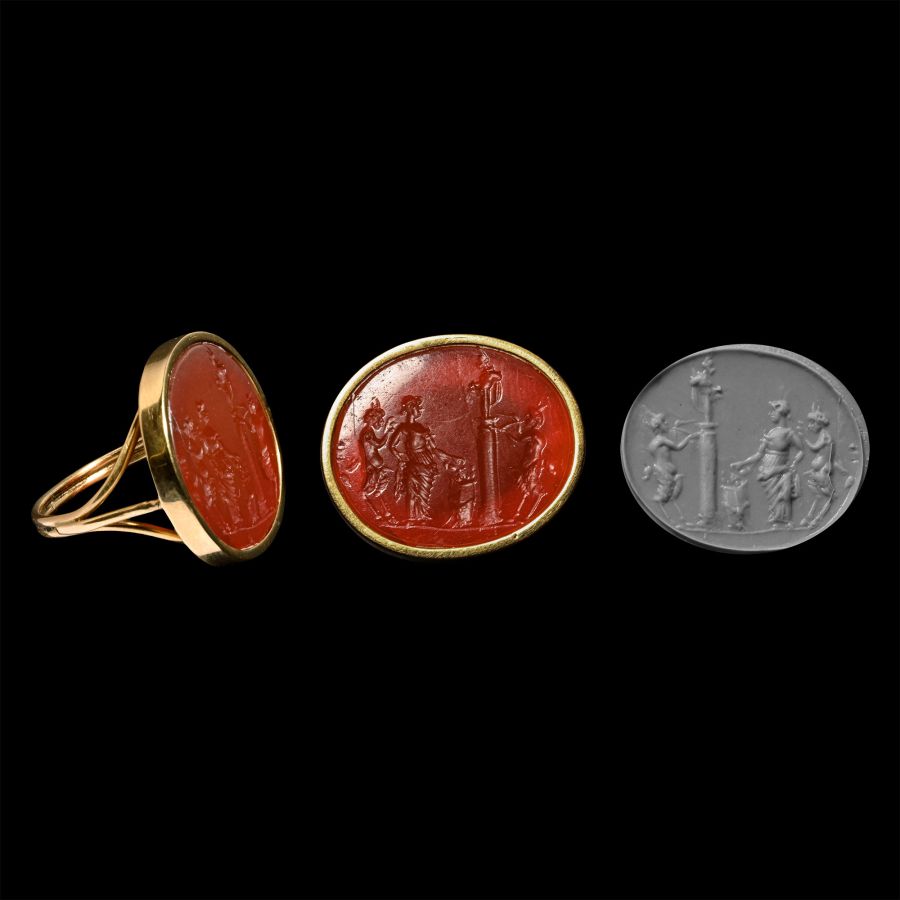
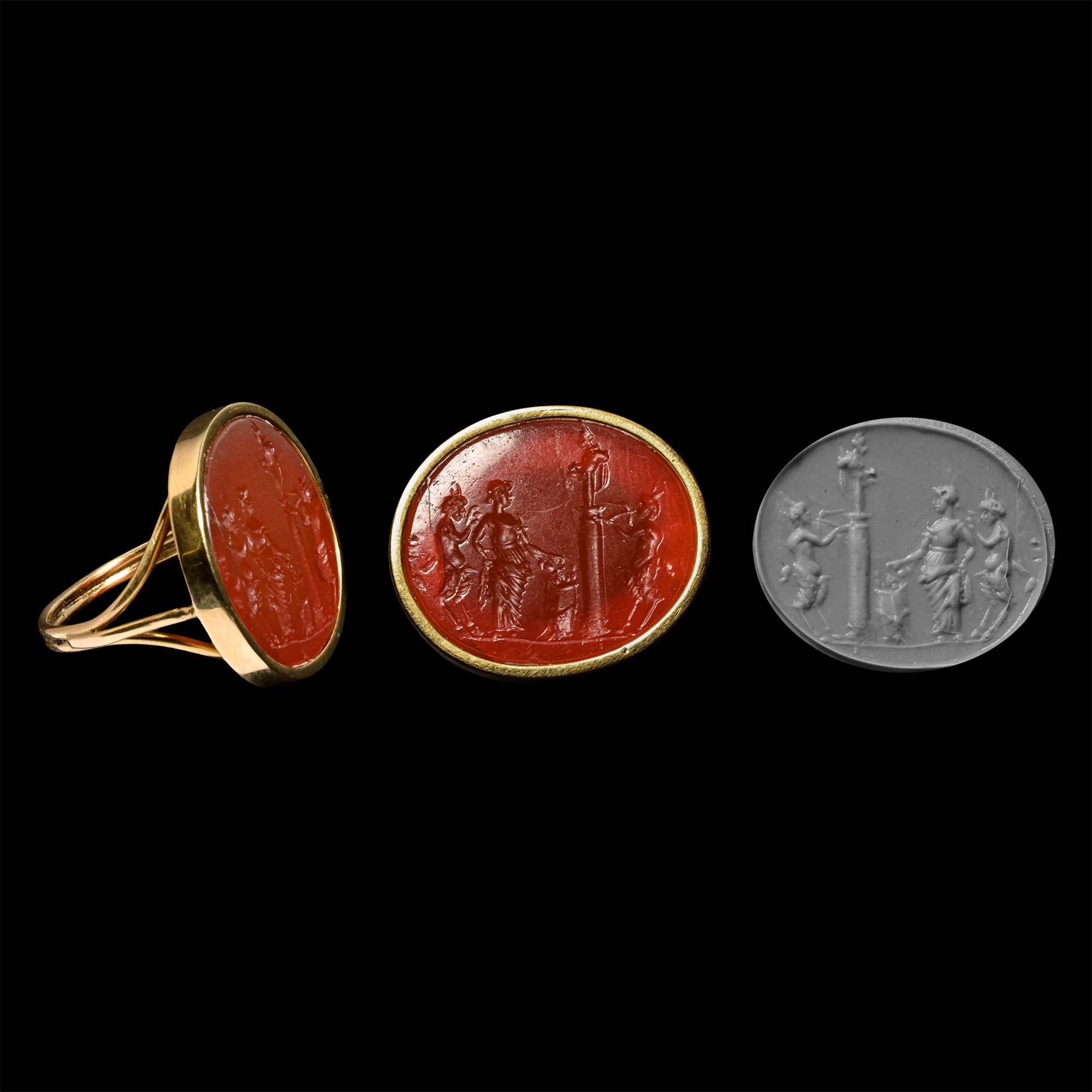
Post Medieval Gemstone Depicting Bacchanalian Sacrifice in Gold Ring
ITALY, 18TH CENTURY A.D.
1 in. (9.36 grams, 25.97 mm overall, 19.15 mm internal diameter (approximate size British N, USA 6 1/2, Europe 13.72, Japan 13)).
Intaglio engraved with satyr playing aulos behind a tall column with statue on the top, a woman in long robe and satyr standing in front of an altar; set into a later gold ring with hoop formed from three round-section wires holding an oval bezel; supplied with a museum-quality impression.
ProvenancePrivate collection, Europe.
Acquired on the English art market.
Cf. Chadour, A.B., Rings. The Alice and Louis Koch Collection, volume II, Leeds, 1994, items 1256-7.
CONDITIONTimeLine Auctions follows a vetting process to ensure the authenticity and legality of all items, reinforcing our commitment to integrity and responsible trading. Each antiquity, antique, and coin lot undergoes thorough examination by a vetting committee of at least ten external specialists, professional trade association members, scientists, and archaeologists: Our Vetting Process
AUCTIONS:
TimeLine is a leading auction house specialising in antiquities, ancient art, collectables, natural history, coins, medals, and books. Our auctions offer museums, collectors, historians, and enthusiasts the opportunity to acquire unique and historically significant pieces.
LOT 0407
Post Medieval Gemstone Depicting Bacchanalian Sacrifice in Gold Ring
Estimate £1,500 - 2,000€1,740 - 2,320 (for guidance only)$2,030 - 2,700 (for guidance only)
-
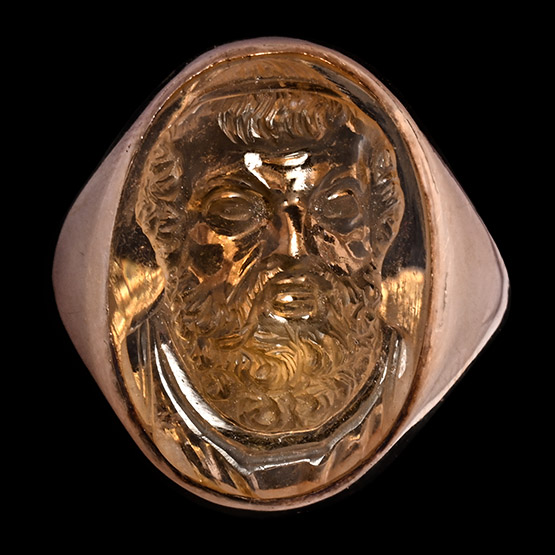
Carved Citrine Bust of Homer in Gold Ring
Italy, 19th century A.D.Sold for (Inc. bp): £1,300
Carved facing bust modelled in the half-round depicting Homer; bezel open to the reverse. 8.14 grams, 29.29 mm overall, 20.60 mm internal diameter (approximate size British Q, USA 8, Europe 17.49, Japan 16)
Private collection, Europe. Acquired on the English art market. -
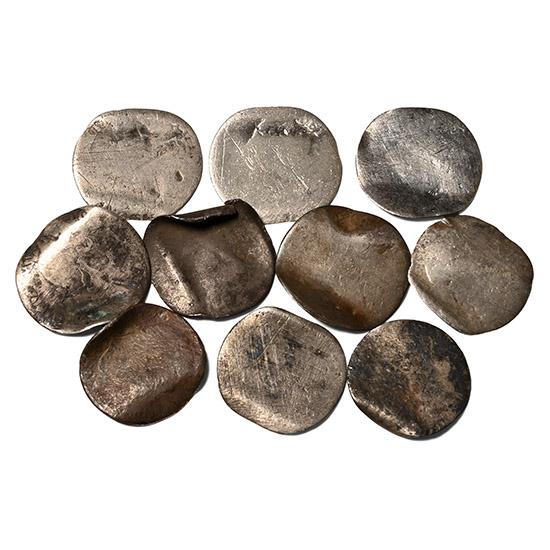
Post Medieval Silver Love Token Collection
18th-19th century A.D.Sold for (Inc. bp): £78
Each coin worn flat and bent into a double-curved 's' profile, for use as a token of love. 17.55 grams total, 18-20 mm
Found Tyne and Wear, UK. This lot is for UK buyers only, not for export.
The custom of giving a bent coin as a love-token is known from the 17th century in England. The coins were usually smoothed to obliterate the monarch’s head and then bent twice; sometimes they were engraved with initials or symbols such as hearts or knots. If the sweetheart accepted the youth's advances, she kept the token; if not, she disposed of it. The tradition is referred to in the children's rhyme 'There was a crooked man, and he walked a crooked mile, and found a crooked sixpence upon a crooked stile.' -
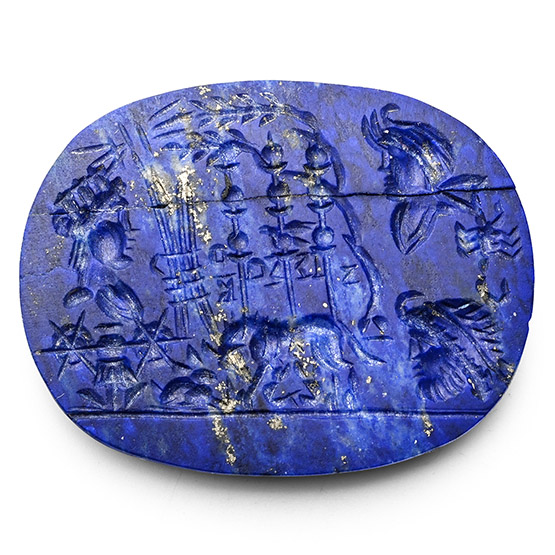
Post-Classical Lapis Lazuli Gemstone with Allegory of Roman Military Power
18th-19th century A.D.Estimate: £300 - 400 (+bp*)
Opening Bid: £150
With incuse scene including three military standards, a laurel frond, three profile busts with crowns, a she-wolf suckling the twins and other items; supplied with a museum-quality impression. 9.07 grams, 35 mm
Acquired on the European art market. Private collection, England.
