
Loading, please wait...
LOT 0341
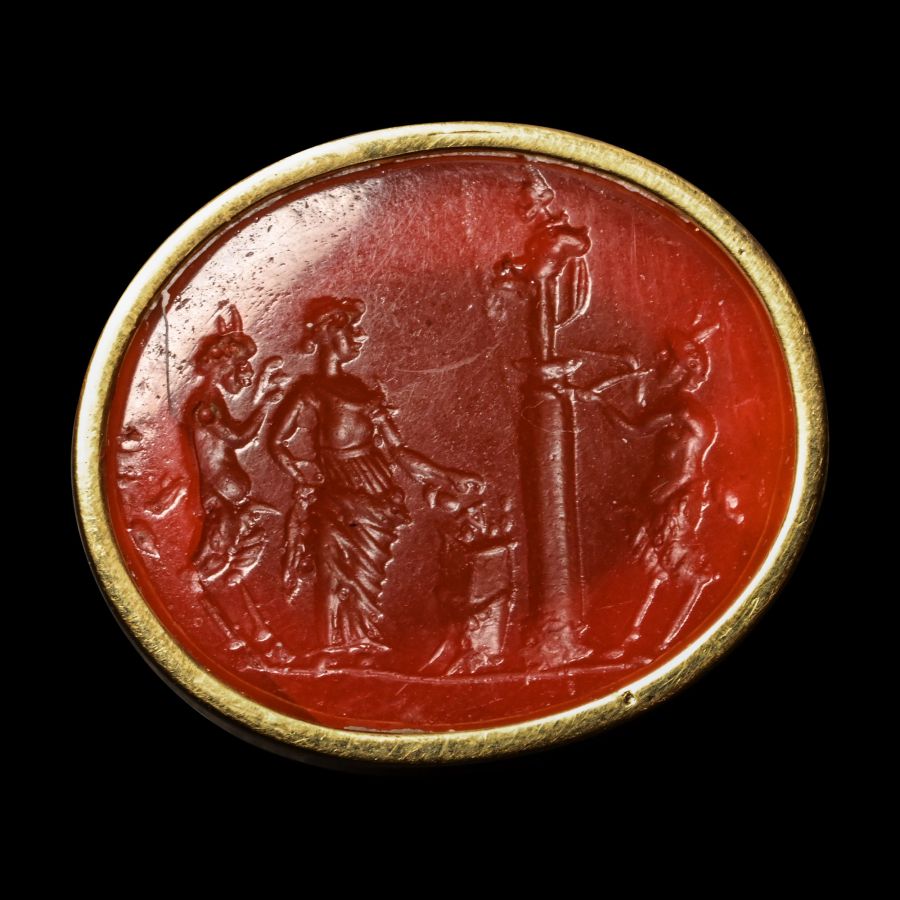
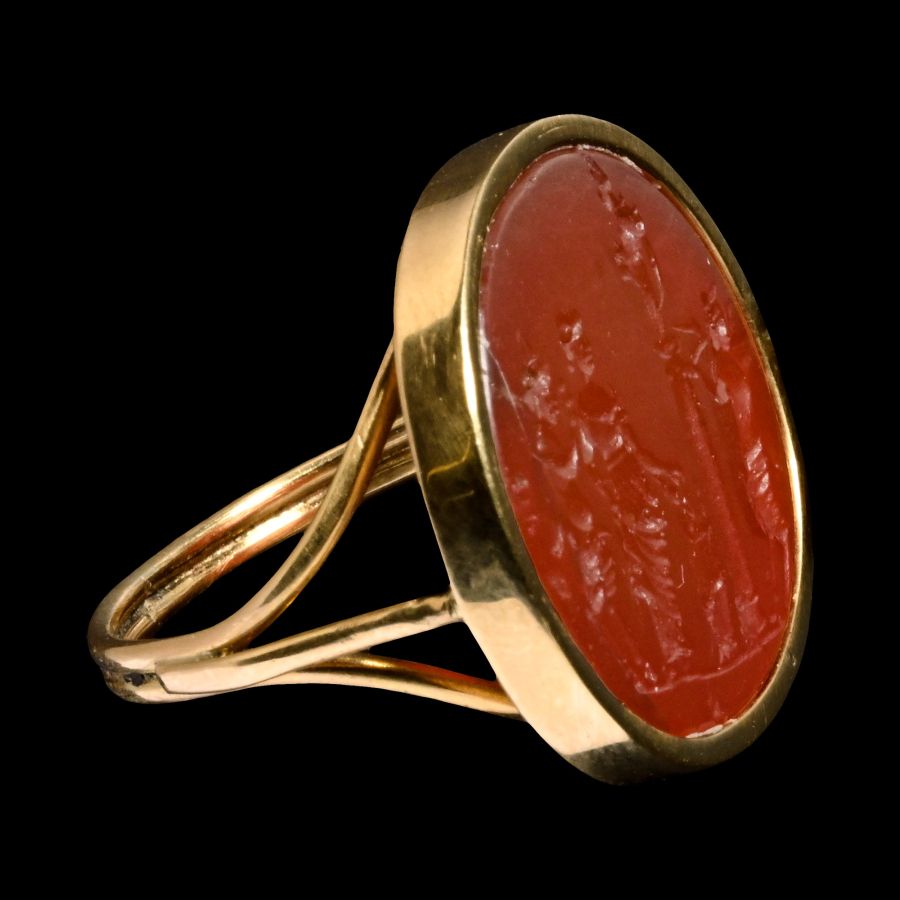
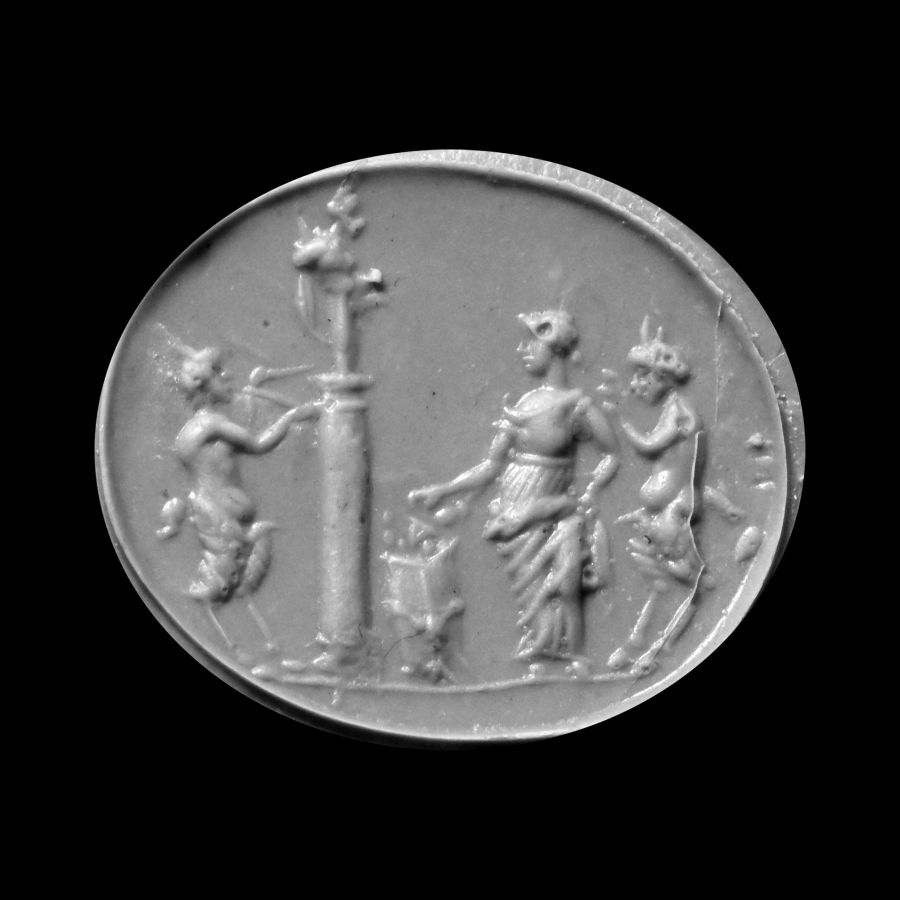
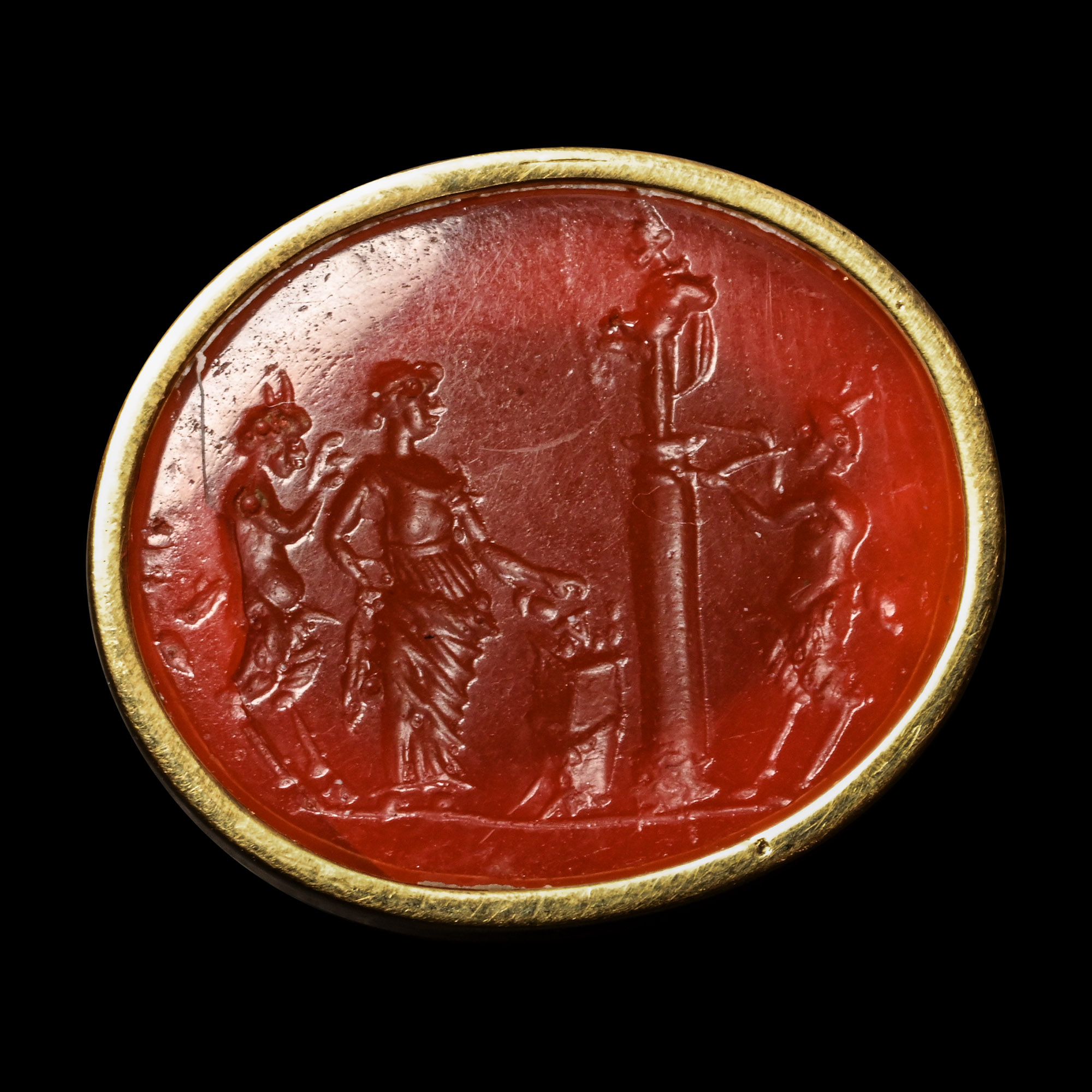
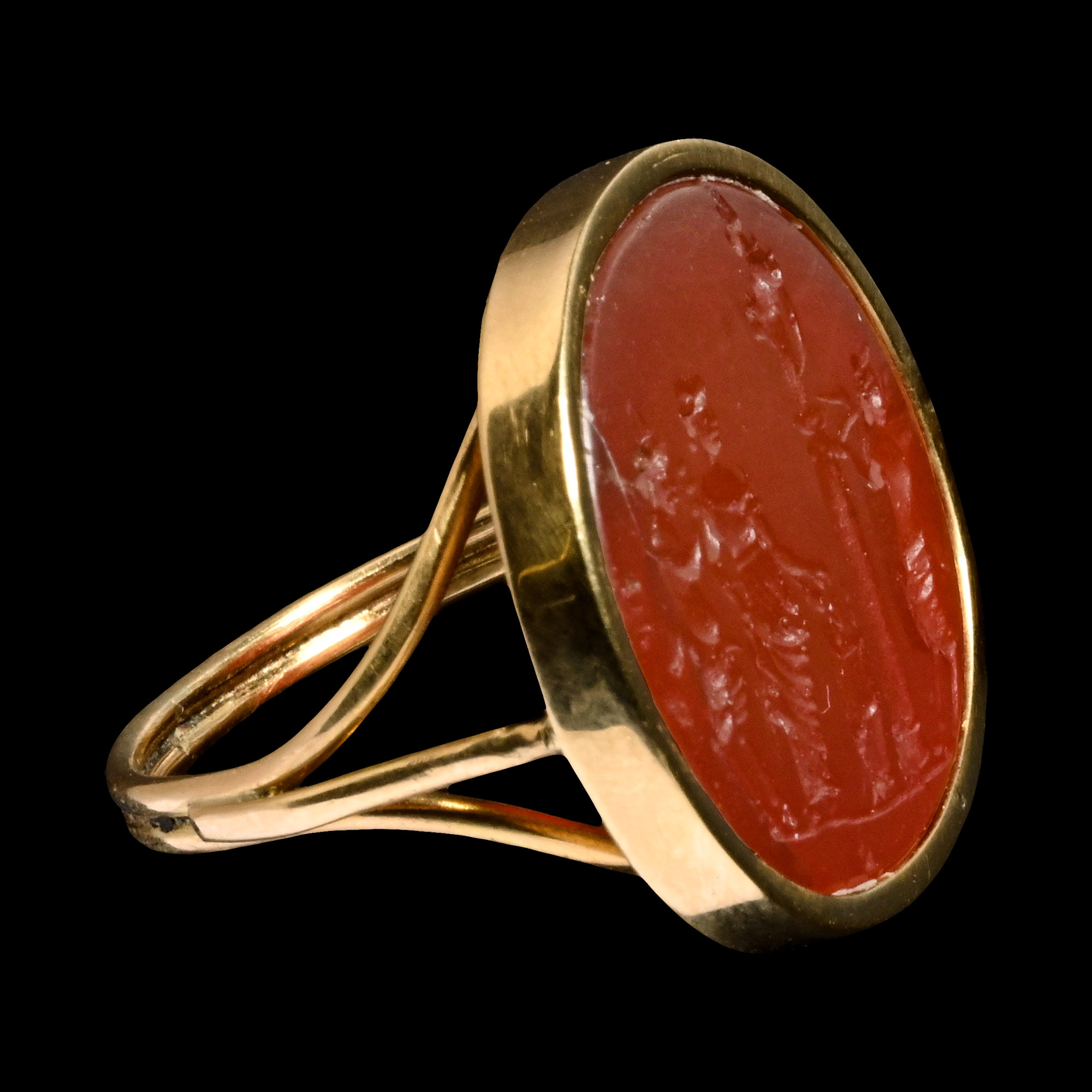
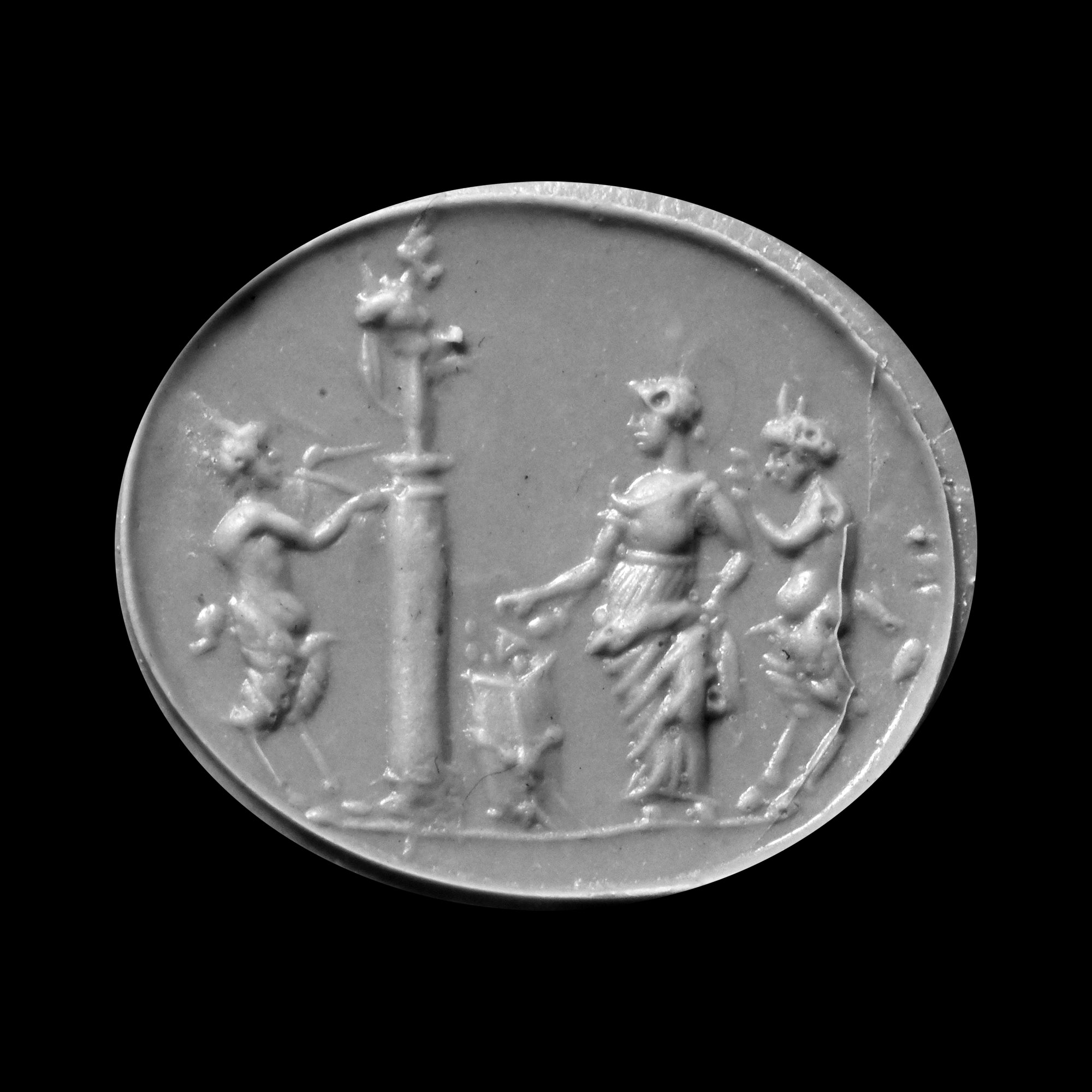
Post Medieval Gemstone Depicting an Offering to Priapus in Gold Ring
ITALY, 18TH CENTURY A.D.
1 in. (9.36 grams, 25.97 mm overall, 19.15 mm internal diameter (approximate size British N, USA 6 1/2, Europe 13.72, Japan 13)).
Intaglio engraved with satyr playing aulos behind a tall column with statue on the top, a woman in long robe and satyr standing in front of an altar; set into a later gold ring with hoop formed from three round-section wires holding an oval bezel; supplied with a museum-quality impression.
ProvenancePrivate collection, Europe.
Acquired on the English art market.
Cf. Chadour, A.B., Rings. The Alice and Louis Koch Collection, volume II, Leeds, 1994, items 1256-7.
CONDITIONTimeLine Auctions follows a vetting process to ensure the authenticity and legality of all items, reinforcing our commitment to integrity and responsible trading. Each antiquity, antique, and coin lot undergoes thorough examination by a vetting committee of at least ten external specialists, professional trade association members, scientists, and archaeologists: Our Vetting Process
AUCTIONS:
TimeLine is a leading auction house specialising in antiquities, ancient art, collectables, natural history, coins, medals, and books. Our auctions offer museums, collectors, historians, and enthusiasts the opportunity to acquire unique and historically significant pieces.
LOT 0341
Post Medieval Gemstone Depicting an Offering to Priapus in Gold Ring
Estimate £1,200 - 1,700€1,390 - 1,970 (for guidance only)$1,620 - 2,300 (for guidance only)
-
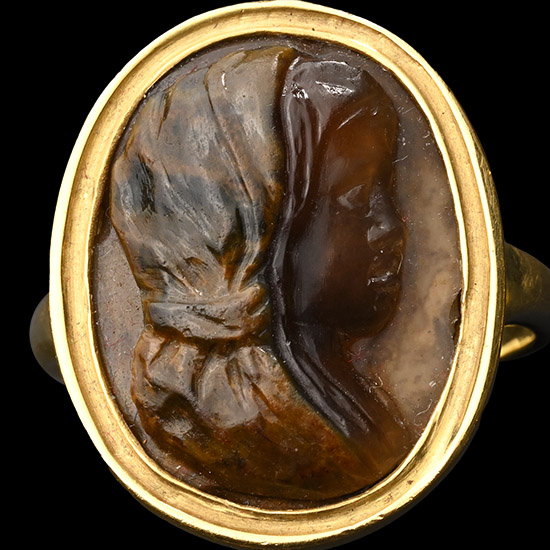
Renaissance Agate Cameo of a Woman in Gold Ring
Italy, 16th-17th century A.D.Estimate: £2,000 - 3,000 (+bp*)
Opening Bid: £1,000
Brown oval cameo depicting a profile bust of a veiled young woman with large eyes and a small button nose, set in a ring with a closed-back setting. 10.26 grams, 24.74 mm overall, 18.91 mm internal diameter (approximate size British N, USA 6 1/2, Europe 13.72, Japan 13)
Acquired on the European art market. This lot has been checked against the Interpol Database of stolen works of art and is accompanied by search certificate number no.13399-257955. -
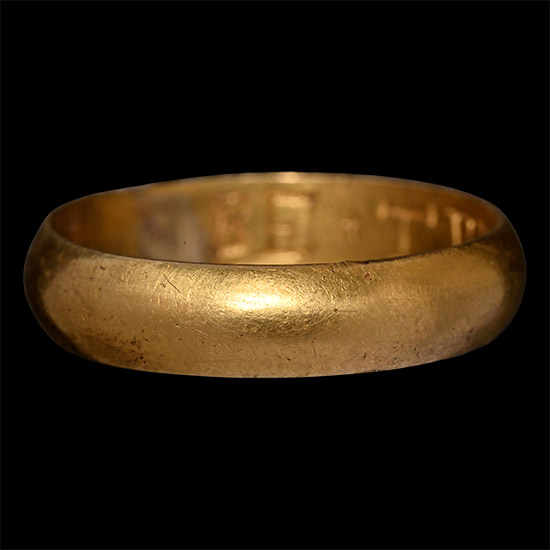
Tudor Gold 'BE . TRVE . IN . HART' Posy Ring
Circa 16th century A.D.Sold for (Inc. bp): £2,470
Featuring a smooth exterior and D-shaped in cross-section, a flat internal face with an inscription in upper case Roman letters, reading 'BE . TRVE . IN . HART' for 'Be true in heart' with the stops formed as small crosses and the N reversed. 4.25 grams, 20.66 mm overall, 18.06 mm internal diameter (approximate size British P, USA 7 1/2, Europe 16.23, Japan 15)
Found whilst searching with a metal detector near Edgmond, Telford & Wrekin, UK, by George Elymn, on 27 October 2024. Recorded with the British Museum's Portable Antiquities Scheme (PAS) with reference no.HESH-B237EA; handed in as Treasure under the Treasure Act, and subsequently disclaimed and returned to the finder. Accompanied by a copy of the Report for H M Coroner on finding of Potential Treasure, with reference no.2025T1645. Accompanied by a copy of a letter from the British Museum explaining that the Crown's interest in this find has been disclaimed.
The 'posy' name is derived from the 'poesy' (motto) engraved around the hoop. In medieval examples, the posy is usually found around the hoop exterior, although on later examples, inscriptions were more usually engraved on the interior. Rings with amatory inscriptions can be found from the 14th century AD onwards, when they served as love gifts, betrothal and wedding rings. Posy rings were also given to friends or used to mark significant occasions. Posies were composed by the giver, kept in stock by goldsmiths, or could be selected from published compendiums or commonplace books such as 'The Mysteries of Love or the Arts of Wooing' (1658 AD), or 'Love's Garland or Posies for Rings, Hand-kerchers and Gloves and such pretty tokens that Lovers send their Loves' (1674 AD). Rings were one genre of personal item amongst many to be adorned with posies at this time. -
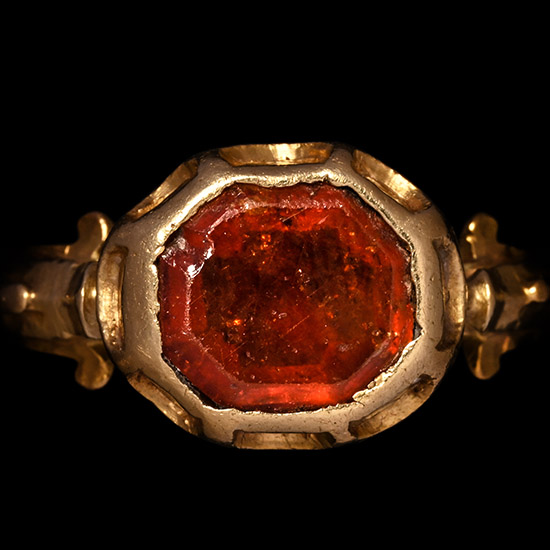
Renaissance Gold Ring with Table-Cut Hessonite Garnet
Western Europe, 16th century A.D.Sold for (Inc. bp): £3,380
Tiered hoop and shoulders supporting a cup bezel with scallop detailing, inset with an octagonal cloison. 7.07 grams, 27.56 mm overall, 19.87 x 19.76 mm internal diameter (approximate size British U, USA 10, Europe 22.52, Japan 21)
Private collection, Europe. Acquired on the English art market. This lot has been checked against the Interpol Database of stolen works of art and is accompanied by a search certificate number no.13048-248385.
Parallels for the ring type are dated 16th century. A related finger ring is also available in the British Museum collection. The chalice-shaped workmanship of the bezel betrays a strong Italian influence in the workmanship of the ring section.
