
Loading, please wait...
LOT 2119
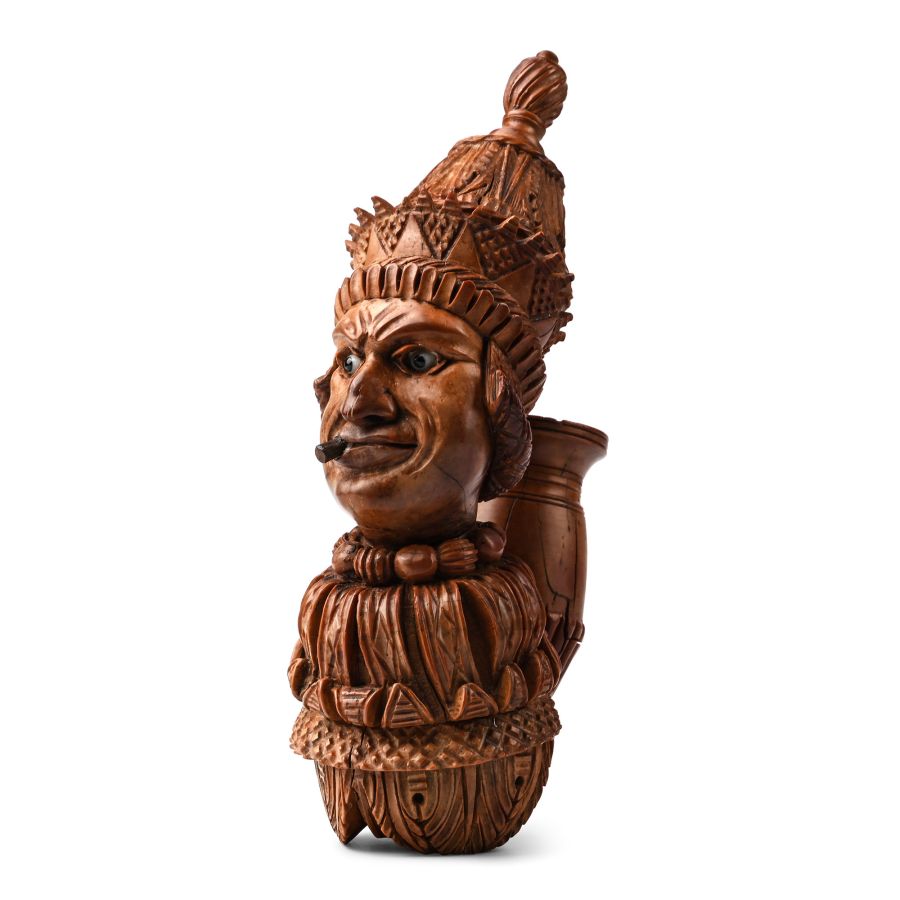
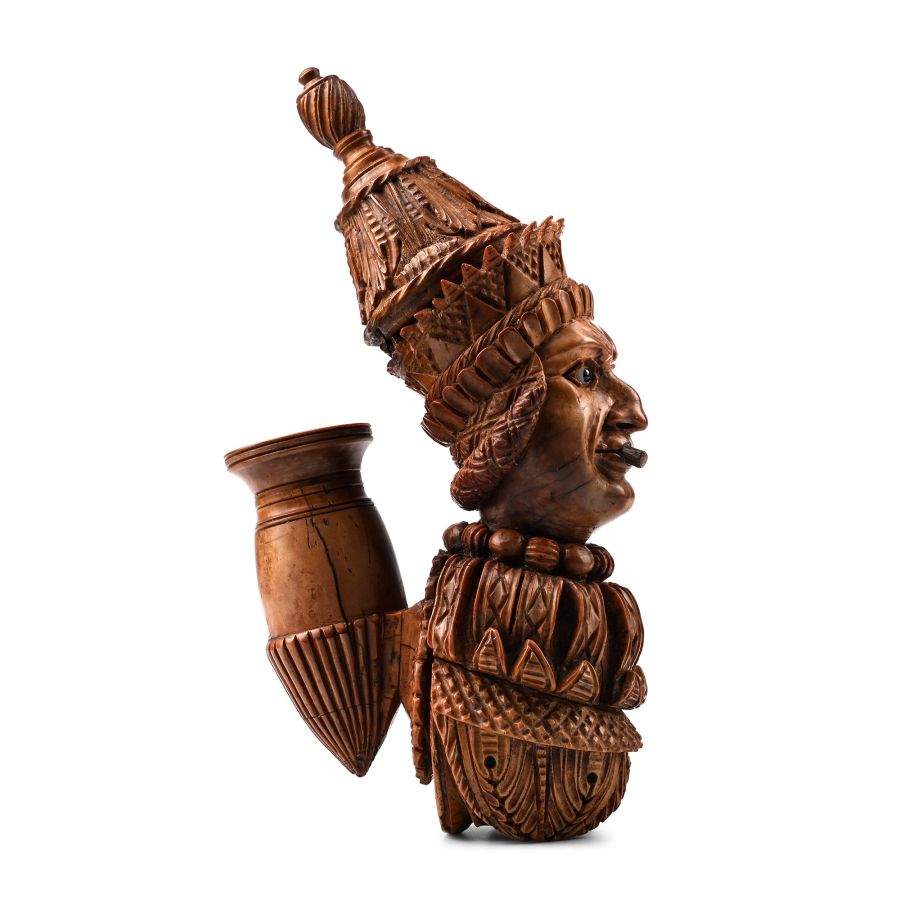
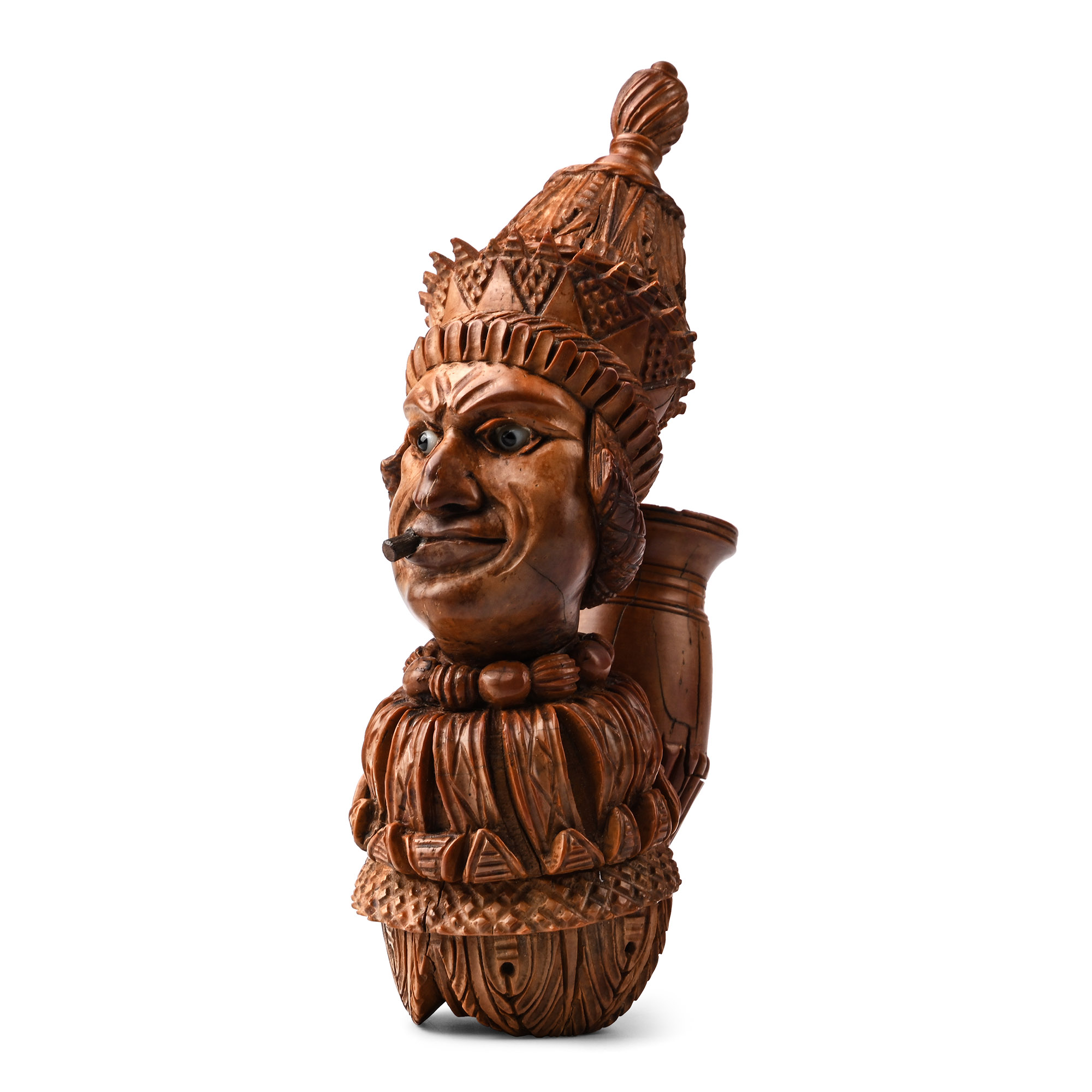
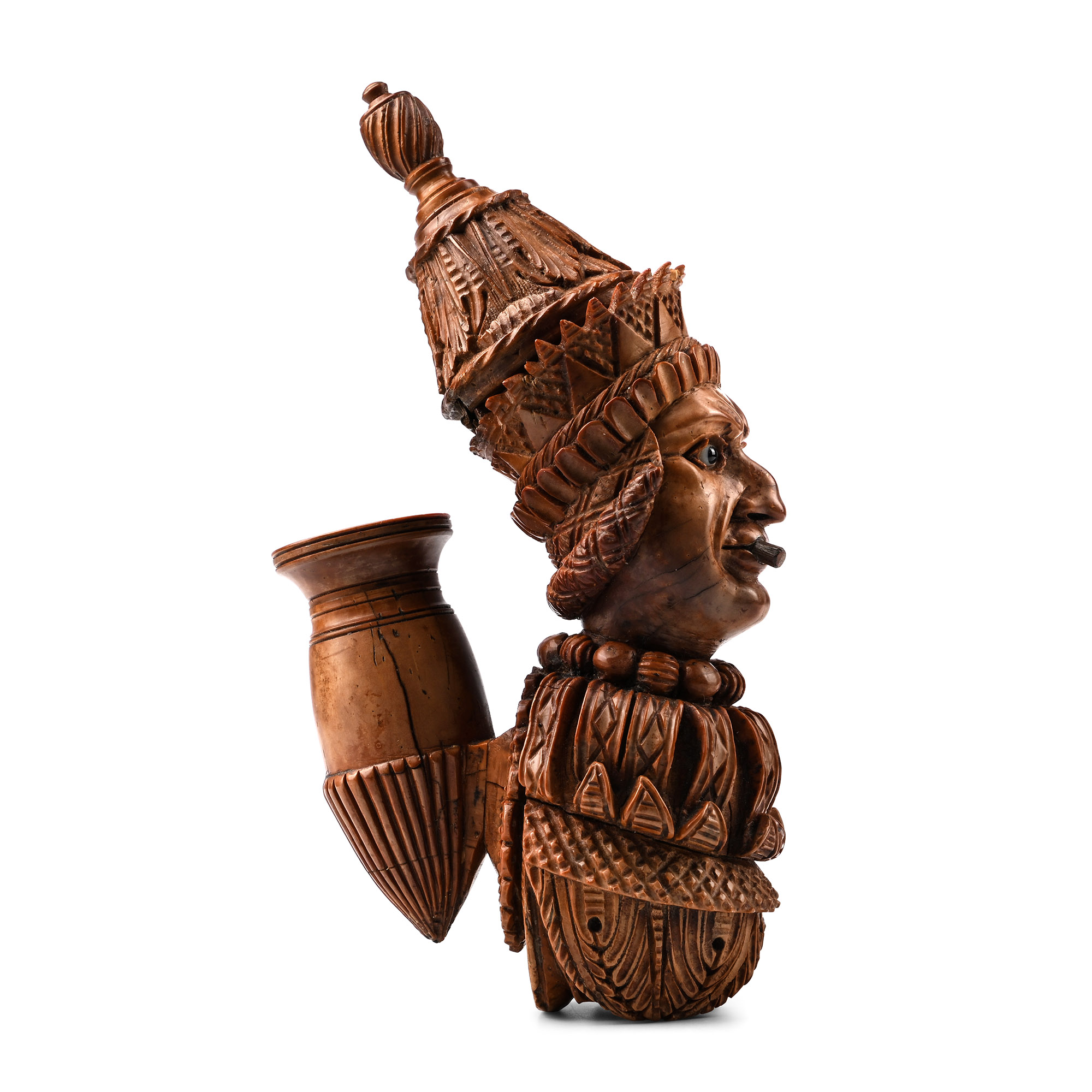
Post Medieval Figural Coquilla Pipe
FRENCH COLONIES, 19TH CENTURY A.D.
6 1/8 in. (177 grams, 15.5 cm).
Bowl formed as a jester head with prominent hooked nose and insert glass eyes, smoking a cigar, wearing a crown and prominent necklace, removable cylindrical cap to the top of the head; ascending stem with ribbed bottom and everted flat rim at the back.
ProvenancePrivate collection, Europe.
Acquired on the English art market.
See Amsterdam Pipe Museum, item APM 16.212.
CONDITIONTimeLine Auctions follows a vetting process to ensure the authenticity and legality of all items, reinforcing our commitment to integrity and responsible trading. Each antiquity, antique, and coin lot undergoes thorough examination by a vetting committee of at least ten external specialists, professional trade association members, scientists, and archaeologists: Our Vetting Process
AUCTIONS:
TimeLine is a leading auction house specialising in antiquities, ancient art, collectables, natural history, coins, medals, and books. Our auctions offer museums, collectors, historians, and enthusiasts the opportunity to acquire unique and historically significant pieces.
-
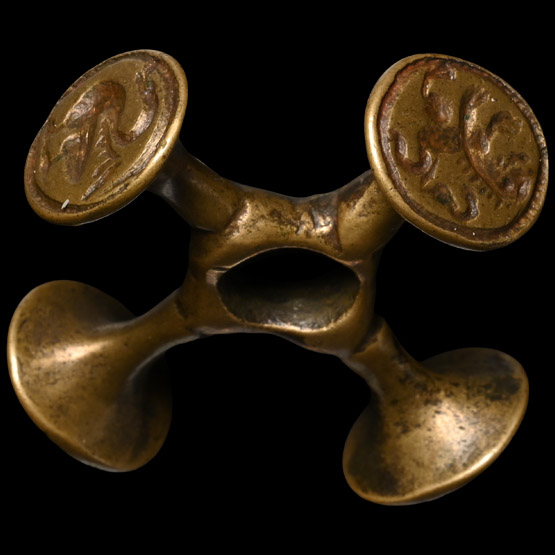
Late Tudor Bronze Four-Way Seal Matrix
16th-17th century A.D.Sold for (Inc. bp): £104
Cruciform with a central oval loop for suspension; each arm with flat discoid bezel; engraved with anchor, ship, rampant lion, and swan motives. 12.3 grams, 35 mm
From the private collection of the late Graham Slater (1927-2024), Cambridge, UK, acquired 1980s-1990s. -
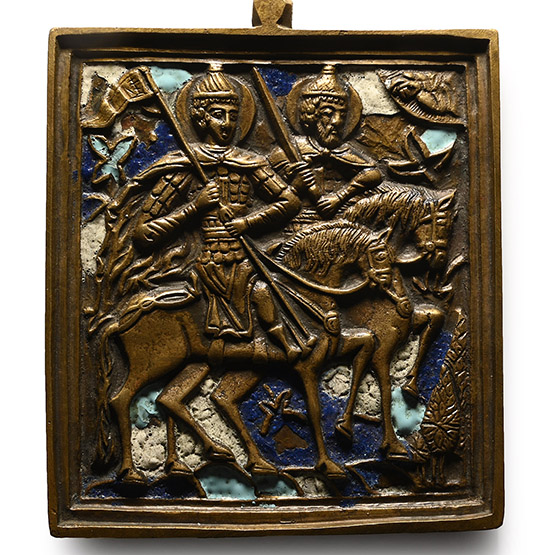
Russian Orthodox Enamelled Bronze Travel Icon with Saints Boris and Gleb
19th century A.D.Estimate: £250 - 350 (+bp*)
Opening Bid: £135
Saint Boris and Saint Gleb depicted on horseback wearing Russian medieval armour, holding a cross standard and a sword, each wearing a conical helmet; on the right upper corner, the hand of God. 260 grams, 10.7 cm
Acquired from Chris Martin-Zakheim, Iconastas, 5 Piccadilly Arcade, London SW1. From the private collection of a West London, UK, gentleman, formed since the early 2000s.
Boris and Gleb were the sons of Vladimir of Kyiv, the first Christian Prince of Rus; they were killed in 1015 and 1019 in the civil struggles for the succession to the throne, and sanctified for their faith. Standards with their image were worn by the medieval Russian army. -
.jpg)
Cylinder Seal Electrotype Group
Late 19th-early 20th century A.D.Sold for (Inc. bp): £111
Of academic interest, copper coated lead seal impressions taken from cylinder seals, including master of animals, courtly scenes and three with cuneiform text. 271 grams total, 34-49 mm
Possibly made by the British Museum. From a West Country, UK, private collection.
