
Loading, please wait...
LOT 1499
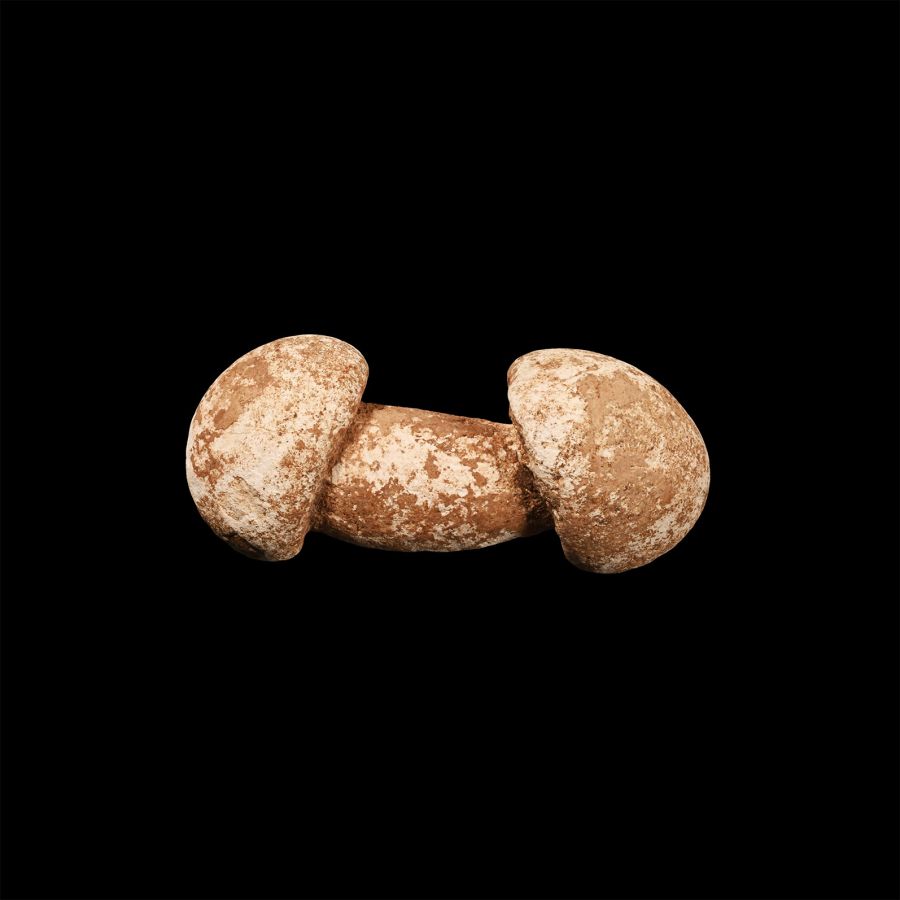
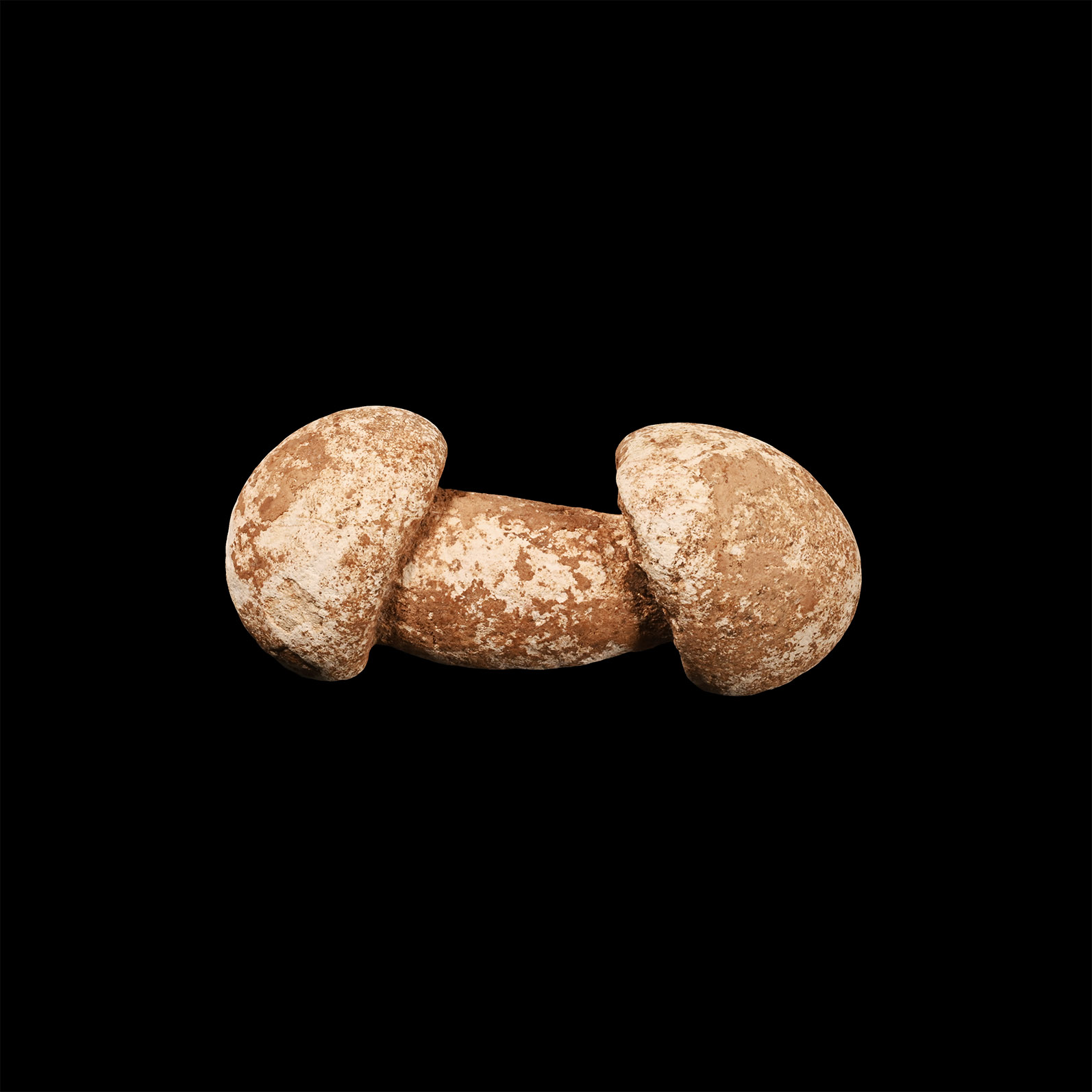
Post Medieval Double Phallic Amulet
19TH-20TH CENTURY A.D. OR EARLIER
1 3/4 in. (10 grams, 44 mm).
A stone amulet formed as a double phallus with stylised detailing. [No Reserve]
ProvenanceAcquired in the late 1980s-early 1990s.
Important North West London collection.
TimeLine Auctions follows a vetting process to ensure the authenticity and legality of all items, reinforcing our commitment to integrity and responsible trading. Each antiquity, antique, and coin lot undergoes thorough examination by a vetting committee of at least ten external specialists, professional trade association members, scientists, and archaeologists: Our Vetting Process
AUCTIONS:
TimeLine is a leading auction house specialising in antiquities, ancient art, collectables, natural history, coins, medals, and books. Our auctions offer museums, collectors, historians, and enthusiasts the opportunity to acquire unique and historically significant pieces.
-
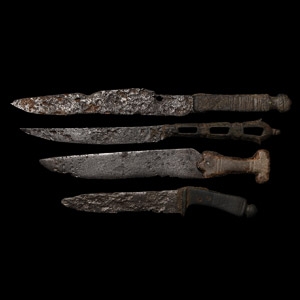
Tudor 'Thames' Knife Group
16th century A.D.Estimate: £200 - 300 (+bp*)
Opening Bid: £100
A group of four single-edged iron knives including one with openwork grip. 112 grams total, 10.5-15 cm
Fair condition.
Found Thames foreshore, London, UK, 1970s-1980s. Ex UK collection. Property of a Portsmouth, UK gentleman. -
.jpg)
Georgian Silver Memento Mori Ring with Skull and Snakes
18th century A.D.Sold for (Inc. bp): £312
A silver memento mori ring with D-section hoop expanding at the shoulders to a facetted bezel, openwork flower bud to each shoulder, incised hatched triangles to the scooped facets above, 'MORS' inscribed to the upper panel, 'SOIFI' to the lower; pale gold insert to central cell engraved with a skull amid entwined snakes. 10.11 grams, 26.62 mm overall, 18.12 mm internal diameter (approximate size British P, USA 7 1/2, Europe 16.23, Japan 15)
Fine condition. Resized.
Acquired since before 1970. Ex private collection of a West Sussex, UK, collector. -
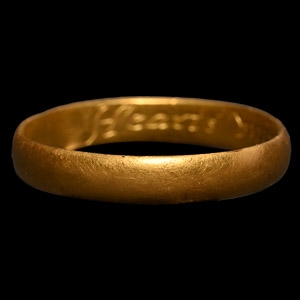
Post Medieval Gold 'Hearts United Lives Contented' Posy Ring
Circa 18th century A.D.Sold for (Inc. bp): £715
A large gold posy ring with D-section hoop, inscribed internally with 'Hearts vnited lives contented' lower case inscription with 'GM' maker's mark punch, possibly for the London goldsmith George Morris, recorded from a dated piece as working 1749-1750. 4.32 grams, 22.46 mm overall, 20.12 mm internal diameter (approximate size British T 1/2, USA 9 3/4, Europe 21.89, Japan 21)
Acquired on the UK antiques market between 1974-1985. Albert Ward collection, Essex, UK.
