Loading, please wait...

Post Medieval Coral Memento Mori Janus Chaplet Bead with Head of Christ and Skull Post Medieval Coral Memento Mori Janus Chaplet Bead with Head of Christ and Skull Post Medieval Coral Memento Mori Janus Chaplet Bead with Head of Christ and Skull Post Medieval Coral Memento Mori Janus Chaplet Bead with Head of Christ and Skull Post Medieval Coral Memento Mori Janus Chaplet Bead with Head of Christ and Skull Post Medieval Coral Memento Mori Janus Chaplet Bead with Head of Christ and Skull
Use mousewheel to zoom in and out, click to enlarge
Details

LOT 0400

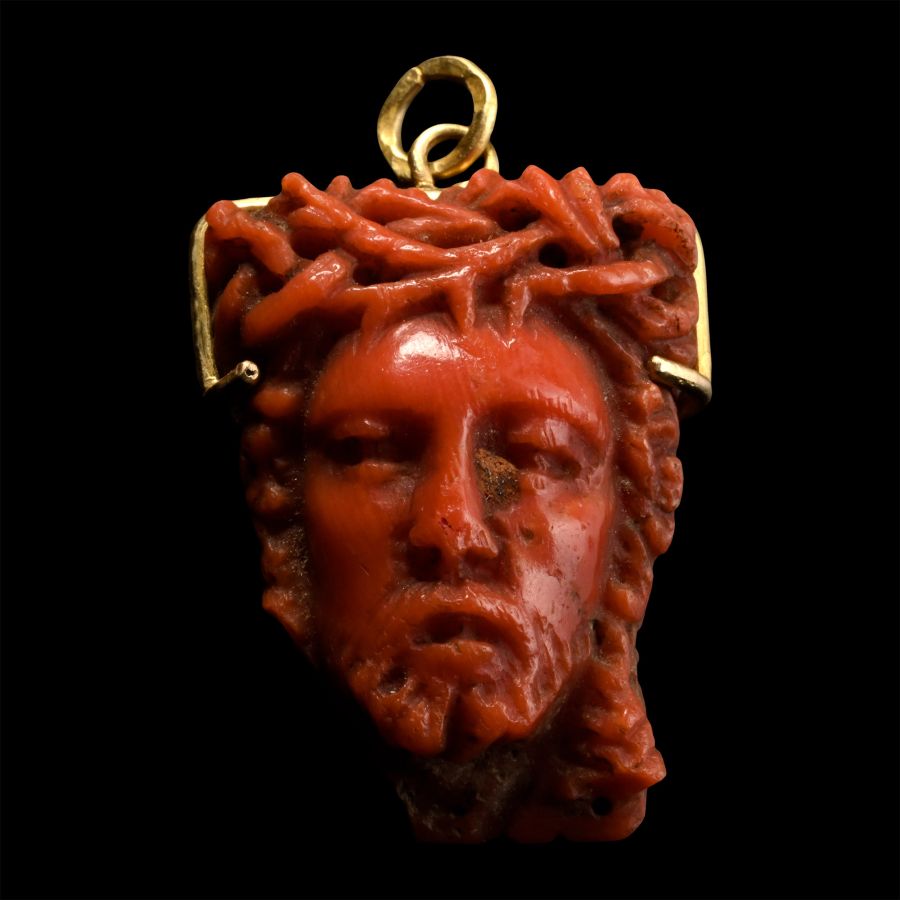
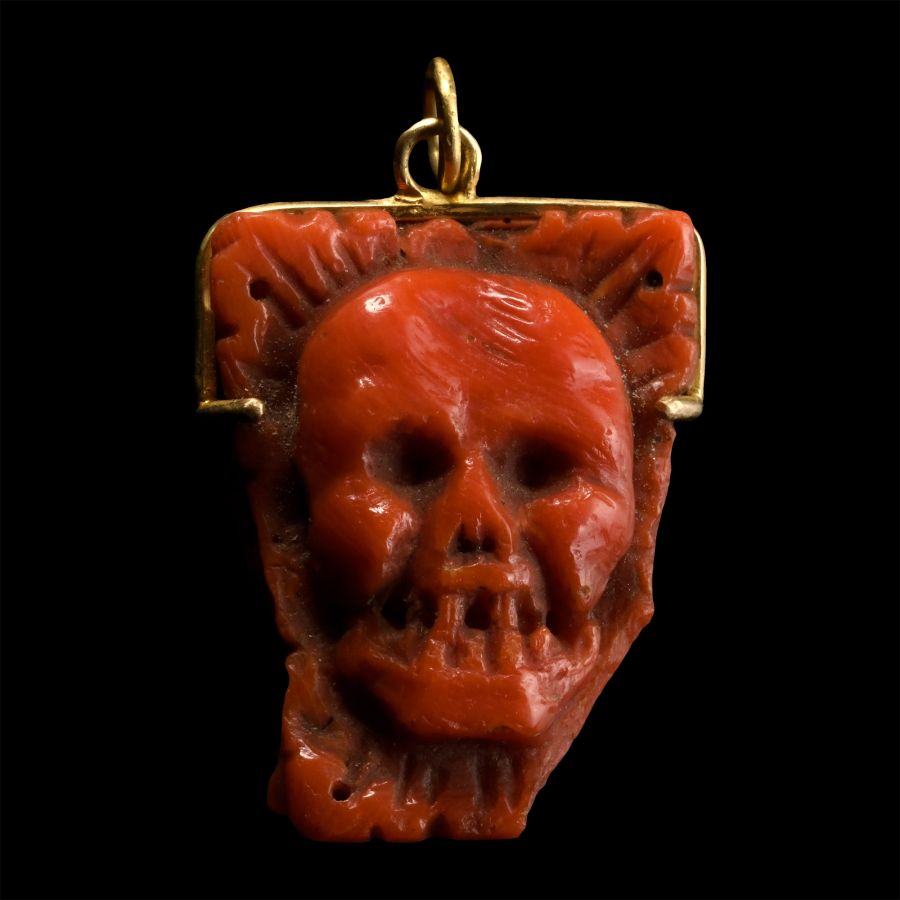
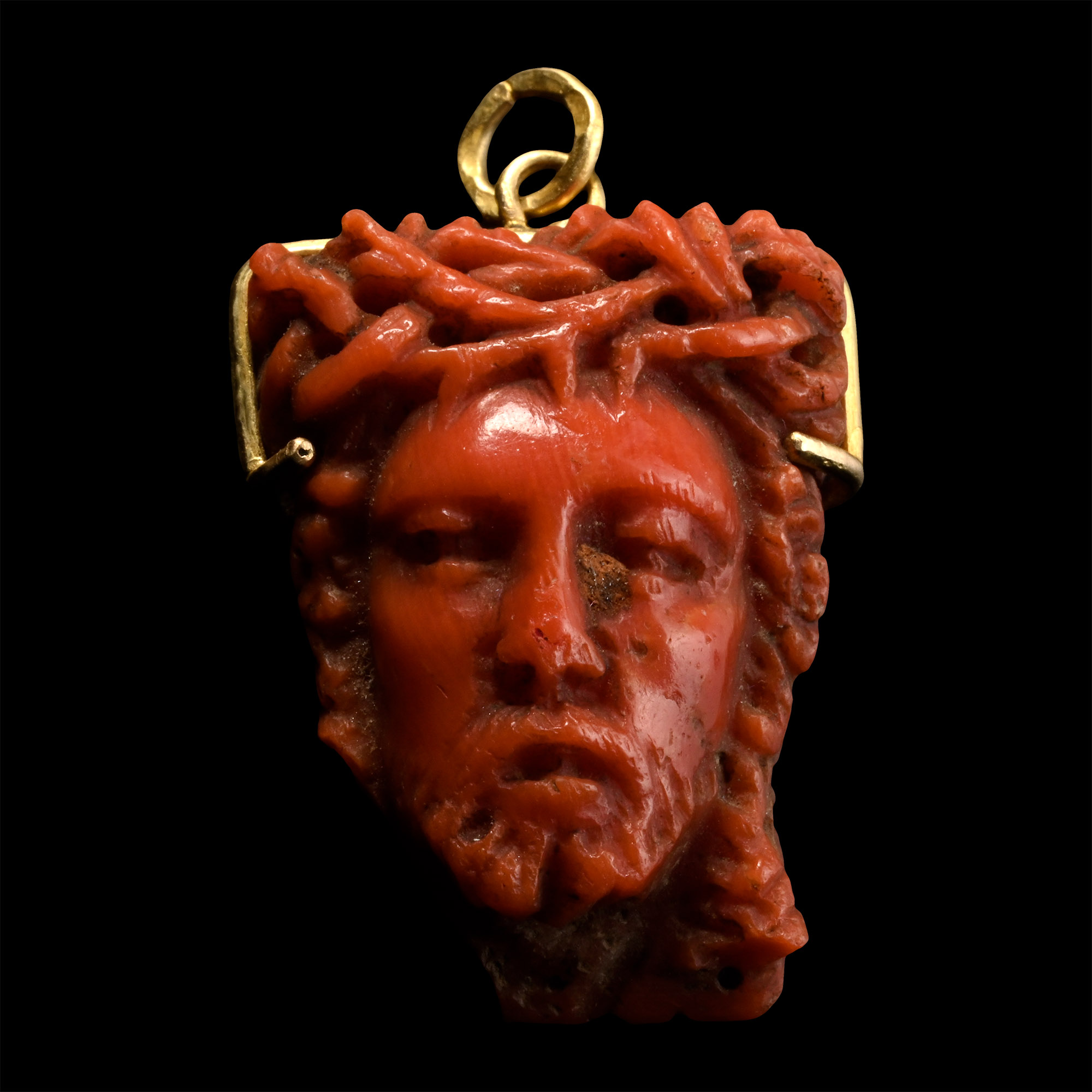
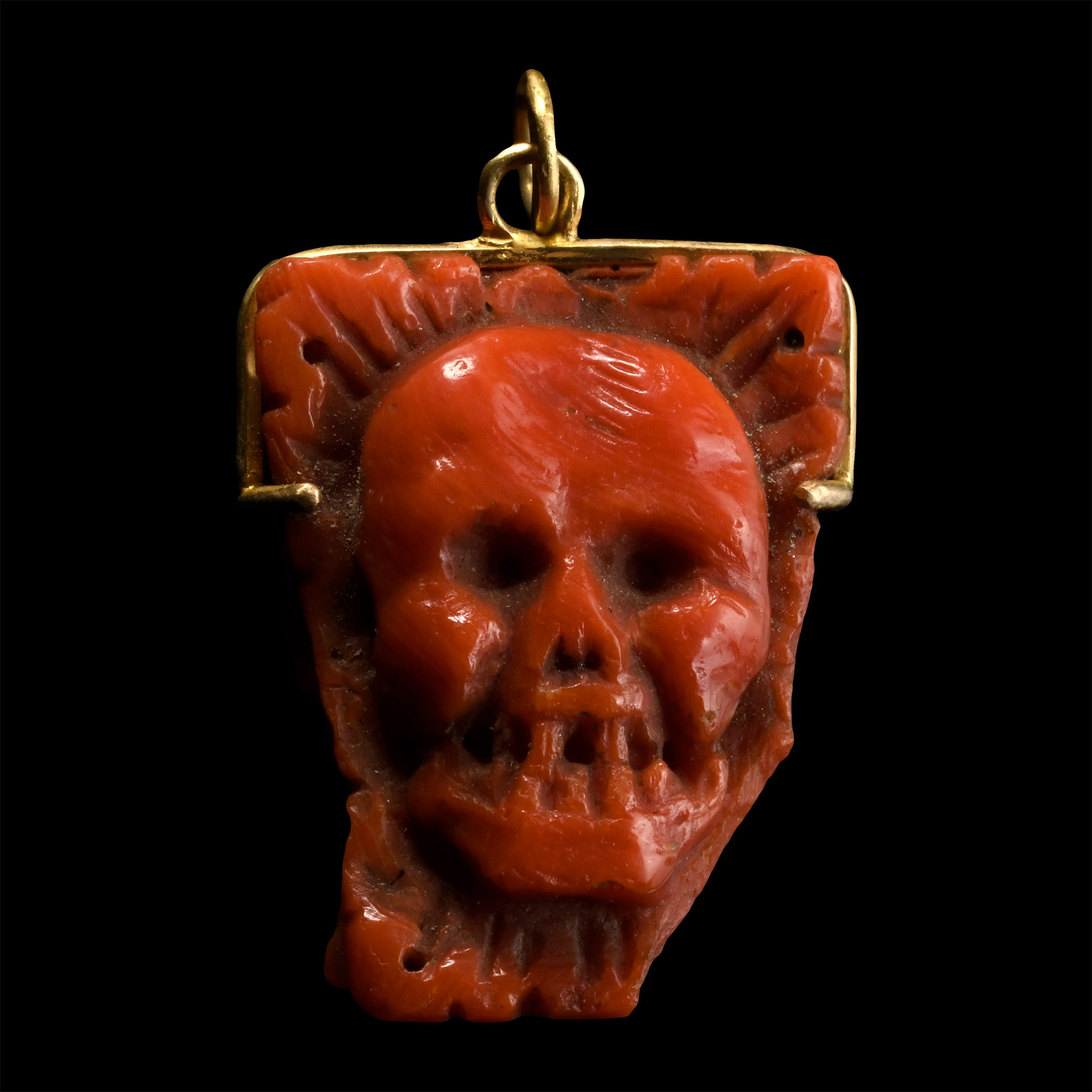
Post Medieval Coral Memento Mori Janus Chaplet Bead with Head of Christ and Skull

17TH-18TH CENTURY A.D.

1 1/2 in. (13.31 grams, 39 mm).

Devotional prayer bead featuring a grimacing skull on one side and the other with the face of Jesus wearing the crown of thorns; set in a simple gold frame with suspension loop.

Provenance

Acquired on the European art market.

CONDITION
VETTING:

TimeLine Auctions follows a vetting process to ensure the authenticity and legality of all items, reinforcing our commitment to integrity and responsible trading. Each antiquity, antique, and coin lot undergoes thorough examination by a vetting committee of at least ten external specialists, professional trade association members, scientists, and archaeologists: Our Vetting Process


AUCTIONS:

TimeLine is a leading auction house specialising in antiquities, ancient art, collectables, natural history, coins, medals, and books. Our auctions offer museums, collectors, historians, and enthusiasts the opportunity to acquire unique and historically significant pieces.

LOT 0400

Post Medieval Coral Memento Mori Janus Chaplet Bead with Head of Christ and Skull

Estimate £1,500 - 2,000€1,740 - 2,320 (for guidance only)$2,030 - 2,700 (for guidance only)

Opening Bid
£700 (EUR 812; USD 945) +BP*

Sign in to Bid

Please enter a e-mail
Please enter a password
Or Create Account here.
Please confirm to accept TC and Privacy policy

Bids: 0
RELATED LOTS
  • Georgian Gold Ring with Carnelian Gemstone with Head of Papposilenus
    Georgian Gold Ring with Carnelian Gemstone with Head of Papposilenus
    Italy, 18th century A.D.

    Estimate: £2,000 - 3,000 (+bp*)

    Opening Bid: £1,000

    Narrow hoop forked at the shoulders and supporting an oval open-backed setting with a slightly convex orange carnelian intaglio depicting the head of Papposilenus facing, wearing a wreath on his bald head, long beard and open mouth; supplied with a museum-quality impression. 3.31 grams, 21.59 mm overall, 18.67 mm internal diameter (approximate size British P, USA 7 1/2, Europe 16.23, Japan 15)

    There is a stable internal fissure within the intaglio.

    Acquired on the European art market. This lot has been checked against the Interpol Database of stolen works of art and is accompanied by search certificate number no.13317-257960.

    The image, derived from Graeco-Roman mythology, represents Papposilenus, a semi-bestial figure with a round face dominated by a thick, unkempt beard and a completely bald head. The subject depicted is the eldest Silenus (the meaning of his name) and the wisest of Dionysus’s retinue; indeed, the infant Dionysus was entrusted to his care.

    Lot Details

  • African Glass Trade Beads
    African Glass Trade Beads
    20th century A.D.

    Estimate: £50 - 70 (+bp*)

    Opening Bid: £5

    Long loop of biconical dark amber coloured beads. 262 grams, 119 cm


    Private collection, London, UK.

    Lot Details

  • Post Medieval Banded Agate Cameo of a Woman in Gold Ring
    Post Medieval Banded Agate Cameo of a Woman in Gold Ring
    18th century A.D.

    Estimate: £600 - 800 (+bp*)

    Bids: 1   |   Current Bid: £30

    Hollow-formed with pie-dish bezel and inset cameo. 3.17 grams, 21.26 mm overall, 17.72 mm internal diameter (approximate size British L, USA 5 3/4, Europe 11.24, Japan 10)


    Private collection, Europe. Acquired on the English art market.

    The cameo is Italian and carved in the classical style of the 2nd century AD, although it dates to the 18th century. Her hair is tied back, and she is wearing a double-banded diadem. The agate displays a deep umber hue, with the bust depicted in light bluish white with highlights of light caramel. In the late 18th century, interest in the classical world became exponentially high, and demand became great for objects from or relating to the ancient world. The high-carat gold ring dates to the late 18th century; there is a small dent to the shoulder of the band.

    Lot Details