
Loading, please wait...
LOT 2127
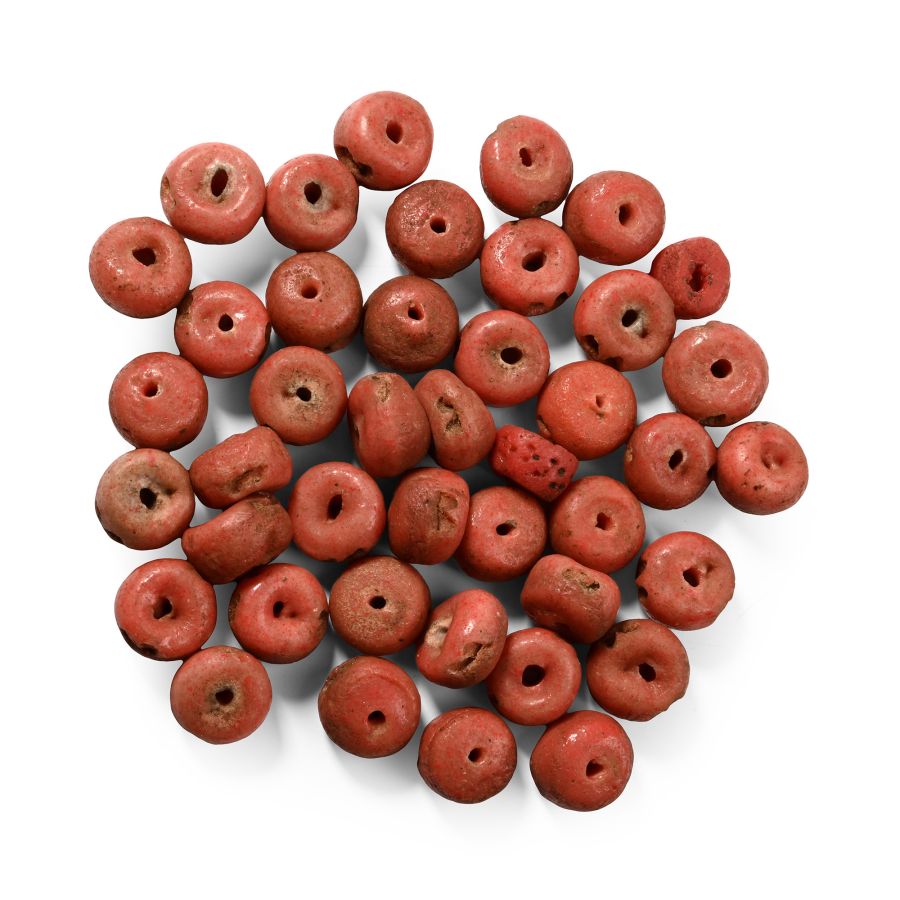
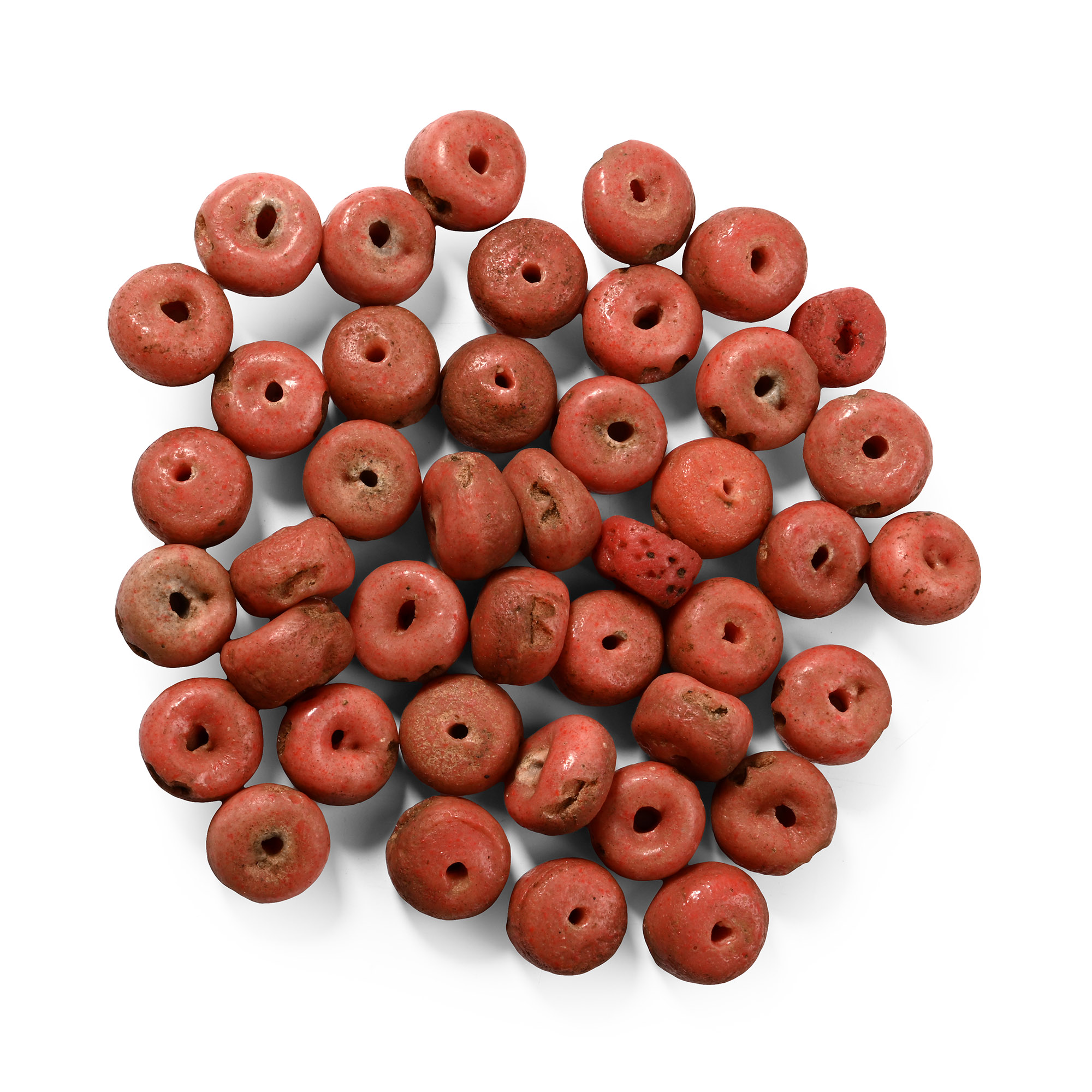
Post Medieval Coral-Coloured Bead Group
20TH CENTURY A.D. OR EARLIER
1/2 - 3/4 in. (212 grams total, 14-19 mm).
Comprising mainly oblate beads, possibly glass, restrung. [42, No Reserve]
ProvenanceAcquired in the 1990s.
Ex London, UK, collection.
TimeLine Auctions follows a vetting process to ensure the authenticity and legality of all items, reinforcing our commitment to integrity and responsible trading. Each antiquity, antique, and coin lot undergoes thorough examination by a vetting committee of at least ten external specialists, professional trade association members, scientists, and archaeologists: Our Vetting Process
AUCTIONS:
TimeLine is a leading auction house specialising in antiquities, ancient art, collectables, natural history, coins, medals, and books. Our auctions offer museums, collectors, historians, and enthusiasts the opportunity to acquire unique and historically significant pieces.
-
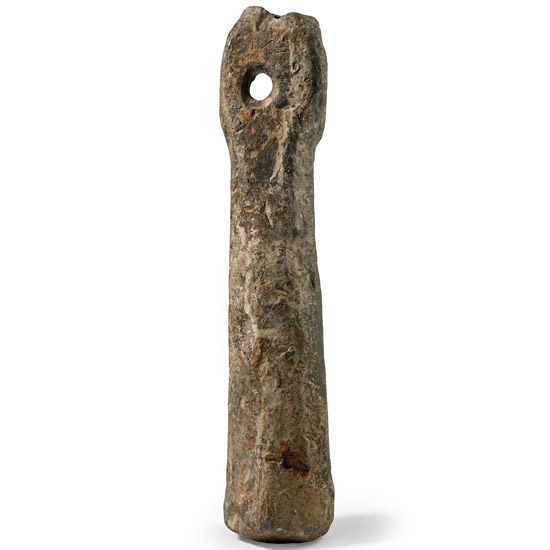
Tudor 'Thames' Lead Tall Ship's Depth Sounding Weight
Circa 16th century A.D.Sold for (Inc. bp): £247
Composed of a tapering and facetted body, a flattened pierced terminal. 6.2 kg, 29.5 cm
Found Thames foreshore at Deptford, UK, circa 1996. -
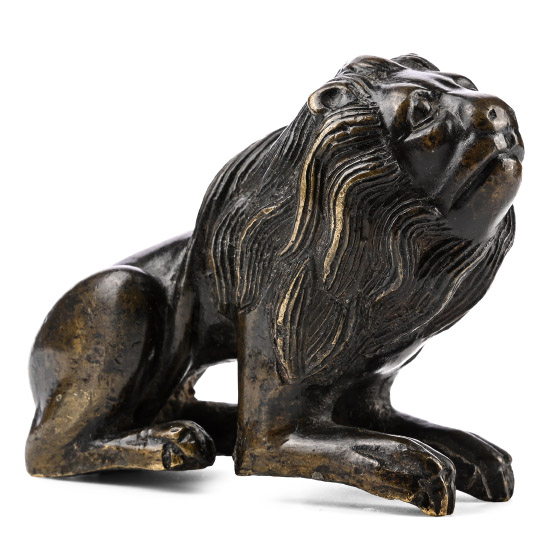
Nuremberg Brass Lion Statue
Germany, 16th century A.D.Estimate: £500 - 700 (+bp*)
Opening Bid: £250
Modelled in a half-seated pose, gazing upwards with compact body, broad forequarters, the mane rendered in long, parallel strands; the tail emerging from underneath the body and resting diagonally on top of the neck. 855 grams, 96 mm
Acquired on the European art market.
The treatment reflects the continuation of late Gothic conventions within German workshops, while also aligning with the more classicising tendencies found in North Italian bronze production of the period. The anatomical structure is simplified yet purposeful, characteristic of functional or cabinet bronzes produced across central Europe in the sixteenth century. Its scale and form correspond to small bronzes intended for Kunstkammer settings or as elements within larger composite objects such as inkstands or caskets, where the lion served as an emblem of vigilance, authority, and learned taste. -
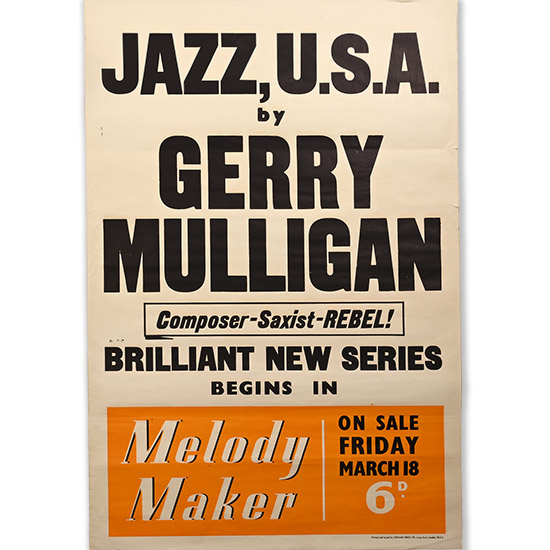
Jazz, U.S.A. by Gerry Mulligan Original Advertising Poster
Circa March 1955 A.D.Sold for (Inc. bp): £416
Off-white ground with black overprinted text and spot yellow block; 'Melody Maker' advertising poster; footnote 'Printed and issued by Odhams Press, Long Acre, London WC2'. 22 grams, 76.2 x 50.6 cm
30 x 20 in.
Acquired on the UK art market. Property of a Harwich, UK, collector.
Gerry Mulligan was an important 20th century composer, arranger, saxophonist and conductor, who played a leading role in the development of jazz and contemporary music. The poster advertises a serialised commentary on the contemporary music scene which appeared in 'Melody Maker'. The footnote reference is to the Odhams publishing venture which folded in 1968.
