
Loading, please wait...
LOT 0360
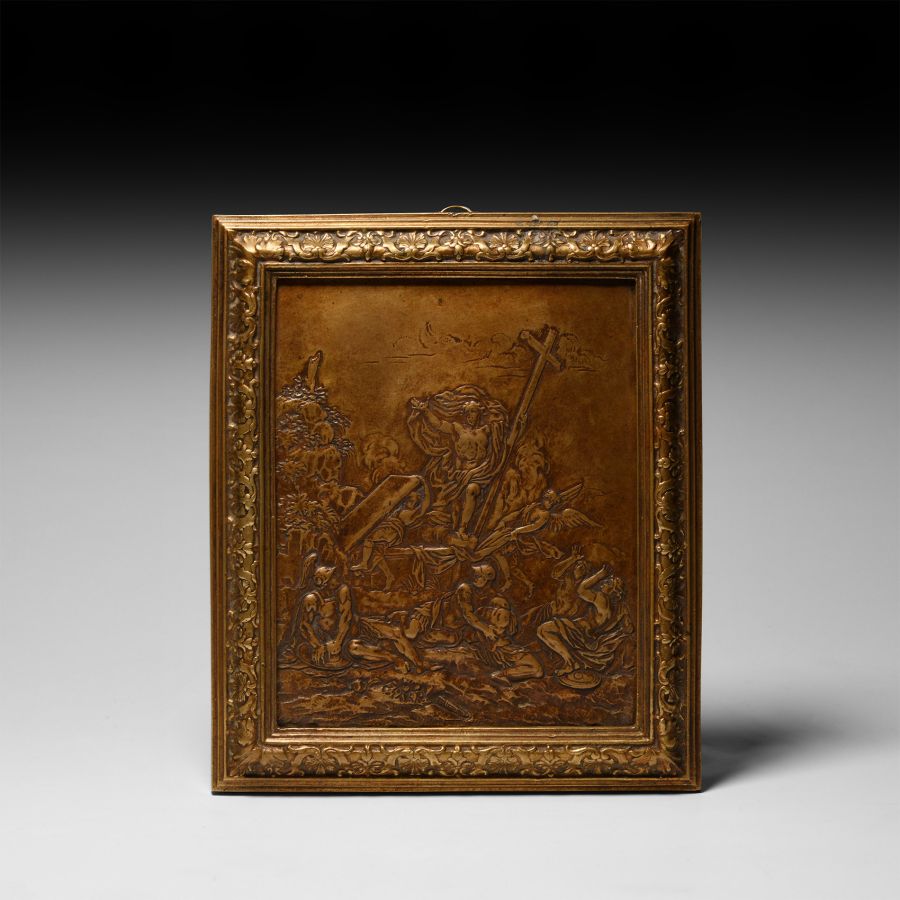
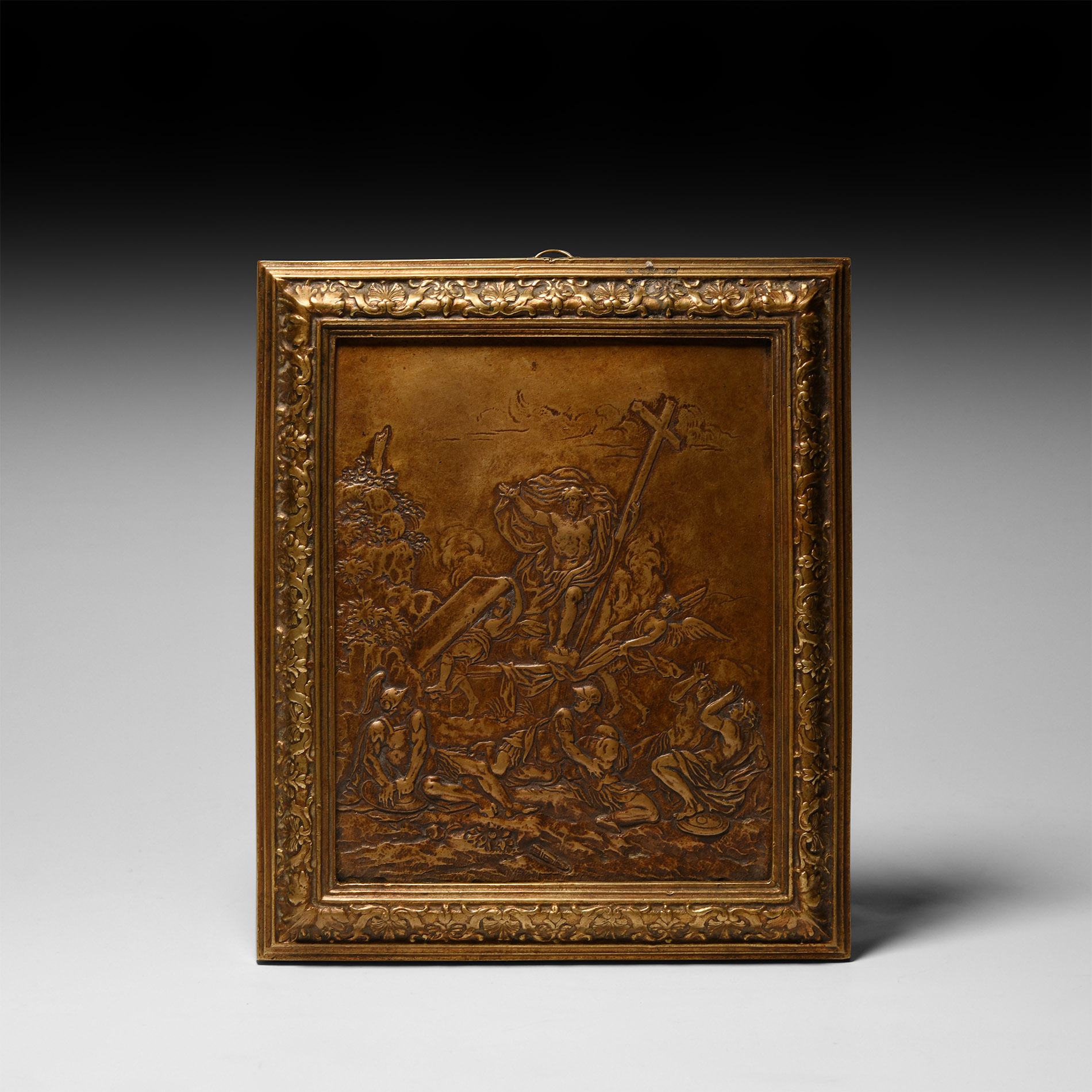
Post Medieval Copper Plaque with Resurrection Scene
18TH-19TH CENTURY A.D.
5 3/4 x 6 3/4 in. (666 grams, 14.5 x 17 cm).
A bronze repoussé plaque depicting Christ triumphant bearing a cross while Roman soldiers open the sarcophagus; mounted in a bronze frame.
ProvenanceEnglish private collection.
CONDITIONTimeLine Auctions follows a vetting process to ensure the authenticity and legality of all items, reinforcing our commitment to integrity and responsible trading. Each antiquity, antique, and coin lot undergoes thorough examination by a vetting committee of at least ten external specialists, professional trade association members, scientists, and archaeologists: Our Vetting Process
AUCTIONS:
TimeLine is a leading auction house specialising in antiquities, ancient art, collectables, natural history, coins, medals, and books. Our auctions offer museums, collectors, historians, and enthusiasts the opportunity to acquire unique and historically significant pieces.
LOT 0360
Post Medieval Copper Plaque with Resurrection Scene
Estimate £800 - 1,000€930 - 1,160 (for guidance only)$1,080 - 1,350 (for guidance only)
-
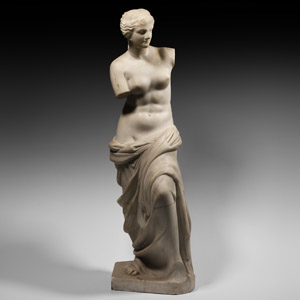
Venus of Milo Statue
19th century A.D.Estimate: £1,200 - 1,700 (+bp*)
Opening Bid: £600
A white marble copy of the famous Venus of Milo, naturalistically portrayed with her garment having fallen from her shoulders, hanging loose at her waist and exposing her breasts. 34.8 kg, 77 cm high
French collection, 1960s-early 2000s. From an important Paris gallery, France.
Aphrodite of Milos, better known as the Venus of Milo, is an ancient Greek statue and one of the most famous works of ancient Greek sculpture known today, created between 130-100 years B.C. The original is currently displayed at the Louvre in Paris. -
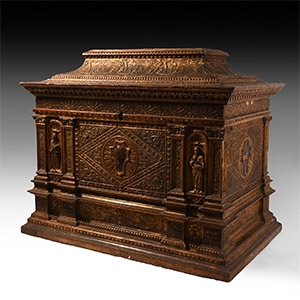
Northern Italian Gilt Wooden Casket
18th-19th century A.D.Estimate: £4,000 - 6,000 (+bp*)
Opening Bid: £2,000
An architectural gilt wooden casket with hinged lid; the exterior with billeting, egg-and-dart ornament and gadrooning, flowering vegetal schemes over the whole; the two principal faces each with a central heater shield painted with heraldic devices, flanked by robed standing figures holding a book each within a niche and with a palmette motif above; remains of polychrome to the shields and elsewhere. 69.5 x 44.5 cm
English private collection. This lot has been checked against the Interpol Database of stolen works of art and is accompanied by search certificate number no.11679-199810
The arms are quartered: or an eagle sable; sable a demi-lion rampant or issuant from a fess; sable a mullet of eight points or; or a lion's head erased sable; the repetition of the colours 'or' gold and 'sable' black may be due to the overall colour-scheme of the casket. The timber shows some old insect flight holes and we are advised that this piece has been recently treated with Permethrin, as a precaution. -
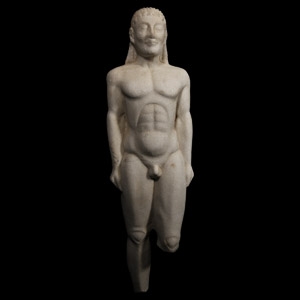
Marble Archaic Kouros Statue
20th century A.D.Sold for (Inc. bp): £1,690
A Greek style marble archaic kouros statue carved with braided hair held by a diadem, arms held straight at the sides, legs in advancing pose. 16.5 kg, 71 cm high
French collection, 1960s-early 2000s. From an important Paris gallery, France.
The kouros (free-standing nude male youth) first appeared in ancient Greece in the Archaic Greek period; kouros figures have been found across the Greek-speaking world, concentrated mainly in sanctuaries of Apollo. The term means ‘male youth, particularly one of noble rank’; when a pubescent boy came of age in ancient Greece, he was known as a kouros, at which point he could participate in the initiation feast of the brotherhood. The god Apollo was known as the greatest kouros. Typically life-sized, these figures were produced in marble, but have also been found in limestone, wood, bronze and terracotta. The female counterpart is the kore.
