
Loading, please wait...
LOT 2116
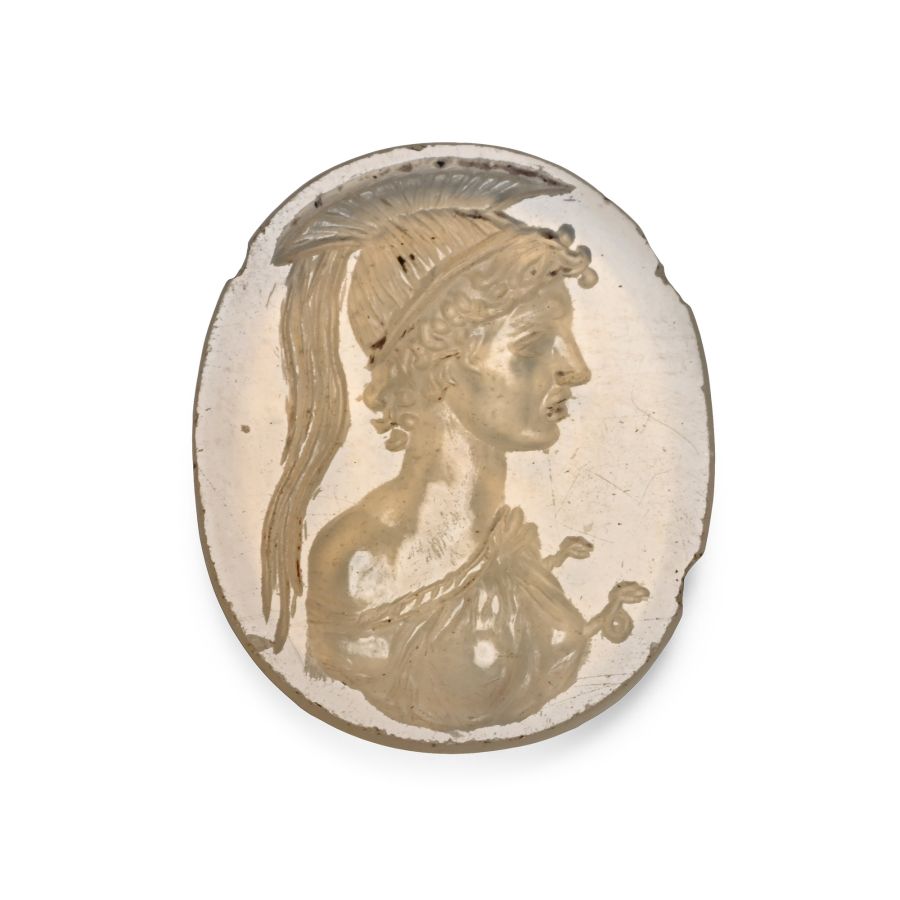
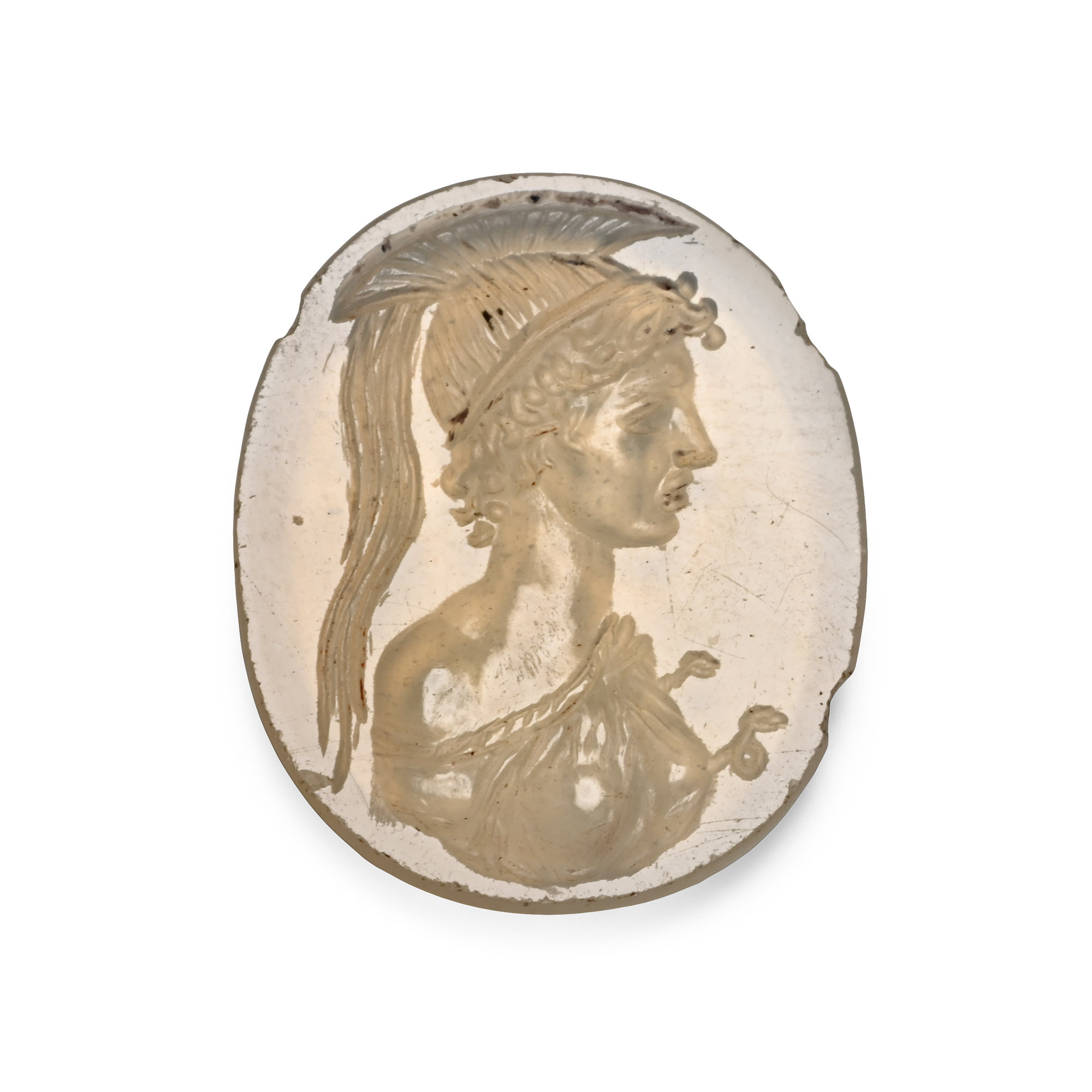
Post Medieval Chalcedony Gemstone with Bust of Minerva
18TH CENTURY A.D.
3/4 in. (1.5 grams, 20 mm).
Translucent cameo with the profile bust of Goddess Minerva wearing a crested helmet.
ProvenanceAcquired on the European art market.
CONDITIONTimeLine Auctions follows a vetting process to ensure the authenticity and legality of all items, reinforcing our commitment to integrity and responsible trading. Each antiquity, antique, and coin lot undergoes thorough examination by a vetting committee of at least ten external specialists, professional trade association members, scientists, and archaeologists: Our Vetting Process
AUCTIONS:
TimeLine is a leading auction house specialising in antiquities, ancient art, collectables, natural history, coins, medals, and books. Our auctions offer museums, collectors, historians, and enthusiasts the opportunity to acquire unique and historically significant pieces.
-
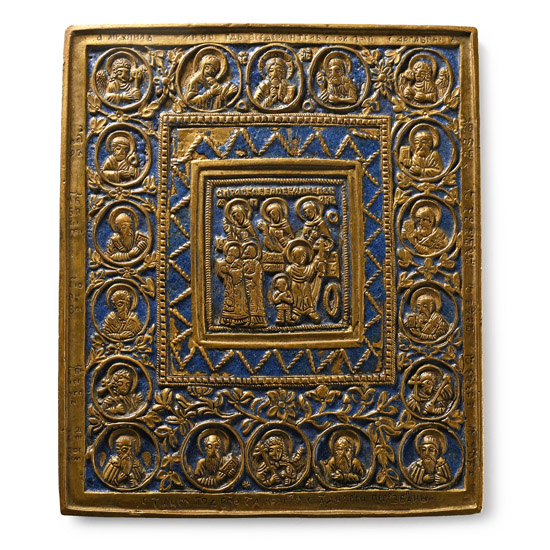
Russian Orthodox Enamelled Bronze Travel Icon with Saint Julitta, Cyricus and Deesis
19th century A.D.Sold for (Inc. bp): £234
With blue enamel and framed by a raised border; Saint Julitta and her son, Cyricus, Saint Gregory the Theologian and Saint John the Chrysostom standing beside them at the centre; three half-length figures above: St. Paraskeva (right), Eudokia, and Barbara (left); OCS inscriptions identifying the saints framing the scene; on the top a deesis, with Christ Pantokrator at the centre, flanked by Saint Mary and Saint John the Precursor; at the top left corner Archangel Michael, on the top right corner the Archangel Gabriel; beneath Saint Gabriel, in vertical order, Saint Paul, Saint Gregory the Theologian, Saint Nicholas of Myra, Saint Demetrios; beneath Saint Michael, in vertical order, Saint Peter, Saint Basil the Great, Saint John Chrysostomos and Saint George; in the last row, nearby Saint Andrew, at the centre, the Archangel Raphael, with sword and cross. 360 grams, 14 cm
Acquired from Chris Martin-Zakheim, Iconastas, 5 Piccadilly Arcade, London SW1. From the private collection of a West London, UK, gentleman, formed since the early 2000s.
This icon was intended for private devotion, often carried by pilgrims and Orthodox believers for spiritual protection. St. Julyttas and her son Cyricus (Ки́рик и Иули́тта), among the most venerated figures in Russian tradition, are depicted in the centre, surrounded by other saints, a symbol of the communion of the righteous in front of the Divine Deesis. -
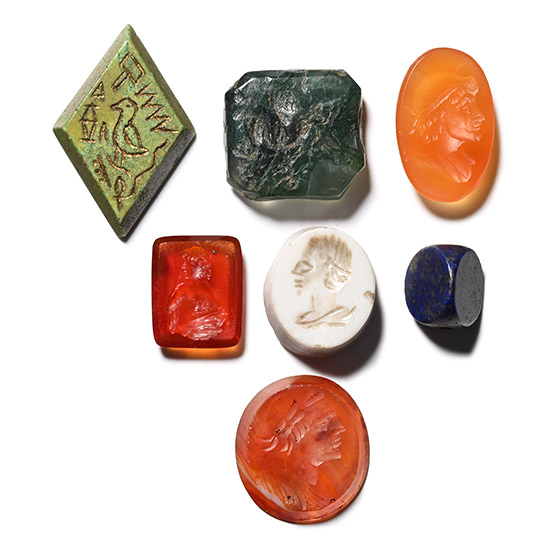
Post Classical Gemstone Collection
19th century A.D.Sold for (Inc. bp): £143
Comprising: three carnelian intaglios with profile busts; an agate intaglio with profile bust; a lozenge-shaped intaglio with bird and other symbols, possibly made of stained bone; an octagonal green stone intaglio with worn motif; and a lapis lazuli bead. 9.71 gram stotal, 9-24 mm
Acquired on the European art market. -
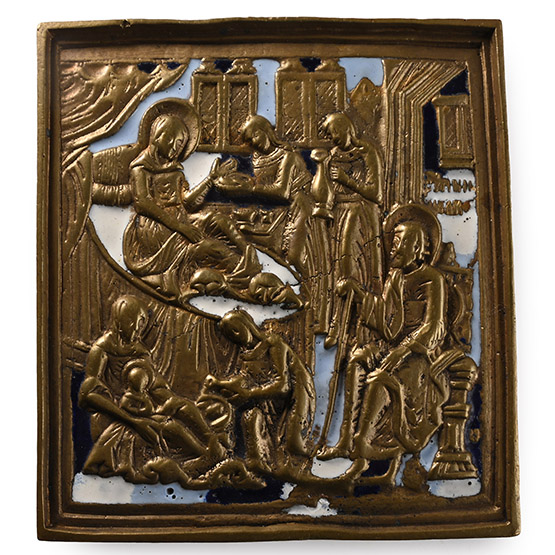
Russian Orthodox Enamelled Bronze Travel Icon with the Birth of the Virgin
19th century A.D.Sold for (Inc. bp): £494
Presenting an architectural setting with figures in two chambers framed with cornices, columns and furnitures; the upper chamber showing Saint Anna in birthing bed with two attendants; the lower room with two attendants bathing an infant; on the right Saint Joachim seated upon a cathedra; Old Slavonic inscription reciting ‘The birth of the most holy mother of God’. 230 grams, 98 mm
Acquired from Chris Martin-Zakheim, Iconastas, 5 Piccadilly Arcade, London SW1. From the private collection of a West London, UK, gentleman, formed since the early 2000s.
According to the Protoevangelium of James, Mary's parents were called Anna and Joachim and conceived Mary at a late age.
