Loading, please wait...

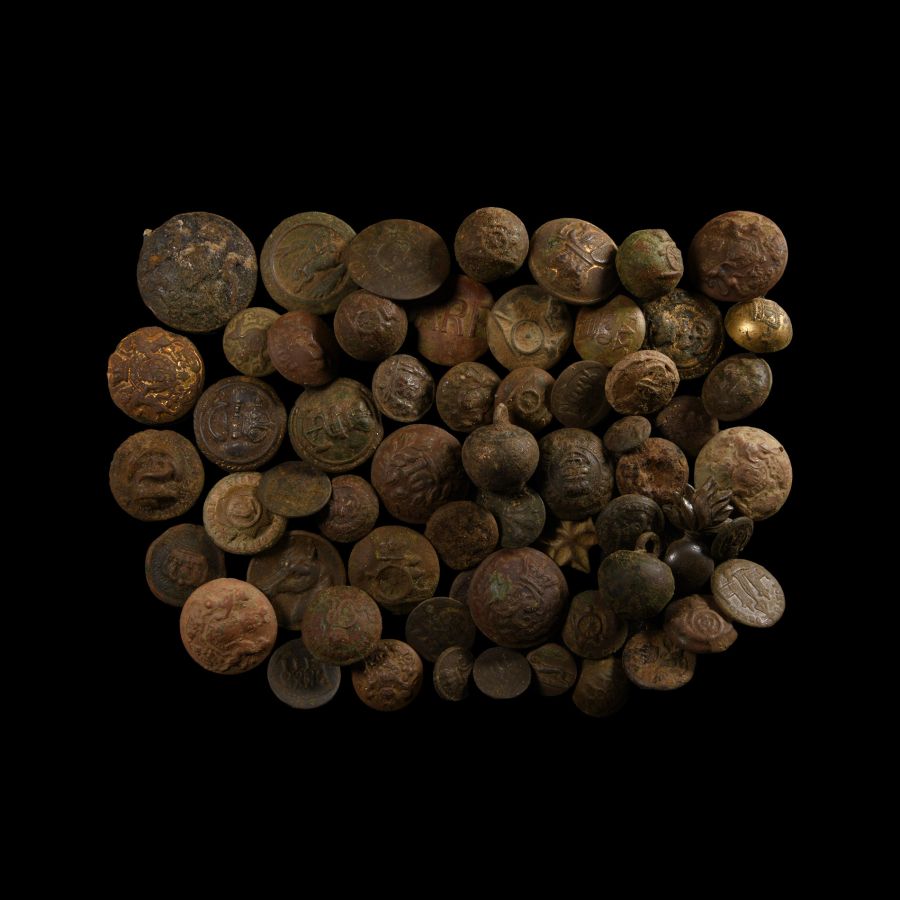
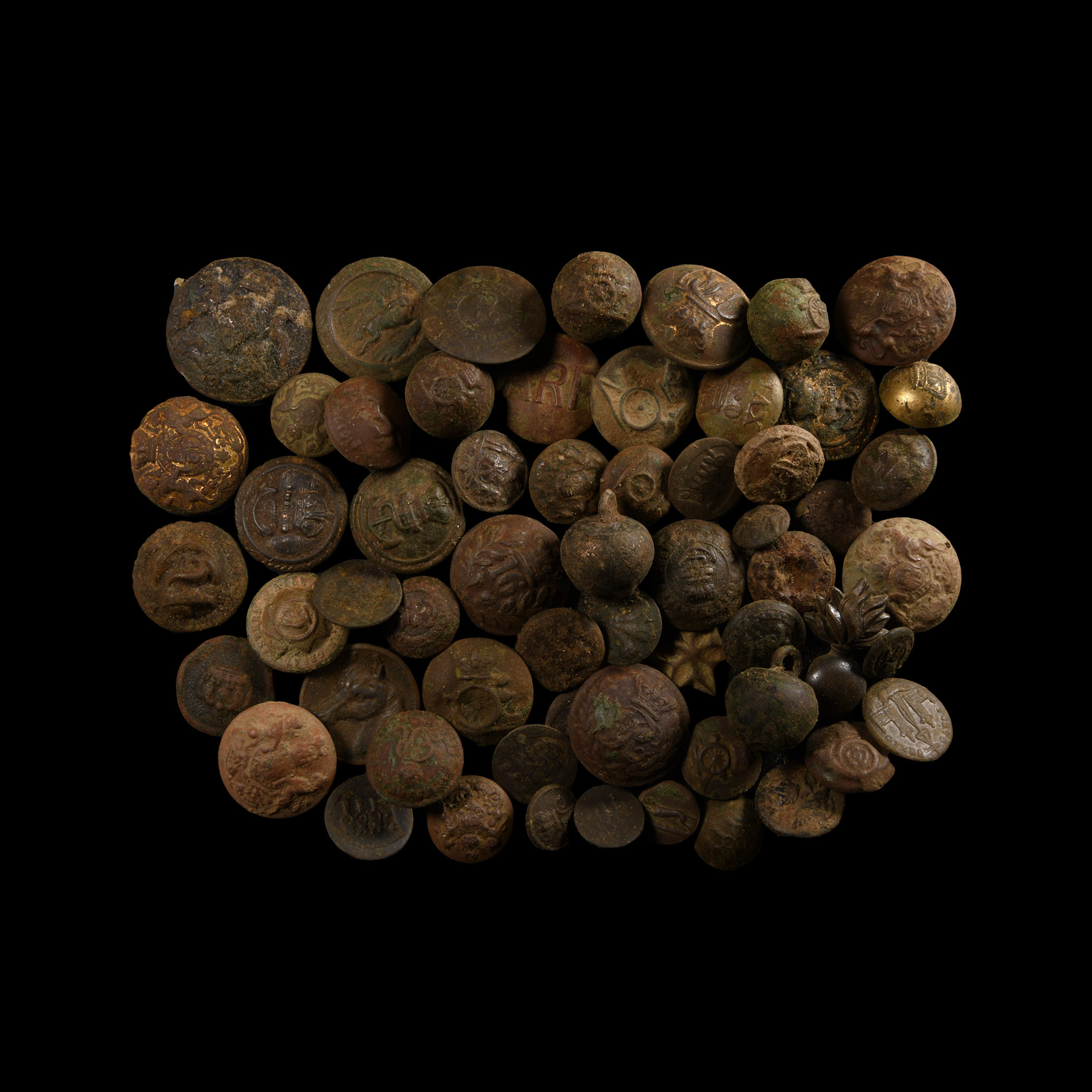
Post Medieval Button Group Post Medieval Button Group Post Medieval Button Group
Use mousewheel to zoom in and out, click to enlarge
Details

LOT 1415

Post Medieval Button Group

19TH-20TH CENTURY A.D.

1/2 - 1 1/8 in. (196 grams total, 12-29 mm).

A mixed group of mainly bronze buttons including figural, armorial and military types. [58, No Reserve]

Provenance

Found Suffolk.

CONDITION
VETTING:

TimeLine Auctions follows a vetting process to ensure the authenticity and legality of all items, reinforcing our commitment to integrity and responsible trading. Each antiquity, antique, and coin lot undergoes thorough examination by a vetting committee of at least ten external specialists, professional trade association members, scientists, and archaeologists: Our Vetting Process


AUCTIONS:

TimeLine is a leading auction house specialising in antiquities, ancient art, collectables, natural history, coins, medals, and books. Our auctions offer museums, collectors, historians, and enthusiasts the opportunity to acquire unique and historically significant pieces.

LOT 1415

Post Medieval Button Group

Sold for (Inc. bp): £26

Print page

RELATED LOTS
  • Russian Icon of the Hodegetria of Constantinople
    Russian Icon of the Hodegetria of Constantinople
    19th century A.D.

    Sold for (Inc. bp): £715

    An icon of Hodegetria with the Virgin wearing a red maphorion embroidered with gold, a dark veil and a dark chiton with double gold embroidery on the cuffs; holding the Child on her left arm and gesturing towards him with the right hand; the Child wearing a yellow brown, gold-woven chiton, holding a scroll in his left hand, while the right one is making the gesture of blessing; the angels Michael and Gabriel to the left and right of the Virgin; on each side of the head of the Virgin inscriptions 'ΜΡ' and 'ΘΥ' (Μήτηρ (τοῦ) Θεοῦ = Mother of God), inscription in Greek letters 'IC XC' (IHCOYC XPICTOC = Jesus Christ) above the child, three letters inside the nimbus of Christ representing the continuous divine self-existence of Christ as God ('O ѾN' = The Only One who always exists); the names of the angles inscribed next to each figure (Aghios Michail and Aghios Gavriil). 869 grams, 29.8 x 24 cm


    Property of a London lady, part of her family's collection.

    The painting is a copy of the famous replica of the Hodegetria of Constantinople, a Byzantine icon of 14th century, repainted by the icon painter Dionisi in 1482, and today preserved in State Tretyakov Gallery, Moscow. The original icon was destroyed by the Turks at the capture of Constantinople in 1453. The replica was venerated as an 'original' real Hodegetria in the Ascension Convent in Kremlin, Moscow. The icon led the liturgical processions on June 23, August 26, May 21 and October 22 in which the Patriarchs and the Russian Tsars took part.

    Lot Details

  • Stuart Period Gold Renaissance Memento Mori Signet Ring with C.L. and Skull
    Stuart Period Gold Renaissance Memento Mori Signet Ring with C.L. and Skull
    17th century A.D.

    Sold for (Inc. bp): £19,500

    A substantial gold signet ring composed of a lentoid-section hoop, expanding capital style shaped shoulders and irregular octagonal bezel engraved with a skull, two flowers below separating the reversed initials in capitals: 'CL', framed by a beaded border. 15.65 grams, 27.14 mm overall, 22.68 mm internal diameter (approximate size British X, USA 11 1/2, Europe 26.29, Japan 25)


    Acquired in the 1980s. Property of a London gentleman. This lot has been checked against the Interpol Database of stolen works of art and is accompanied by search certificate no.11664-197587.

    Signet rings were jewellery items serving practical functions, and were pressed into hot wax to seal letters and packets. Personal seals or secreta acted as a legal safeguard, since they were used to witness wills, loans, commercial, personal and other documents. Such rings were often engraved with a coat of arms, initials, merchant's mark or some other personal symbol. Painted portraits of this period portray the wearer with the signet ring on the thumb or forefinger, allowing for practical use. Skulls on rings were potent symbols of mortality. 'Memento mori' or 'remember that you must die' imagery served as a reminder to the Christian of the need to keep their soul in good order for the final judgment.

    Lot Details

  • Gold, Enamel, and Diamond-Set Skull Ring
    Gold, Enamel, and Diamond-Set Skull Ring
    Circa 1700 A.D.

    Sold for (Inc. bp): £4,212

    A Queen Anne period gold ring composed of a slender hoop with expanding shoulders formed as the ball-joints of long bones; bezel formed as an elongated stylised skull featuring large eye-sockets set with facetted diamonds; white enamelled teeth and head detailing; accompanied by a vintage ring box. 2.82 grams, 19.54 mm overall,17.22 mm internal diameter (approximate size British J 1/2, USA 5, Europe 9.32, Japan 9)


    Acquired from Berganza, Hatton Garden, London, 2016. Property of an East Sussex collector. Accompanied by a copy of the Berganza invoice. This lot has been checked against the Interpol Database of stolen works of art and is accompanied by search certificate no.11665-197583.

    Likely a ring of the memento mori genre. The V & A Museum states that during the 'Renaissance, the ring developed from the simple forms of the medieval period into a miniature work of art, combining the skills of the chaser, engraver and enameller as well as the stone cutter.'

    Lot Details

Stay up-to-date with the latest from TimeLine Auctions by joining our mailing list