
Loading, please wait...
LOT 2036
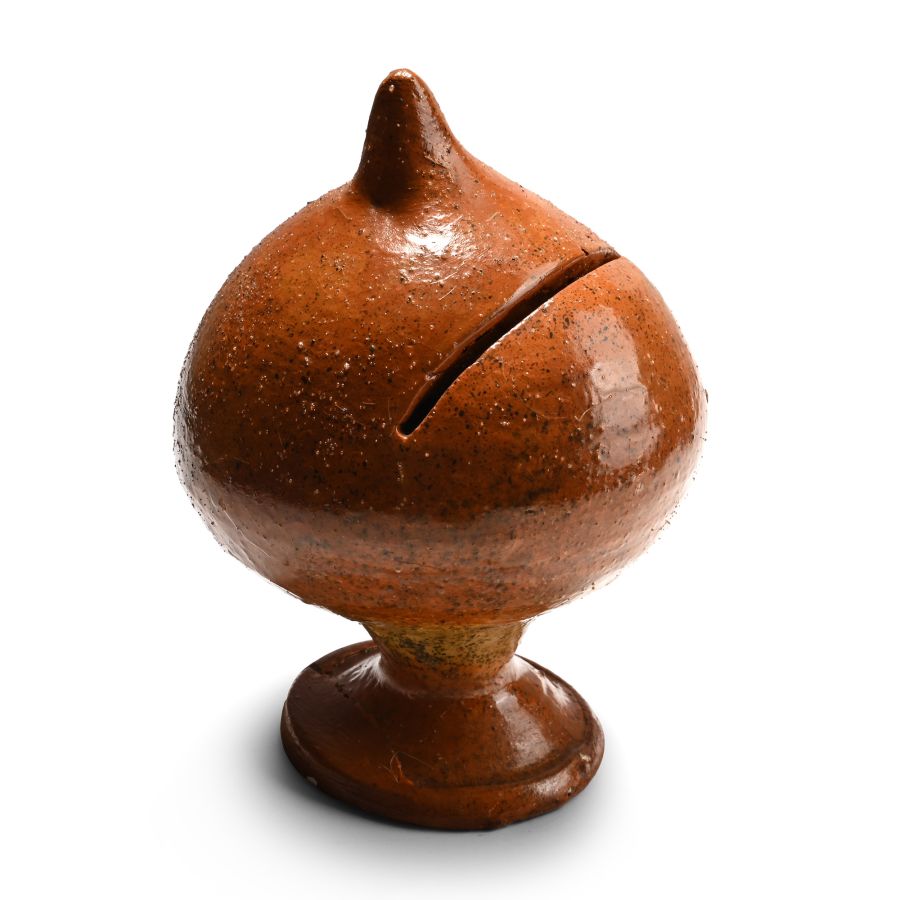
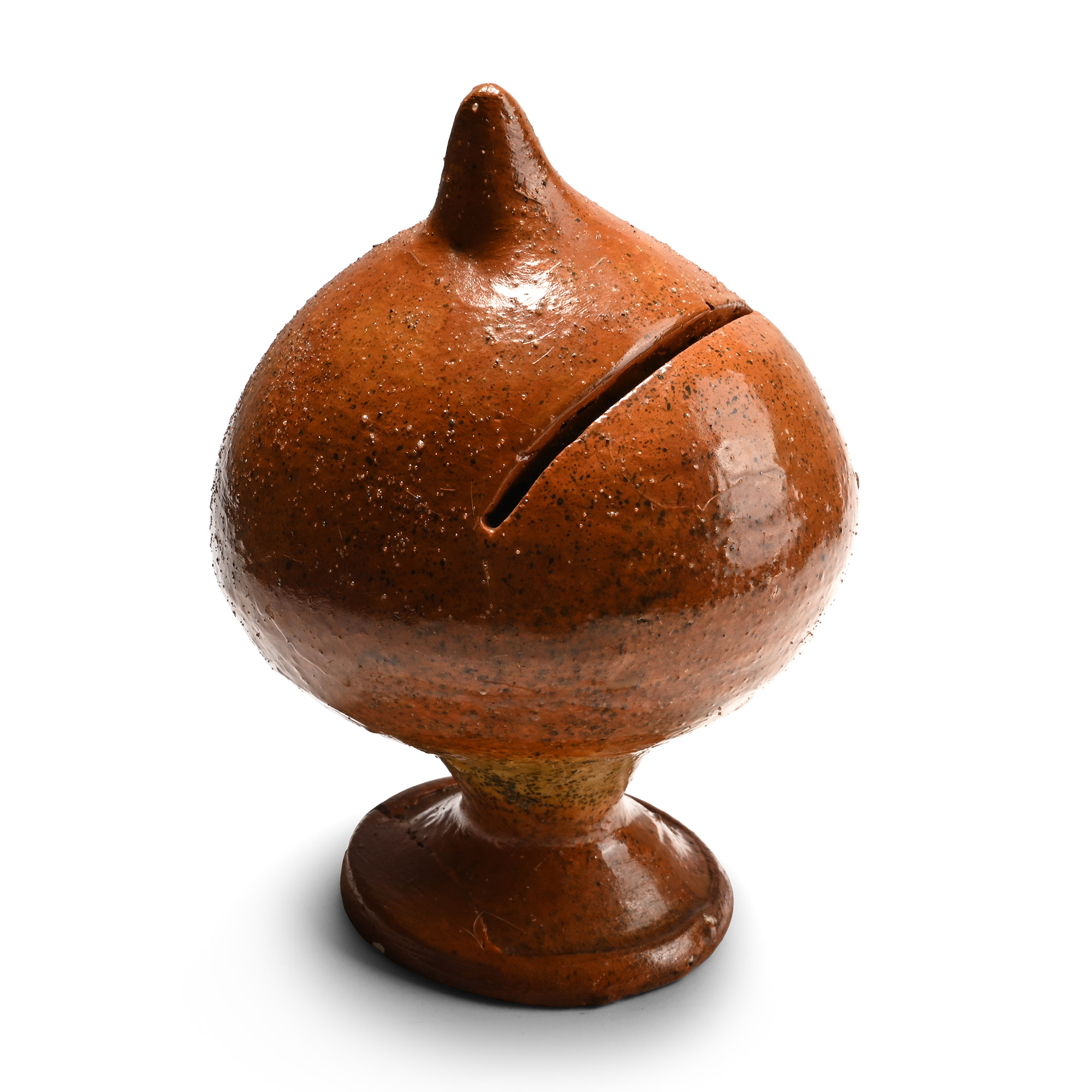
Post Medieval Brown Glazed Money Box
17TH-18TH CENTURY A.D.
4 7/8 in. (297 grams, 12.5 cm).
Hand-thrown pot with bulbous body and a trumpet-shaped foot; a wide slit to the upper part of the body. [No Reserve]
ProvenanceAcquired on the UK art market.
Property of a Kent, UK, lady collector.
Exhibited at the Harwich Museum, Harwich, Essex, UK, 8th June 2026-14th September 2026; accompanied by a copy of a photograph of the artefacts on display.
CONDITIONTimeLine Auctions follows a vetting process to ensure the authenticity and legality of all items, reinforcing our commitment to integrity and responsible trading. Each antiquity, antique, and coin lot undergoes thorough examination by a vetting committee of at least ten external specialists, professional trade association members, scientists, and archaeologists: Our Vetting Process
AUCTIONS:
TimeLine is a leading auction house specialising in antiquities, ancient art, collectables, natural history, coins, medals, and books. Our auctions offer museums, collectors, historians, and enthusiasts the opportunity to acquire unique and historically significant pieces.
-
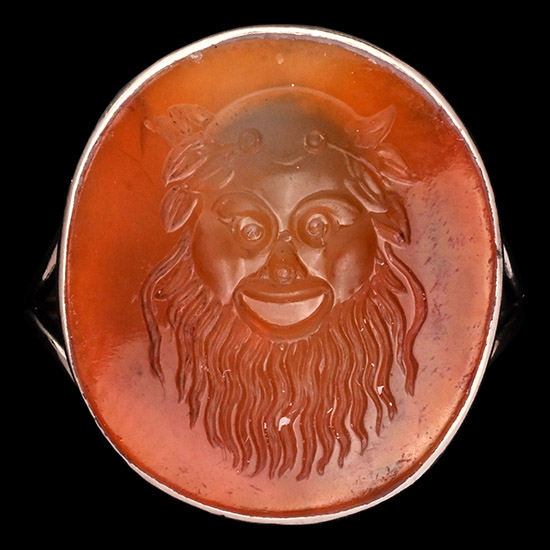
Georgian Gold Ring with Carnelian Gemstone with Head of Papposilenus
Italy, 18th century A.D.Estimate: £2,000 - 3,000 (+bp*)
Opening Bid: £1,000
Narrow hoop forked at the shoulders and supporting an oval open-backed setting with a slightly convex orange carnelian intaglio depicting the head of Papposilenus facing, wearing a wreath on his bald head, long beard and open mouth; supplied with a museum-quality impression. 3.31 grams, 21.59 mm overall, 18.67 mm internal diameter (approximate size British P, USA 7 1/2, Europe 16.23, Japan 15)
There is a stable internal fissure within the intaglio.
Acquired on the European art market. This lot has been checked against the Interpol Database of stolen works of art and is accompanied by search certificate number no.13317-257960.
The image, derived from Graeco-Roman mythology, represents Papposilenus, a semi-bestial figure with a round face dominated by a thick, unkempt beard and a completely bald head. The subject depicted is the eldest Silenus (the meaning of his name) and the wisest of Dionysus’s retinue; indeed, the infant Dionysus was entrusted to his care. -
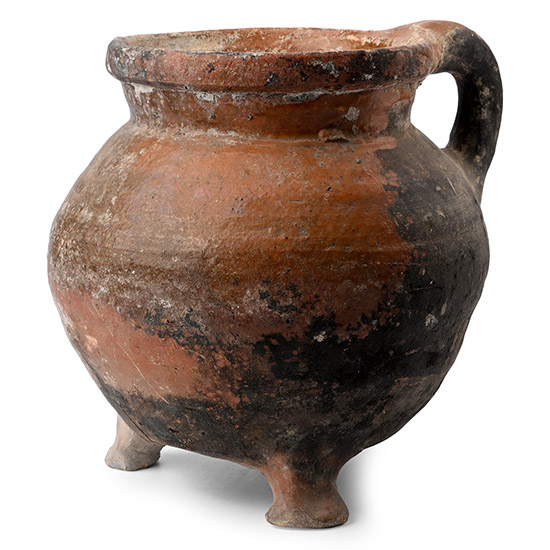
Tudor Period Glazed Ceramic Tripod Cooking Vessel
16th century A.D.Sold for (Inc. bp): £208
Comprising a bulbous body with an everted rim and a loop handle to the rear, three flaring feet on the underside. 1.05 kg, 20.6 cm wide
From a UK collection formed in the 1980s. Property of an Essex, UK, gentleman. -
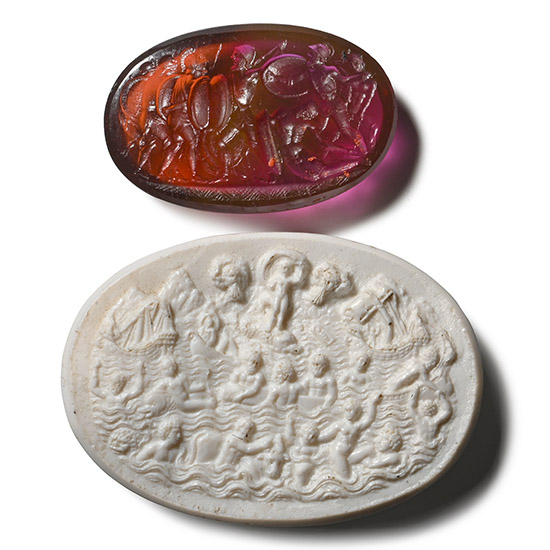
Renaissance Gemstone and Impression Group
18th century A.D.Estimate: £200 - 300 (+bp*)
Current Winning Bid: £30
Comprising: a two-tone oval glass intaglio showing a classical fighting scene; an impression of an intaglio showing a scene after a battle at sea with men in water and ships with broken masts. 17.76 grams total, 24-35 mm
Acquired on the European art market.
