
Loading, please wait...
LOT 2152
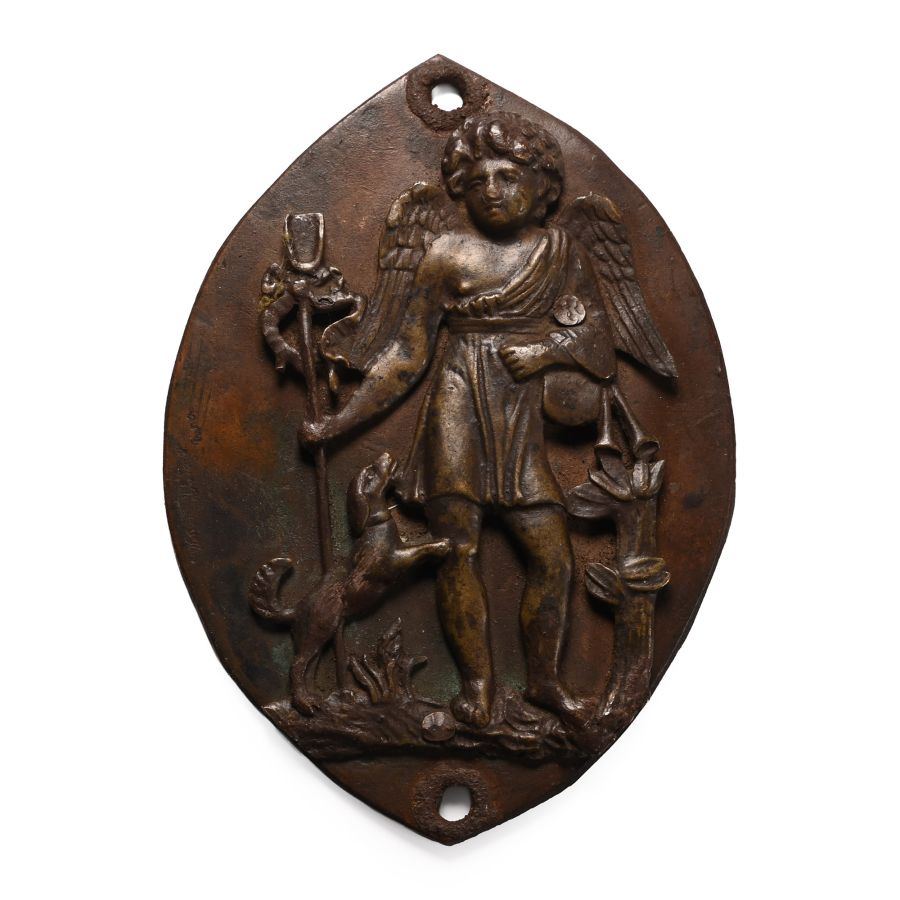
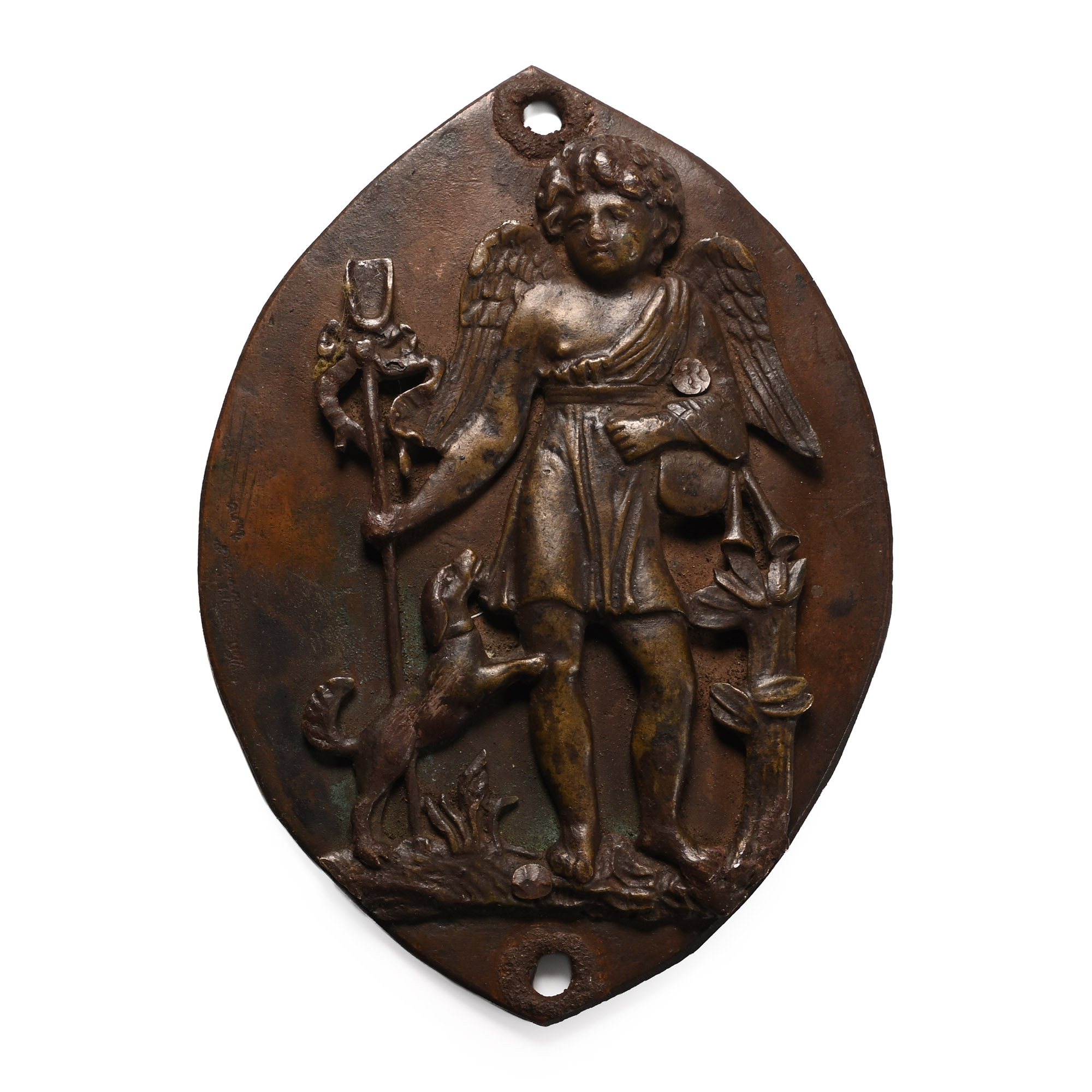
Post Medieval Bronze Vesica-Shaped Plaque with Saint
19TH CENTURY A.D.
4 1/2 in. (180 grams, 11.3 cm).
A lentoid plaque with an applied applique showing a standing winged saint holding a staff, dressed in a short tunic, a dog standing against his leg, possibly depicting St Roch, the patron saint of dogs. [No Reserve]
ProvenanceAcquired on the UK art market in the 1970s-1990s.
Property of a Nottinghamshire, UK, gentleman.
This lot is accompanied by an illustrated lot declaration signed by the Head of the Antiquities Department, Dr Raffaele D'Amato.
TimeLine Auctions follows a vetting process to ensure the authenticity and legality of all items, reinforcing our commitment to integrity and responsible trading. Each antiquity, antique, and coin lot undergoes thorough examination by a vetting committee of at least ten external specialists, professional trade association members, scientists, and archaeologists: Our Vetting Process
AUCTIONS:
TimeLine is a leading auction house specialising in antiquities, ancient art, collectables, natural history, coins, medals, and books. Our auctions offer museums, collectors, historians, and enthusiasts the opportunity to acquire unique and historically significant pieces.
-
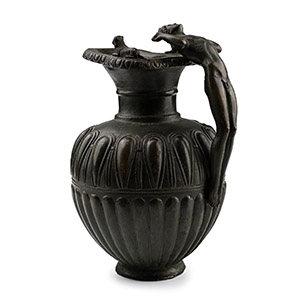
Bronze Grand Tour Greek Oinochoe
Italy, late 19th century A.D.Sold for (Inc. bp): £338
With flared rim, leaf pattern to the shoulder, handle formed as a kouros with arms flexed, hands reaching towards two dogs on the rim; fluted body decorated with lotus flower design. 1.24 kgm 17.8 cm
From the private collection of a S.W. London gentleman, acquired in the 1970s. This lot is accompanied by an illustrated lot declaration signed by the Head of the Antiquities Department, Dr Raffaele D'Amato.
Considered to be after a Corinthian model, stolen from the Museo Archeologico Nazionale, Taranto and now lost. -
.jpg)
Bronze Grand Tour Egyptian Sphinx
Italy, late 19th century A.D.Sold for (Inc. bp): £338
Hollow-formed miniature of a sphinx couchant with forelegs extended, wearing the nemes crown and with tasseled braid placed along the spine; mounted on a wooden display stand. 1.44 kg total, 25 wide including stand
From the private collection of a S.W. London gentleman, acquired in the 1970s. This lot is accompanied by an illustrated lot declaration signed by the Head of the Antiquities Department, Dr Raffaele D'Amato.
The most celebrated Sphinx in Egyptian mythology is the monument built near the pyramids as a protective symbol, to wish the pharaoh a peaceful afterlife. It has a leonine body and a human head. The Sphinx could be shown as male or female, depending on the pharaoh or queen it had to protect. The inclusion of sphinxes in temple complexes became a tradition lasting into the Roman period and Late Antiquity. Many pharaohs had their heads carved atop the guardian statues of their tombs, in part to show their close relationship with the powerful solar deity Sekhmet, a lioness. This cast bronze sphinx is a fine example of neoclassical sculptural art under the influence of Egyptomania and the renewed interest in the culture of ancient Egypt sparked by Napoleon’s Egyptian Campaign from 1798. At a time when only few could afford a trip to Egypt during the peak of Egyptomania contact could be made with Egyptian culture through literature, architecture and art. Particularly influential were Vivant Denon’s Voyage dans la Basse et la Haute Égypte, the Institute of Egypt's Description de l'Égypte, Robert Adams's interior decoration, Verdi’s Aida and the pedestal sphinxes protecting the obelisk of Tuthmosis III (Cleopatra's Needle). -
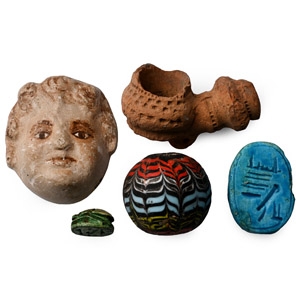
Post Medieval Artefact Collection
19th-20th century AD.Sold for (Inc. bp): £7
Including a polychrome hot-worked Javan bead, pipe bowl, scarabs and other items. 127 grams total, 17-54 mm
From the private collection of Kenneth Machin (1936-2020), Buckinghamshire, UK; his collection of antiquities and natural history was formed since 1948; thence by descent. This lot is accompanied by an illustrated lot declaration signed by the Head of the Antiquities Department, Dr Raffaele D'Amato.
