Loading, please wait...

Post Medieval Bronze Vanitas Relief with Skull and Crossed Bones Post Medieval Bronze Vanitas Relief with Skull and Crossed Bones Post Medieval Bronze Vanitas Relief with Skull and Crossed Bones Post Medieval Bronze Vanitas Relief with Skull and Crossed Bones Post Medieval Bronze Vanitas Relief with Skull and Crossed Bones Post Medieval Bronze Vanitas Relief with Skull and Crossed Bones
Use mousewheel to zoom in and out, click to enlarge
Details

LOT 1970

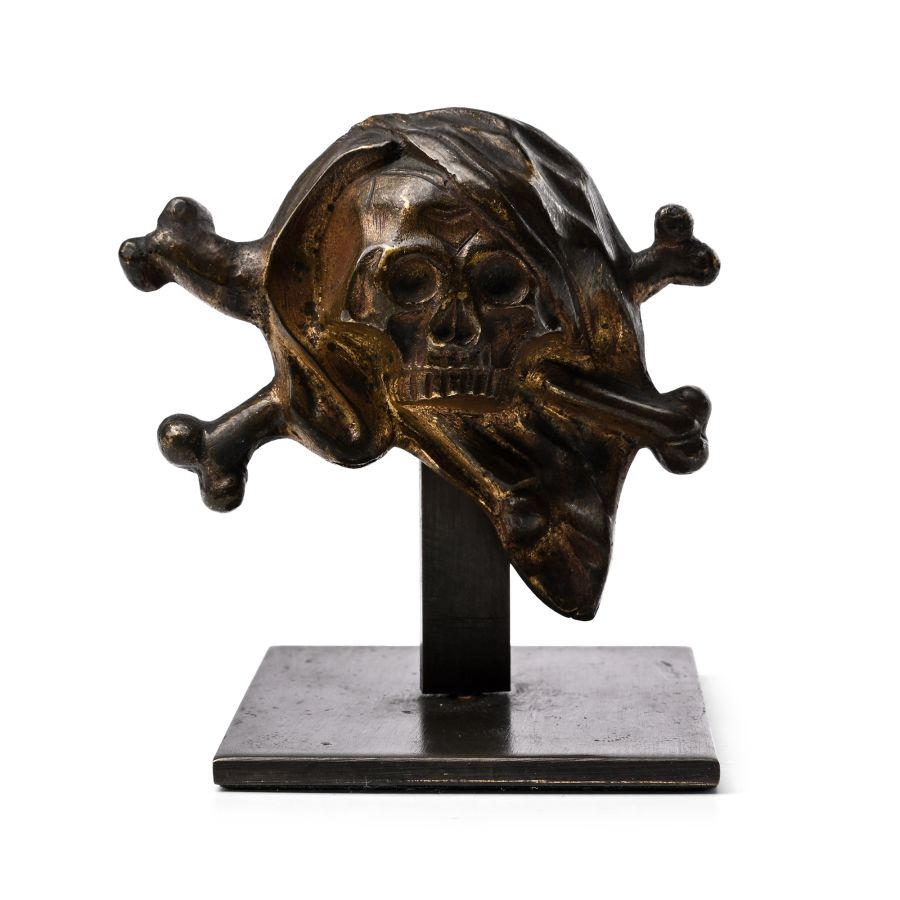
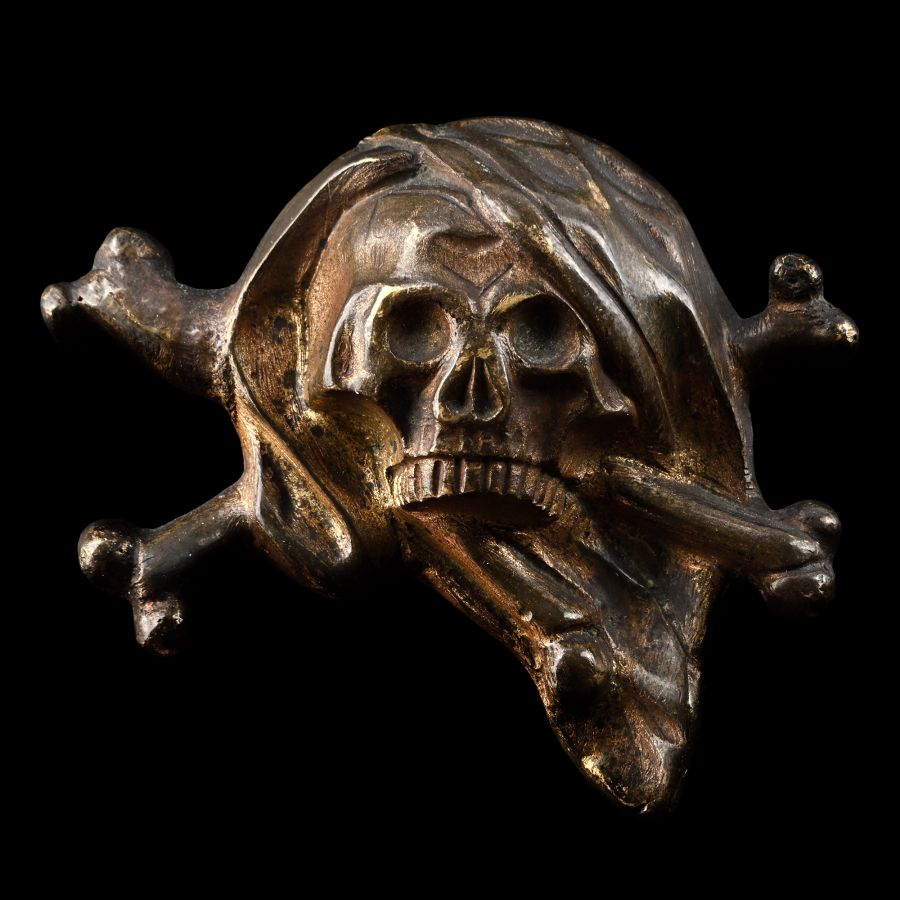
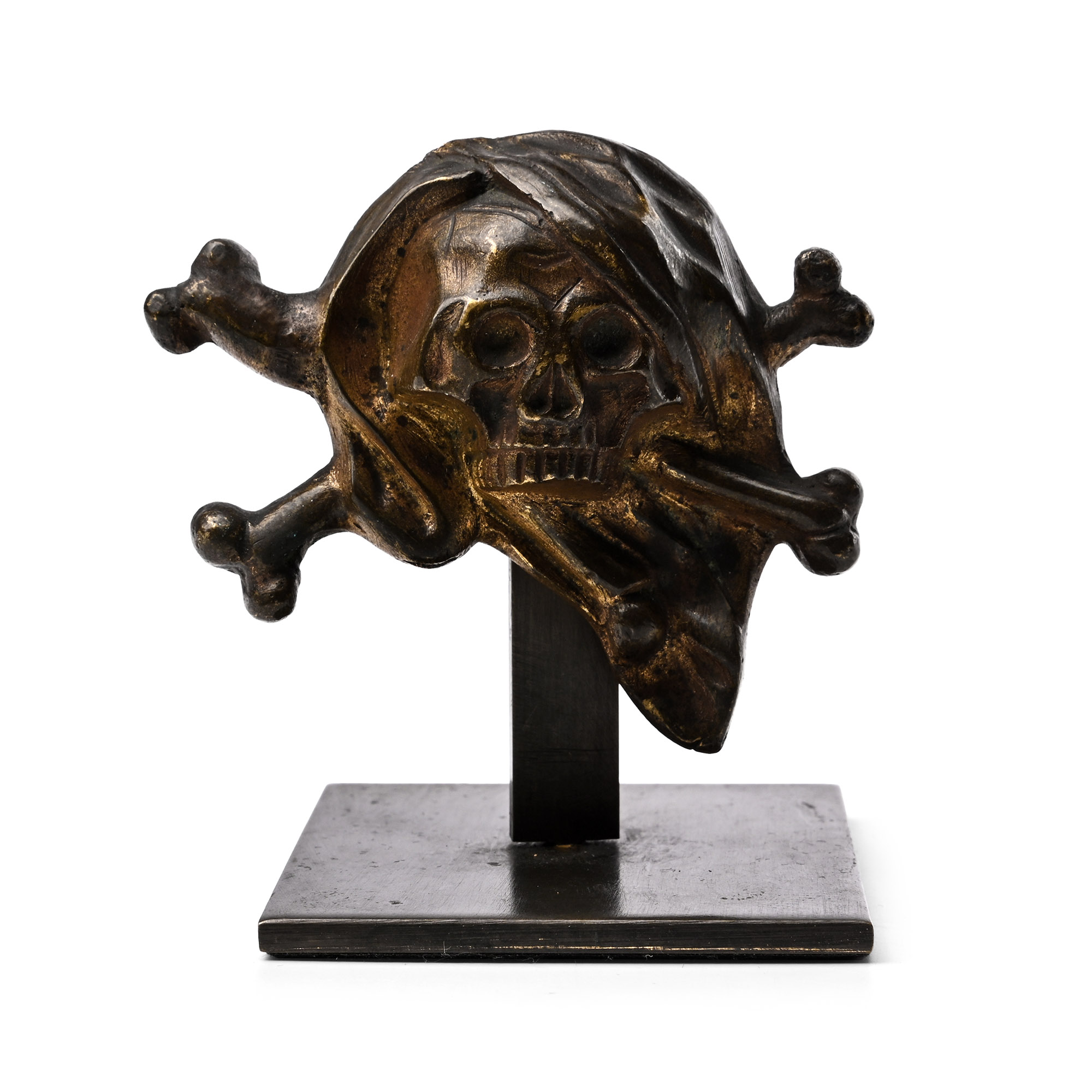
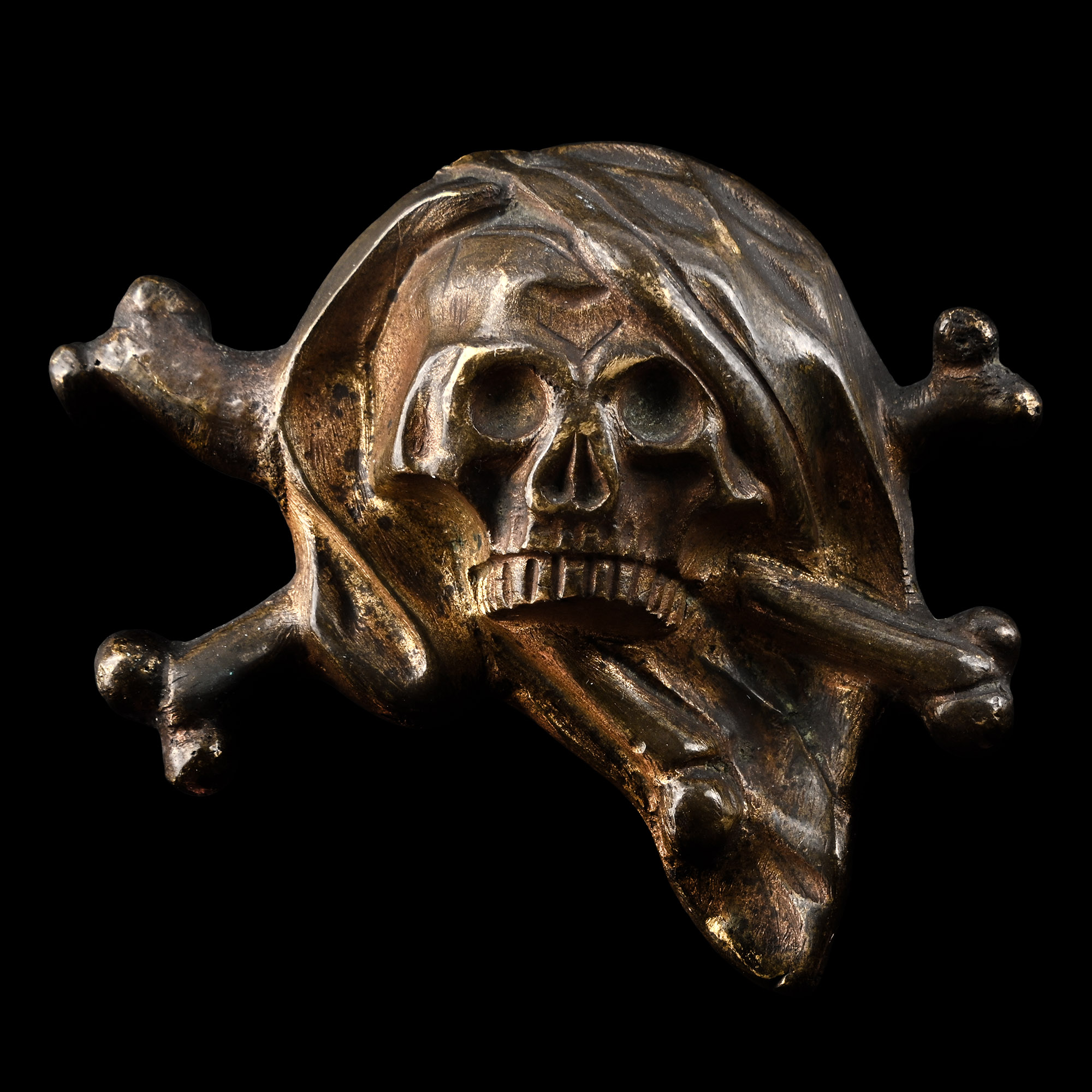
Post Medieval Bronze Vanitas Relief with Skull and Crossed Bones

GERMANY, 18TH CENTURY A.D.

2 5/8 in. (161 grams total, 66 mm high including stand).

Comprising a human skull and crossed long bones; mounted on a custom-made display stand.

Provenance

Private collection, Europe.
Acquired on the English art market.

CONDITION
VETTING:

TimeLine Auctions follows a vetting process to ensure the authenticity and legality of all items, reinforcing our commitment to integrity and responsible trading. Each antiquity, antique, and coin lot undergoes thorough examination by a vetting committee of at least ten external specialists, professional trade association members, scientists, and archaeologists: Our Vetting Process


AUCTIONS:

TimeLine is a leading auction house specialising in antiquities, ancient art, collectables, natural history, coins, medals, and books. Our auctions offer museums, collectors, historians, and enthusiasts the opportunity to acquire unique and historically significant pieces.

LOT 1970

Post Medieval Bronze Vanitas Relief with Skull and Crossed Bones

Sold for (Inc. bp): £468

Print page

RELATED LOTS
  • Renaissance Gold Ring with Agate Cameo of the Presentation of Christ at Jerusalem
    Renaissance Gold Ring with Agate Cameo of the Presentation of Christ at Jerusalem
    Italy, circa 1600 A.D.

    Estimate: £3,000 - 4,000 (+bp*)

    Opening Bid: £1,500

    Ellipsoid bezel with flange rim, inset cameo with a group of four adults holding an infant on a plinth; a rare subject for depiction. 8.91 grams, 24.68 mm overall, 19.41 x 17.44 mm internal diameter (approximate size British P 1/2, USA 7 3/4, Europe 16.86, Japan 16)


    Private collection, Europe. Acquired on the English art market. This lot has been checked against the Interpol Database of stolen works of art and is accompanied by search certificate number no.13152-248333.

    Lot Details

  • Russian Orthodox Enamelled Bronze Travel Icon with Saint Antipas of Pergamum
    Russian Orthodox Enamelled Bronze Travel Icon with Saint Antipas of Pergamum
    19th century A.D.

    Estimate: £250 - 350 (+bp*)

    Opening Bid: £135

    Representing Saint Antipas with a Gospel in his left hand and making the gesture of blessing with his right, dressed as a bishop, with sticharion, covered by omophorion, and surmounted by an epitrachelion; the Mandylion at the centre above the saint, Saint Mary on the left panel and Jesus on the right; Old Slavic inscription around the figures: 'ΙC ΧΡ' (Jesus Christ); 'ΜΡ ϴΥ'(Mother of God); Saint Antipas of Pergamum (Св Анти́па Перга́мский). 238 grams, 11.3 cm


    Acquired from Chris Martin-Zakheim, Iconastas, 5 Piccadilly Arcade, London SW1. From the private collection of a West London, UK, gentleman, formed since the early 2000s.

    The icon features meticulous craftsmanship typical of Orthodox iconography. Saint Antipas was popularly held to be a healer of tooth problems. He was martyred by burning in a brazen bull-shaped altar under the Emperors Nero or Domitian.

    Lot Details

  • Renaissance Carnelian Intaglio of the Roman Emperor Nero in Gold Ring
    Renaissance Carnelian Intaglio of the Roman Emperor Nero in Gold Ring
    Italy, 16th-17th century A.D.

    Sold for (Inc. bp): £1,755

    With narrow shank and fleur-de-lys to each shoulder supporting an ellipsoid cell with inset carnelian intaglio profile bust of Nero with solar crown; supplied with a museum-quality impression. 3.64 grams, 22.23 mm overall, 20.44 mm internal diameter (approximate size British P, USA 7 1/2, Europe 16.23, Japan 15)


    Private collection, Europe. Acquired on the English art market.

    Nero, who reigned as Roman Emperor from 54 to 68 AD, is one of history’s most infamous rulers, known for his extravagant lifestyle, ruthless rule, and controversial actions. Born as Lucius Domitius Ahenobarbus, he was adopted by his great-uncle, Emperor Claudius, and ascended the throne at the age of 16, initially under the guidance of his mother, Agrippina the Younger, his tutor Seneca, and the Praetorian Prefect Burrus. Early in his reign, Nero promoted arts and cultural projects and enjoyed popularity, but as he gained autonomy, he became increasingly tyrannical. He allegedly ordered the deaths of his mother, wife, and other prominent figures. Nero is often (though likely inaccurately) associated with the Great Fire of Rome in 64 AD, after which he blamed and persecuted Christians, marking one of the earliest recorded persecutions of the group. His reign ended in turmoil and revolt, leading to his suicide in 68 AD, which marked the end of the Julio-Claudian dynasty. His legacy remains controversial, remembered as both a patron of the arts and an archetype of a decadent, cruel autocrat.

    Lot Details

Stay up-to-date with the latest from TimeLine Auctions by joining our mailing list