
Loading, please wait...
LOT 1986
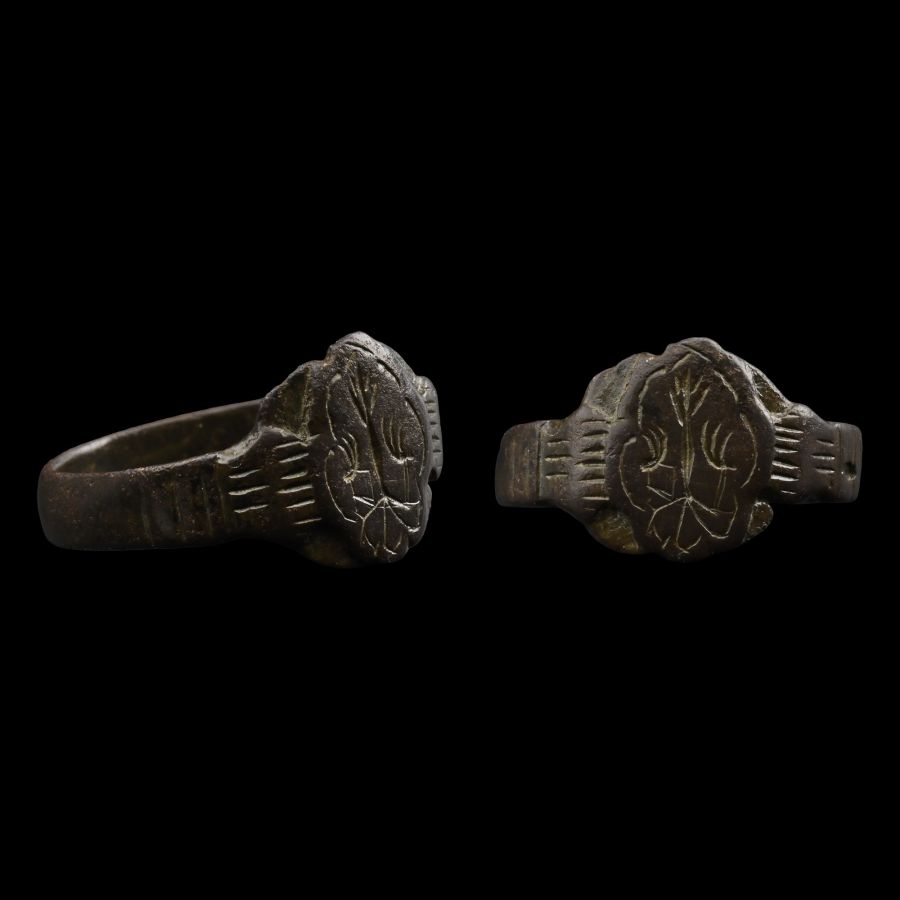
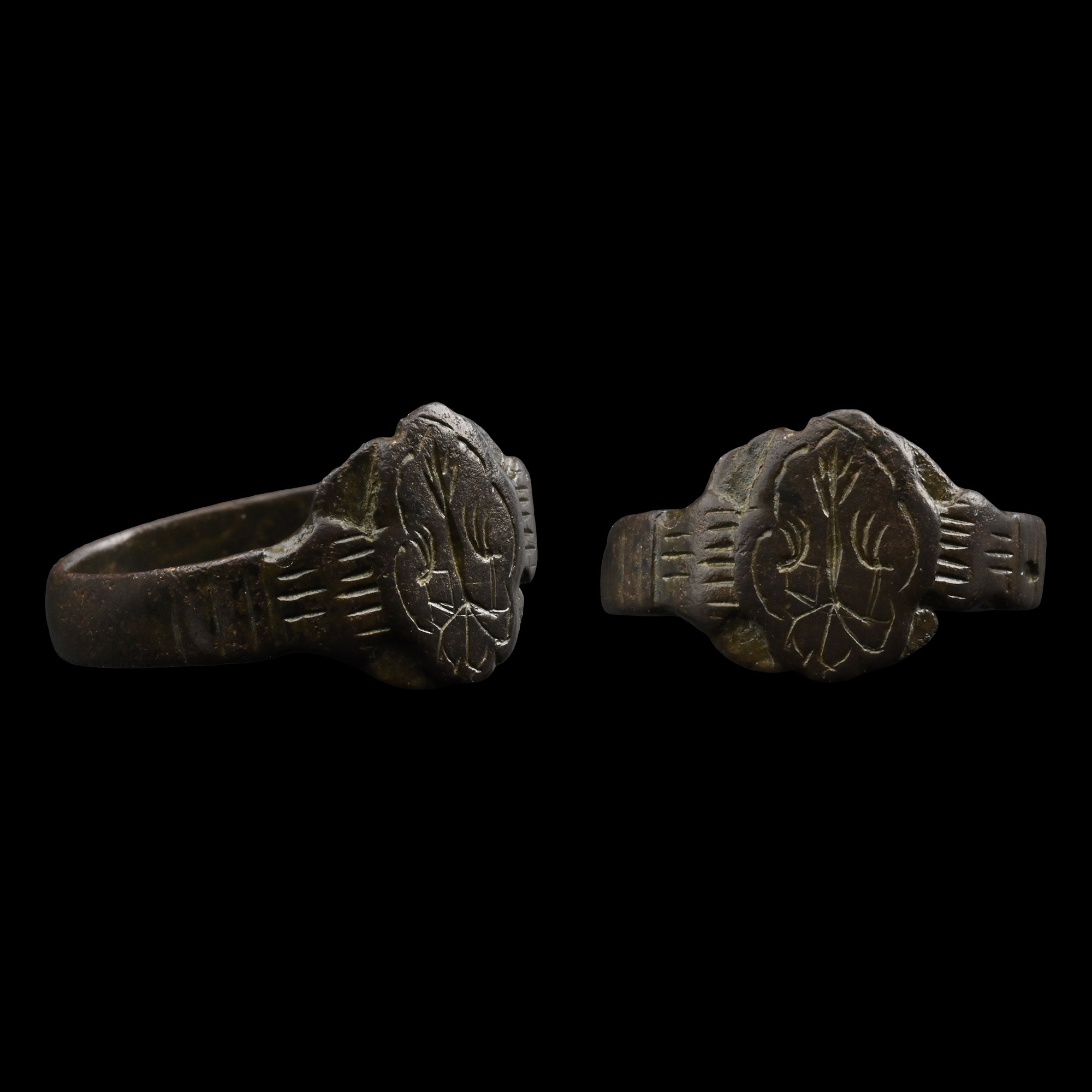
Post Medieval Bronze Ring with Bird
17TH-18TH CENTURY A.D.
3/4 in. (2.93 grams, 21.84 mm overall, 18.09 mm internal diameter (approximate size British P 1/2, USA 7 3/4, Europe 16.86, Japan 16)).
Flat-section hoop with hatched shoulders, plaque with raised panel, spread eagle motif lightly incised. [No Reserve]
ProvenanceEx German art market, 2000s.
Acquired from an EU collector living in London.
From the collection of a Surrey, UK, gentleman.
TimeLine Auctions follows a vetting process to ensure the authenticity and legality of all items, reinforcing our commitment to integrity and responsible trading. Each antiquity, antique, and coin lot undergoes thorough examination by a vetting committee of at least ten external specialists, professional trade association members, scientists, and archaeologists: Our Vetting Process
AUCTIONS:
TimeLine is a leading auction house specialising in antiquities, ancient art, collectables, natural history, coins, medals, and books. Our auctions offer museums, collectors, historians, and enthusiasts the opportunity to acquire unique and historically significant pieces.
-
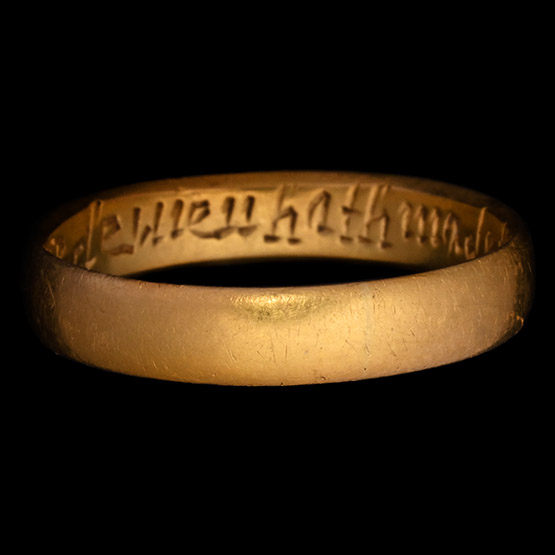
Large Post Medieval 'Providence Divine Hath Made Thee Mine' Gold Posy Ring
Circa 18th century A.D.Sold for (Inc. bp): £2,080
D-shaped in section with minuscule italic inscription to inner face 'prouidence deuien hath made thee mine'. 5.12 grams, 22.51 mm overall, 19.59 mm internal diameter (approximate size British T, USA 9 1/2, Europe 21.26, Japan 20)
From a collection which predates 1982. Property of a Somerset collector, UK, since circa 2013. -
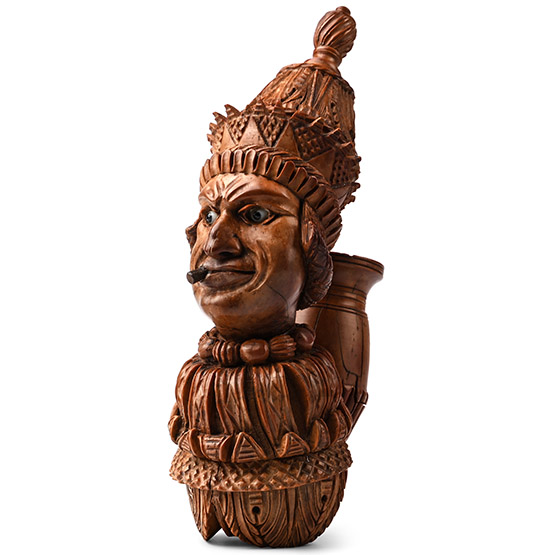
Post Medieval Figural Coquilla Pipe
French Colonies, 19th century A.D.Sold for (Inc. bp): £845
Bowl formed as a jester head with prominent hooked nose and insert glass eyes, smoking a cigar, wearing a crown and prominent necklace, removable cylindrical cap to the top of the head; ascending stem with ribbed bottom and everted flat rim at the back. 177 grams, 15.5 cm
Private collection, Europe. Acquired on the English art market. -
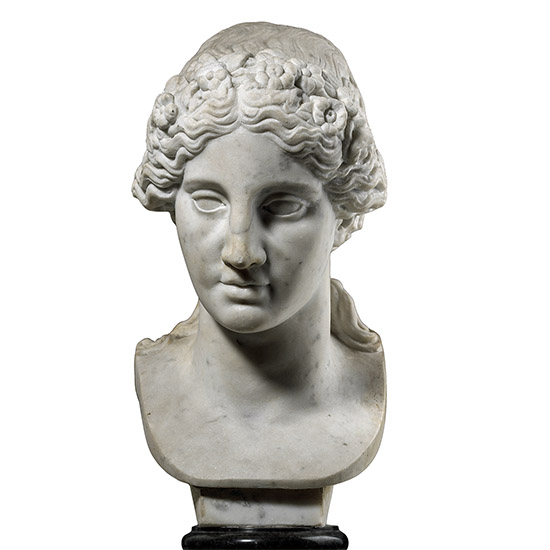
Marble Head of the Greek Goddess Aphrodite
18th-19th century A.D.Sold for (Inc. bp): £5,460
Modelled in the round as a bust of a youthful female, possibly Aphrodite with her hair bound by a narrow filet tied at the nape of the neck and the tails retained by a flat ribbon at the rear; the face perhaps modelled on the statue 'Aphrodite of Knidos' by Praxiteles; socket to crown of the head for attachment of a nimbus (now absent); mounted on a socle base. 12.6 kg, 40.5 cm
Acquired on the Los Angeles art market. Private collection, England. This lot has been checked against the Interpol Database of stolen works of art and is accompanied by search certificate number no.13095-249678.
This magnificent head of a woman with an elaborate hairstyle is in perfect harmony with the artistic works of several neo-classical sculptors of 18th century, yet subtly different from it in stylistic terms, like Giovanni Marchiori, and to the so-called stone Venus or Flora in the Museo Civico di Treviso.
