
Loading, please wait...
LOT 1488
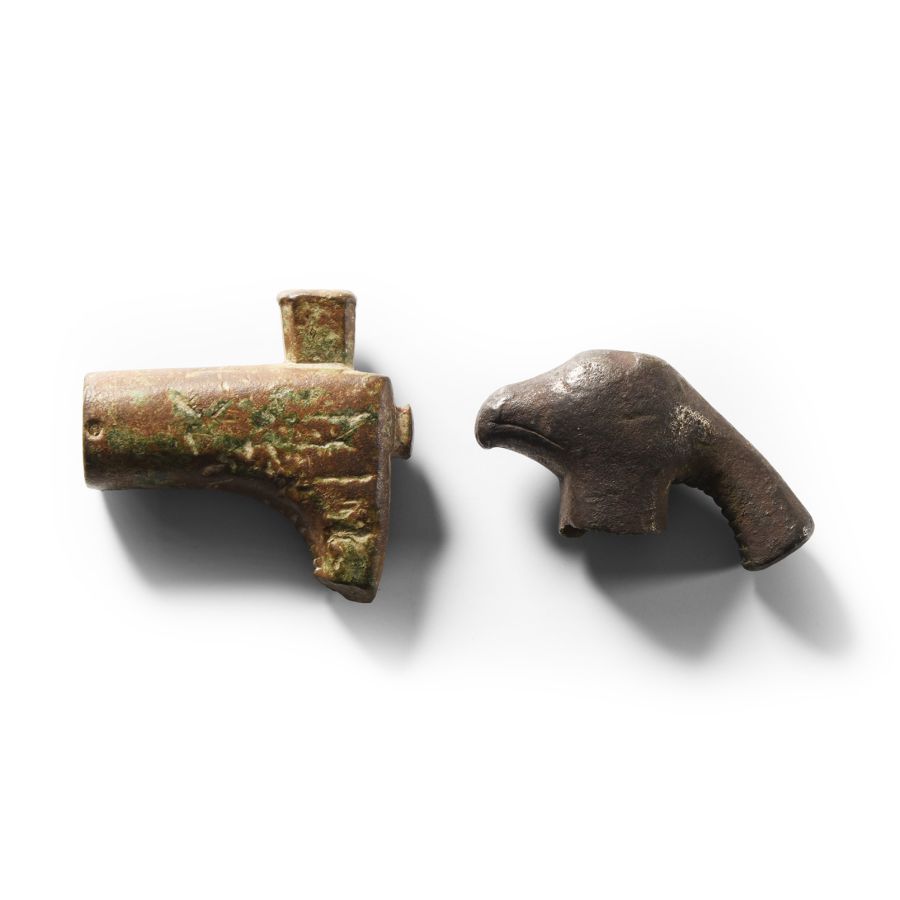
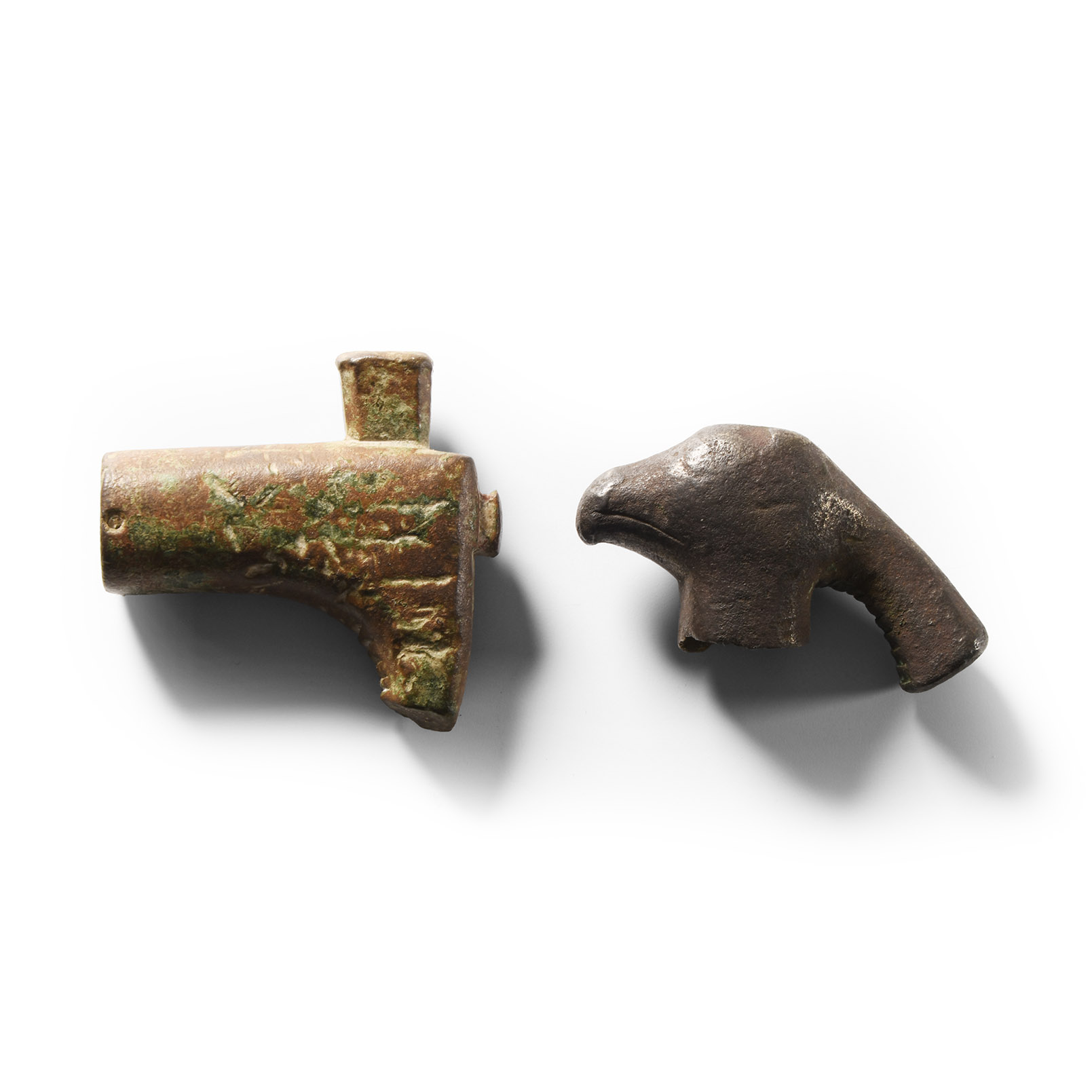
Post Medieval Bronze Riding Crop Terminal Group
CIRCA 18TH-19TH CENTURY A.D.
1 7/8 in. (129 grams total, 47-49 mm).
One formed with two square hatched striking faces, the other with stylised bird-head detailing. [2, No Reserve]
ProvenanceFound near Newbury, Berkshire, UK.
Property of a Stowmarket, UK, gentleman.
TimeLine Auctions follows a vetting process to ensure the authenticity and legality of all items, reinforcing our commitment to integrity and responsible trading. Each antiquity, antique, and coin lot undergoes thorough examination by a vetting committee of at least ten external specialists, professional trade association members, scientists, and archaeologists: Our Vetting Process
AUCTIONS:
TimeLine is a leading auction house specialising in antiquities, ancient art, collectables, natural history, coins, medals, and books. Our auctions offer museums, collectors, historians, and enthusiasts the opportunity to acquire unique and historically significant pieces.
-

Post Medieval Milky Green Jade Bracelet
19th-20th century A.D.Sold for (Inc. bp): £59
With a D-section polished hoop with rounded edges. 40.2 grams, 73 mm wide
UK private collection formed 1970s-1990s. Property of an East Sussex, UK, gentleman. -

Gold Expandable Ring
20th century A.D. or earlierSold for (Inc. bp): £338
Composed of a coiled hoop with faux-twisted body and coiled terminals. 7.28 grams, 25.14 mm overall, 19.97 mm internal diameter (approximate size British P, USA 7 1/2, Europe 16.23, Japan 15)
From the collection of a North American gentleman, formed in the 1990s. -
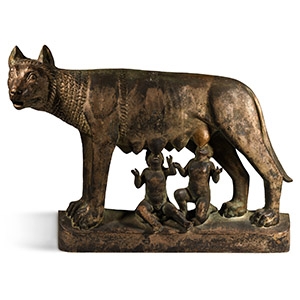
Large Bronze Roman Romulus and Remus Plaque
Late 19th-early 20th century A.D.Estimate: £1,500 - 2,000 (+bp*)
Opening Bid: £750
Modelled in the half-round and hollow to the reverse; the lupa she-wolf standing with head turned, infant twins suckling beneath on a chamfered base. 14.9 kg, 72 cm wide
Ex Weser auction, Germany. Ex French gallery, Paris.
The plaque is modelled on the famous Lupa Capitolina "the Capitoline Wolf", believed to be an Etruscan-inspired bronze of the 5th century B.C. with modifications in the 15th century AD by Antonio del Pollaiuolo. The twin boys are Romulus and Remus, abandoned by their mother and kept alive by the wolf. They went on to be founders of Rome; Romulus killed Remus in a dispute over the most appropriate hill (Palatine or Aventine) on which to base the city's layout.
