
Loading, please wait...
LOT 1553
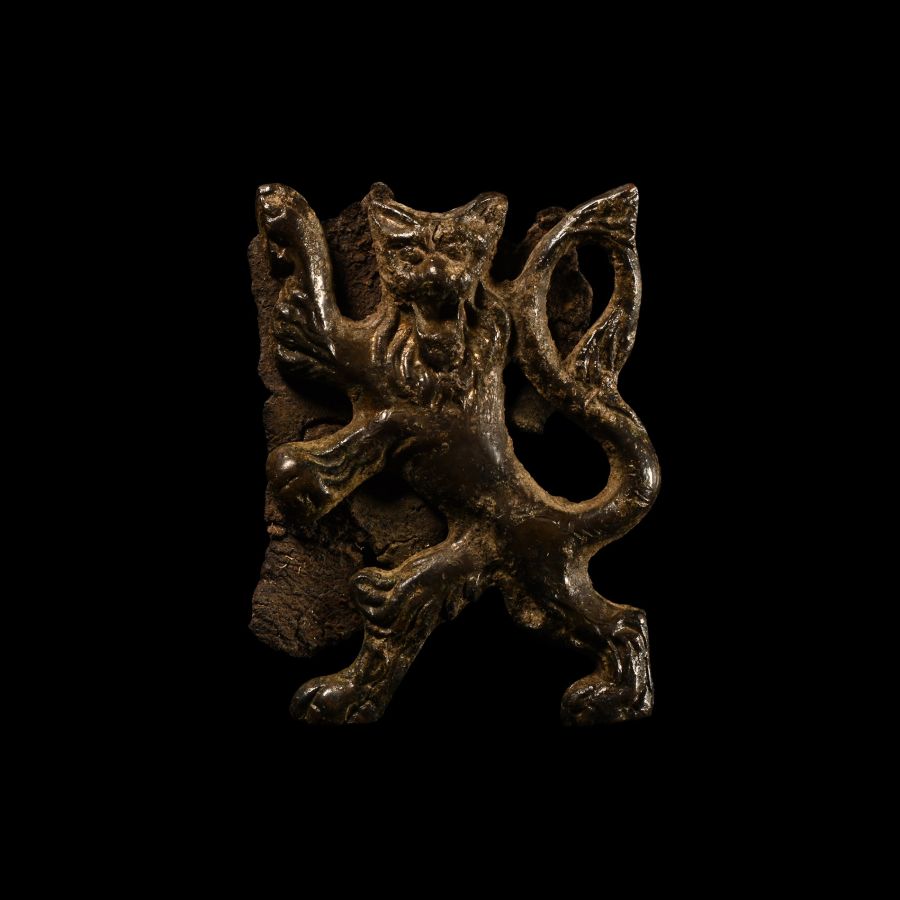
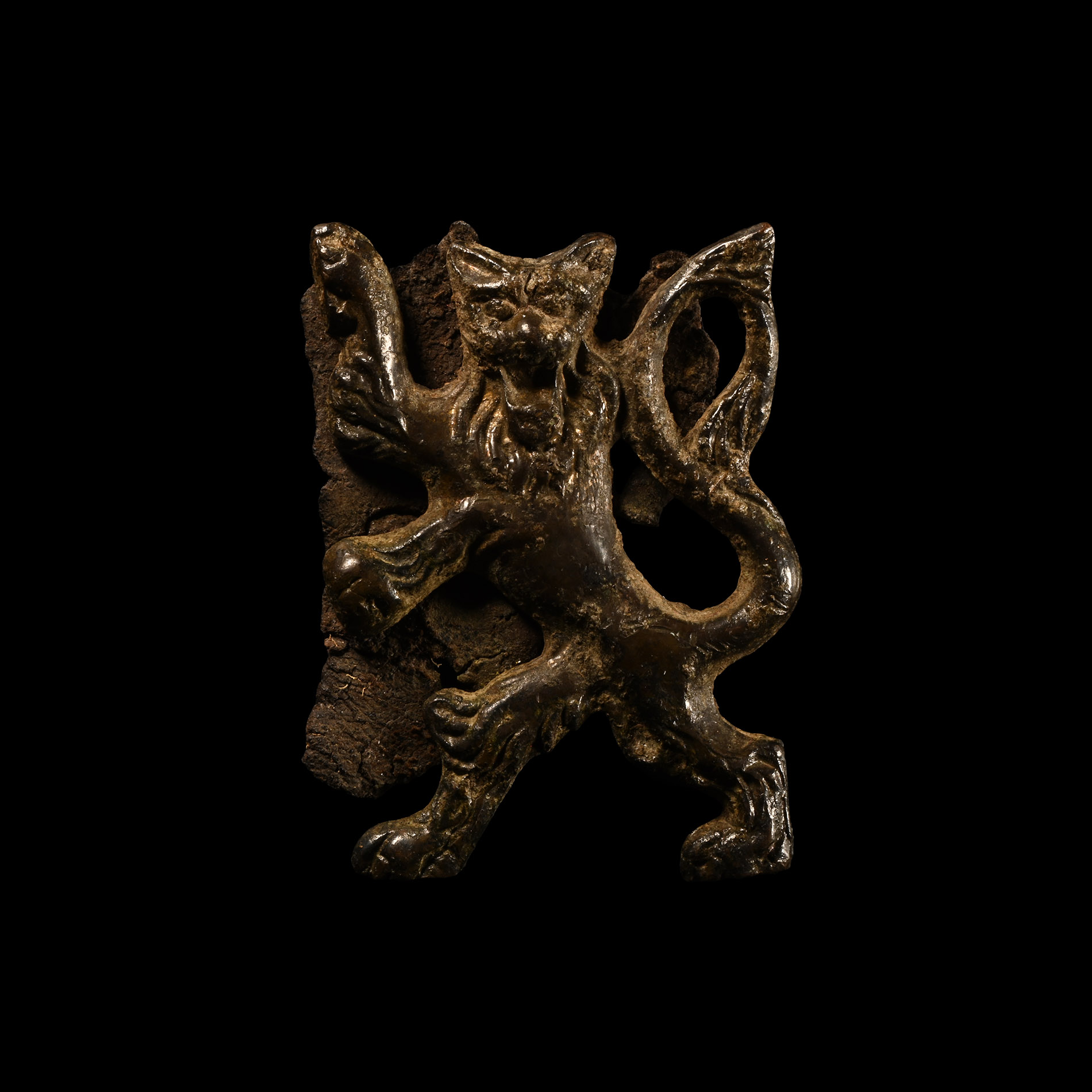
Post Medieval Bronze Rampant Guardant Lion Heraldic Mount
17TH-18TH CENTURY A.D.
2 1/4 in. (30.5 grams, 56 mm).
Of large size and of good style with remains of leather on the reverse. [No Reserve]
ProvenanceFound near Wells, Somerset, UK.
CONDITIONTimeLine Auctions follows a vetting process to ensure the authenticity and legality of all items, reinforcing our commitment to integrity and responsible trading. Each antiquity, antique, and coin lot undergoes thorough examination by a vetting committee of at least ten external specialists, professional trade association members, scientists, and archaeologists: Our Vetting Process
AUCTIONS:
TimeLine is a leading auction house specialising in antiquities, ancient art, collectables, natural history, coins, medals, and books. Our auctions offer museums, collectors, historians, and enthusiasts the opportunity to acquire unique and historically significant pieces.
LOT 1553
Post Medieval Bronze Rampant Guardant Lion Heraldic Mount
Sold for (Inc. bp): £59
-
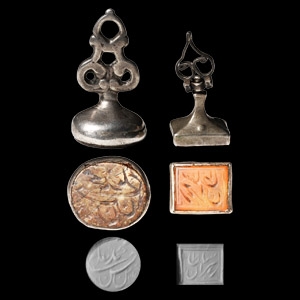
Silver Fob Seal Collection with Calligraphic Gemstones
Circa 19th century A.D.Estimate: £120 - 170 (+bp*)
Opening Bid: £67
One composed of an openwork trefoil stem and oval base set with a polished stone bearing a calligraphic inscription in Arabic; one featuring a leaf-shaped openwork handle with rectangular base set with polished carnelian bearing an Arabic(?) calligraphic inscription. 10.6 grams total, 24-29 mm
From a family collection formed 1900-1950; by descent circa 1980. -
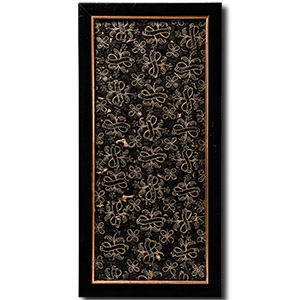
Renaissance Gold and Silver Embroidery Panel
Italian, circa 16th-17th century A.D.Sold for (Inc. bp): £195
Rectangular panel of embroidered fabric with gold and silver threads on a black velvet ground; in a glazed wooden frame. 1.25 kg, 52.5 x 25.5 cm
Acquired in the 1990s or before. From a deceased London, UK, estate. -
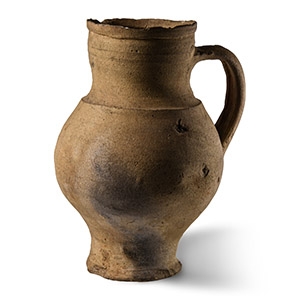
Tudor Period Terracotta Flagon
16th century A.D.Sold for (Inc. bp): £59
With a bulbous body and strap handle, tall neck with everted rim. 532 grams, 20 cm high
Acquired on the UK art market in the 1980s. From an East Anglian private collection.
