
Loading, please wait...
LOT 2056
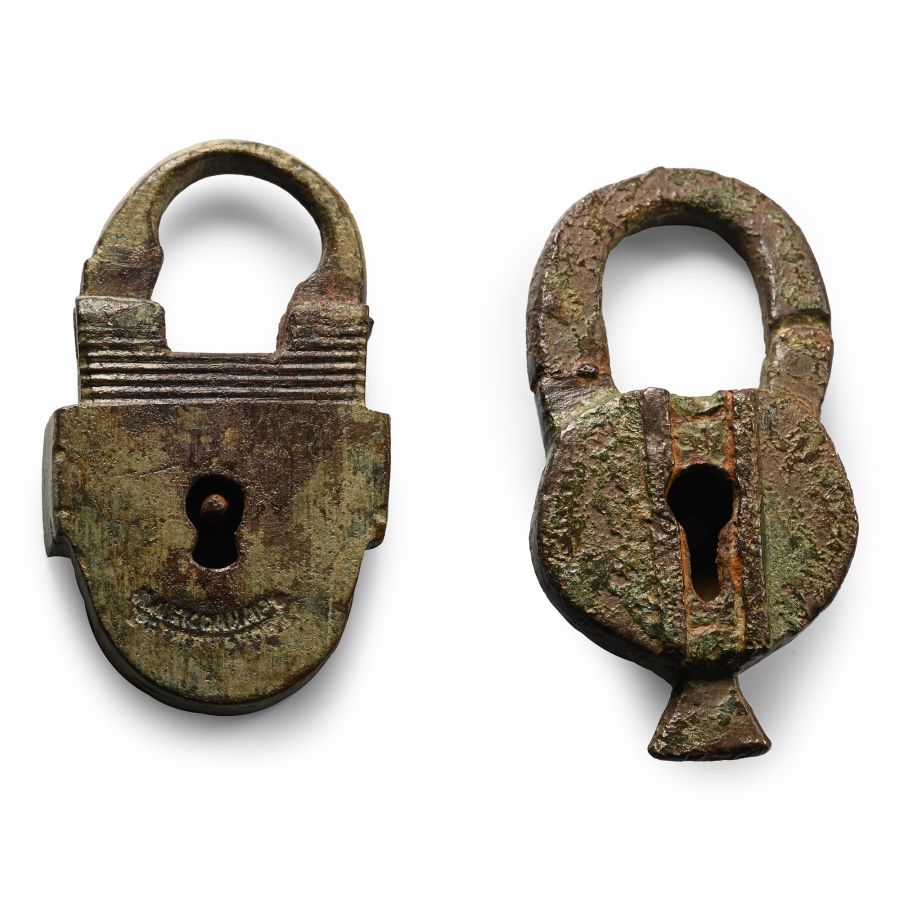
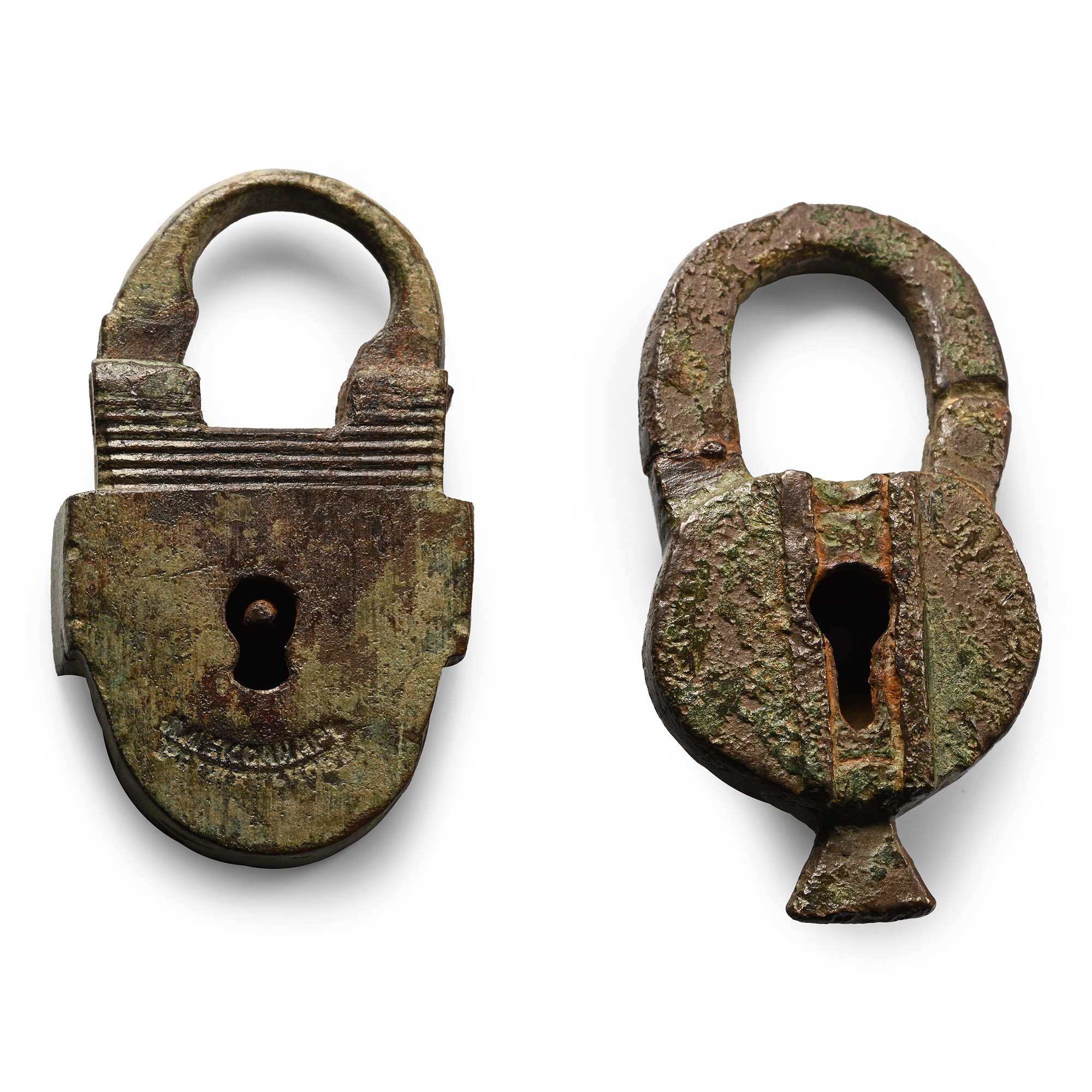
Post Medieval Bronze Padlock Group
16TH-18TH CENTURY A.D.
1 3/4 - 2 in. (56 grams total, 46-50 mm).
One with guide-rails to the keyhole and domed rear, one with transverse ribbing above. [2]
ProvenanceEx German art market, 2000s.
Acquired from an EU collector living in London.
From the collection of Surrey, UK, gentleman.
This lot is accompanied by an illustrated lot declaration signed by the Head of the Antiquities Department, Dr Raffaele D’Amato.
TimeLine Auctions follows a vetting process to ensure the authenticity and legality of all items, reinforcing our commitment to integrity and responsible trading. Each antiquity, antique, and coin lot undergoes thorough examination by a vetting committee of at least ten external specialists, professional trade association members, scientists, and archaeologists: Our Vetting Process
AUCTIONS:
TimeLine is a leading auction house specialising in antiquities, ancient art, collectables, natural history, coins, medals, and books. Our auctions offer museums, collectors, historians, and enthusiasts the opportunity to acquire unique and historically significant pieces.
-
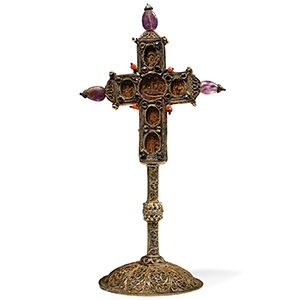
Mount Athos Wooden Cross with Silver-Gilt Mounts
Circa 1700 A.D.Sold for (Inc. bp): £4,160
Comprising: a wooden cross with carved scenes from the life of Christ (Nativity and others to one face, Crucifixion and others to the other face) housed in a filigree frame with beaded wire borders to the circular openings; three large amethyst beads to the arms, smaller coral and glass beads to each face; cannetille balustered stem and domed base. 140 grams, 21.8 cm
Ex Iconastas, London, SW1, UK, in 2004. Ex Mayfair Gallery Limited, London W1, UK, in 2005. Property of a London, UK, gentleman collector. Accompanied by a copy of the Mayfair Gallery invoice dated 10 January 2005. Accompanied by a copy of the Iconastas invoice dated 18 February 2004. Accompanied by an academic report by Dr Raffaele D'Amato. This lot has been checked against the Interpol Database of stolen works of art and is accompanied by search certificate no.12488-229957. This lot has been cleared against the Art Loss Register database, and is accompanied by an illustrated lot declaration signed by the Head of the Antiquities Department, Dr Raffaele D’Amato. -

Demon Imp Car Bonnet Mascot
Mid 20th century A.D.Sold for (Inc. bp): £104
Modelled in the round imp in crouching pose on a D-shaped base, hands held before the face; possibly Morris Motor Company mascot from 1930s. 87 grams, 86 mm
Property of a Cambridgeshire, UK, gentleman. This lot is accompanied by an illustrated lot declaration signed by the Head of the Antiquities Department, Dr Raffaele D’Amato. -
.jpg)
Post Medieval Painted Terracotta Cherub Applique
20th century A.D.Sold for (Inc. bp): £39
Ellipsoid plaque with baroque-inspired putto ornament, the head modelled in the round and painted in pink and auburn tones, face tilted downwards; robe, upper body and wings modelled in high relief with left arm held straight at the side and right arm bent, hand on the chest; feather detailing to wings; pierced either side of the shoulders for suspension; knop to reverse of head and hole to void. 833 grams, 29.5 cm
From a Cambridgeshire, UK, collection. This lot is accompanied by an illustrated lot declaration signed by the Head of the Antiquities Department, Dr Raffaele D’Amato.
