
Loading, please wait...
LOT 1434
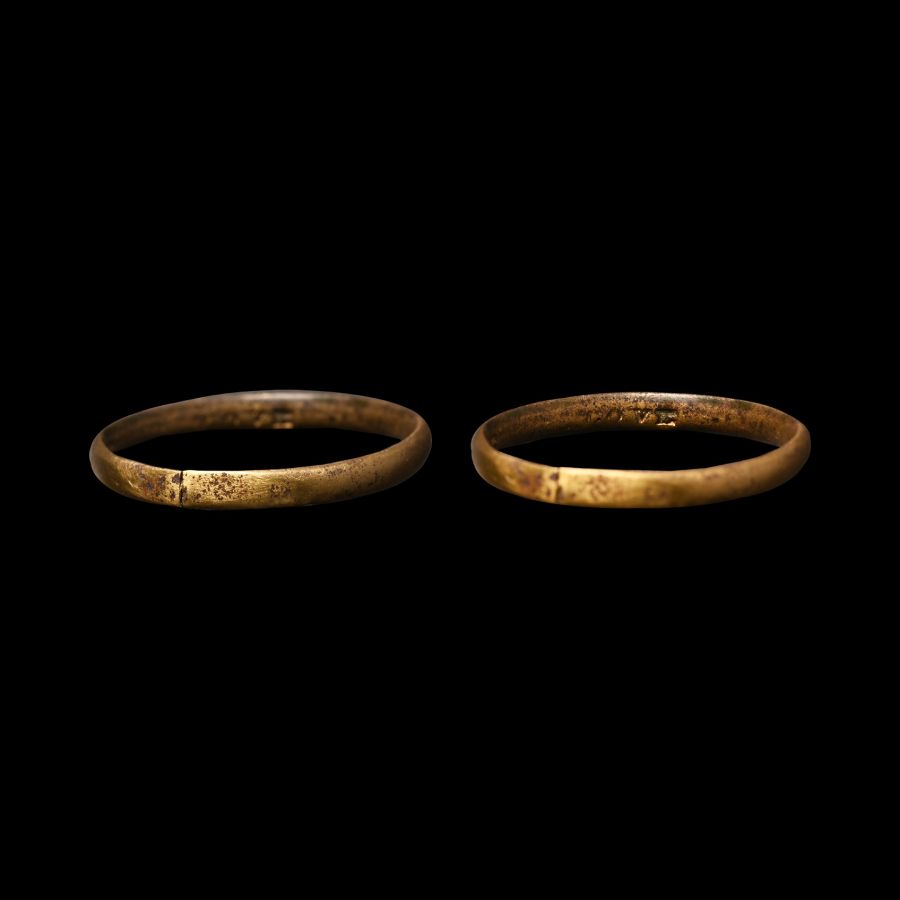
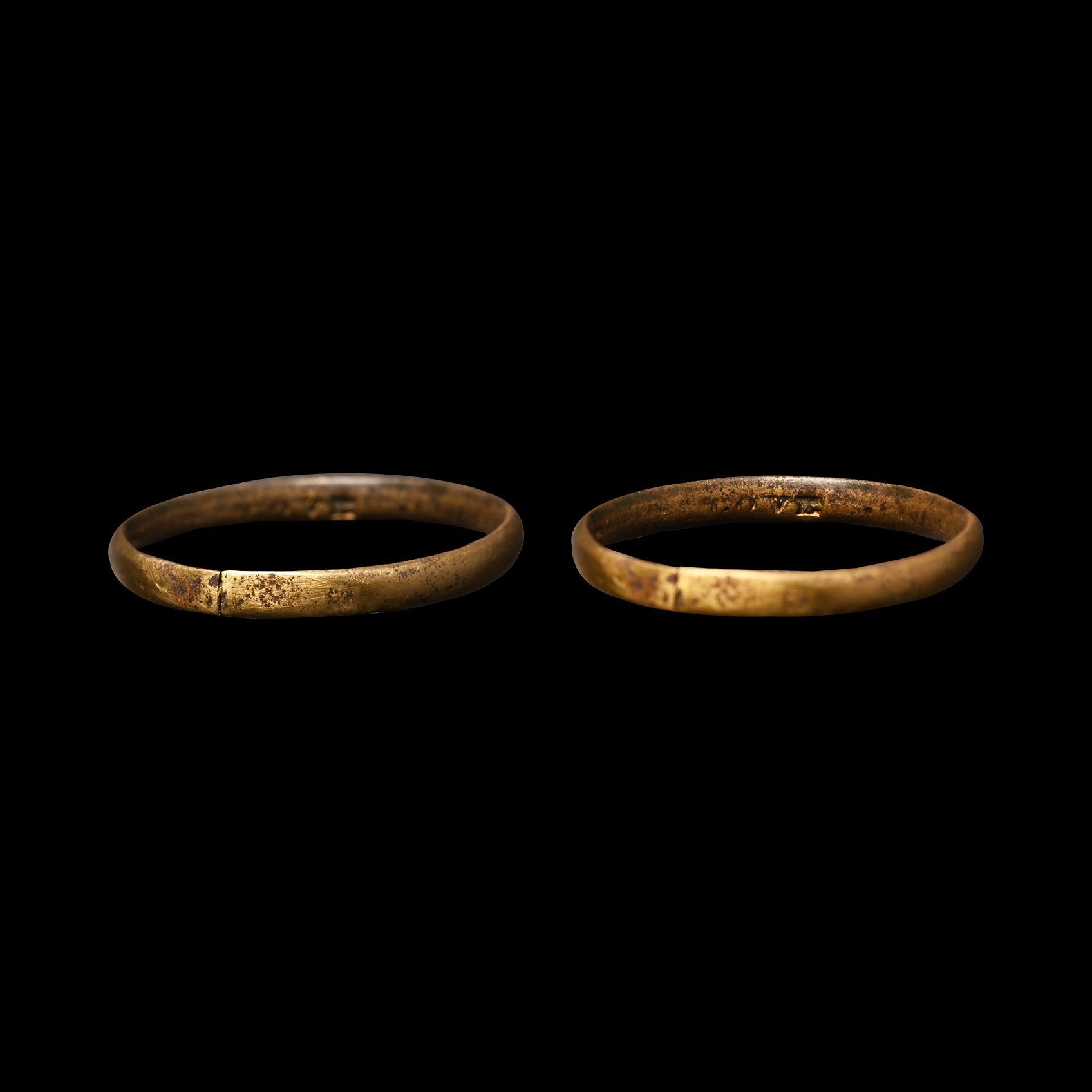
Post Medieval Bronze 'LOVE' Posy Ring
18TH-19TH CENTURY A.D.
3/4 in. (0.99 grams, 19.90 mm overall, 17.52 mm internal diameter (approximate size British M 1/2, USA 6 1/4, Europe 13.09, Japan 12)).
A slender bronze posy ring inscribed 'LOVE' to the interior and other worn inscription; hoop split. [No Reserve]
ProvenanceAcquired circa 2010.
From an old Essex, UK, collection.
TimeLine Auctions follows a vetting process to ensure the authenticity and legality of all items, reinforcing our commitment to integrity and responsible trading. Each antiquity, antique, and coin lot undergoes thorough examination by a vetting committee of at least ten external specialists, professional trade association members, scientists, and archaeologists: Our Vetting Process
AUCTIONS:
TimeLine is a leading auction house specialising in antiquities, ancient art, collectables, natural history, coins, medals, and books. Our auctions offer museums, collectors, historians, and enthusiasts the opportunity to acquire unique and historically significant pieces.
-
.jpg)
Bronze Copy of The Farnese Hermes
19th century A.D.Sold for (Inc. bp): £2,860
A bronze statue modelled on the famous Farnese Hermes (now in the British Museum); the god portrayed naturalistically in the round, youthful and nude, a chlamys draped around his shoulders, winged sandals on his feet; discoid base. 16.3 kg, 82 cm high
French collection, 1960s-early 2000s. From an important Paris gallery, France. with Marion Antique Auction, USA, 8 June 2019, lot 131. This lot has been checked against the Interpol Database of stolen works of art and is accompanied by search certificate number no.11689-199352.
The statue copies a Roman copy of a famous type created in the school of the Greek sculptor Praxiteles in the 4th century B.C. Villa de Papiri. A similar copy exists in the collection of the British Museum, London, under accession no. 1864,1021.1. -
.jpg)
Post Medieval Silver Apostle Paul Statuette
18th century A.D.Sold for (Inc. bp): £130
A silver figure modelled in the round as the Apostle Paul, standing on a polygonal base, wearing a voluminous floor-length robe, clasping the Bible to the right side of his breast, holding a sword in his left hand, semi-naturalistic detailing to his face, beard and hair. 58.2 grams, 66 mm high
Fine condition.
Austrian private collection since circa 1995. Ex central London gallery. -
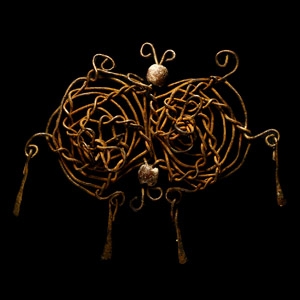
Tudor 'Thames' Wire Butterfly Brooch with Dangles
Circa 16th century A.D.Sold for (Inc. bp): £20
A coiled wire 'butterfly' brooch or other jewellery piece, with beads representing the head and 'tail', four articulate dangles to the mid and lower body. 3.42 grams, 56 mm wide
Found on the Thames foreshore, London, UK. Acquired on the UK antiques market between 1974-1985. Albert Ward collection, Essex, UK.
