
Loading, please wait...
LOT 2012
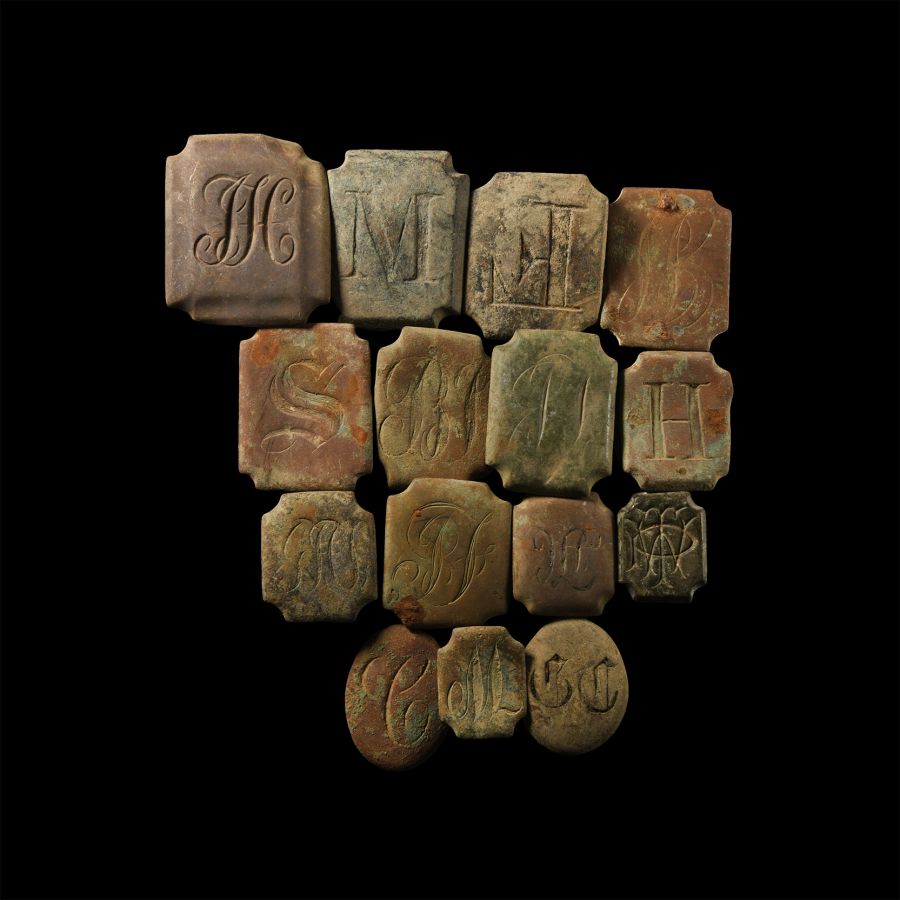
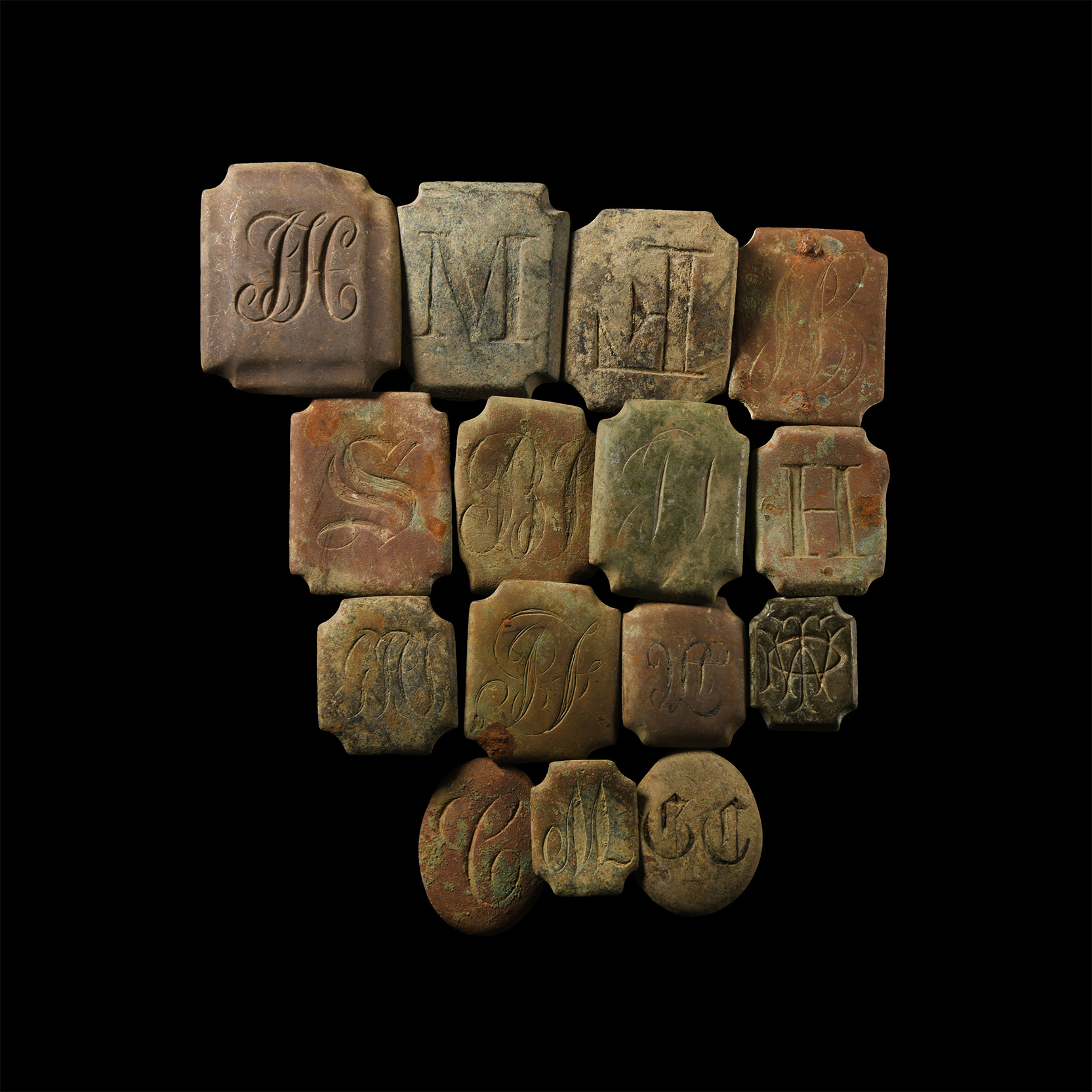
Post Medieval Bronze Initialled Mount Collection
18TH-19TH CENTURY A.D.
1 3/8 - 2 5/8 in. (500 grams total, 36-67 mm).
Mainly comprising rectangular mounts with scalloped corners and mounting lugs to reverse, single initials including S; H; M; C and conjoined initials engraved in a variety of lettering styles. [15, No Reserve]
ProvenanceFound Berkshire, UK.
CONDITIONTimeLine Auctions follows a vetting process to ensure the authenticity and legality of all items, reinforcing our commitment to integrity and responsible trading. Each antiquity, antique, and coin lot undergoes thorough examination by a vetting committee of at least ten external specialists, professional trade association members, scientists, and archaeologists: Our Vetting Process
AUCTIONS:
TimeLine is a leading auction house specialising in antiquities, ancient art, collectables, natural history, coins, medals, and books. Our auctions offer museums, collectors, historians, and enthusiasts the opportunity to acquire unique and historically significant pieces.
-
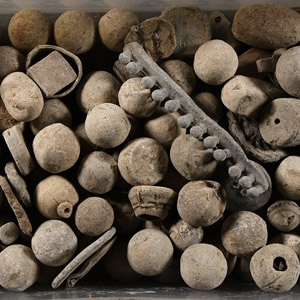
Post Medieval Lead Musket Ball Group
Circa 16th-19th century A.D.Sold for (Inc. bp): £33
Including balls of various gauges, some with casting flashes; together with lead seals and other miscellaneous items. 3.45 kg total, 1-7 cm
Acquired 1990s-early 2000s. East Anglian private collection. -
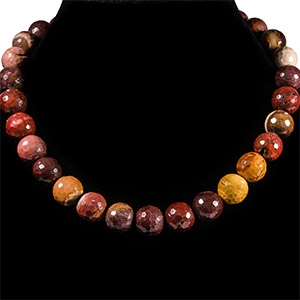
Facetted Stone Bead Necklace String
20th century A.D.Sold for (Inc. bp): £20
Composed of spherical, facetted beads, mostly dark red but with some colour variation in a variety of colours, including a few banded and veined stones; restrung for display. 138 grams, 40.5 cm long
UK gallery, early 2000s. -
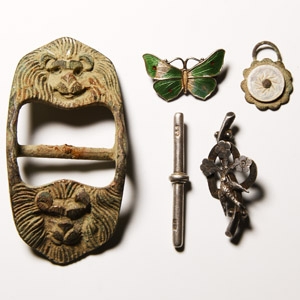
Post Medieval Silver and Bronze Artefact Group
19th-20th century A.D.Sold for (Inc. bp): £33
Comprising: a sterling silver butterfly brooch; a stamped silver mount; brooch designed with an openwork heart behind bird holding a spray of flowers, pin absent, silver marks to reverse; a button or other clothes fitting featuring a scalloped circumference and nacre disc with whorl design at centre, loop to edge; buckle plate with both arms formed as lions heads. 48 grams total, 21-71 mm
Found Hampshire, UK.
