
Loading, please wait...
LOT 1136
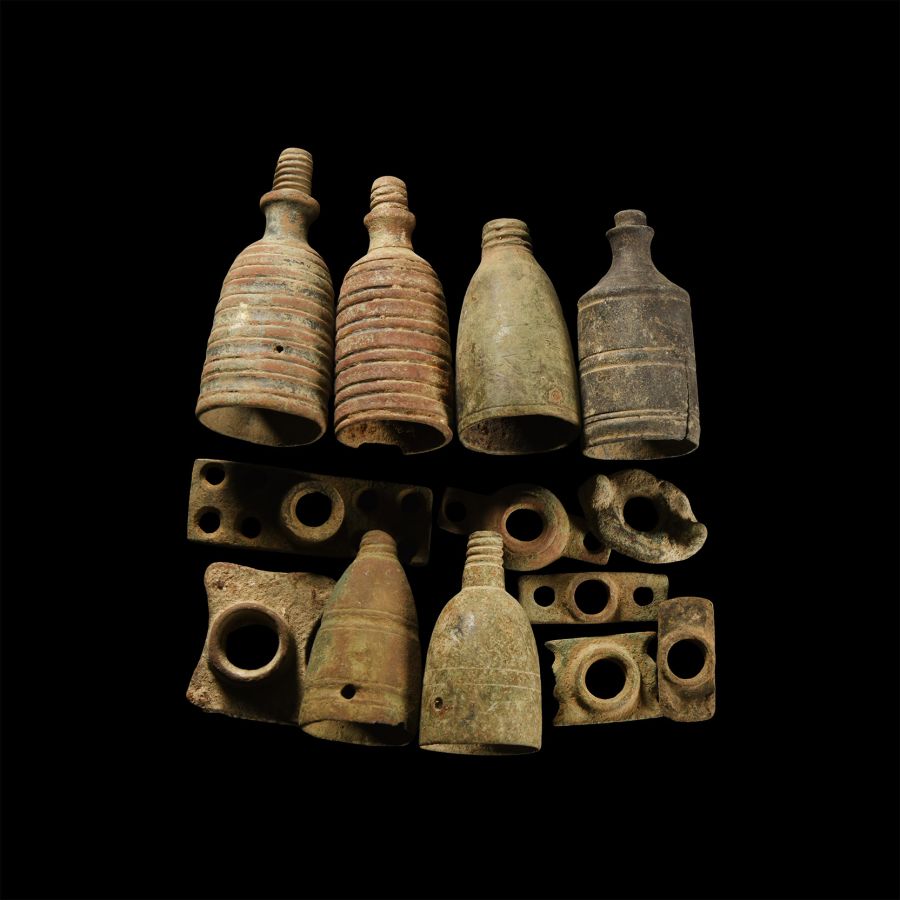
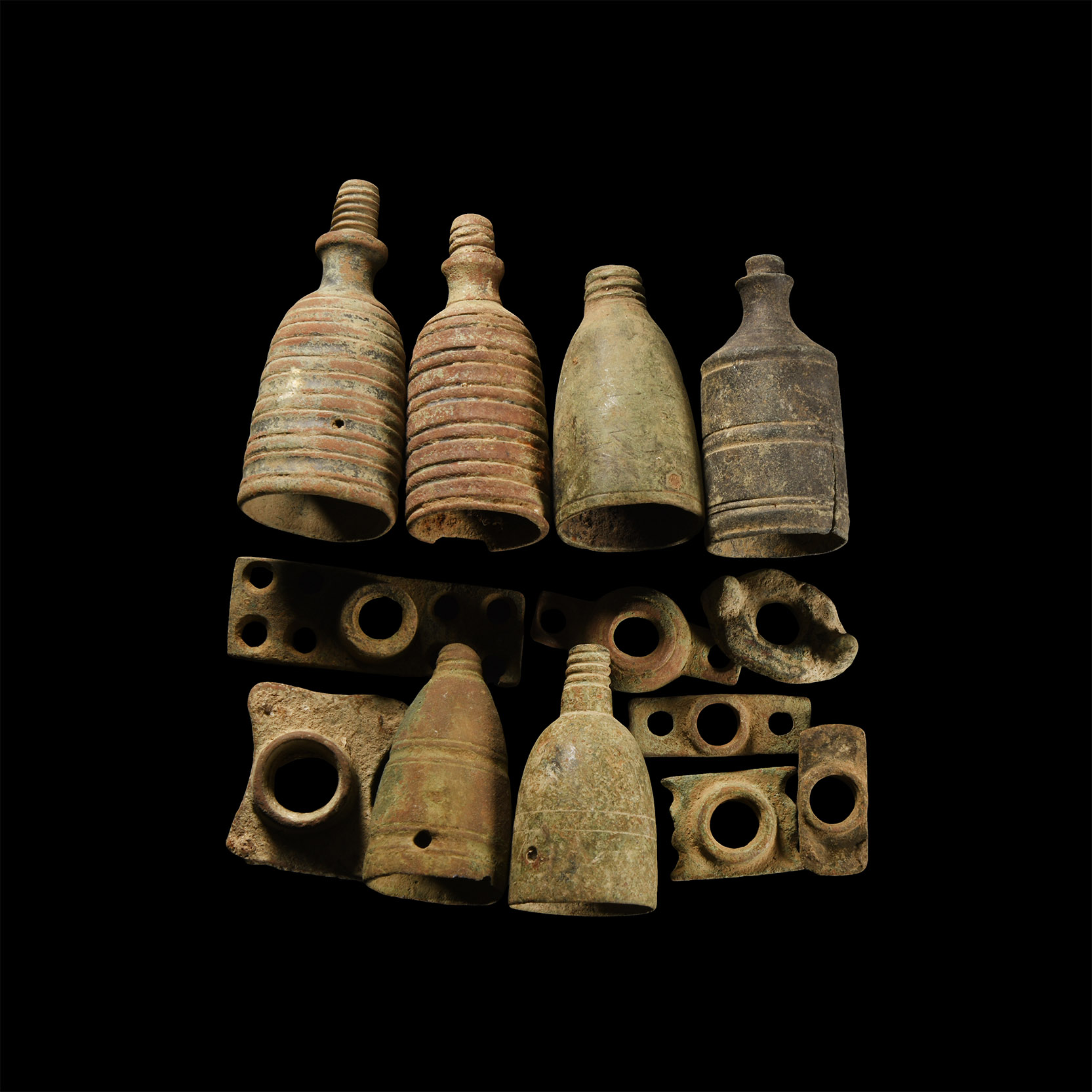
Post Medieval Bronze Helmet Plume Holder Group
19TH-20TH CENTURY A.D.
7/8 - 2 1/4 in. (270 grams total, 22-58 mm).
Comprising six various types, together with various fittings; a number of holders decorated with banding. [13, No Reserve]
ProvenanceFound Berkshire, UK.
LiteratureCf. similar examples in PAS, see SUSS-C3EDEC, LIN-C5B84A, NLM-6884E2, WMID-7484BA, BERK-088962.
CONDITIONTimeLine Auctions follows a vetting process to ensure the authenticity and legality of all items, reinforcing our commitment to integrity and responsible trading. Each antiquity, antique, and coin lot undergoes thorough examination by a vetting committee of at least ten external specialists, professional trade association members, scientists, and archaeologists: Our Vetting Process
AUCTIONS:
TimeLine is a leading auction house specialising in antiquities, ancient art, collectables, natural history, coins, medals, and books. Our auctions offer museums, collectors, historians, and enthusiasts the opportunity to acquire unique and historically significant pieces.
-
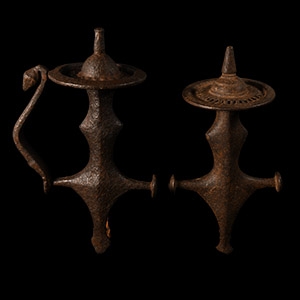
Indian Tulwar Iron Sword Hilt Pair
19th century A.D.Sold for (Inc. bp): £33
Both with lozenge-section quillon block, shaped langet and scalloped grip, quillon with discoid terminals; one with knuckle guard with conical terminal. 528 grams total, 18-18.5 cm
Acquired on the UK art market. Property of a Ruislip, UK, gentleman, by inheritance. -
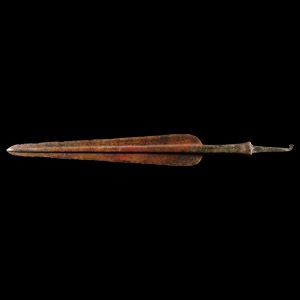
Massive West Persian Bronze Spearhead
Circa 12th-10th century B.C.Estimate: £250 - 350 (+bp*)
Opening Bid: £139
With heavily ridged and tapered blade, short collared shaft and tapered bent tang with round stud terminal. 674 grams, 52.5 cm
Acquired 1980-2015. Ex Abelita family collection.
The weapon belongs to the type 1 of the Khorasani spearhead classification, mainly from Marlik or Amlash areas. Similar pieces have been dated by Stutzinger to 1200-1100 B.C., but the period of use is attested at least until the 1000 B.C. -
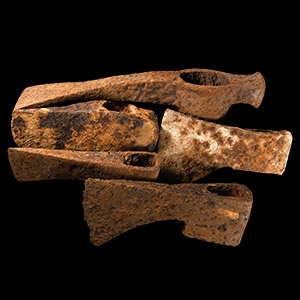
Medieval Iron Artefact Collection
14th-18th century A.D.Sold for (Inc. bp): £130
Comprising axeheads of different types, together with a pickaxe with a small hammer-style butt. 5.48 kg total, 16-30 cm
Acquired 1990s-early 2000s. East Anglian private collection.
Various axes of similar types have been recovered from the colonies of the New World. One of our specimen seems to be a French hatchet marked with a cross and circle, like the one found in the estate of Tom Wnuck.
