
Loading, please wait...
LOT 2075
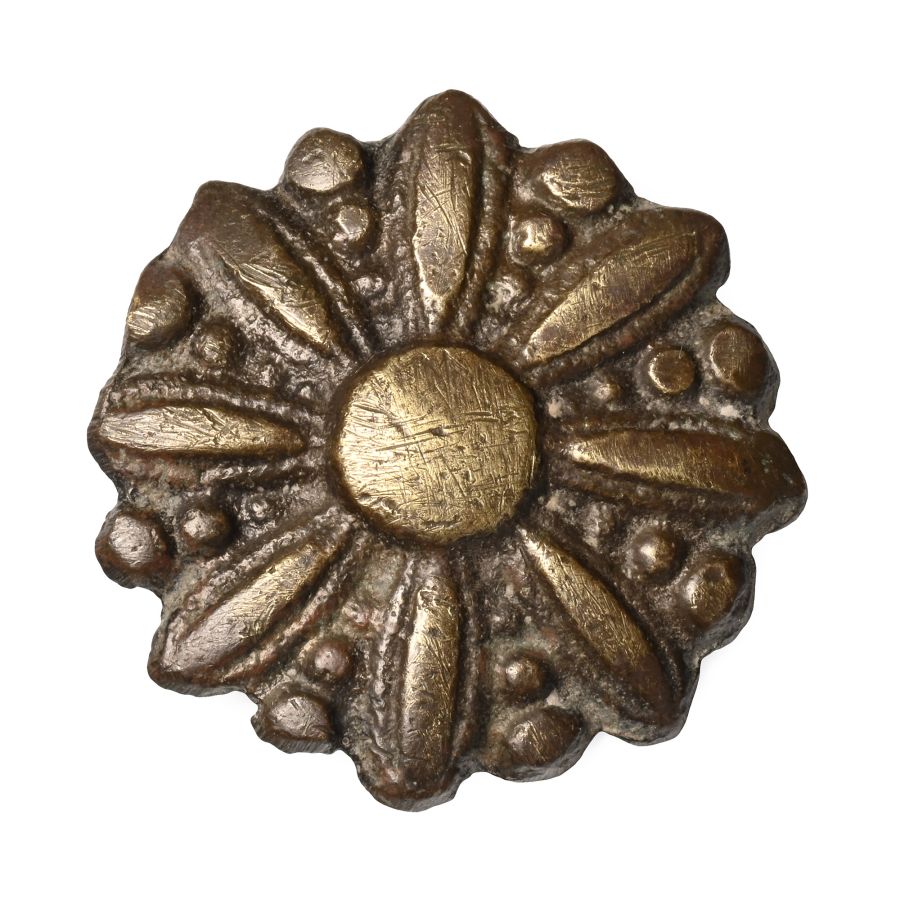
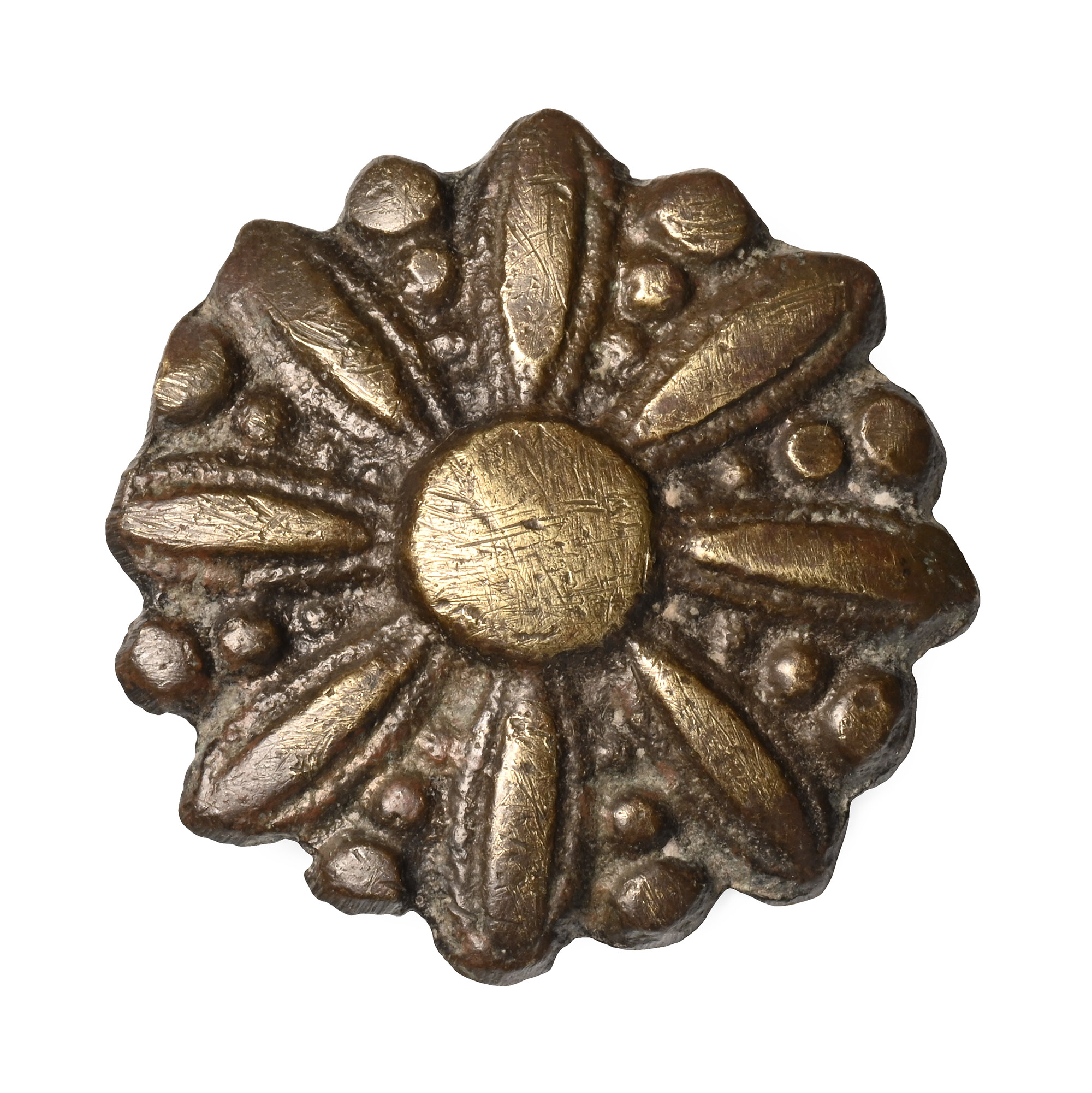
Post Medieval Bronze Flower Mount
17TH-18TH CENTURY A.D.
1 3/8 in. (13.6 grams, 36 mm).
Modelled as an eight-petalled flower with pellets between the petals; remains of mounting lugs on the reverse. [No Reserve]
ProvenanceLondon, UK, art market, 1980s.
Private collection, London, UK.
TimeLine Auctions follows a vetting process to ensure the authenticity and legality of all items, reinforcing our commitment to integrity and responsible trading. Each antiquity, antique, and coin lot undergoes thorough examination by a vetting committee of at least ten external specialists, professional trade association members, scientists, and archaeologists: Our Vetting Process
AUCTIONS:
TimeLine is a leading auction house specialising in antiquities, ancient art, collectables, natural history, coins, medals, and books. Our auctions offer museums, collectors, historians, and enthusiasts the opportunity to acquire unique and historically significant pieces.
-
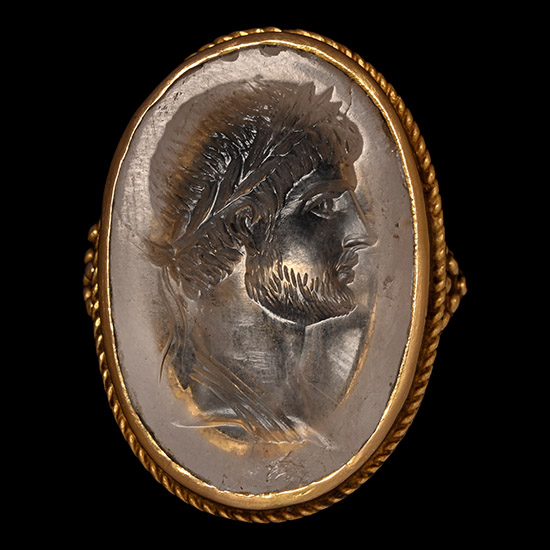
Post-Classical Rock Crystal Gemstone with Bust of the Emperor Hadrian
17th century A.D. or laterEstimate: £2,500 - 3,500 (+bp*)
Opening Bid: £1,250
Ellipsoid in plan with incuse profile bust of Emperor Hadrian, bearded and wearing a laurel wreath on his brow; in an antique mount open to the underside; supplied with a museum-quality impression. 12.68 grams, 31.18 mm overall, 20.40 mm internal diameter (approximate size British R, USA 8 1/2, Europe 18 3/4, Japan 18)
Acquired on the French art market. Private collection, England. This lot has been checked against the Interpol Database of stolen works of art and is accompanied by search certificate number no.13148-249494. -
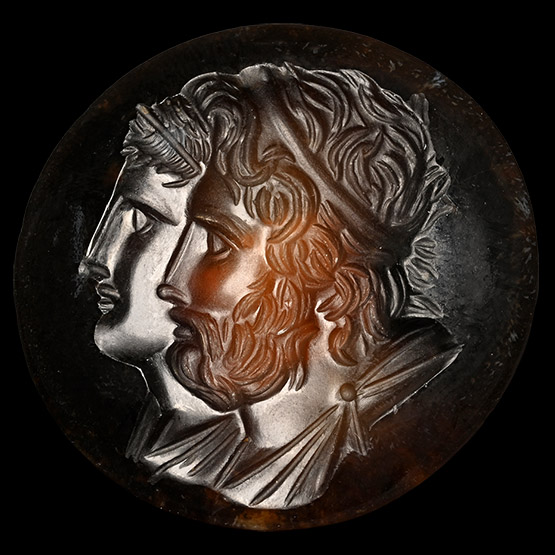
Large Post-Classical Agate Gemstone Depicting a Double Portrait of Hellenistic Rulers
19th century A.D. or earlierEstimate: £500 - 700 (+bp*)
Opening Bid: £250
Intaglio jugate busts of a bearded male with browband in the foreground and female bust to the rear with diadem; supplied with a museum-quality impression. 7.37 grams, 31 mm
with Hotel des Ventes de Monte-Carlo, 2022. Private collection, England.
The image portrays human rulers as Zeus and Hera/Jupiter and Juno. -
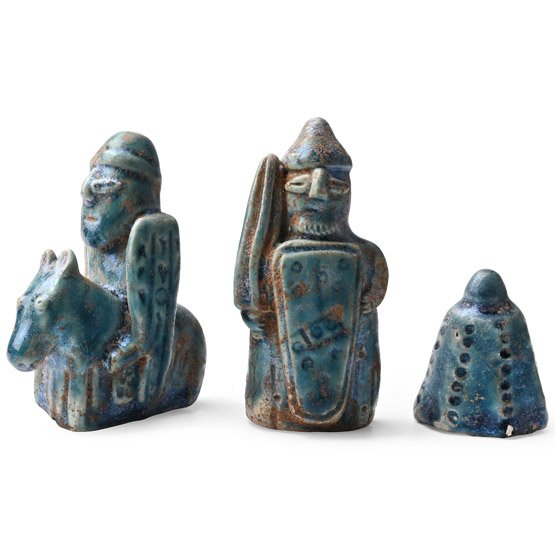
Western Asiatic Style Glazed Ceramic Gaming Piece Group
20th century A.D.Sold for (Inc. bp): £208
Comprising a bell-shaped pawn with pellet detailing; a standing knight with sword and teardrop shield; a mounted knight with spear and shield. 226 grams total, 44-85 mm
Private collection, UK.
