
Loading, please wait...
LOT 2099
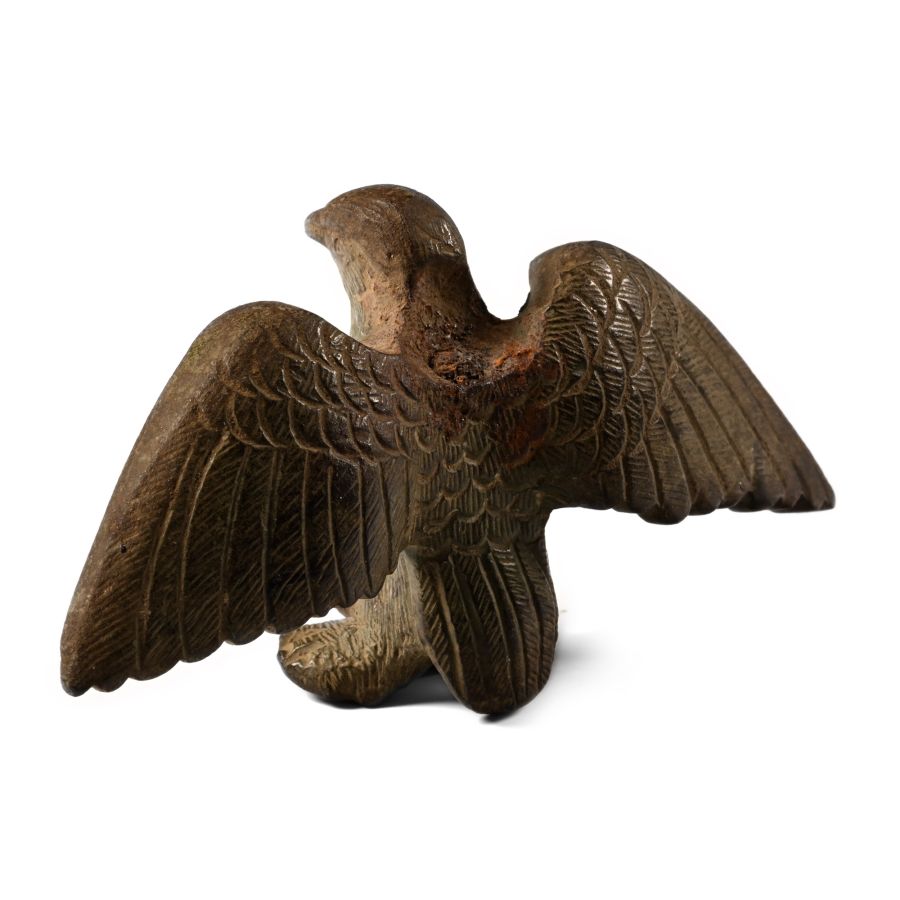
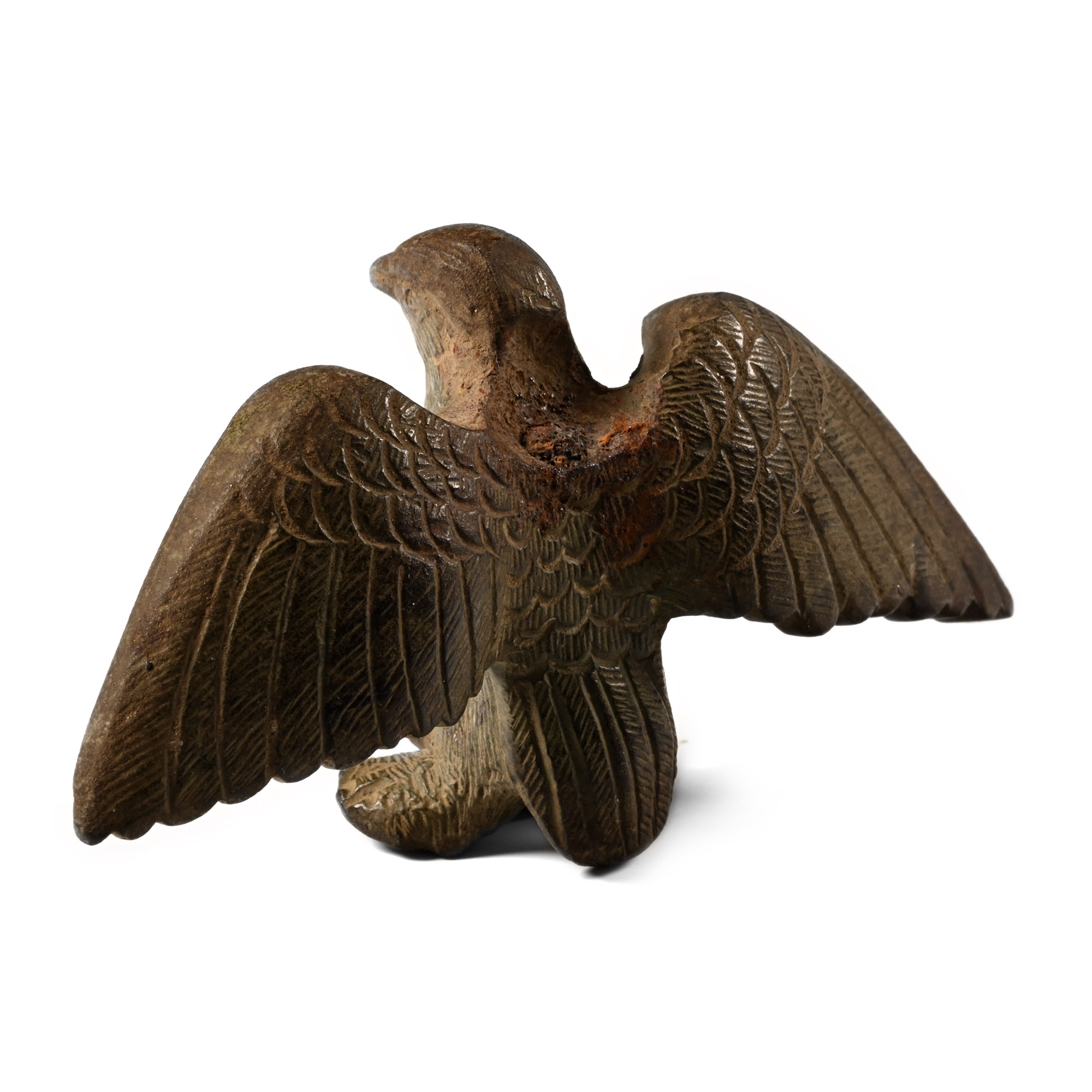
Post Medieval Bronze Eagle Finial
18TH-19TH CENTURY A.D.
3 1/2 in. (131 grams, 88 mm).
With wings partly spread, sockets to the underside of the feet. [No Reserve]
ProvenanceProperty of a professional collector; acquired before 1990.
Property of a Californian, USA, collector.
This lot is accompanied by an illustrated lot declaration signed by the Head of the Antiquities Department, Dr Raffaele D’Amato.
See Appels, A. & Laycock, S., Roman Buckles and Military Fittings, Witham, 2007.
CONDITIONTimeLine Auctions follows a vetting process to ensure the authenticity and legality of all items, reinforcing our commitment to integrity and responsible trading. Each antiquity, antique, and coin lot undergoes thorough examination by a vetting committee of at least ten external specialists, professional trade association members, scientists, and archaeologists: Our Vetting Process
AUCTIONS:
TimeLine is a leading auction house specialising in antiquities, ancient art, collectables, natural history, coins, medals, and books. Our auctions offer museums, collectors, historians, and enthusiasts the opportunity to acquire unique and historically significant pieces.
-

Post Medieval Gilt Plaque with Winged Cherub
17th-18th century A.D.Sold for (Inc. bp): £234
Depicted with a young face, curly hair, crowned by a halo, six radiating wings with feather detail; two holes for attachment. 33 grams, 19 cm
Acquired Brigantia Antiques, York, UK, circa 2007. Ian Wilkinson collection, Nottinghamshire, UK, formed since 1985. This lot is accompanied by an illustrated lot declaration signed by the Head of the Antiquities Department, Dr Raffaele D’Amato.
The plaque represents the central applique of a riphidion, an ecclesiastic fan worn by the Deacons during the Liturgical celebration of the Orthodox Church. The iconography refers to the Cherubim, the Angelic creatures with many wings and many eyes, ‘Singing the triumphal hymn, exclaiming, proclaiming, and saying' Holy, holy, holy. Fans are appointed to symbolise the invisible presence of the angels during significant liturgical acts. They are carried in the Great Entrance while the choir sings, ‘We who mystically represent the Cherubim and who sing the thrice-holy hymn to the life-creating Trinity, now lay aside all cares of this life, that we may receive the King of All, who comes invisibly escorted by the angelic host’. The altar servers take the place of angels, and they carry seraphic fans like the ancient Roman soldiers who carry the banner of their regiment. -
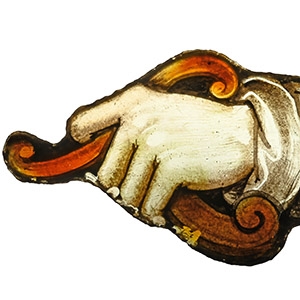
Tudor Period Stained Glass Panel with Hand Holding Sword
Northern France, circa 1530-1550 A.D.Sold for (Inc. bp): £169
With detailing to the rolled cuff, hand with forefinger hooked over the quillons. 36 grams, 15 cm
Private collection, Paris. Ex central London gallery. This lot is accompanied by an illustrated lot declaration signed by the Head of the Antiquities Department, Dr Raffaele D’Amato. -
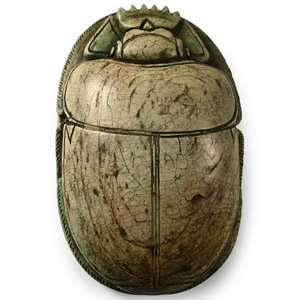
Grand Tour Steatite Scarab with Hieroglyphics
19th-20th century A.D.Sold for (Inc. bp): £124
Anatomical detailing to the carapace, head and legs, underside with twelve lines of hieroglyphic text, replicating the royal scarab of the Pharaoh Amenhotep III (ca. 1390–1352 B.C.), commemorating the construction of an artificial lake for his principal wife, Tiye. 326 grams, 98 mm
From a private, UK, collection in the 1980s. Property of a London, UK, antiquarian. This lot is accompanied by an illustrated lot declaration signed by the Head of the Antiquities Department, Dr Raffaele D’Amato.
This is a replica of one of several commemorative scarabs issued by Pharaoh Amenhotep III to celebrate various events. The text reads: Regnal Year 11 under the majesty of Horus, the Strong Bull Appearing in Truth, Two Ladies, Who Established the Laws and Pacifies the Two Lands, Horus of Gold, Strong of Arm who Smites the Asiatics, King of Upper and Lower Egypt Nebmaatre, Son of Re, Amenhotep Ruler of Thebes given life, the great royal wife Tiye, may she live, whose father's name is Yuya and whose mother's name is Tjuyu. His majesty commanded the making of a basin for the great royal wife Tiye, may she live, in her town of Djarukha. Its length is 3700 (cubits) and its width is 700 (cubits.) (His Majesty) celebrated the opening of the lake in the third month of the Akhet season, day 16. The procession of his majesty in the royal barge Aten-Tjehen (literally, 'the dazzling sun disk') was in it.
