
Loading, please wait...


LOT 1940
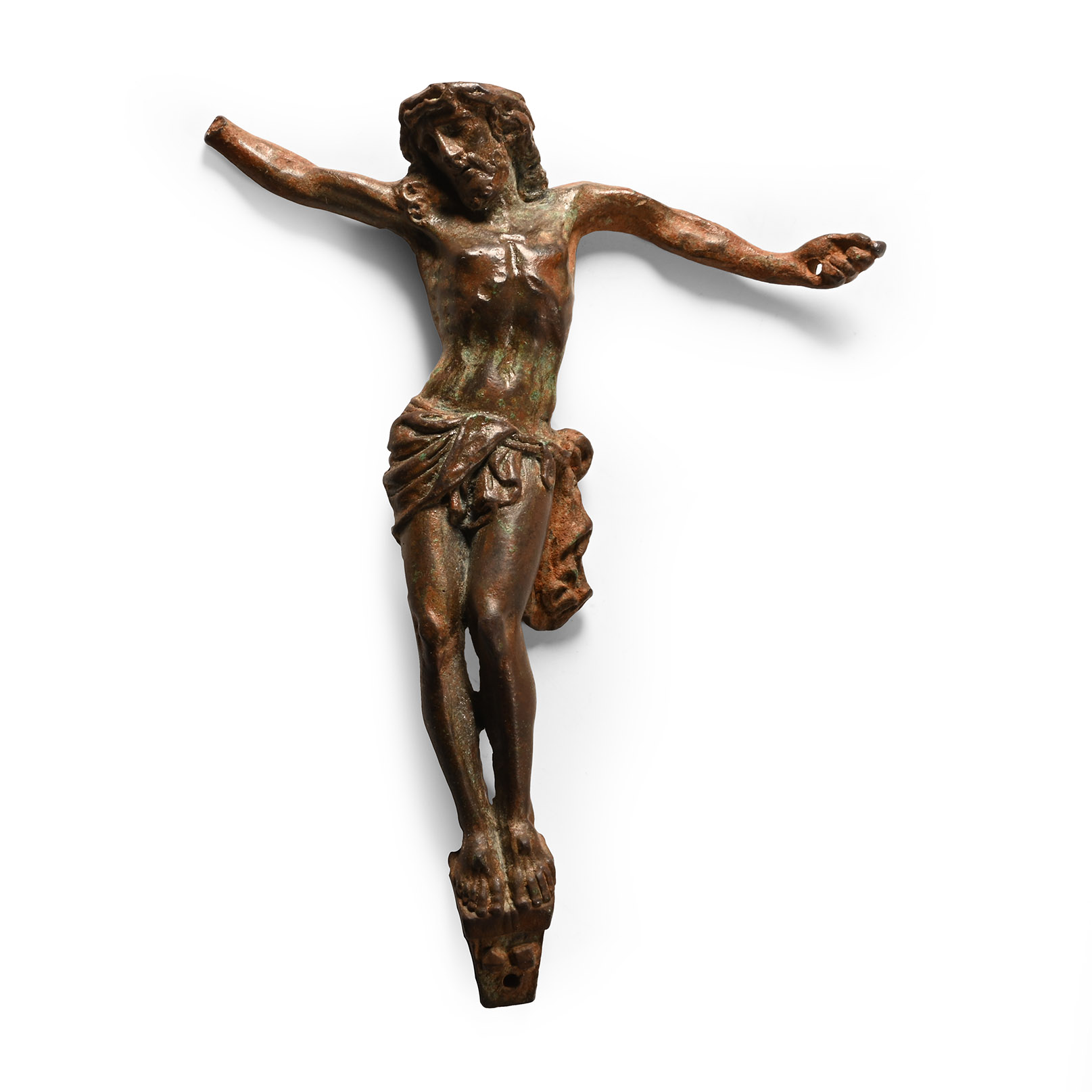
Post Medieval Bronze Corpus Christi
18TH-19TH CENTURY A.D.
4 in. (93 grams, 10.1 cm).
Modelled in the round with arms outstretched, loin cloth to the thighs, feet placed on the supporting block; marked 'II0' to reverse. [No Reserve]
ProvenanceFrom the collection of a gentleman, acquired on the London art market in the 1990s.
CONDITIONTimeLine Auctions follows a vetting process to ensure the authenticity and legality of all items, reinforcing our commitment to integrity and responsible trading. Each antiquity, antique, and coin lot undergoes thorough examination by a vetting committee of at least ten external specialists, professional trade association members, scientists, and archaeologists: Our Vetting Process
AUCTIONS:
TimeLine is a leading auction house specialising in antiquities, ancient art, collectables, natural history, coins, medals, and books. Our auctions offer museums, collectors, historians, and enthusiasts the opportunity to acquire unique and historically significant pieces.
-
Glazed Vessel Group
Circa 16th-18th century A.D.Sold for (Inc. bp): £46
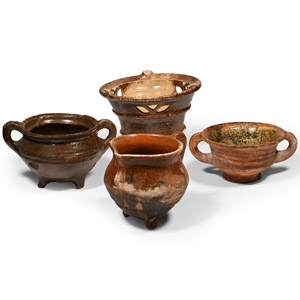
Comprising: a broad brown-glazed pot with openwork detailing, low tripod legs; squat red and yellow-glazed jar with lateral loop handles; brown-glazed biconvex bowl with lateral loop handles; biconvex pot with strap handle and pouring lip. 2 kg total, 14.3-20.5 cm
Acquired 1990s-early 2000s. Ex East Anglian private collection. -
Lapis Lazuli Bead Necklace String
20th century A.D.Sold for (Inc. bp): £39
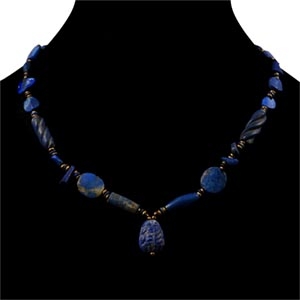
Composed mainly of tabular, annular and cylindrical beads with metal spacers, the central feature a scaraboid pendant. 33 grams, 38 cm
Ex London art market. Property of a North London, UK, gentleman. -
Greek Style Terracotta Oinochoe
20th century A.D.Estimate: £400 - 600 (+bp*)
Opening Bid: £200
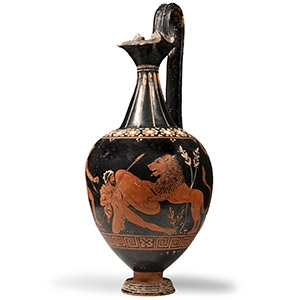
With tiered foot, ovoid body, tapering neck and scooped trefoil mouth; tall strap handle to the rear with median gusset; painted palmette below the handle and combat scene with two hoplites and an attacking lion; after the antique. 1.36 kg, 41 cm
From a Paris collection, France. Ex French gallery, 1970-1990.
