
Loading, please wait...
LOT 1845
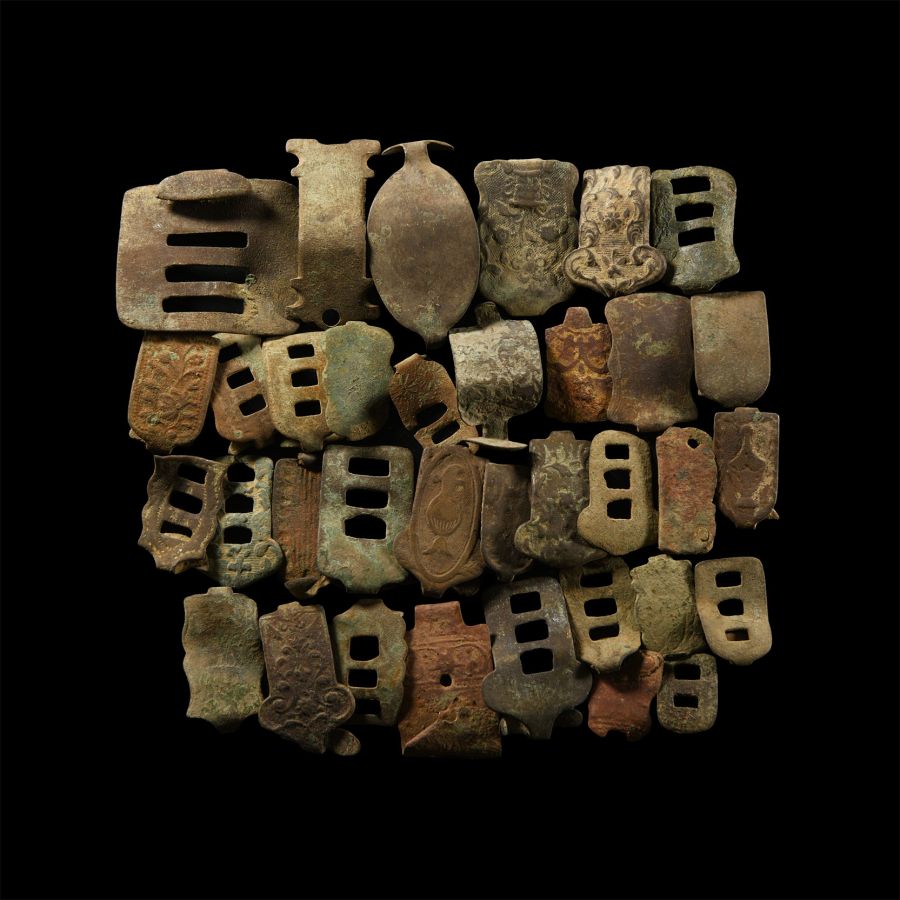
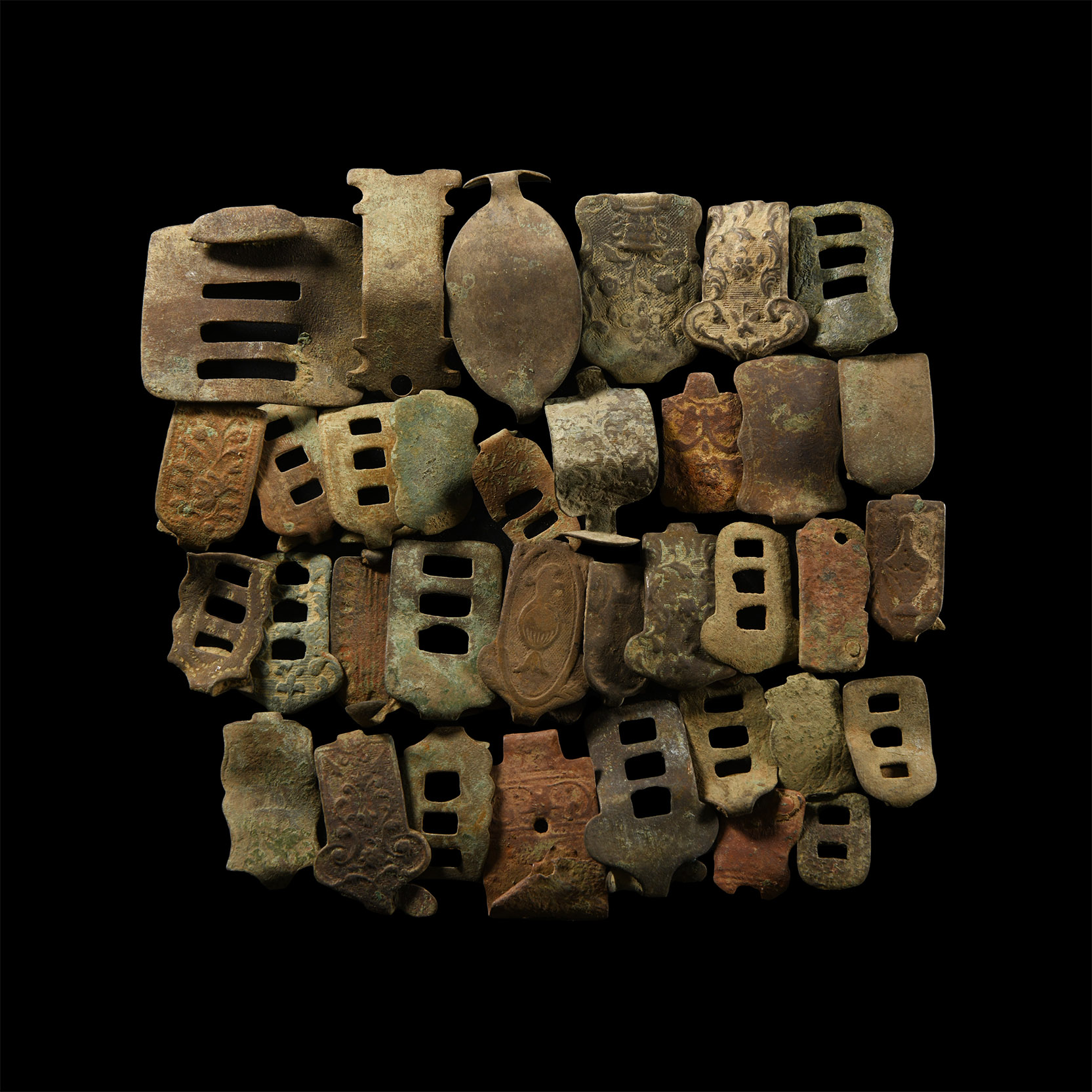
Post Medieval Bronze Clasp Group
CIRCA 16TH-19TH CENTURY A.D.
1/2 - 1 3/8 in. (64 grams total, 14-36 mm).
Comprising clasps of various types and designs, including examples with floral ornament, pricked dot designs, vegetal motifs and others. [35, No Reserve]
ProvenanceFound Berkshire, UK.
CONDITIONTimeLine Auctions follows a vetting process to ensure the authenticity and legality of all items, reinforcing our commitment to integrity and responsible trading. Each antiquity, antique, and coin lot undergoes thorough examination by a vetting committee of at least ten external specialists, professional trade association members, scientists, and archaeologists: Our Vetting Process
AUCTIONS:
TimeLine is a leading auction house specialising in antiquities, ancient art, collectables, natural history, coins, medals, and books. Our auctions offer museums, collectors, historians, and enthusiasts the opportunity to acquire unique and historically significant pieces.
-
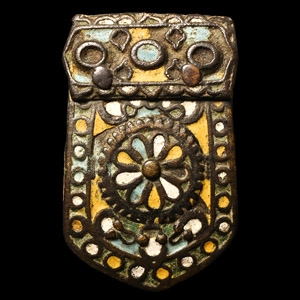
Balkan Enamelled Belt Fastener
19th century A.D.Sold for (Inc. bp): £33
Tongue-shaped with three loops to reverse; displaying an enamelled rosette against a geometric field and within a border of pellets. 32 grams, 57 mm
Acquired on the UK art market, circa 2010.
Pafti (belt buckles) were a typical Balkan adornment, usually round or oval, mainly with floral ornamentation, but sometimes with mother-of-pearl appliqués of Jerusalem, or plates engraved with iconographic scenes. -
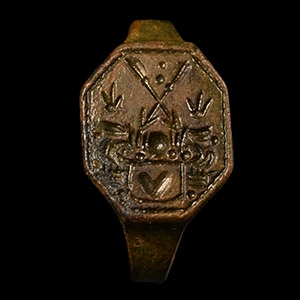
Tudor Period Bronze Armorial Signet Ring with Crossed Spears
16th-17th century A.D.Sold for (Inc. bp): £85
The hoop rectangular in section, octagonal bezel engraved with an armorial or pseudo-armorial design, composed of a rectangular cartouche containing a heart, flanked by (possible) animals, crossed spears or arrows above. 7.72 grams, 26.87 mm overall, 22.19 mm internal diameter (approximate size British Z 1/2, USA 12 1/2, Europe 29.43, Japan 28)
Private collection formed since the 1940s. UK art market. Property of an Essex gentleman. -
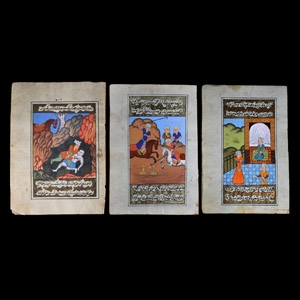
Watercolour Painting Group
India, 19th century A.D.Estimate: £80 - 100 (+bp*)
Opening Bid: £40
Three bifacial manuscript pages, each with recto with multiple lines of text, verso with watercolour scene with panel of text above and below, including children being instructed in martial arts in a courtyard, riders playing Chovgan, and a warrior wearing a lion skin attacking a demon in a cave, whilst his horse looks on from above. 5 grams, 14.8 x 10.3 cm
Fine condition.
Acquired on the UK art market, 1980s-1990s. The Woodbridge collection of Indo-Persian art.
