
Loading, please wait...
LOT 2056
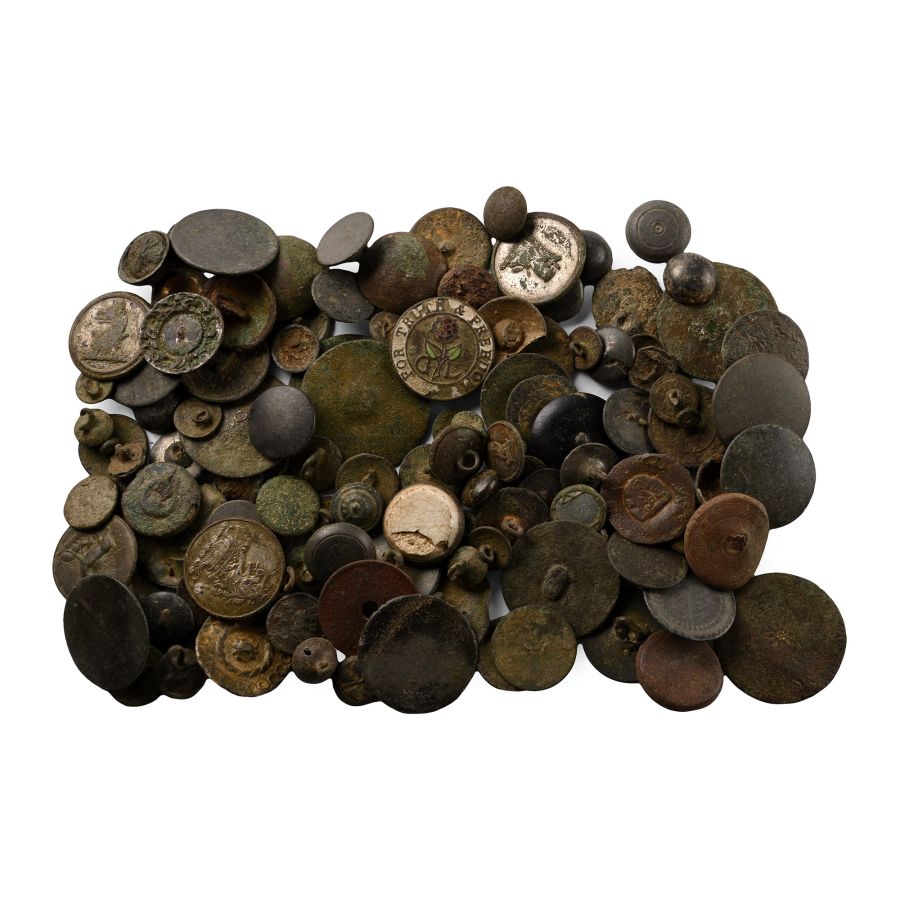
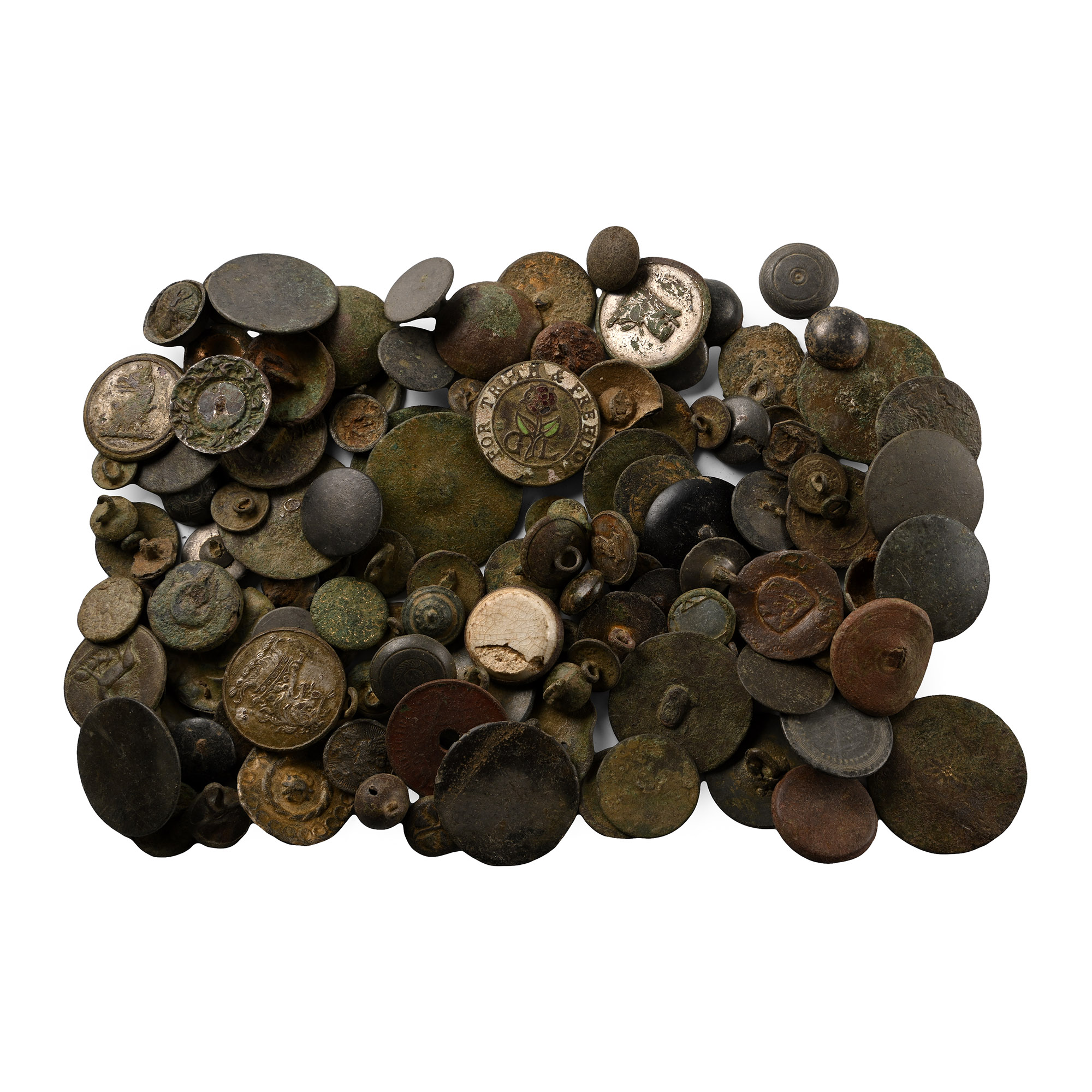
Post Medieval Bronze Button Collection
18TH-20TH CENTURY A.D.
3/8 - 1 3/8 in. (390 grams total, 10-34 mm).
Including heraldic, geometric and other designs. [116, No Reserve]
ProvenanceAcquired on the UK art market.
Property of an East Anglia private collector.
This lot is accompanied by an illustrated lot declaration signed by the Head of the Antiquities Department, Dr Raffaele D'Amato.
TimeLine Auctions follows a vetting process to ensure the authenticity and legality of all items, reinforcing our commitment to integrity and responsible trading. Each antiquity, antique, and coin lot undergoes thorough examination by a vetting committee of at least ten external specialists, professional trade association members, scientists, and archaeologists: Our Vetting Process
AUCTIONS:
TimeLine is a leading auction house specialising in antiquities, ancient art, collectables, natural history, coins, medals, and books. Our auctions offer museums, collectors, historians, and enthusiasts the opportunity to acquire unique and historically significant pieces.
-

Bronze Grand Tour Statue of 'The Dying Gaul' from the Capitoline Museum
Italy, circa 1880 A.D.Estimate: £1,000 - 1,400 (+bp*)
Opening Bid: £500
Copy of a Greek sculpture (now lost) from the Hellenistic period (323-31 BC) thought to have been made in bronze; a young Galatian warrior, wounded in the chest by a sword blow and dying, half-lying with his face turned downwards; with typical features of the idealised Celtic warrior: the high cheekbones, the hairstyle with thick and long locks, and the moustache (mytax); resting on a discarded shield with short sword under his right hand, straps and two tubular war-horns. 4 kg, 32 cm
From the private collection of a S.W. London gentleman, acquired in the 1970s. This lot is accompanied by an illustrated lot declaration signed by the Head of the Antiquities Department, Dr Raffaele D'Amato.
The Dying Gaul statue was rediscovered in Rome in the early 17th century, specifically in the 1620s, during excavations for the Villa Ludovisi. It was initially part of the Ludovisi collection and later acquired by Pope Clement XII for the Capitoline Museums. Except for a torque around the neck (a metal necklace typical of Celtic warriors), the figure is completely naked. It is possible to identify the figure tentatively as the ‘Trumpeter of Epigonos’ mentioned by Pliny (Natural History 34.88). -
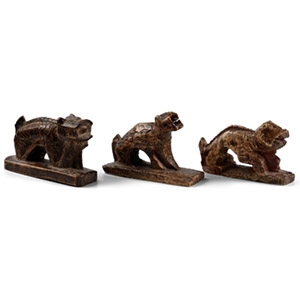
Post Medieval Carved Bone Lion Collection
20th century A.D.Sold for (Inc. bp): £39
Each standing with arched back on a rectangular base, head tilted and tongue protruding. 311 grams total, 9.7-10.2 cm
Acquired on the UK art market in the 1990s. From the Dr Ince collection, N.W. London, UK. This lot is accompanied by an illustrated lot declaration signed by the Head of the Antiquities Department, Dr Raffaele D'Amato. -
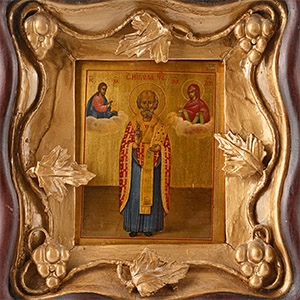
Russian Icon of Saint Nicholas in Byzantine Style
19th century A.D.Sold for (Inc. bp): £169
Gilt panel with hand-painted image of St Nicholas standing between busts of Jesus and Mary, Cyrillic text above; mounted in a wooden frame with grapevine surround and hinged glazed lid; old label to reverse 'O bache / Capitain'. 946 grams, 23 cm
From the private collection of a Canadian gentleman living in Essex, UK, formed since the 1920s-circa 1990. Property of an Essex lady until the late 1990s; thence by descent. From the private collection of an Essex gentleman since the late 1990s. This lot is accompanied by an illustrated lot declaration signed by the Head of the Antiquities Department, Dr Raffaele D'Amato.
