
Loading, please wait...
LOT 2163
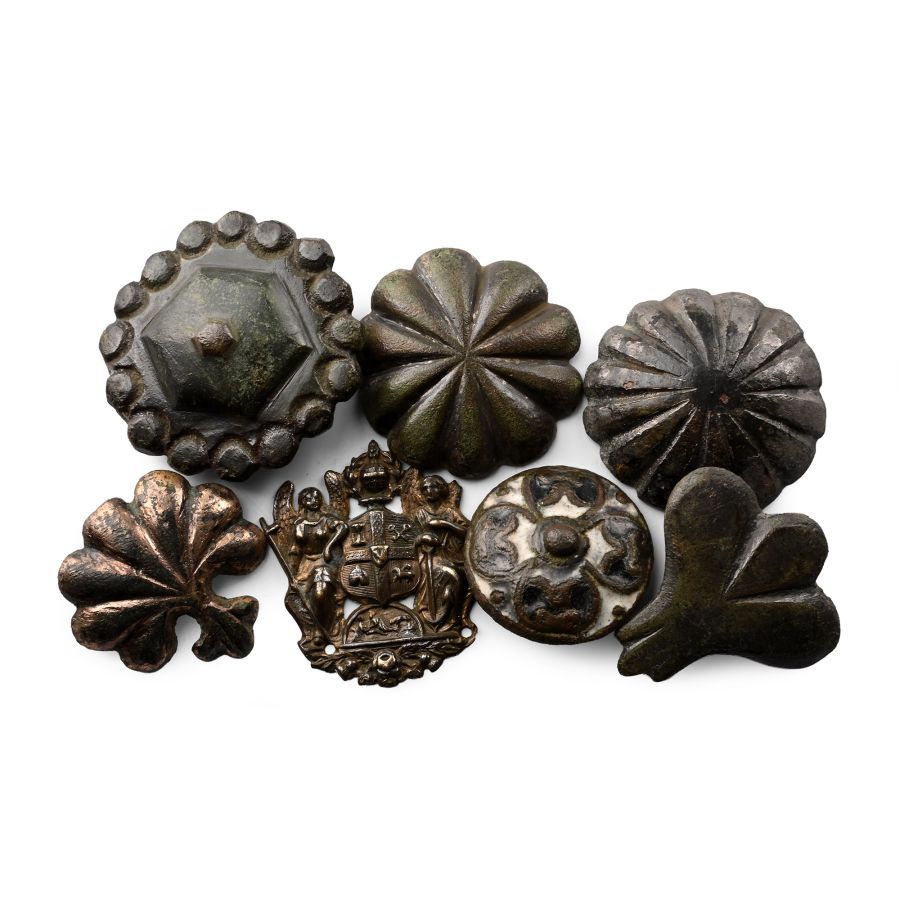
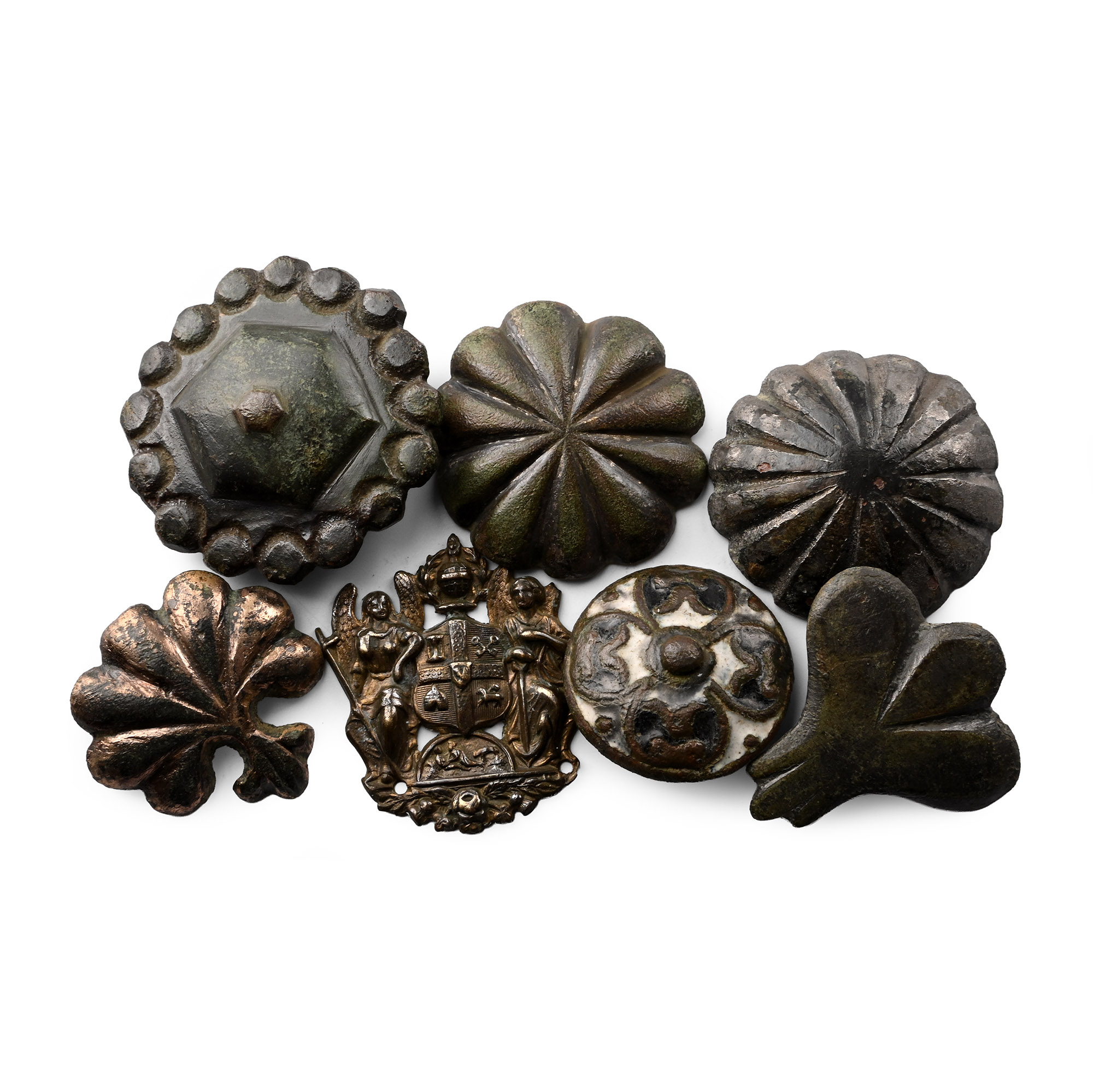
Post Medieval Bronze Belt Mount Collection
18TH-19TH CENTURY A.D.
1 in. (64.14 grams total, 24-36 mm).
Including scallop shell, trilobate, enamelled rosette and other types. [7, No Reserve]
ProvenanceFound various sites in Norfolk, UK.
Acquired on the UK art market.
From the private collection of a Kent, UK, gentleman.
Six objects with Norfolk museum (PAS) record slips.
This lot is accompanied by an illustrated lot declaration signed by the Head of the Antiquities Department, Dr Raffaele D'Amato.
TimeLine Auctions follows a vetting process to ensure the authenticity and legality of all items, reinforcing our commitment to integrity and responsible trading. Each antiquity, antique, and coin lot undergoes thorough examination by a vetting committee of at least ten external specialists, professional trade association members, scientists, and archaeologists: Our Vetting Process
AUCTIONS:
TimeLine is a leading auction house specialising in antiquities, ancient art, collectables, natural history, coins, medals, and books. Our auctions offer museums, collectors, historians, and enthusiasts the opportunity to acquire unique and historically significant pieces.
-
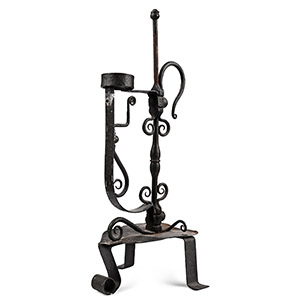
Iron Candle Holder
France, 18th century A.D.Estimate: £500 - 700 (+bp*)
Opening Bid: £250
The central baluster knopped column with scrolling ornament and looped carrying handle above a trefoil-shaped platform and rivetted tripod feet. 1.21 kg, 44 cm
Ex Nic McElhatton, former chairman of Christie's South Kensington. Property of a Berkshire, UK, collector. Accompanied by a copy of McElhatton's cataloguing page. This lot is accompanied by an illustrated lot declaration signed by the Head of the Antiquities Department, Dr Raffaele D'Amato. -
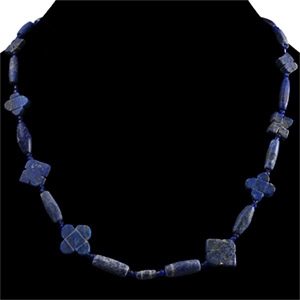
Bactrian Style Lapis Lazuli Bead Necklace String
20th century A.D.Sold for (Inc. bp): £26
Composed of alternating tabular flower-shaped, barrel-shaped and grooved cylindrical beads interspersed with small glass oblate beads; restrung. 29 grams, 43.2 cm
From the London, UK, art market in the 1990s. This lot is accompanied by an illustrated lot declaration signed by the Head of the Antiquities Department, Dr Raffaele D'Amato. -
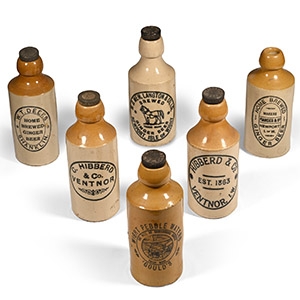
Antique Isle of Wight Ginger Beer Bottle Collection
Late 19th-early 20th century A.D.Sold for (Inc. bp): £65
Comprising: one stamped 'C. HIBBERD & CO. VENTNOR' with stopper; one stamped 'HIBBERD & CO. VENTNOR, I.W. EST. 1863' with stopper; one stamped 'W.B. MEW. LANGTON & CO. LD. NEWPORT, ISLE OF WIGHT. BREWED GINGER BEER' with stopper; one stamped 'W.T. DEEKS SHANKLIN. HOME BREWED GINGER BEER' with stopper; one stamped 'WIGHT PEBBLE WATERS GOULD'S. THE WELL AT GARRISBROOKE CASTLE TRADE MARK' with stopper; one stamped 'HOME BREWED GINGER BEER. MAKERS FLANDER & CO. NEWPORT I OF W.'; accompanied by a booklet by Stephen Day, Castaways- collectable containers. 3.2 kg total, 16.5-18.5 cm
From the private collection of an East Anglian gentleman, 1970s-early 2000s. This lot is accompanied by an illustrated lot declaration signed by the Head of the Antiquities Department, Dr Raffaele D'Amato.
