
Loading, please wait...
LOT 1930
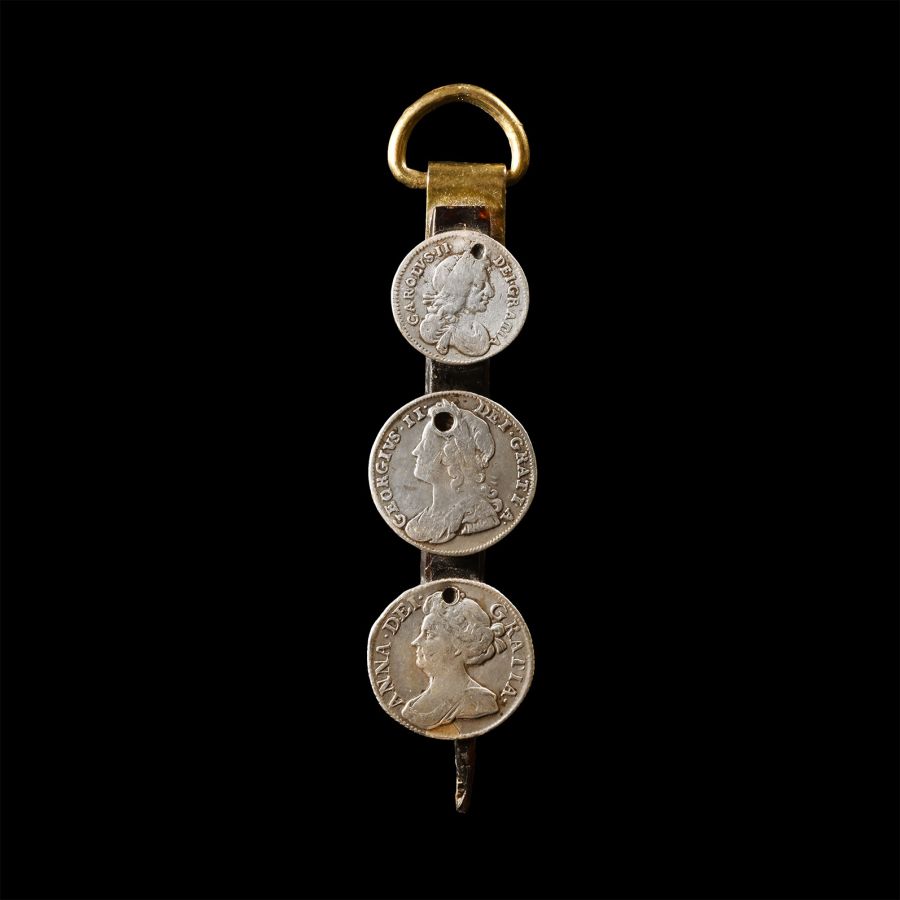
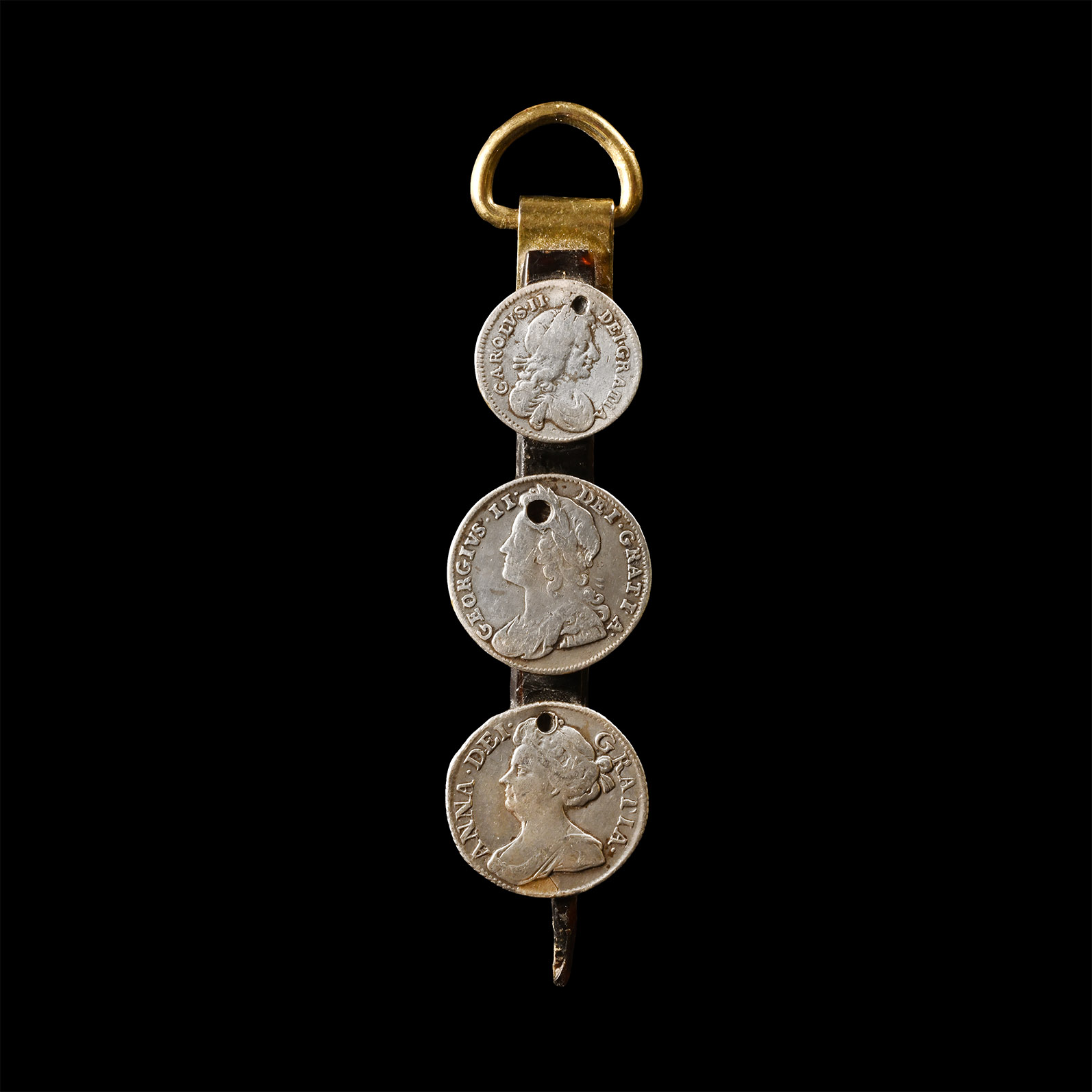
Post Medieval Brass Fitting with Coins
17TH-18TH CENTURY A.D.
3 3/4 in. (11.8 grams, 95 mm).
Group of three silver coins mounted obverse-outwards on a horn shank with brass suspension ring: Charles II threepence; George II sixpence; Queen Anne sixpence; each coin pierced. [No Reserve]
ProvenanceAcquired 1960s-1990s.
Late Alison Barker collection, a retired London barrister.
TimeLine Auctions follows a vetting process to ensure the authenticity and legality of all items, reinforcing our commitment to integrity and responsible trading. Each antiquity, antique, and coin lot undergoes thorough examination by a vetting committee of at least ten external specialists, professional trade association members, scientists, and archaeologists: Our Vetting Process
AUCTIONS:
TimeLine is a leading auction house specialising in antiquities, ancient art, collectables, natural history, coins, medals, and books. Our auctions offer museums, collectors, historians, and enthusiasts the opportunity to acquire unique and historically significant pieces.
-
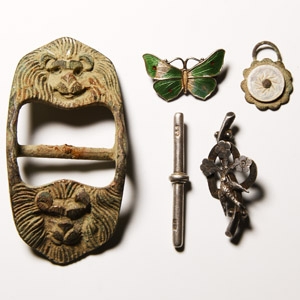
Post Medieval Silver and Bronze Artefact Group
19th-20th century A.D.Sold for (Inc. bp): £33
Comprising: a sterling silver butterfly brooch; a stamped silver mount; brooch designed with an openwork heart behind bird holding a spray of flowers, pin absent, silver marks to reverse; a button or other clothes fitting featuring a scalloped circumference and nacre disc with whorl design at centre, loop to edge; buckle plate with both arms formed as lions heads. 48 grams total, 21-71 mm
Found Hampshire, UK. -
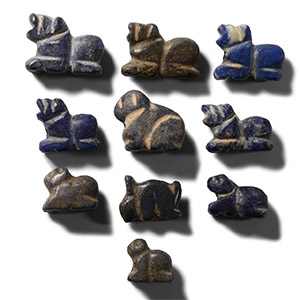
Lapis Lazuli Lion Amulet Group
20th century A.D.Sold for (Inc. bp): £72
Comprising group of mixed size small amuletic beads in form of a crouching lion; each pierced for stringing. 22 grams total, 11-19 mm
UK gallery, early 2000s. -
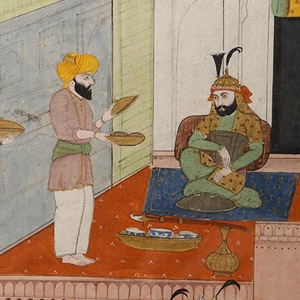
Framed Watercolour Painting of a Nobleman's Residence
Persia, 20th century A.D.Estimate: £80 - 100 (+bp*)
Opening Bid: £40
With two servants bringing lidded chafing dishes of food to the crouching male wearing a helmet and cuirass with a shield at his feet; below, an attendant in helmet and riding coat holds the reins of the horse; panels of nastaliq text above and below; mounted in a glazed wooden frame. 1.16 kg, 47.5 x 32.3 cm
Very fine condition.
Acquired on the UK art market, 1980s-1990s. The Woodbridge collection of Indo-Persian art.
