
Loading, please wait...
LOT 2063
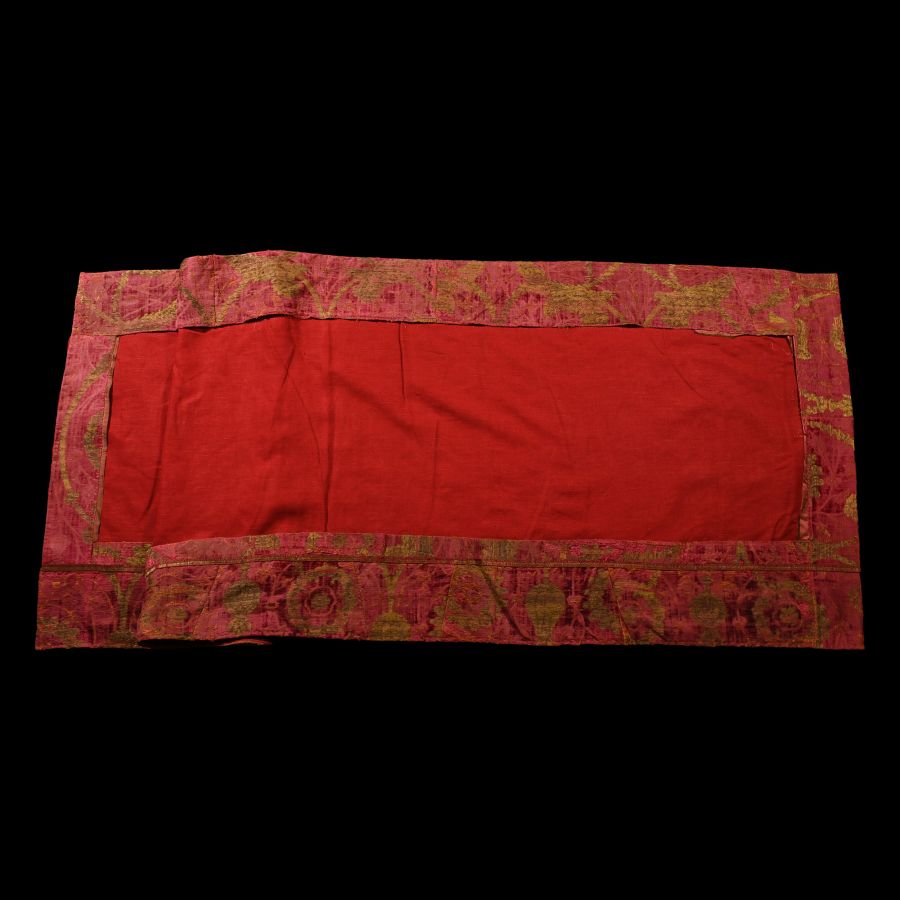
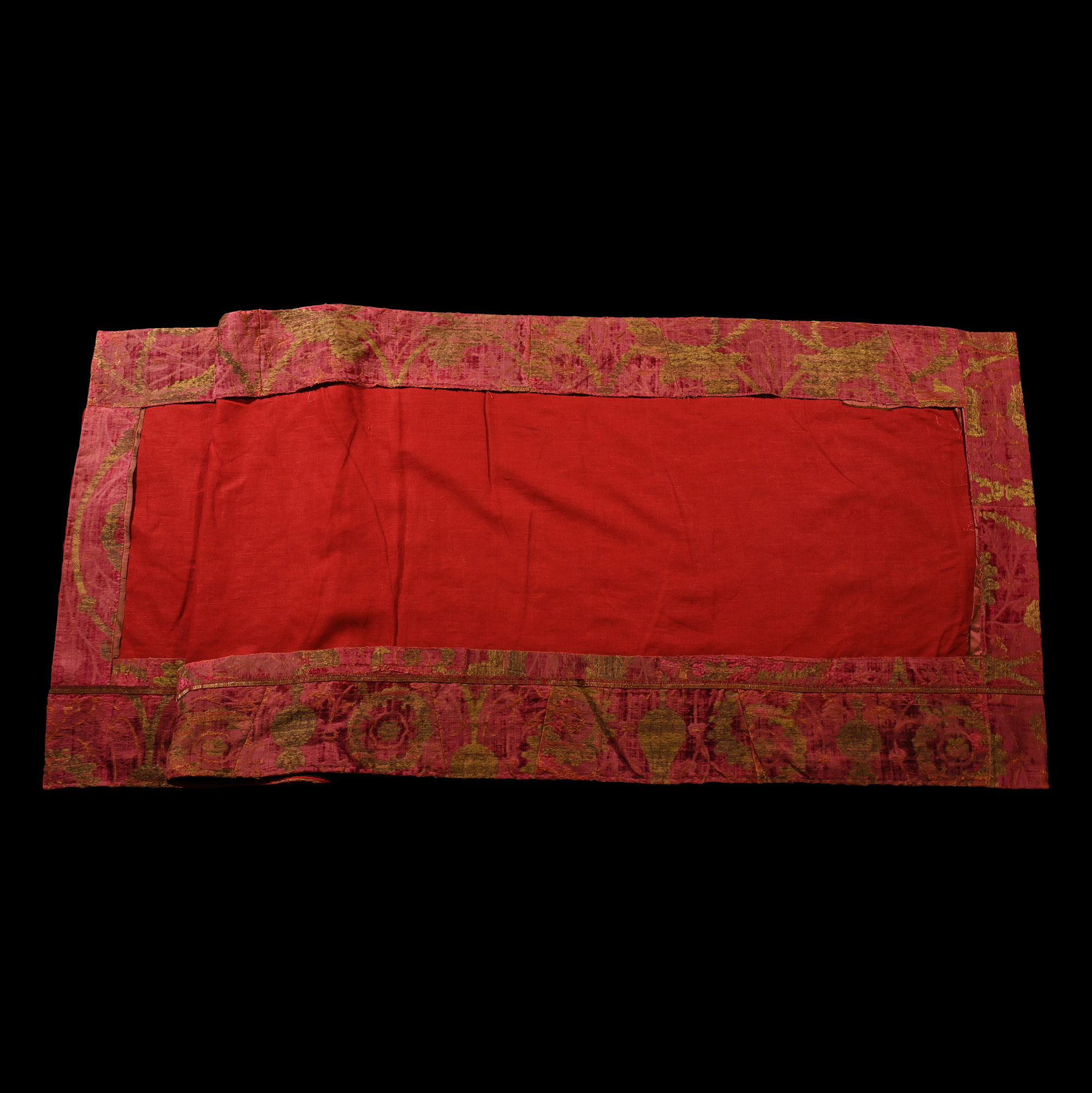
Post Medieval Altar Tapestry Frontal
16TH CENTURY A.D.
35 1/2 x 95 5/8 in. (2.6 kg, 90 x 243 cm).
Rectangular velvet tapestry panel with crimson field and gold-yellow detailing, made up from individual strips and with a central void; more recent fabric backing; the design an arcade with rosettes and tendrils. [No Reserve]
ProvenanceEx central London gallery.
This lot is accompanied by an illustrated lot declaration signed by the Head of the Antiquities Department, Dr Raffaele D’Amato.
TimeLine Auctions follows a vetting process to ensure the authenticity and legality of all items, reinforcing our commitment to integrity and responsible trading. Each antiquity, antique, and coin lot undergoes thorough examination by a vetting committee of at least ten external specialists, professional trade association members, scientists, and archaeologists: Our Vetting Process
AUCTIONS:
TimeLine is a leading auction house specialising in antiquities, ancient art, collectables, natural history, coins, medals, and books. Our auctions offer museums, collectors, historians, and enthusiasts the opportunity to acquire unique and historically significant pieces.
-
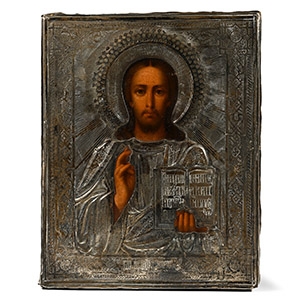
Russian Wooden Icon with Christ Pantocrator with Silver Cover
Dated 1889 A.D.Sold for (Inc. bp): £546
Showing Christ Pantocrator (Lord of the Universe) making a blessing gesture with the right hand, the left hand holding the gospel, covered with an elaborate silver oklad marked 84, with repoussé and chased decoration, incised Cyrillic inscription on the Gospel, and on the bottom an incised Cyrillic inscription 'Господь Вседержитель'= Lord Almighty. 498 grams, 22.5 x 18 cm
Property of a London, UK, gentleman collector. This lot is accompanied by an illustrated lot declaration signed by the Head of the Antiquities Department, Dr Raffaele D’Amato.
This fine Russian religious work depicts Christ Pantocrator, ‘Almighty’ or ‘All Powerful’. It is a compound word formed from the Greek words for ‘all’ and the noun ‘strength’ (kratos). In Orthodox Christianity, his icon is one of the most common religious images. The 'oklad', or protective covering of the icon, was made from silver, often gilt, sometimes with cloisonné enamel decorations, and always decorated with geometric floral patterns. The style of Christ recalls the work of Ivan Semenovich Gubkin, an embosser active in Russia at the beginning of 20th century. -
.jpg)
Ethiopian Wooden Diptych Icon of the Virgin and Child with Gabra Manfus Qeddus and Saints
17th century A.D.Sold for (Inc. bp): £2,210
Portable shrine with geometric ornament and crosses to the outer face, opening doors to reveal a diptych with image of Mary Theotokos and Child, escorted by angels Gabriel and Michael with drawn swords, on the left; on the right, Abune Gabra Manfus Qeddus with hands raised, nimbate figures of Takla Haymanot and Ewostatewos with yellow and blue garments on the right; on the lower right corner Saint George (Bet Gorgis) killing the dragon. 453 grams, 21.8 x 19 cm
Sir Alistair McAlpine, circa 2000. This lot is accompanied by an illustrated lot declaration signed by the Head of the Antiquities Department, Dr Raffaele D’Amato.
In the Ethiopian icons, Gabra Manfas Qeddus (Servant of the Holy Spirit) the famous hermit whose sanctity tamed the wild beasts, is often represented. The exterior faces of these diptych panels, like the smaller bilateral diptychs of the 17th century, were carved with centralised cross designs that reflects the carved designs of contemporary wooden altar tablets. -
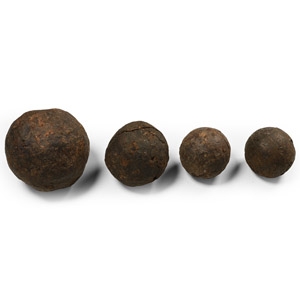
Civil War Iron Shot Collection
17th century A.D.Sold for (Inc. bp): £13
Comprising small grape or canister shots, and a larger shot, likely for a smoothbore cannon. 1.66 kg total, 37-61 mm
Found on various UK sites since 1974. Property of an Essex collector. This lot is accompanied by an illustrated lot declaration signed by the Head of the Antiquities Department, Dr Raffaele D’Amato.
