
Loading, please wait...
LOT 2128
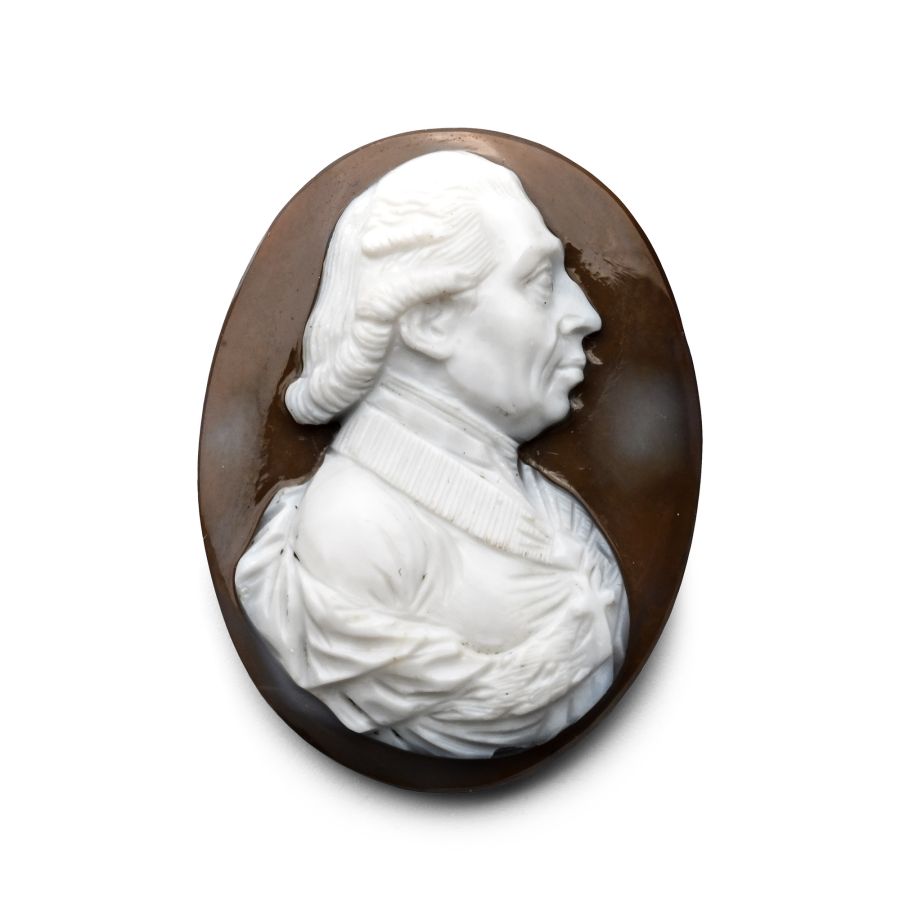
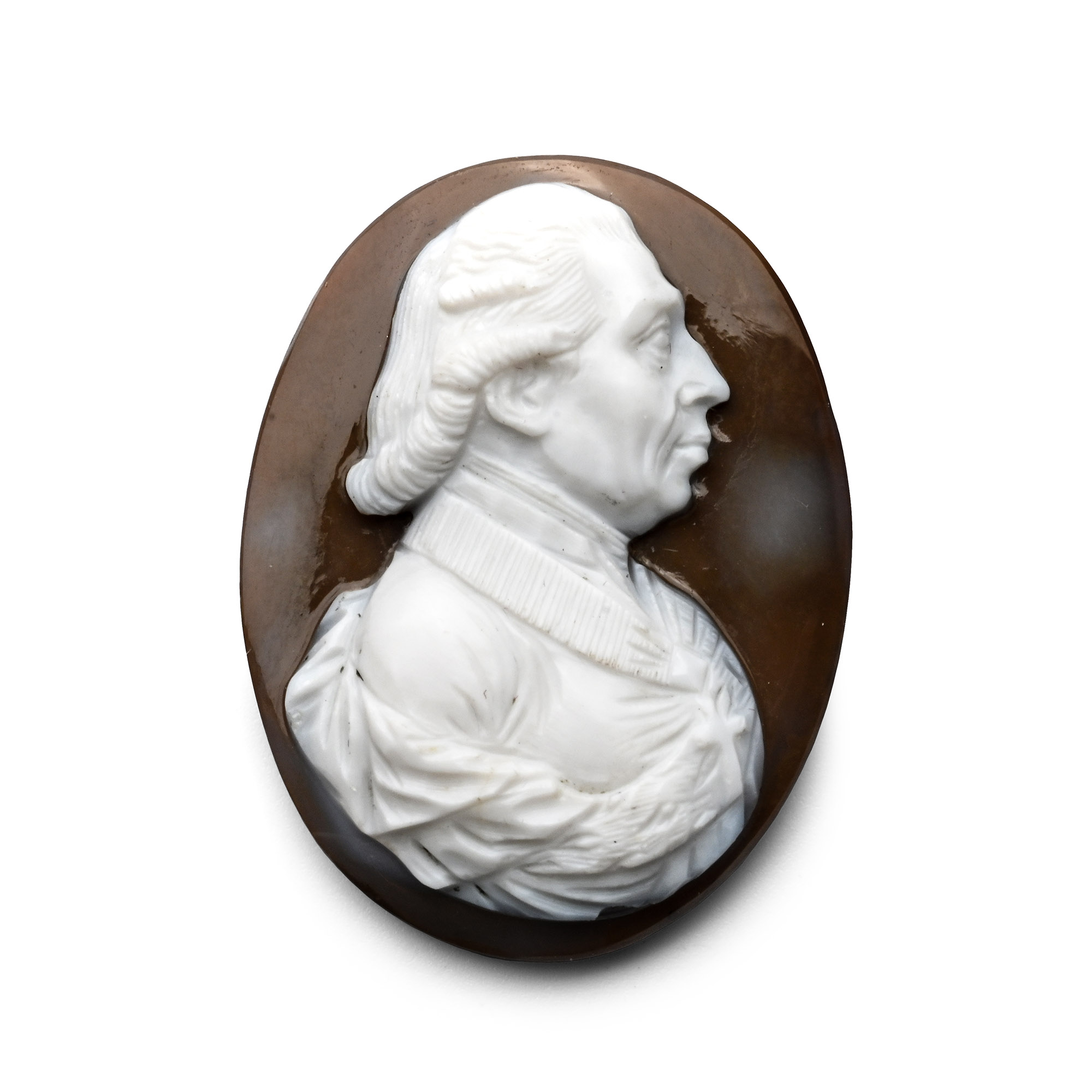
Post Medieval Agate Cameo of Bishop Karl Theodor Anton Maria Von Dalberg
GERMANY, 19TH CENTURY A.D.
1 in. (3.52 grams, 25 mm).
Ellipsoid with reserved profile of Karl Theodor Anton Maria Von Dalberg facing left, attributed to Johann Martin Bückle (1742-1811).
ProvenancePrivate collection, Europe.
Acquired on the English art market.
Karl Theodor Anton Maria von Dalberg (February 8, 1744 - February 10, 1817) was a Catholic German bishop and statesman. Throughout his career, he held various significant positions, including Prince-Archbishop of Regensburg, Arch-Chancellor of the Holy Roman Empire, Bishop of Constance and Worms, Prince-Primate of the Confederation of the Rhine, and Grand Duke of Frankfurt.
CONDITIONTimeLine Auctions follows a vetting process to ensure the authenticity and legality of all items, reinforcing our commitment to integrity and responsible trading. Each antiquity, antique, and coin lot undergoes thorough examination by a vetting committee of at least ten external specialists, professional trade association members, scientists, and archaeologists: Our Vetting Process
AUCTIONS:
TimeLine is a leading auction house specialising in antiquities, ancient art, collectables, natural history, coins, medals, and books. Our auctions offer museums, collectors, historians, and enthusiasts the opportunity to acquire unique and historically significant pieces.
LOT 2128
Post Medieval Agate Cameo of Bishop Karl Theodor Anton Maria Von Dalberg
Estimate £350 - 450€410 - 520 (for guidance only)$470 - 610 (for guidance only)
-
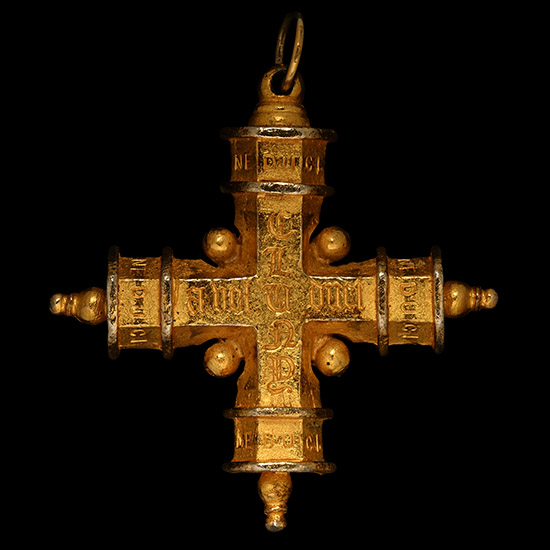
Spanish Silver-Gilt Cross Pendant
20th century A.D.Sold for (Inc. bp): £572
Hollow-formed with hexagonal-section arms, each with a raised collar bearing an incised legend 'ME DU CI TO CE LOS' and granule finial; granules between the arms; blackletter legend 'CLUNY' vertically and 'a vol duci' horizontally; suspension ring. 33.32 grams, 59 mm
Ex Cornish collection, UK. Property of a London, UK, antiquarian.
The Abbaye de Cluny is a site of pilgrimage, a former Benedictine monastery. -
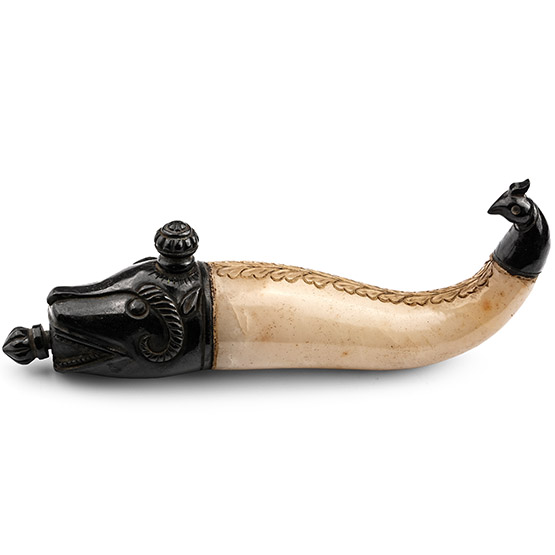
Indian Mutton Fat Jade Carved Fish-Shaped Gunpowder Flask
Late 20th-21st century A.D.Sold for (Inc. bp): £260
Carved in the round in the form of a fish with S-curved body in grey-white stone; the finial a bird's head and neck; fish-head with open jaws, lotus-flower knops as stoppers. 331 grams, 19.5 cm
Private collection, UK. -
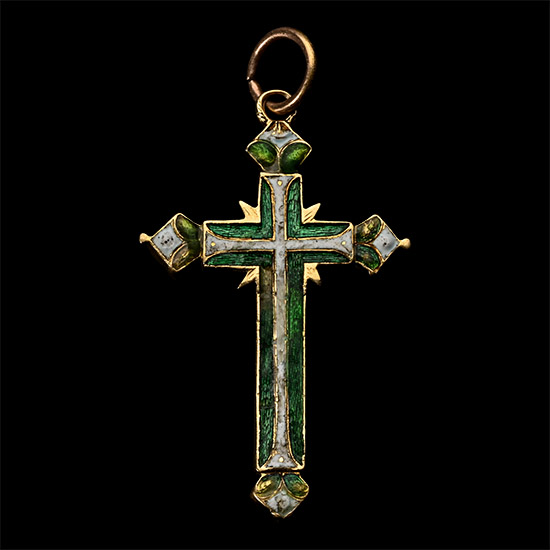
Enamelled Gold Cross Pendant with Instruments of Passion
Germany, 17th century A.D.Estimate: £2,000 - 3,000 (+bp*)
Current Winning Bid: £1,300
A finely executed devotional pendant in the form of a Latin cross, worked in high-carat gold and elaborately decorated on both sides; the obverse set with twelve table-cut almandine garnets, each enclosed within raised rub-over collets and inset with finely painted polychrome enamel scene depicting symbols of the Arma Christi, the Instruments of the Passion, including the scourge, hammer and pincers, the column of flagellation, rooster, dice, crown of thorns, and other emblematic motifs; the upper terminal with black enamel and bearing a gilt inscription 'INRI', an abbreviation of 'Iesus Nazarenus Rex Iudaeorum' for 'Jesus of Nazareth, King of the Jews'; the reverse with guilloché enamel in translucent green and opaque white, forming a cross with stylised foliate terminals; the pendant retaining its original integral suspension loop; some restoration on the enamel. 4.06 grams, 43 mm
Acquired on the European art market. This lot has been checked against the Interpol Database of stolen works of art and is accompanied by search certificate number no.13403-257997.
This pendant typifies early 17th-century German devotional jewellery, in which vivid enamelwork and miniature Passion iconography converge in portable, contemplative forms of piety.
