
Loading, please wait...
LOT 0425
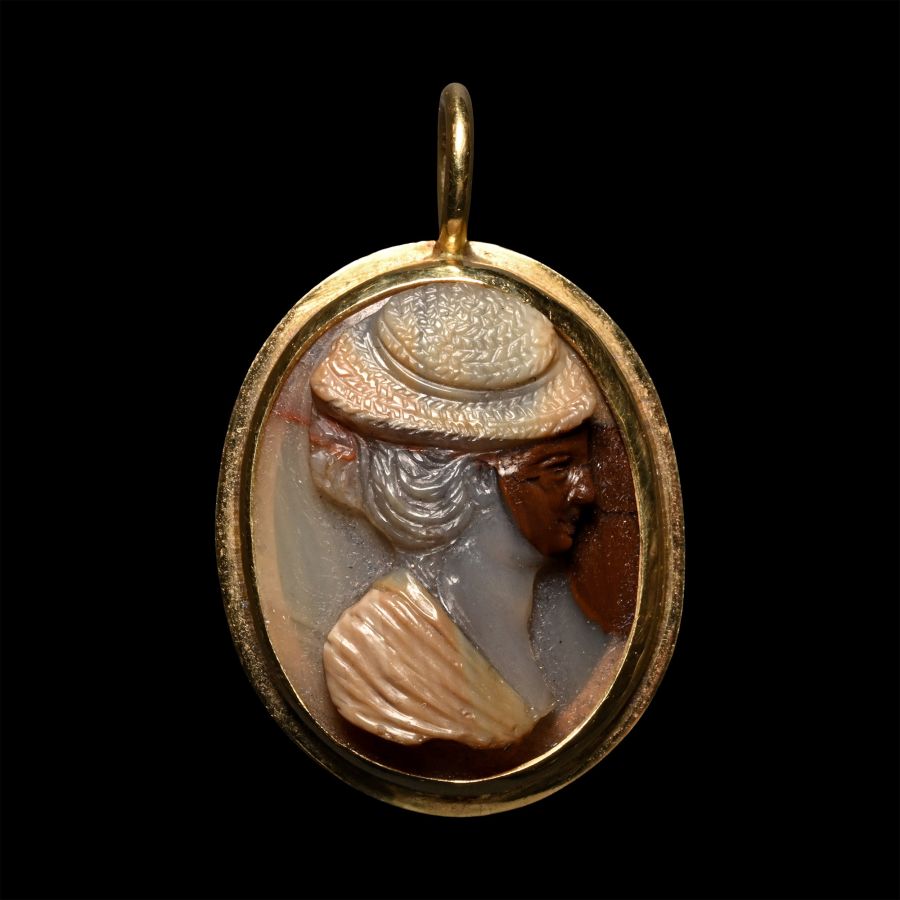
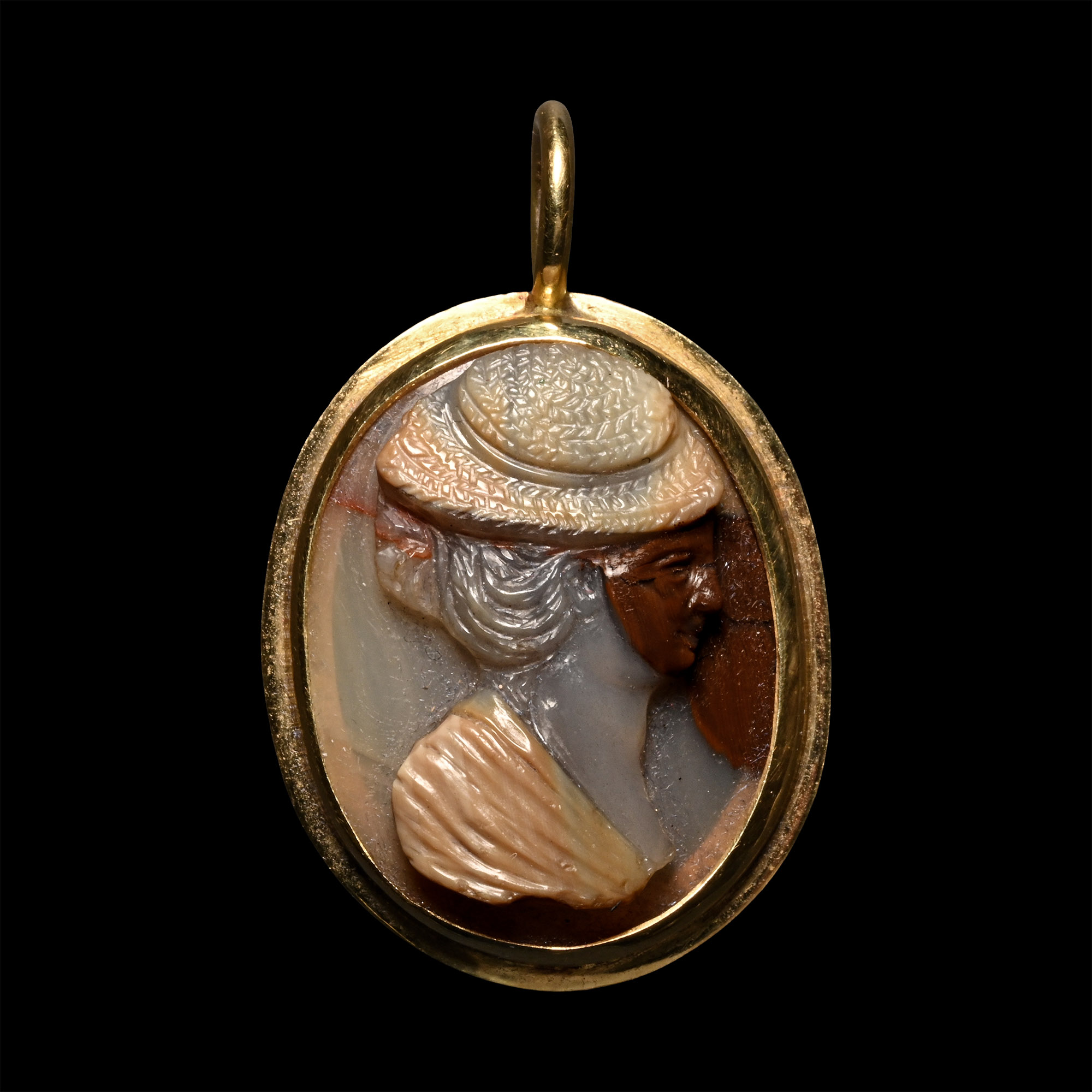
Post Medieval Agate Cameo of a Lady in Gold Pendant
19TH CENTURY A.D.
1 3/8 in. (6.40 grams, 36 mm).
Carved in low-relief, a female profile bust wearing a straw hat and mantle.
ProvenancePrivate collection, Europe.
Acquired on the English art market.
TimeLine Auctions follows a vetting process to ensure the authenticity and legality of all items, reinforcing our commitment to integrity and responsible trading. Each antiquity, antique, and coin lot undergoes thorough examination by a vetting committee of at least ten external specialists, professional trade association members, scientists, and archaeologists: Our Vetting Process
AUCTIONS:
TimeLine is a leading auction house specialising in antiquities, ancient art, collectables, natural history, coins, medals, and books. Our auctions offer museums, collectors, historians, and enthusiasts the opportunity to acquire unique and historically significant pieces.
LOT 0425
Post Medieval Agate Cameo of a Lady in Gold Pendant
Estimate £1,000 - 1,400€1,160 - 1,620 (for guidance only)$1,350 - 1,890 (for guidance only)
-
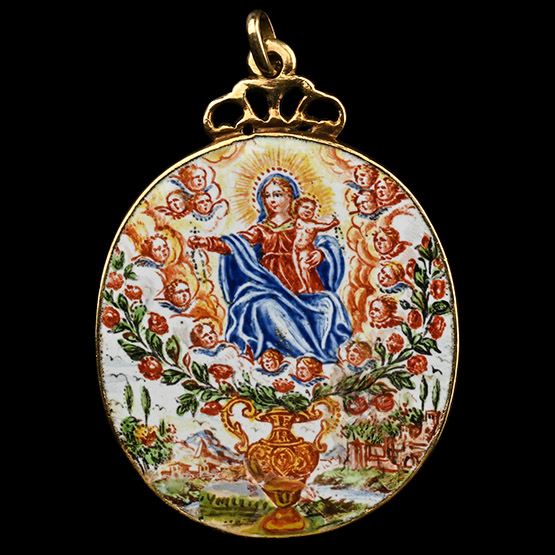
Enamelled Gold Pendant Depicting the Virgin and Child with Saints
Sicily, 17th-18th century A.D.Sold for (Inc. bp): £3,900
Decorated to obverse with a vase abundant with flowers in a mountainous landscape, with reserved roundels containing the images of Saints Anthony of Padua, John the Baptist and Saint Dominic de Guzmán; reverse with another vase in a landscape emitting a rose garland supporting an image of the Virgin and Child in Majesty, amidst clouds and angels. 24 grams, 61 mm
Private collection, Europe. Acquired on the French art market. This lot has been checked against the Interpol Database of stolen works of art and is accompanied by search certificate number no.13057-248398.
The pendant is decorated in the manner of Giuseppe Bruno who was an enameler from Messina, Sicily (active c.1652-82). -
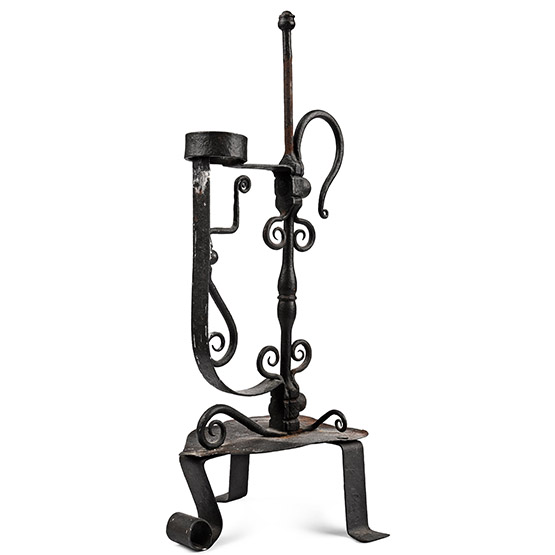
Iron Candle Holder
France, 18th century A.D.Estimate: £300 - 400 (+bp*)
Opening Bid: £150
The central baluster knopped column with scrolling ornament and looped carrying handle above a trefoil-shaped platform and rivetted tripod feet. 1.21 kg, 44 cm
Ex Nic McElhatton, former chairman of Christie's South Kensington. Property of a Berkshire, UK, collector. Accompanied by a copy of McElhatton's cataloguing page. -
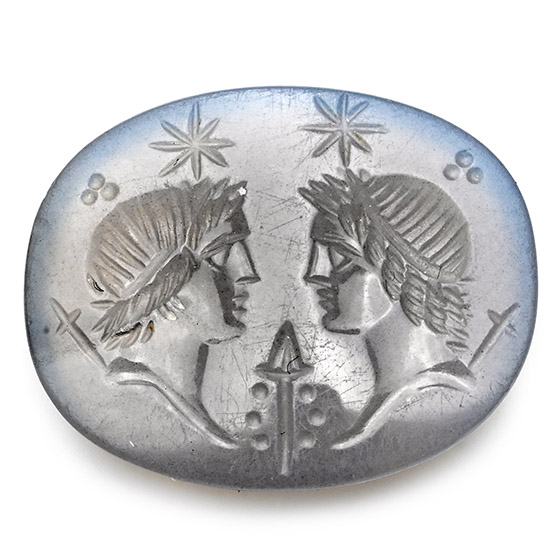
Post-Classical Chalcedony Gemstone with Two Facing Busts of the Dioscuri
19th century A.D. or laterEstimate: £600 - 800 (+bp*)
Opening Bid: £300
Incuse male profile busts with stars in the background and other objects in the field; supplied with a museum-quality impression. 2.17 grams, 19 mm
Acquired on the French art market. Private collection, England.
