
Loading, please wait...
LOT 0424
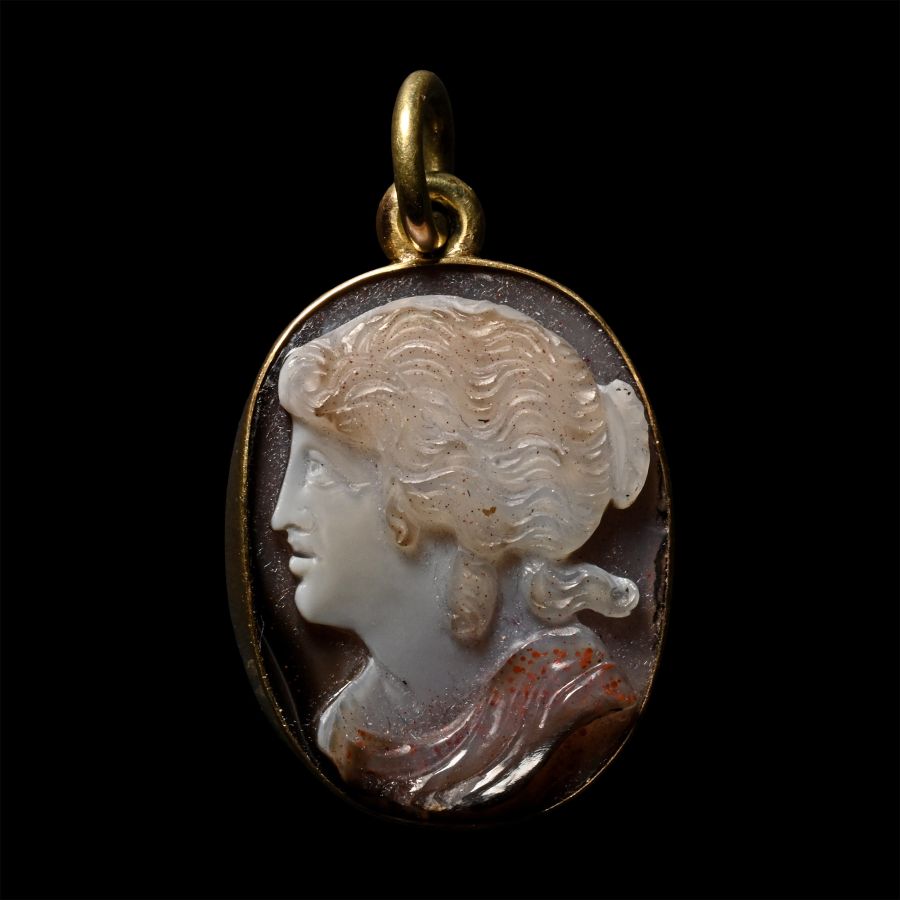
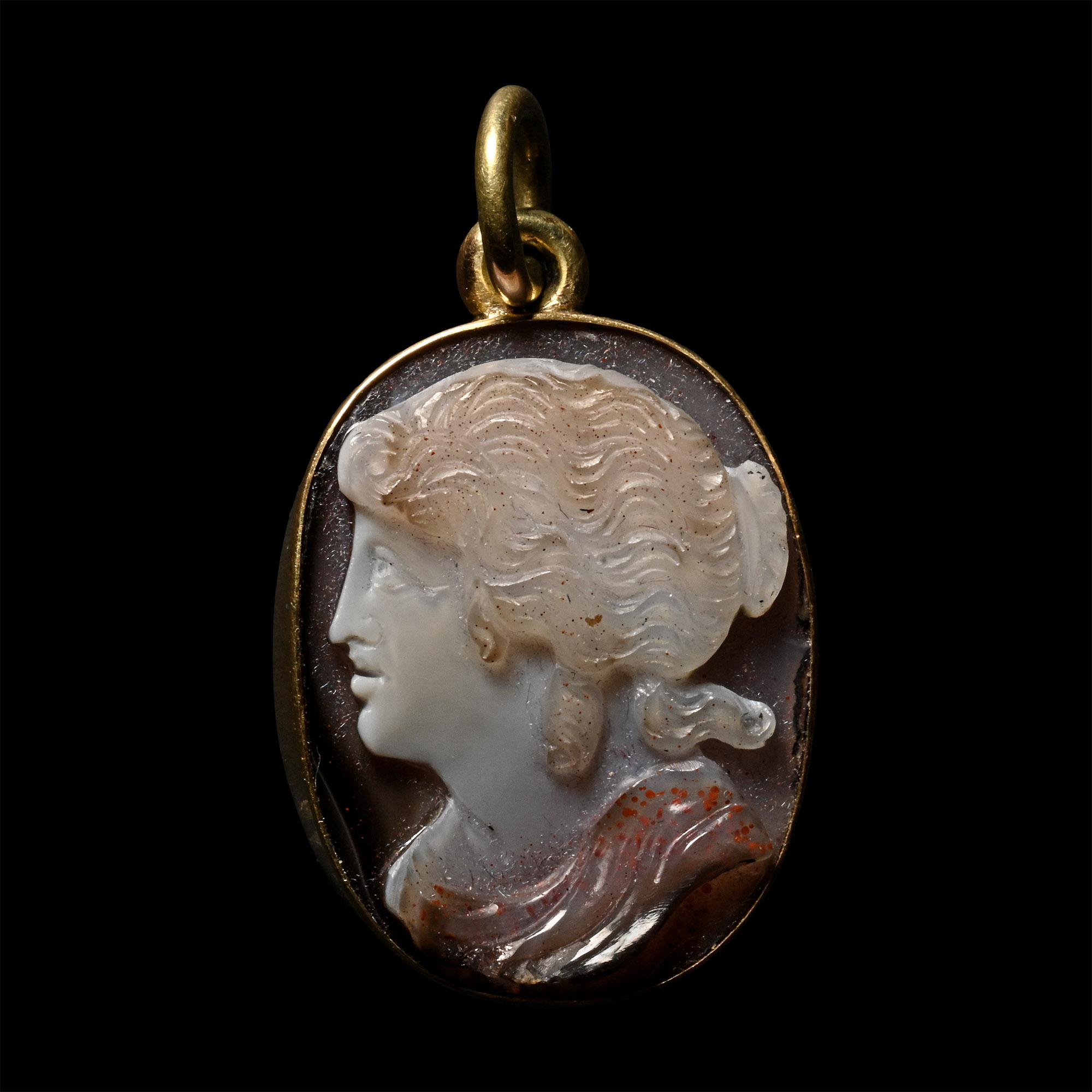
Post Medieval Agate Cameo of a Classical Muse in Gold Mount
ITALY, 18TH CENTURY A.D.
1 1/2 in. (7.8 grams, 38 mm).
Gold cell with suspension loop, inset banded agate panel with reserved female profile bust with hair in a chignon.
ProvenancePrivate collection, Europe.
Acquired on the English art market.
TimeLine Auctions follows a vetting process to ensure the authenticity and legality of all items, reinforcing our commitment to integrity and responsible trading. Each antiquity, antique, and coin lot undergoes thorough examination by a vetting committee of at least ten external specialists, professional trade association members, scientists, and archaeologists: Our Vetting Process
AUCTIONS:
TimeLine is a leading auction house specialising in antiquities, ancient art, collectables, natural history, coins, medals, and books. Our auctions offer museums, collectors, historians, and enthusiasts the opportunity to acquire unique and historically significant pieces.
LOT 0424
Post Medieval Agate Cameo of a Classical Muse in Gold Mount
Estimate £800 - 1,000€930 - 1,160 (for guidance only)$1,080 - 1,350 (for guidance only)
-
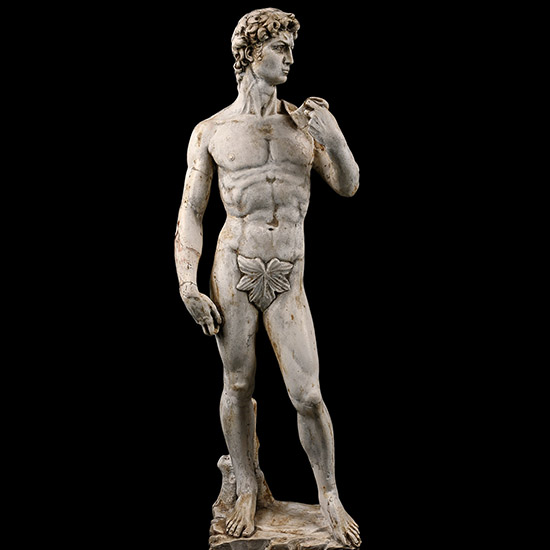
Replica of David Statue by Michelangelo
Late 19th-20th century A.D.Estimate: £600 - 800 (+bp*)
Opening Bid: £300
A composition statue modelled after the Italian Renaissance masterpiece sculpted by Michelangelo, David depicted nude in a contrapposto position, carrying the weight on his right leg, holding the sling in his raised left hand, and the handle of the sling placed in his right hand, with a large ivy leaf covering his genitals; restored. 18.75 kg, 82.5 cm high
Private collection, London.
Michelangelo created the original sculpture between 1501 and 1504, and it was originally commissioned as one of a series of statues of twelve prophets. However, it was then placed in the public square in front of the Palazzo della Signoria. -
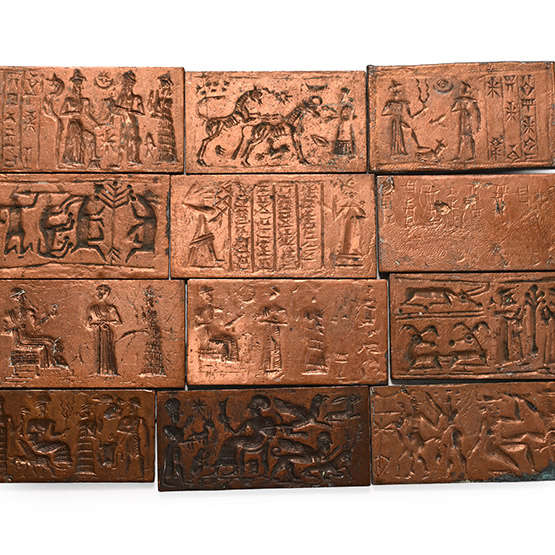
Cylinder Seal Electrotype Group
Late 19th-early 20th century A.D.Sold for (Inc. bp): £85
Of academic interest, copper-coated lead seal impressions including presentation scenes, combat scenes, court scenes and others; some with cuneiform text. 278 grams total, 39-47 mm
Possibly made by the British Museum. From a West Country, UK, private collection. -
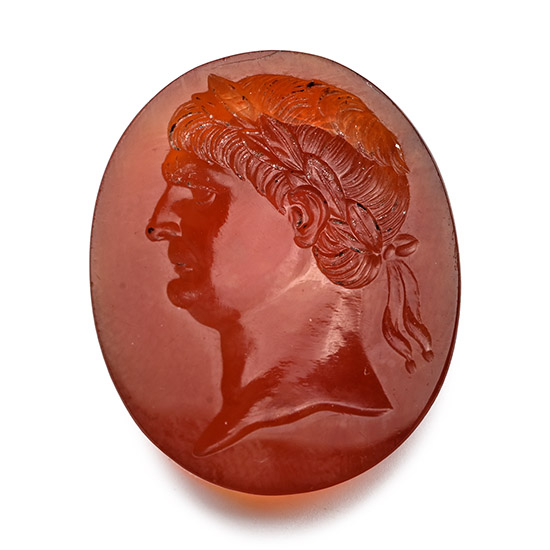
Neoclassical Carnelian Gemstone of Roman Emperor Trajan
Italy, 18th century A.D.Estimate: £1,000 - 1,400 (+bp*)
Opening Bid: £500
Intaglio profile bust with short hair and laurel wreath; supplied with a museum-quality impression. 3.01 grams, 21 mm
Private English collection, formed between the late 1970s and early 1990s. Private collection, London, UK.
