
Loading, please wait...
LOT 0367
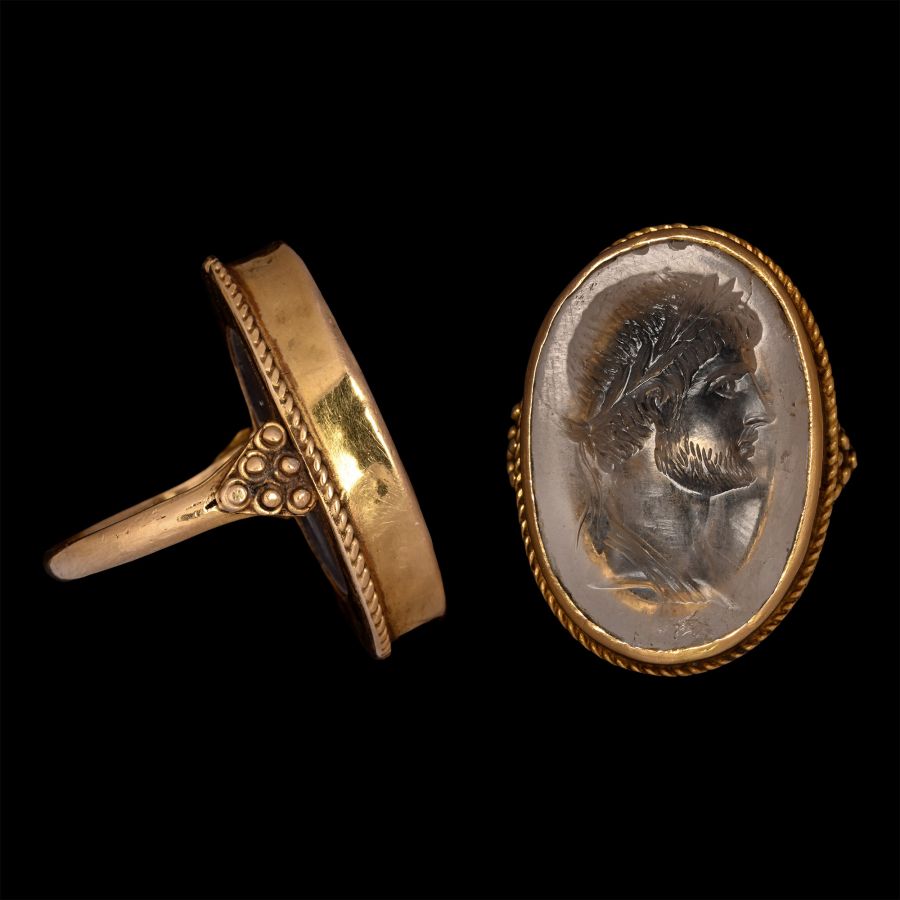
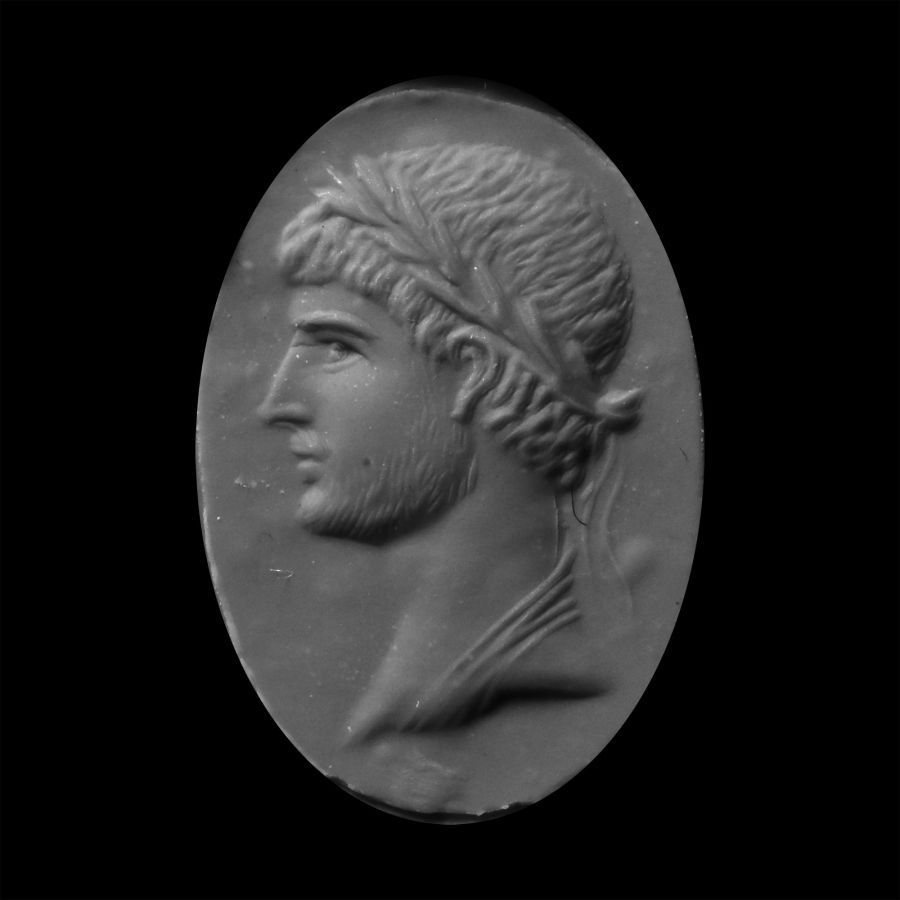
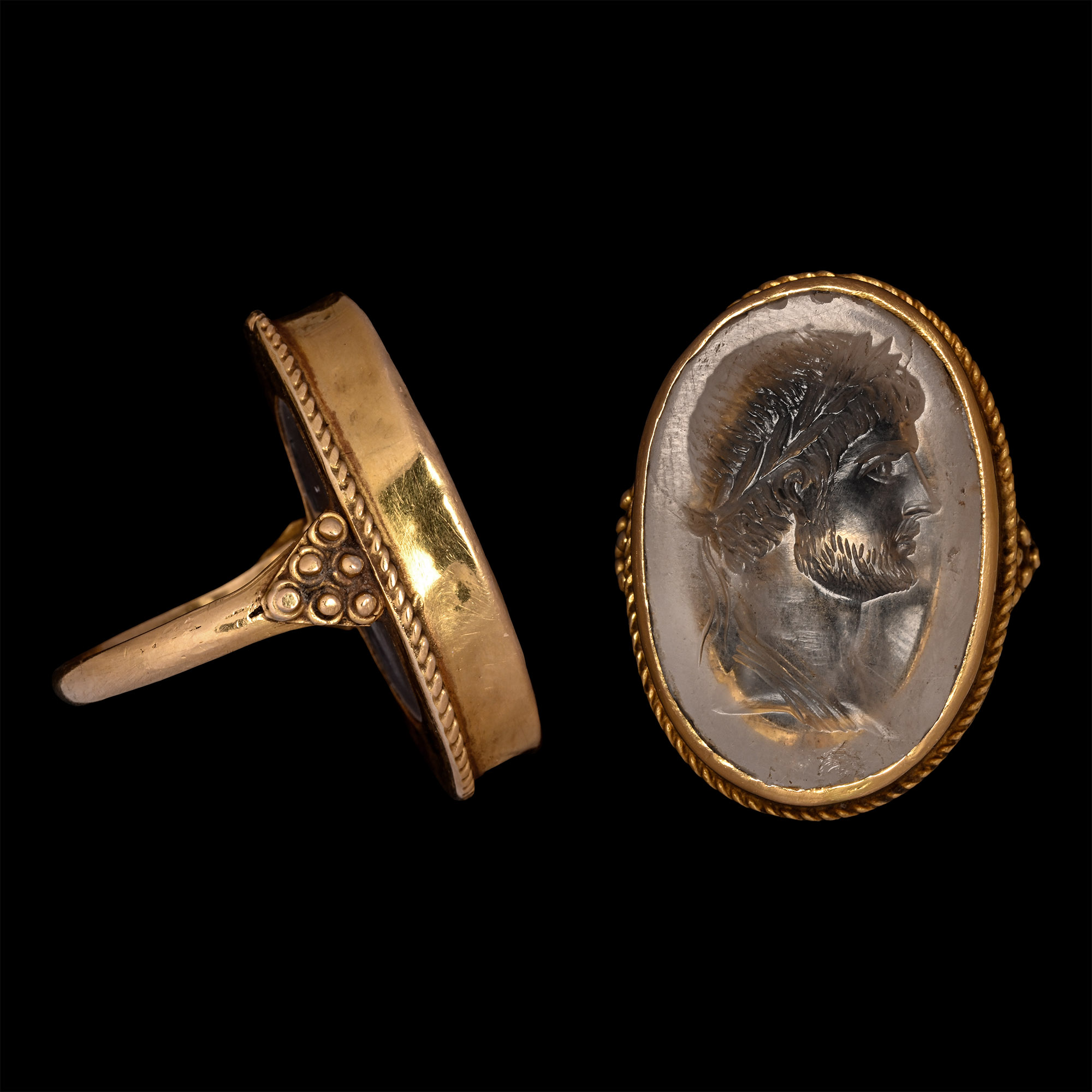
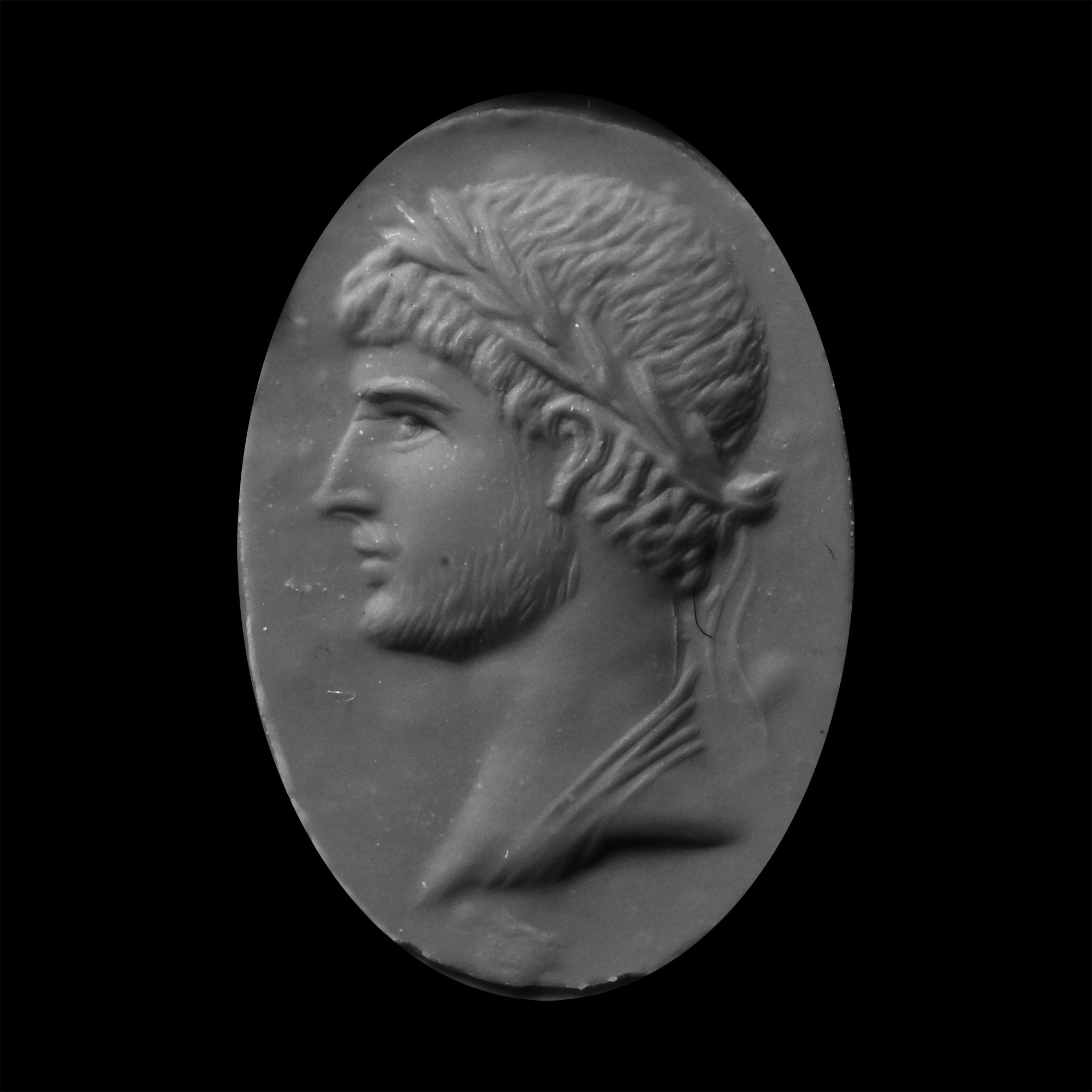
Post-Classical Rock Crystal Gemstone with Bust of the Emperor Hadrian
17TH CENTURY A.D. OR LATER
1 1/4 in. (12.68 grams, 31.18 mm overall, 20.40 mm internal diameter (approximate size British R, USA 8 1/2, Europe 18 3/4, Japan 18)).
Ellipsoid in plan with incuse profile bust of Emperor Hadrian, bearded and wearing a laurel wreath on his brow; in an antique mount open to the underside; supplied with a museum-quality impression.
ProvenanceAcquired on the French art market.
Private collection, England.
This lot has been checked against the Interpol Database of stolen works of art and is accompanied by search certificate number no.13148-249494.
Cf. Chadour, A.B., Rings. The Alice and Louis Koch Collection, volume I, Leeds, 1994, item 71, for type.
CONDITIONTimeLine Auctions follows a vetting process to ensure the authenticity and legality of all items, reinforcing our commitment to integrity and responsible trading. Each antiquity, antique, and coin lot undergoes thorough examination by a vetting committee of at least ten external specialists, professional trade association members, scientists, and archaeologists: Our Vetting Process
AUCTIONS:
TimeLine is a leading auction house specialising in antiquities, ancient art, collectables, natural history, coins, medals, and books. Our auctions offer museums, collectors, historians, and enthusiasts the opportunity to acquire unique and historically significant pieces.
LOT 0367
Post-Classical Rock Crystal Gemstone with Bust of the Emperor Hadrian
Estimate £2,500 - 3,500€2,900 - 4,060 (for guidance only)$3,380 - 4,730 (for guidance only)
-
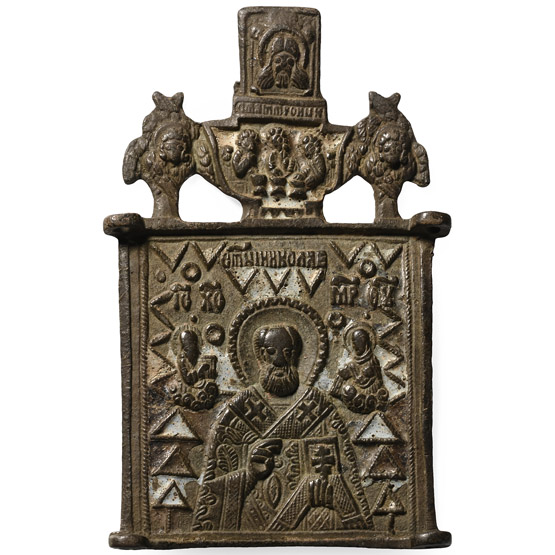
Eastern European Enamelled Bronze Icon of St Nicholas
Circa 18th-19th century A.D.Sold for (Inc. bp): £39
Central panel of triptych formed as a rectangular plaque of low-relief figure of Saint Nicholas flanked by smaller figures of Jesus and Mary to each side, a suspension hoop to each corner; upper panel with central image of trinity with cherubs and vernicle; remains of pale blue enamel. 47 grams, 90 mm
Ex Constable collection, 1990s. Ex P. Morris collection. -

Stuart Period Carved Bone Janus Chaplet Bead
France, 17th century A.D.Sold for (Inc. bp): £819
Janiform, carved with the head of Christ to one side and to the other a skull, from a Rosary; with a turned bronze display stand. 100 grams total, 48 mm includin stand
Private collection, Europe. Acquired on the English art market.
Originally part of a rosary; the head of Christ acting as an object of personal devotion, the skull as a reminder of his great sacrifice for our sins and of our own mortality. The gentle wear and warm patination are a testament to the years of devoted veneration by its previous owners. -
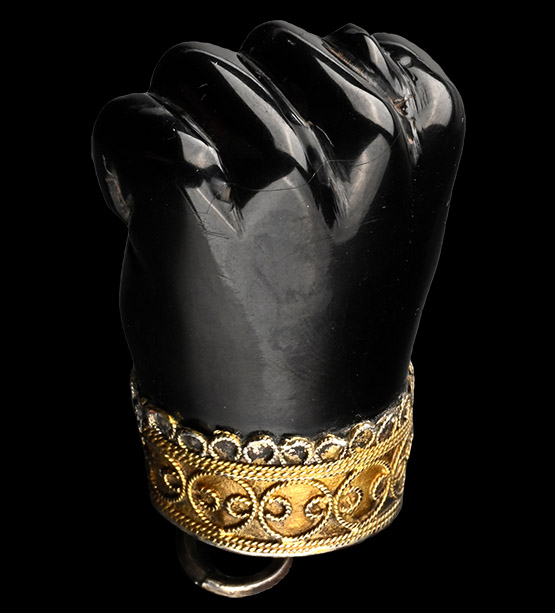
Silver-Gilt Mounted Jet 'Figa' Amulet
Spain, 17th century A.D.Estimate: £700 - 900 (+bp*)
Opening Bid: £350
Formed as a hand showing figa gesture, silver mount with applied twisted wires; attachment loop and ring to the top. 19.6 grams, 56 mm
Private collection, Europe. Acquired on the English art market.
Mano Fico, as protective amulets have been used since the ancient world, it was believed to protect from the evil eye and other dark and magical forces and to promote fertility. In ancient Rome, the fig sign, or mano fico, was made by the pater familias (father of the family) to ward off the evil spirits of the dead as a part of the Lemuria ritual. The ancient Greeks wore amulets of the gesture around the neck to protect from the evil eye, and also used the gesture in artwork. What they considered an overtly sexual gesture was expected to distract evil spirits from causing harm. The pendant would have been worn from a belt or from a chatelaine containing other protective talismans. This carving would have served as a token representing a person's pilgrimage to Santiago de Compostela, one of the very few places in which jet can be found and mined since at least the Middle Ages.
