
Loading, please wait...
LOT 1963
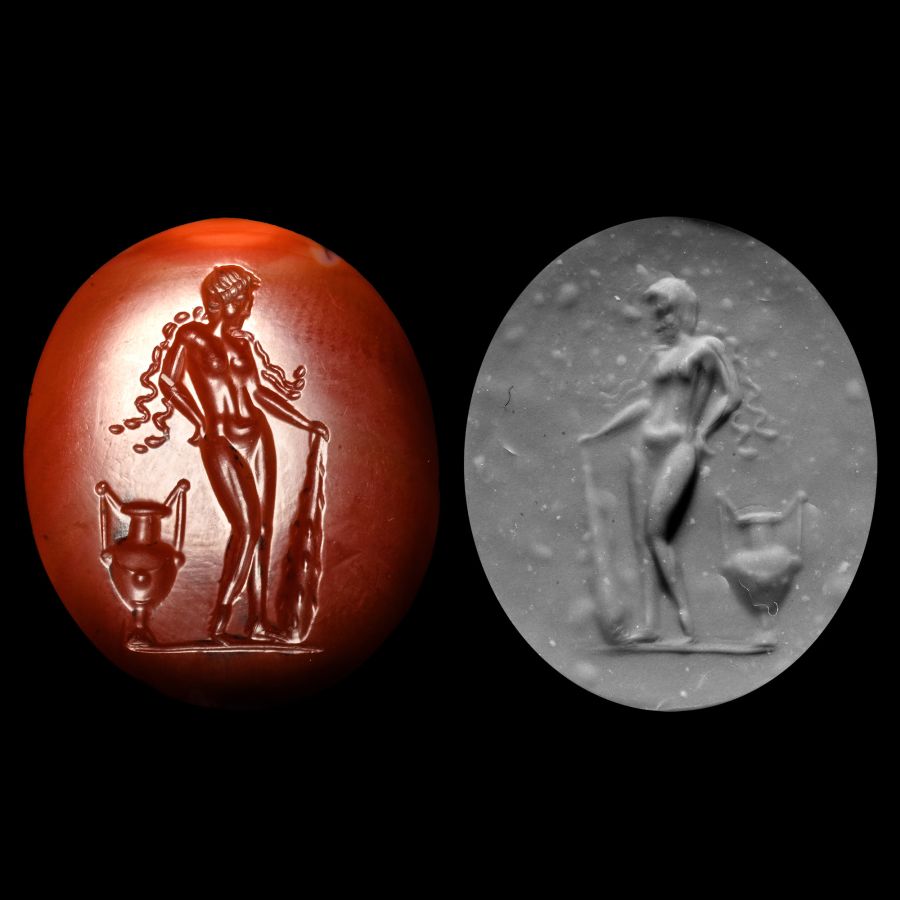
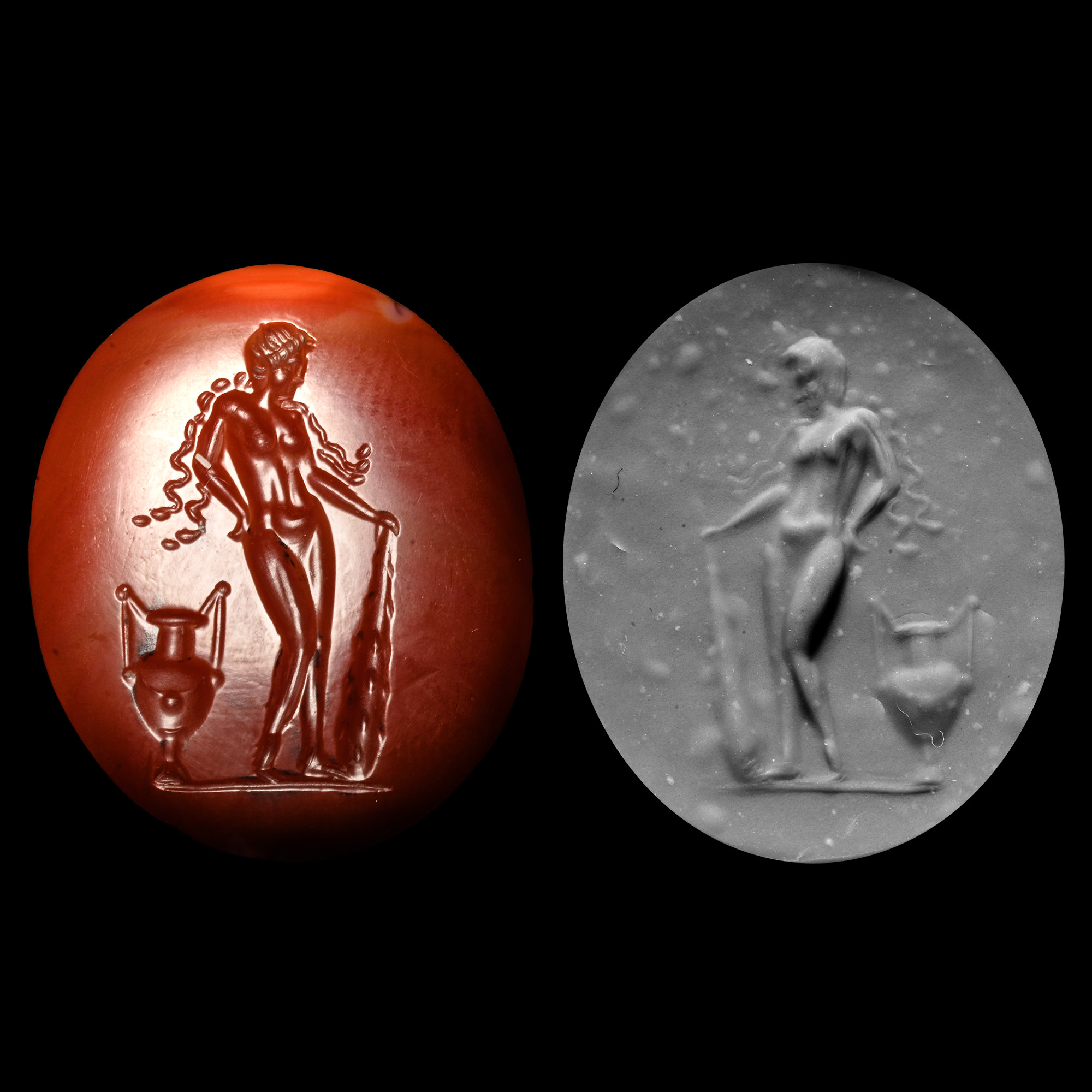
Post-Classical Red Agate Gemstone with Omphale
19TH-20TH CENTURY A.D.
1 in. (4.13 grams, 25 mm).
Elipsoid in plan with domed obverse; intaglio with Omphale standing nude on a baseline, right hand on her hip and supporting her club with her left; at her feet an Apulian trozella vessel; supplied with a museum-quality impression.
ProvenancePrivate collection, England.
FootnotesThe figure bears the classic symbol of Hercules - the club - but the details of her nude body and lack of beard indicate that this is a female.
Omphale was the queen of Lydia, daughter of the river Lardanos. According to myth, Hercules was a slave to the beautiful queen for three years and was forced by her to dress as a woman and spin wool, giving up his lion's head. It was Omphale who donned her lion's head and wielded the club, as depicted in this intaglio, an allegory of submission and revenge in love. An interesting post-classical work.
TimeLine Auctions follows a vetting process to ensure the authenticity and legality of all items, reinforcing our commitment to integrity and responsible trading. Each antiquity, antique, and coin lot undergoes thorough examination by a vetting committee of at least ten external specialists, professional trade association members, scientists, and archaeologists: Our Vetting Process
AUCTIONS:
TimeLine is a leading auction house specialising in antiquities, ancient art, collectables, natural history, coins, medals, and books. Our auctions offer museums, collectors, historians, and enthusiasts the opportunity to acquire unique and historically significant pieces.
LOT 1963
Post-Classical Red Agate Gemstone with Omphale
Estimate £500 - 700€580 - 810 (for guidance only)$680 - 950 (for guidance only)
-
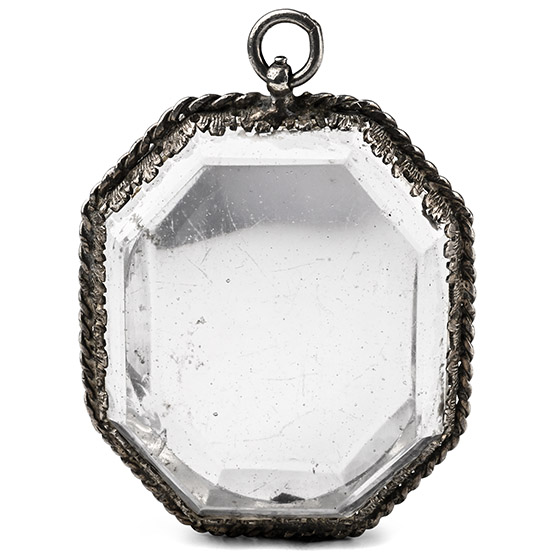
Post Medieval Silver-Mounted Glass Pendant
Germany, 17th century A.D.Estimate: £500 - 700 (+bp*)
Opening Bid: £250
Octagonal in plan with ropework and foliage frame, suspension loop. 52.2 grams, 65 mm
Private collection, Europe. Acquired on the English art market. -
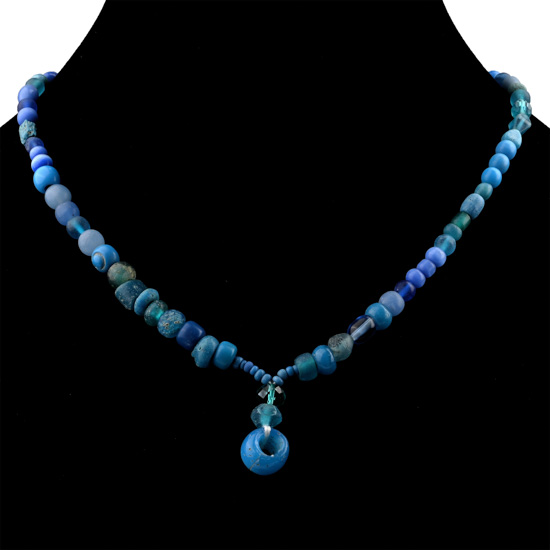
Glass Bead Necklace String
20th century A.D.Sold for (Inc. bp): £13
Mixed group of stone, glass and plastic beads, central feature a large annular bead. 17.75 grams, 38.5 cm
From London, UK, gallery collection, 1990s. -
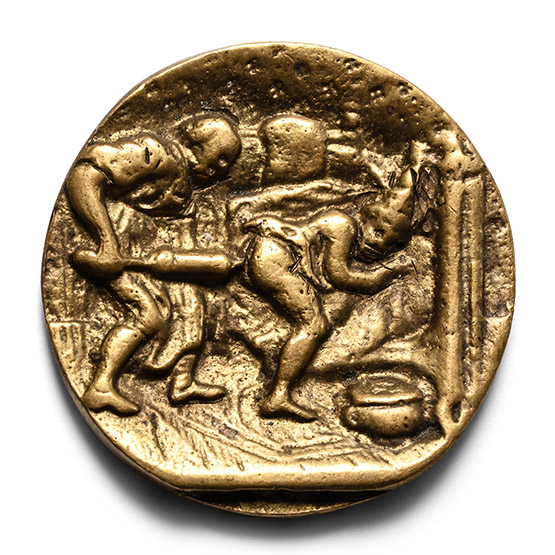
Dutch Erotic Bronze Box Inlay
17th-18th century A.D.Sold for (Inc. bp): £286
Discoid in plan with low-relief scene of two lovers, bed and chamber-pot. 8.42 grams, 26 mm
Ex private UK collection. Property of a London, UK, antiquarian.
