
Loading, please wait...
LOT 2002
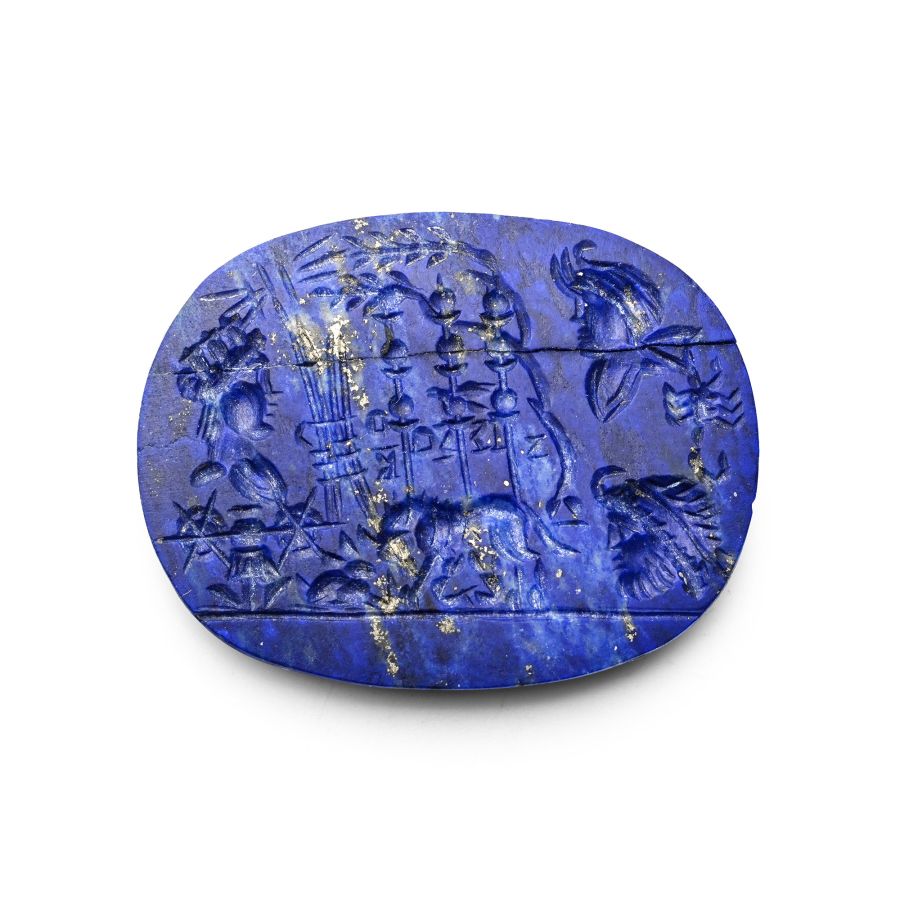
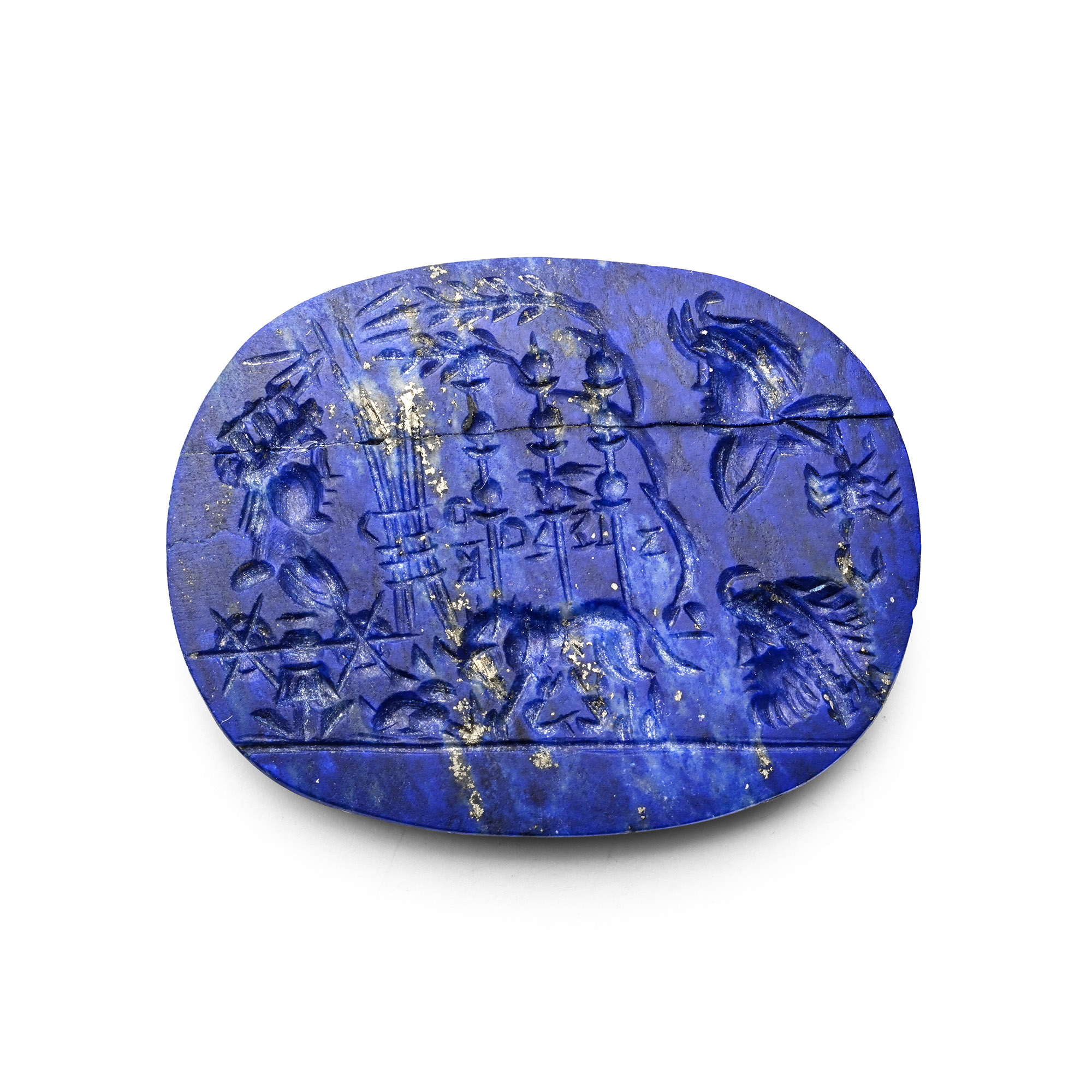
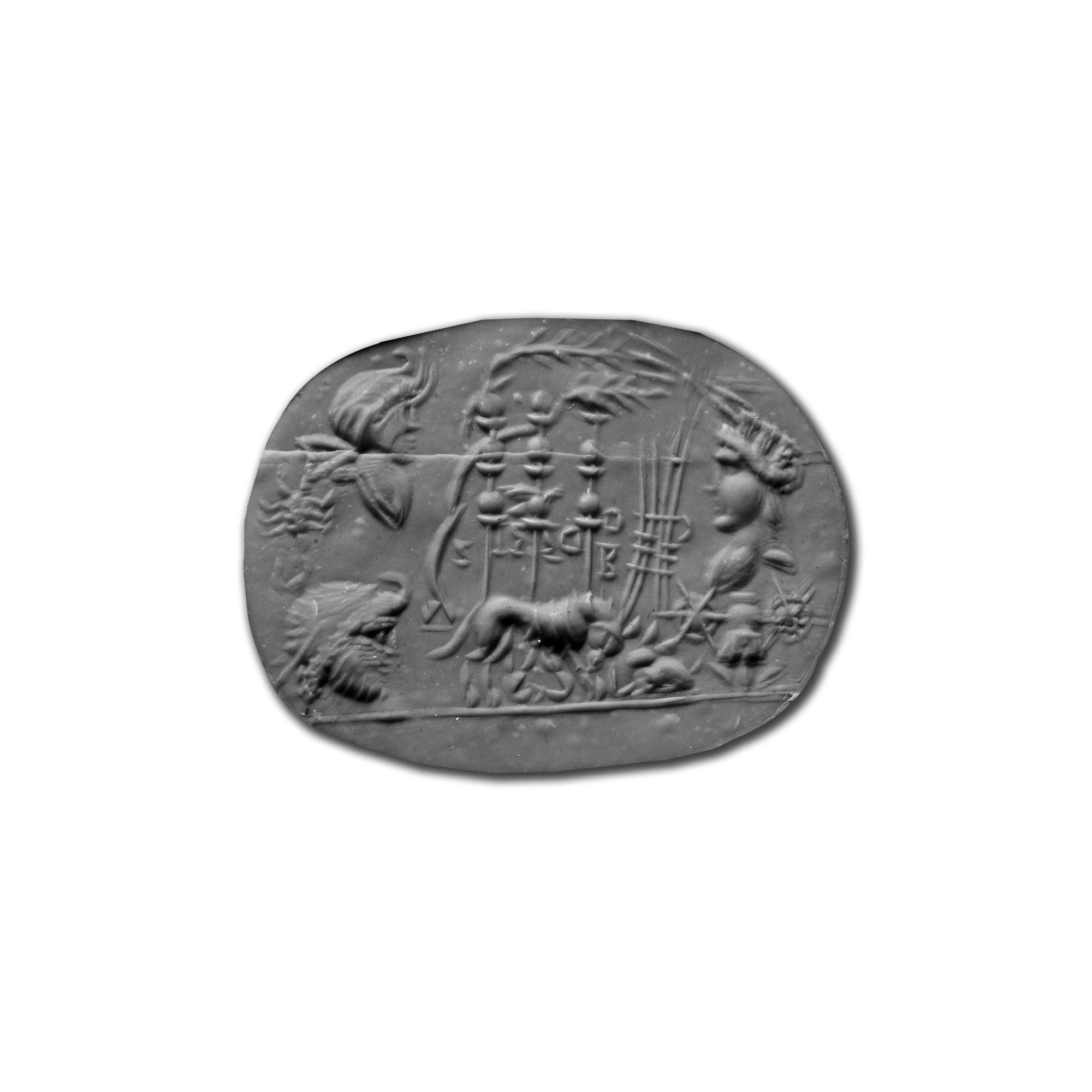
Post-Classical Lapis Lazuli Gemstone with Allegory of Roman Military Power
18TH-19TH CENTURY A.D.
1 3/8 in. (9.07 grams, 35 mm).
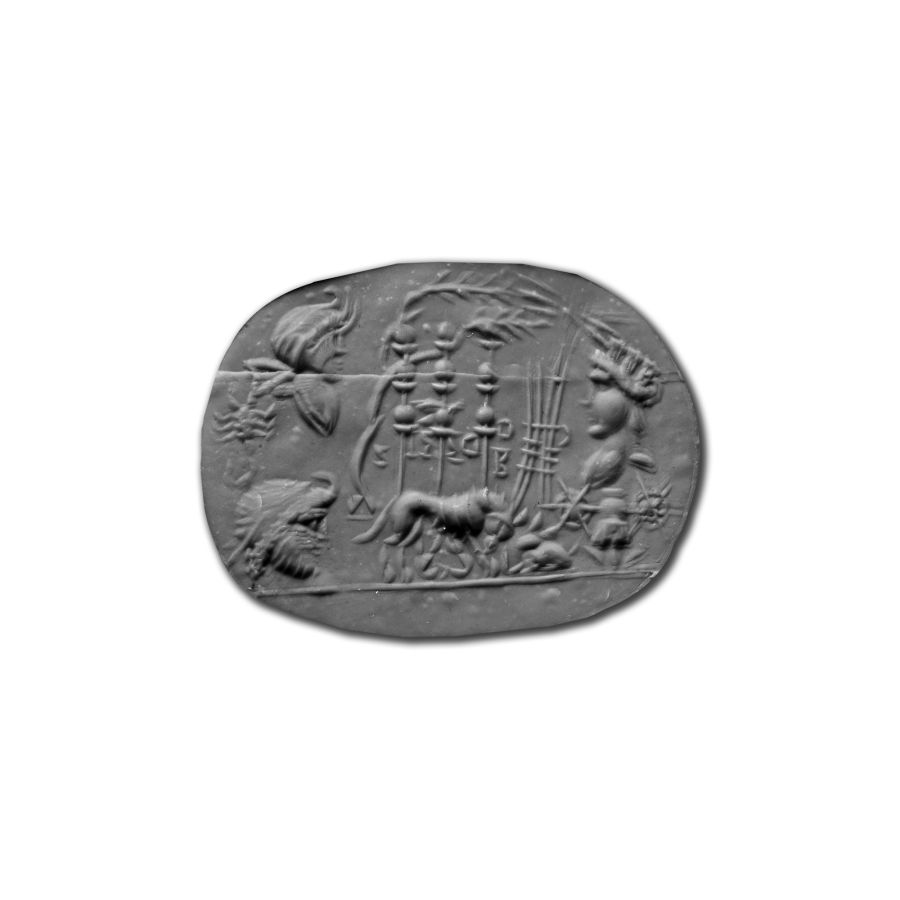
With incuse scene including three military standards, a laurel frond, three profile busts with crowns, a she-wolf suckling the twins and other items; supplied with a museum-quality impression.
ProvenanceAcquired on the European art market.
Private collection, England.
TimeLine Auctions follows a vetting process to ensure the authenticity and legality of all items, reinforcing our commitment to integrity and responsible trading. Each antiquity, antique, and coin lot undergoes thorough examination by a vetting committee of at least ten external specialists, professional trade association members, scientists, and archaeologists: Our Vetting Process
AUCTIONS:
TimeLine is a leading auction house specialising in antiquities, ancient art, collectables, natural history, coins, medals, and books. Our auctions offer museums, collectors, historians, and enthusiasts the opportunity to acquire unique and historically significant pieces.
LOT 2002
Post-Classical Lapis Lazuli Gemstone with Allegory of Roman Military Power
Estimate £300 - 400€350 - 460 (for guidance only)$410 - 540 (for guidance only)
-
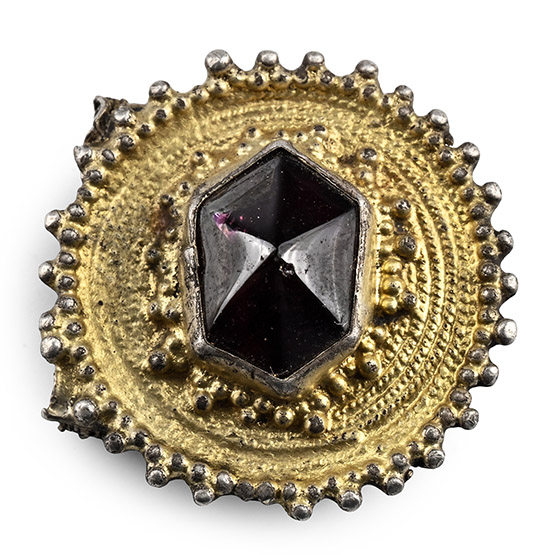
Tudor Period Silver-Gilt Mount with Facetted Garnet
16th-17th century A.D.Sold for (Inc. bp): £169
Discoid plaque with granules to the rim, concentric rings to the face and central hexagonal cell with inset garnet gemstone, mounting loops to reverse. 3.16 grams, 20 mm
Ex German art market, 2000s. Acquired from an EU collector living in London. From the collection of a Surrey, UK, gentleman. -
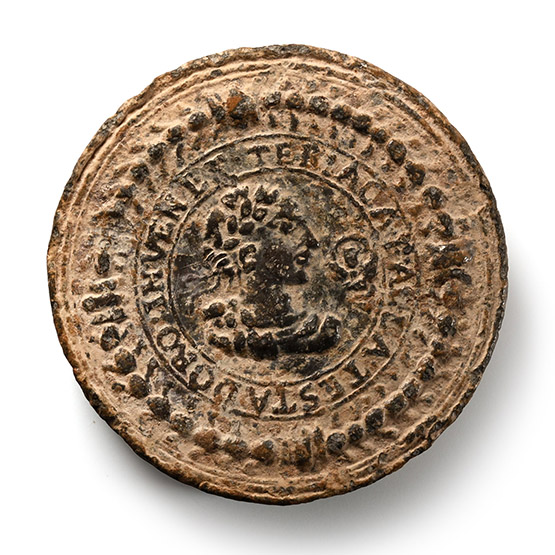
Theriaca 'Venice Triacle' Lead Box Lid
Italy, Venice, 17th century A.D.Sold for (Inc. bp): £260
Discoid in plan with lip to underside, central low-relief motif of a laureate and draped Roman-style bust with a nimbate lion of St. Mark, within a band inscribed 'TERIACA F ALLA TESTA DORO IN VENET'; all within outer band containing laurel wreath. 31 grams, 45 mm
From the collection of a gentleman, acquired on the London art market in the 1990s.
Theriaca or ‘Venice treacle’ was a medicinal compound used since the time of Mithradates VI of Pontus as an antidote against any poisonous bite. -
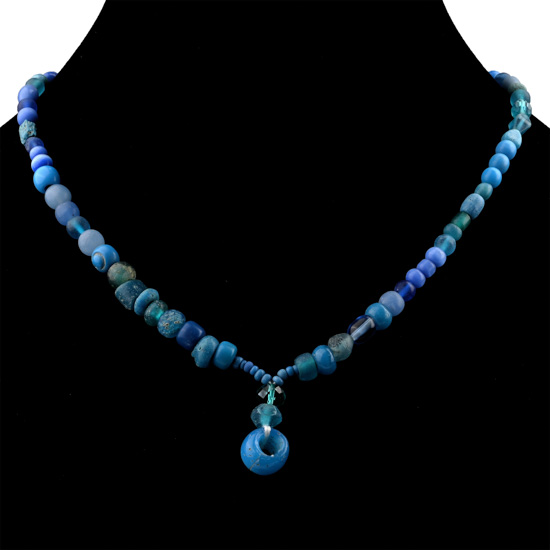
Glass Bead Necklace String
20th century A.D.Sold for (Inc. bp): £13
Mixed group of stone, glass and plastic beads, central feature a large annular bead. 17.75 grams, 38.5 cm
From London, UK, gallery collection, 1990s.
