
Loading, please wait...
LOT 2121
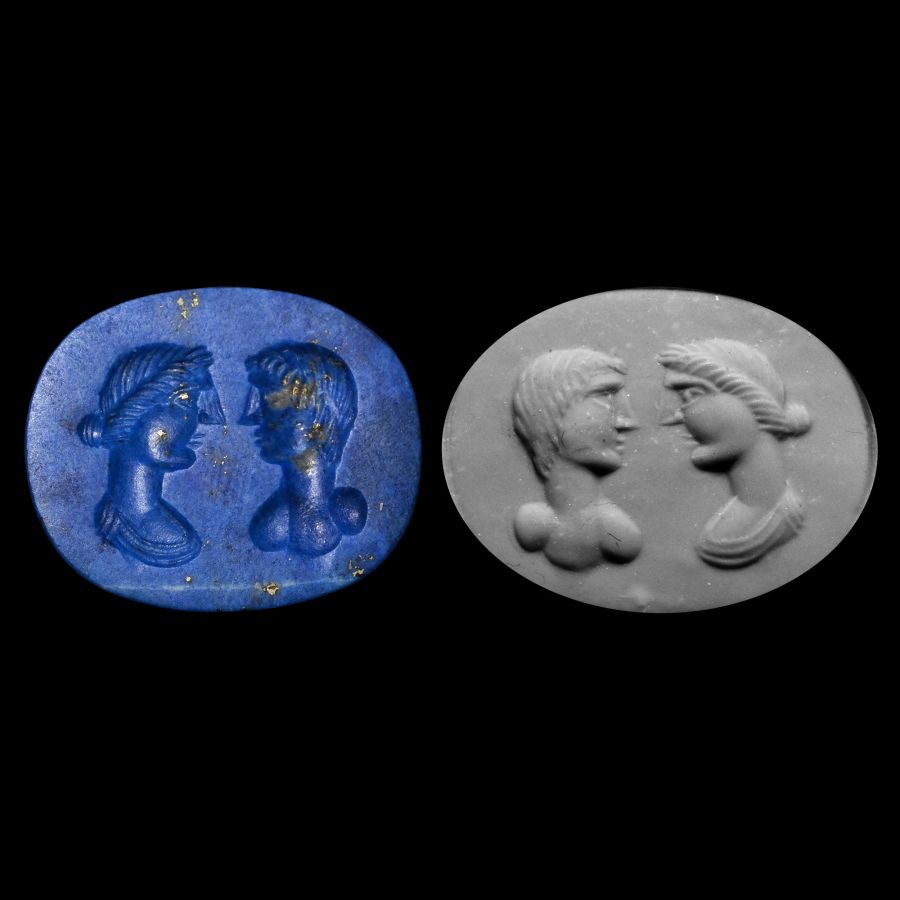
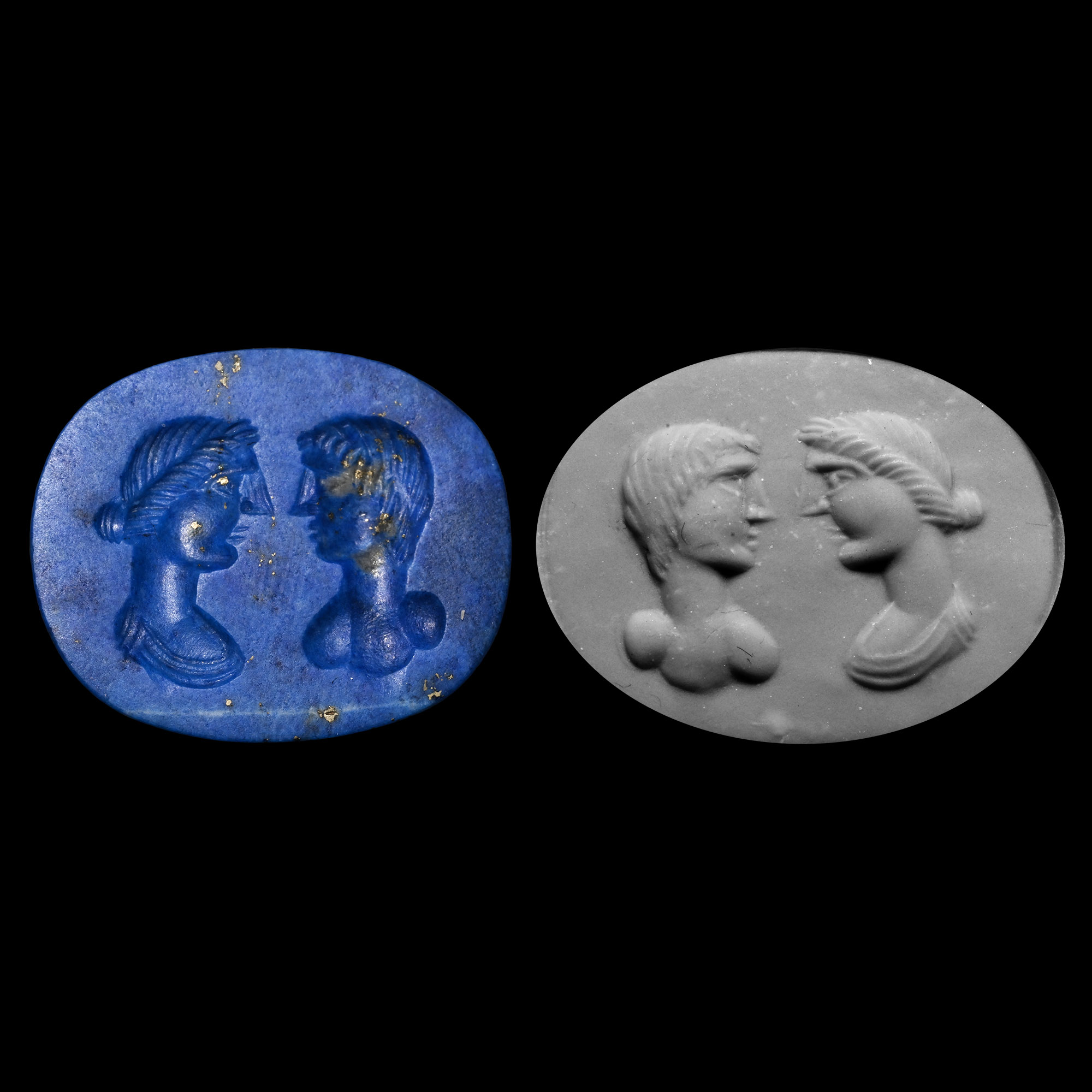
Post-Classical Lapis-Coloured Gem with Facing Busts
19TH CENTURY A.D. OR EARLIER
1 in. (1.63 grams, 23 mm).
Sub-rectangular in plan with an intaglio female bust in profile with hair drawn up in a chignon and a male bust with Julian hairstyle; supplied with a museum-quality impression.
ProvenancePrivate collection, England.
CONDITIONTimeLine Auctions follows a vetting process to ensure the authenticity and legality of all items, reinforcing our commitment to integrity and responsible trading. Each antiquity, antique, and coin lot undergoes thorough examination by a vetting committee of at least ten external specialists, professional trade association members, scientists, and archaeologists: Our Vetting Process
AUCTIONS:
TimeLine is a leading auction house specialising in antiquities, ancient art, collectables, natural history, coins, medals, and books. Our auctions offer museums, collectors, historians, and enthusiasts the opportunity to acquire unique and historically significant pieces.
LOT 2121
Post-Classical Lapis-Coloured Gem with Facing Busts
Estimate £200 - 300€230 - 350 (for guidance only)$270 - 410 (for guidance only)
-
Large Carved Marble Statue of a Headless Maiden Holding a Dove
19th century A.D.Estimate: £1,000 - 1,400 (+bp*)
Opening Bid: £500
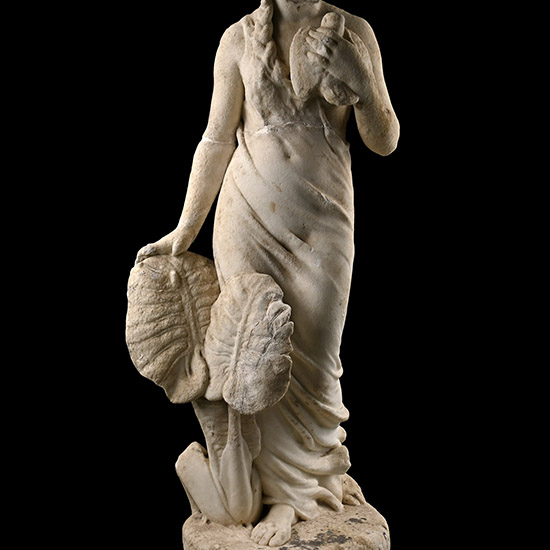
Her body depicted in a contrapposto pose with the weight on her right leg, resting her right hand on large plant leaves that surround her; a sheer garment wrapped around her body and plaited over her right shoulder; holding a dove against her chest with her left hand. 51.5 kg, 80 cm high
Private collection, London. -
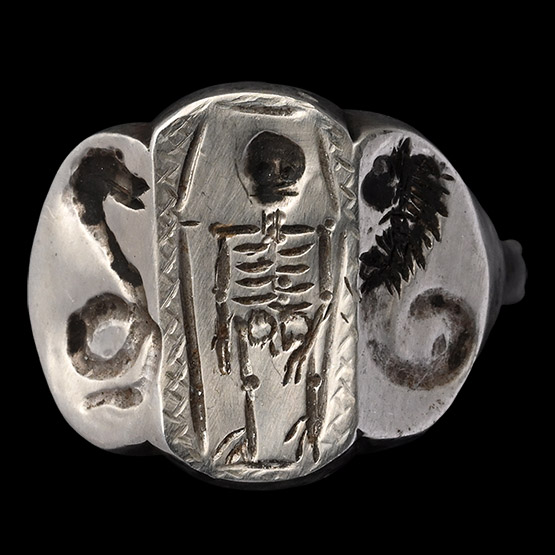
Post Medieval Silver Memento Mori Ring with Skeleton in Coffin Flanked by Rearing Snakes
18th-19th century A.D.Sold for (Inc. bp): £117
With facetted hoop, quatrefoil bezel with serpents flanking a coffin with skeleton inside; italic script legend to reverse 'jeap[...]'. 5.28 grams, 20.97 mm overall, 16.91 mm internal diameter (approximate size British N, USA 6 1/2, Europe 13.72, Japan 13)
Ex East Sussex private collection, 1970s-1980s. -
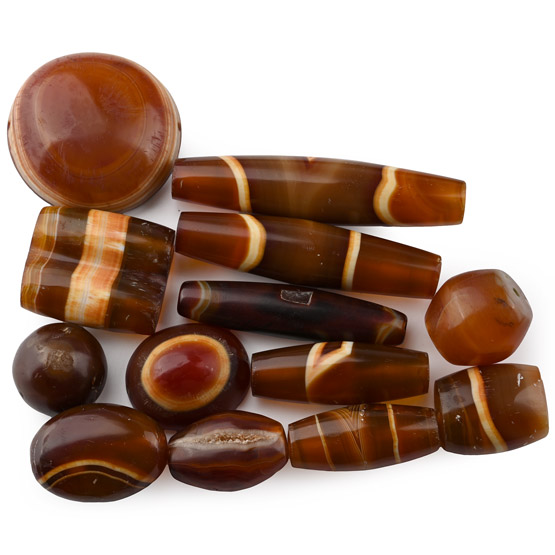
Banded Agate Bead Collection
20th century A.D.Sold for (Inc. bp): £20
Including plano-convex, oblate and other types. 270 grams total, 23-72 mm
Private collection, UK.
