
Loading, please wait...
LOT 2108
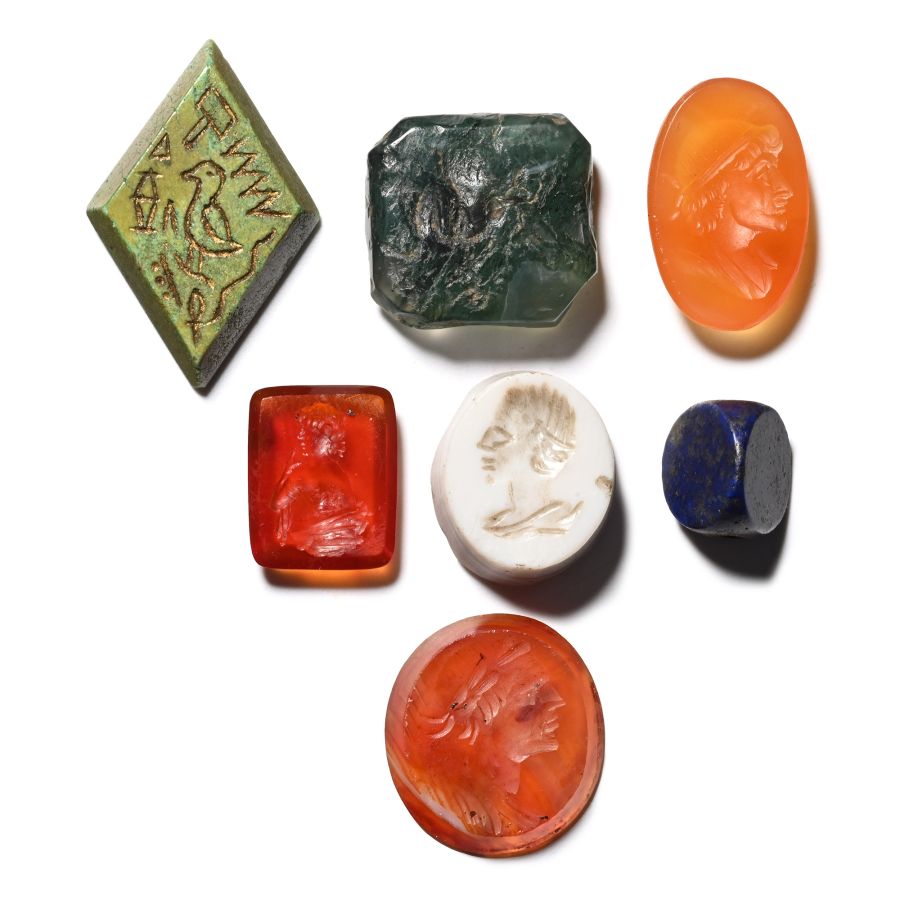
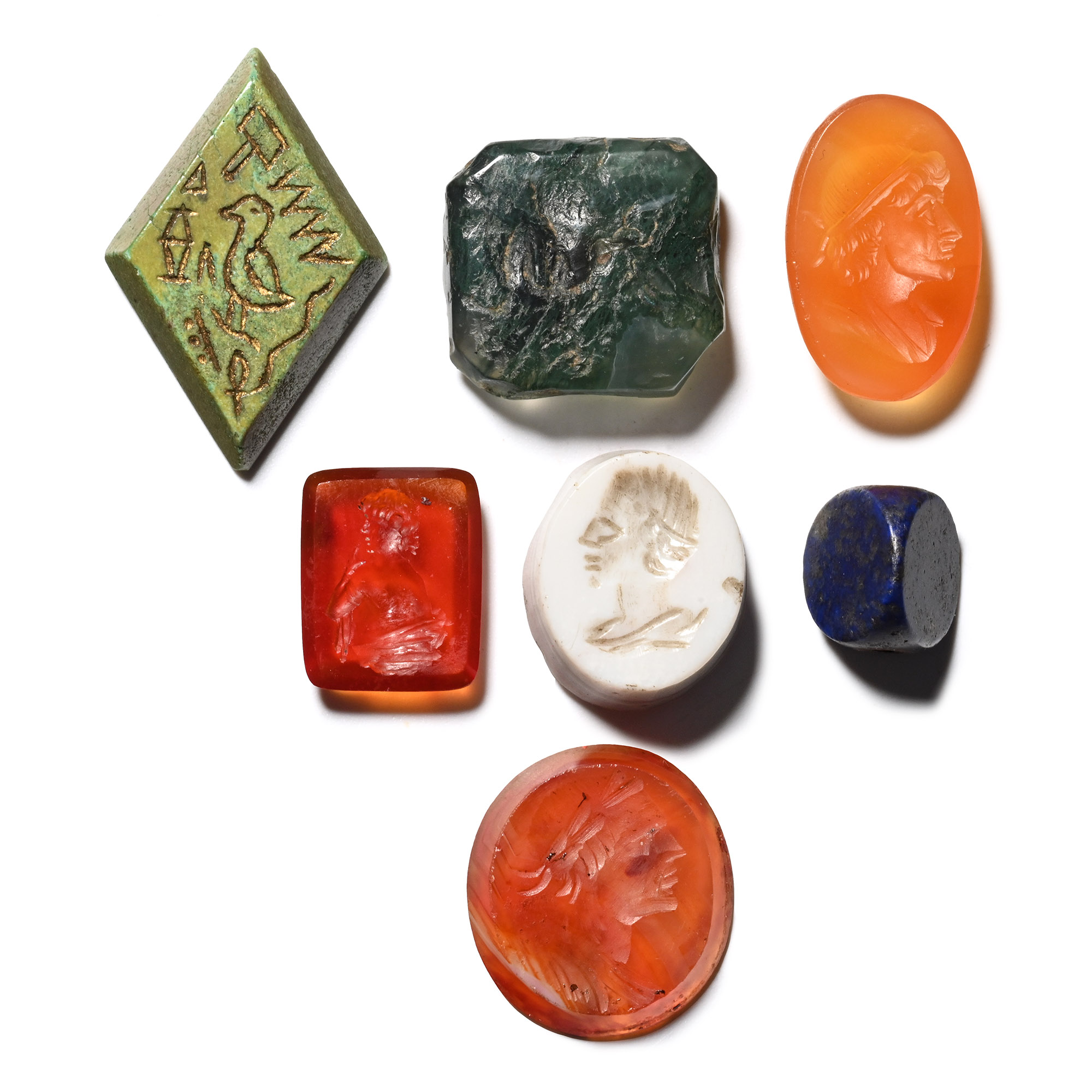
Post Classical Gemstone Collection
19TH CENTURY A.D.
3/8 - 1 in. (9.71 gram stotal, 9-24 mm).
Comprising: three carnelian intaglios with profile busts; an agate intaglio with profile bust; a lozenge-shaped intaglio with bird and other symbols, possibly made of stained bone; an octagonal green stone intaglio with worn motif; and a lapis lazuli bead. [7]
ProvenanceAcquired on the European art market.
CONDITIONTimeLine Auctions follows a vetting process to ensure the authenticity and legality of all items, reinforcing our commitment to integrity and responsible trading. Each antiquity, antique, and coin lot undergoes thorough examination by a vetting committee of at least ten external specialists, professional trade association members, scientists, and archaeologists: Our Vetting Process
AUCTIONS:
TimeLine is a leading auction house specialising in antiquities, ancient art, collectables, natural history, coins, medals, and books. Our auctions offer museums, collectors, historians, and enthusiasts the opportunity to acquire unique and historically significant pieces.
-
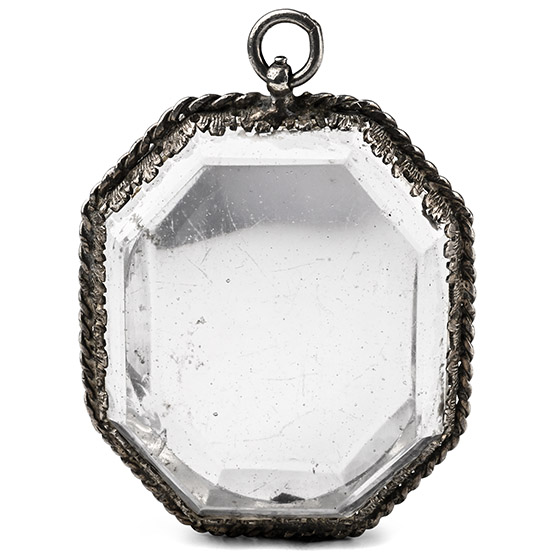
Post Medieval Silver-Mounted Glass Pendant
Germany, 17th century A.D.Estimate: £400 - 600 (+bp*)
Opening Bid: £200
Octagonal in plan with ropework and foliage frame, suspension loop. 52.2 grams, 65 mm
Private collection, Europe. Acquired on the English art market. -
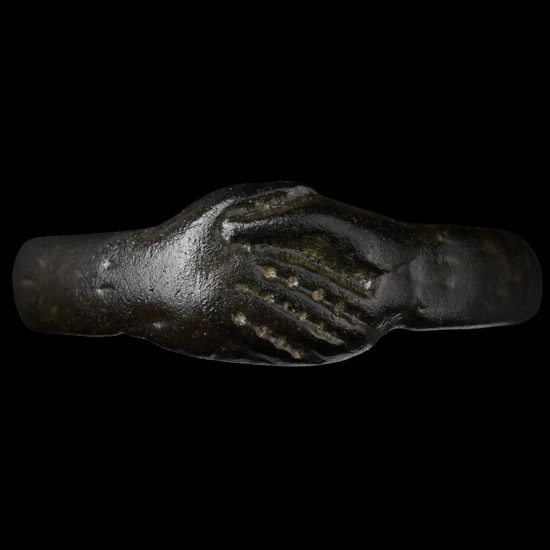
Stuart Period Clasped Hands Ring
Circa 17th century A.D.Sold for (Inc. bp): £59
Comprising a slender hoop with two clasping hands. 2.41 grams, 21.62 mm overall, 18.40 mm internal diameter (approximate size British Q, USA 8, Europe 17.49, Japan 16)
Ex German art market, 2000s. Acquired from an EU collector living in London. From the collection of a Surrey, UK, gentleman. -
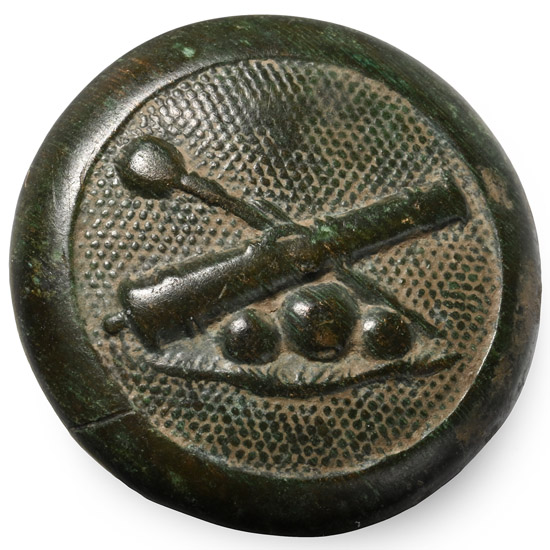
WWI Bronze Button with Cannon and Shot
20th century A.D.Sold for (Inc. bp): £20
Military uniform button, domed in profile with loop to reverse; low-relief cannon, ramrod and shot reserved against a hatched field; Austro-Hungarian field artillery regimen. 3.8 grams, 23 mm
From the private collection of Mr Brian Edwards, New Malden, Surrey, UK, formed from the late 1970s-early 1980s; thence by descent. Accompanied by the original collector's data sheet(s) with reference no.A95.
