
Loading, please wait...
LOT 0432
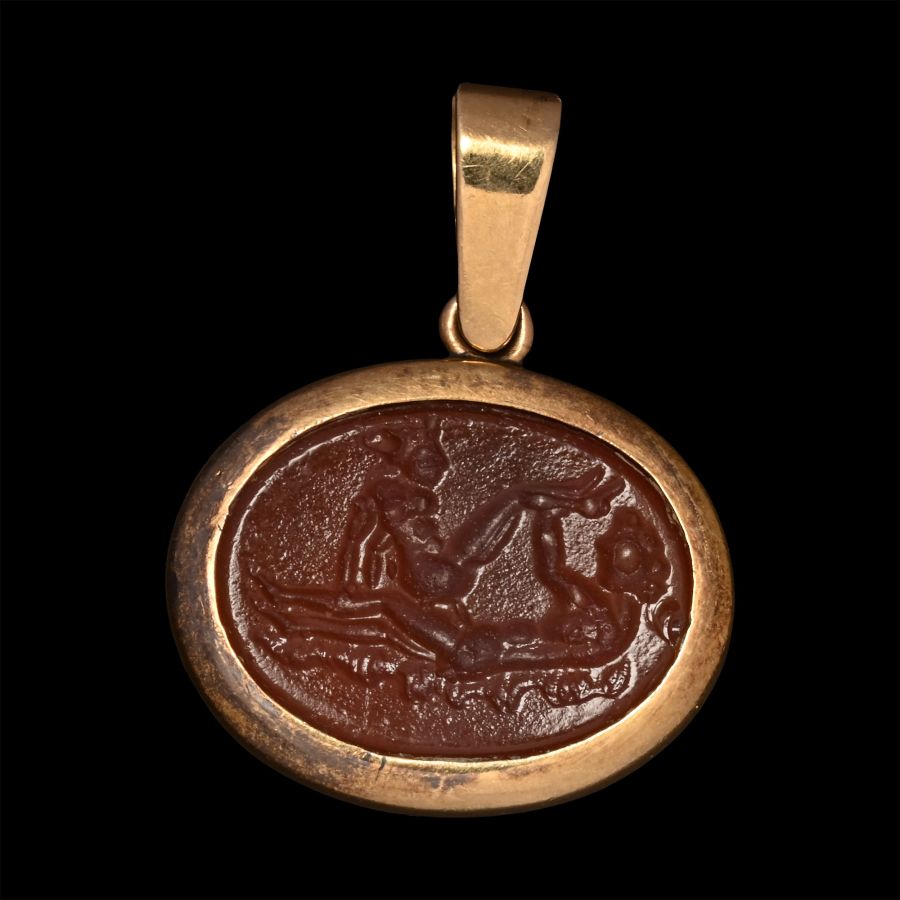
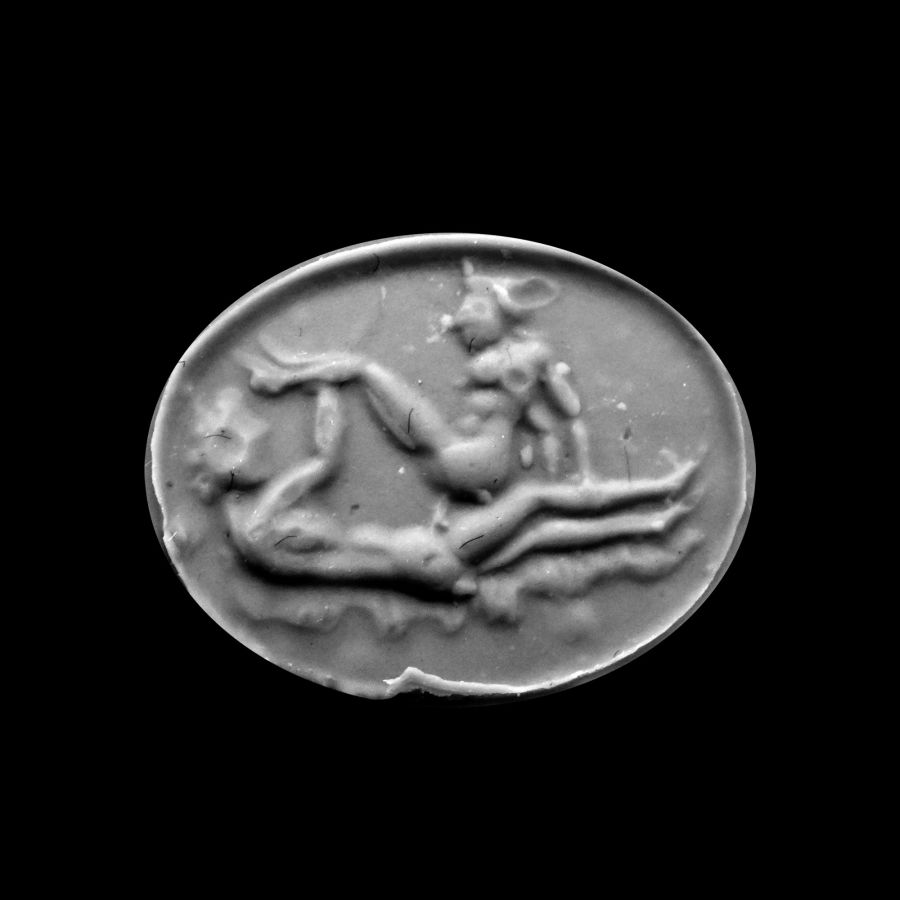
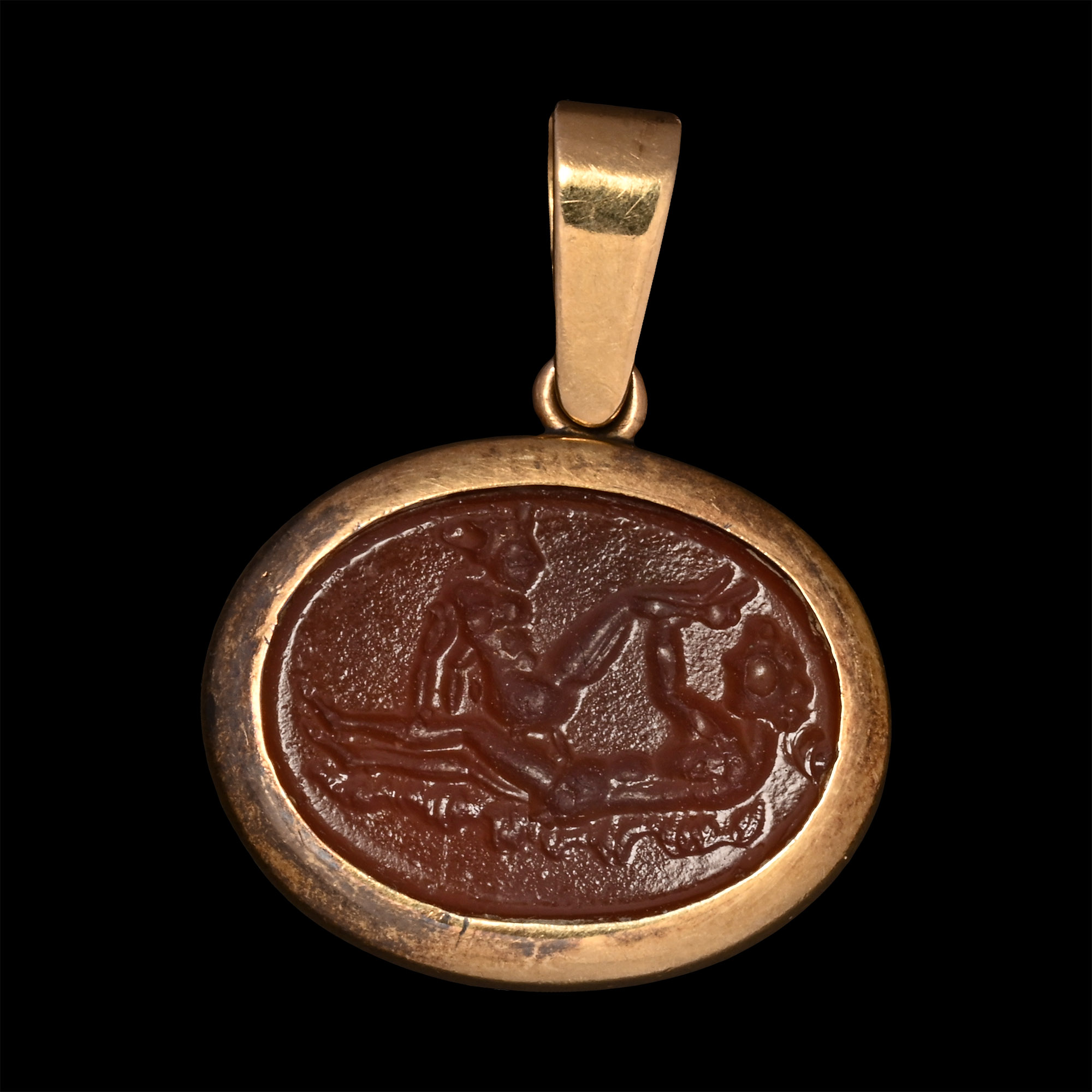
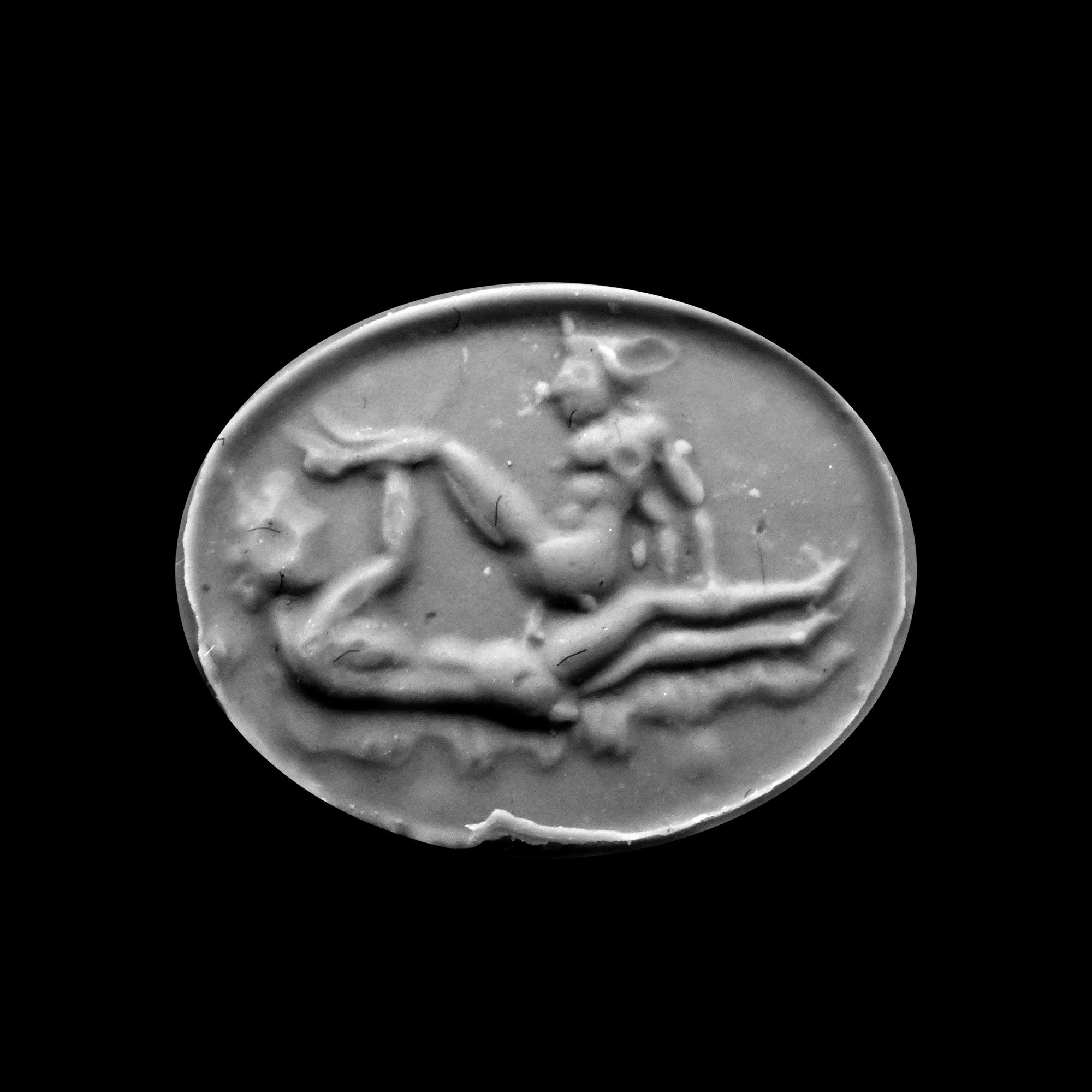
Post-Classical Gem with Erotic Scene in Gold Mount
19TH CENTURY A.D.
1 1/4 in. (7.12 grams, 30 mm).
Ellipsoid in plan, glass intaglio with scene of two lovers; gold frame and bale; supplied with a museum-quality impression.
ProvenanceAcquired on the French art market.
Private collection, England.
TimeLine Auctions follows a vetting process to ensure the authenticity and legality of all items, reinforcing our commitment to integrity and responsible trading. Each antiquity, antique, and coin lot undergoes thorough examination by a vetting committee of at least ten external specialists, professional trade association members, scientists, and archaeologists: Our Vetting Process
AUCTIONS:
TimeLine is a leading auction house specialising in antiquities, ancient art, collectables, natural history, coins, medals, and books. Our auctions offer museums, collectors, historians, and enthusiasts the opportunity to acquire unique and historically significant pieces.
LOT 0432
Post-Classical Gem with Erotic Scene in Gold Mount
Estimate £500 - 700€580 - 810 (for guidance only)$680 - 950 (for guidance only)
-
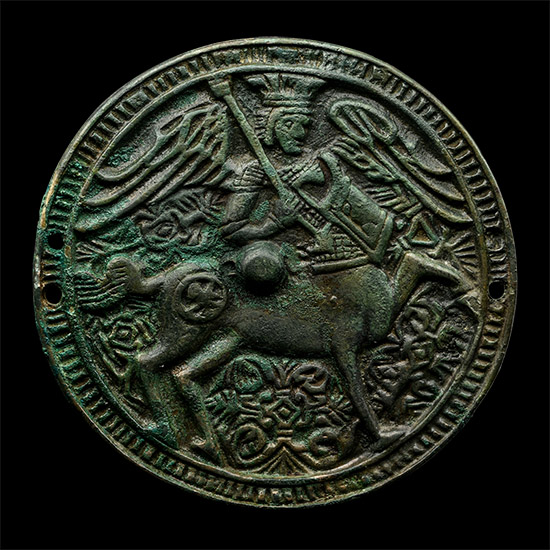
Post Medieval Mirror with Centaur 'Kitovras'
16th-17th century A.D.Sold for (Inc. bp): £910
Discoid with ribbed border and central raised pellet, motif of a winged centaur holding a square shield and a staff(?), foliage motif to the background; pierced three times to the rim. 153 grams, 10.1 cm
From the private collection of a London gentleman, from his grandfather's collection formed before the early 1970s.
This version of a centaur was known as ‘kitovras’, an old Russian version of the word ‘kentauros’. He is typically portrayed with the body of a horse and the torso and head of a man, often featuring prominent wings and wearing armour. Kitovras is best known from a legend, ‘The Tale of Solomon and Kitovras’, in which he is tricked into building the temple for King Solomon. While held in captivity, Kitovras tells Solomon how to obtain the stone needed to build the temple and stays with him through its completion. When Solomon doubts Kitovras’ strength, Kitovras throws him to the edge of the Promised Land, but the king eventually returns and takes back the throne. -
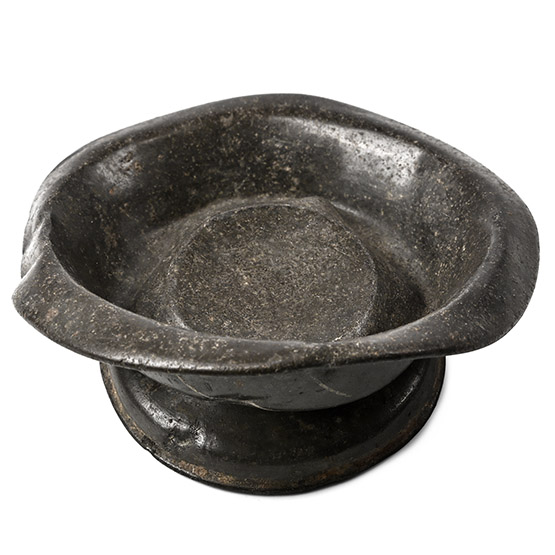
Post Medieval Pewter Goblet
17th-18th century A.D.Sold for (Inc. bp): £20
Comprising a squat cup with broad rounded rim, low base with pedestal foot. 49 grams, 74 mm
From the collection of a Buckinghamshire, UK, collection established from the earlier 1960s. -
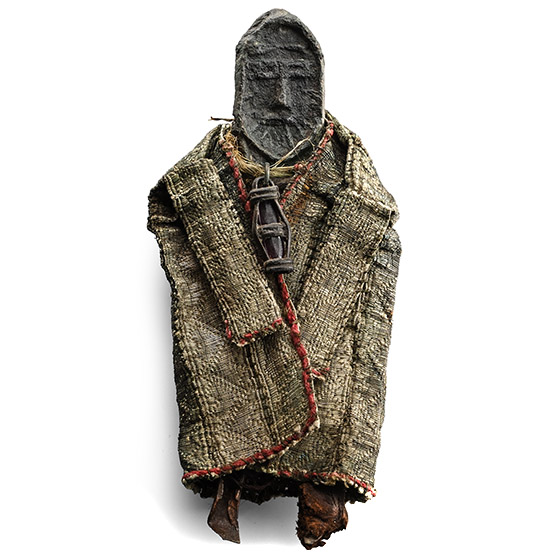
Bronze Anthropomorphic Clothed Ancestral Effigy
Siberia, circa 17th-18th century A.D.Sold for (Inc. bp): £650
Anthropomorphic figure (ittarma) with low-relief facial features, radiating beard, raised rim, bronze lantern-shaped pendant on cord around the neck; outer garment a sleeved coat in silken textile with open front; beneath, a fabric undergarment. 105 grams, 14.8 cm
From the private collection of a London gentleman, from his grandfather's collection formed before the early 1970s.
Such effigies, called itterma or ittarma are regarded as a temporary vessel for the soul of a deceased person. They were intended to maintain contact between the surviving descendants and the spirit world.
