
Loading, please wait...
LOT 0384
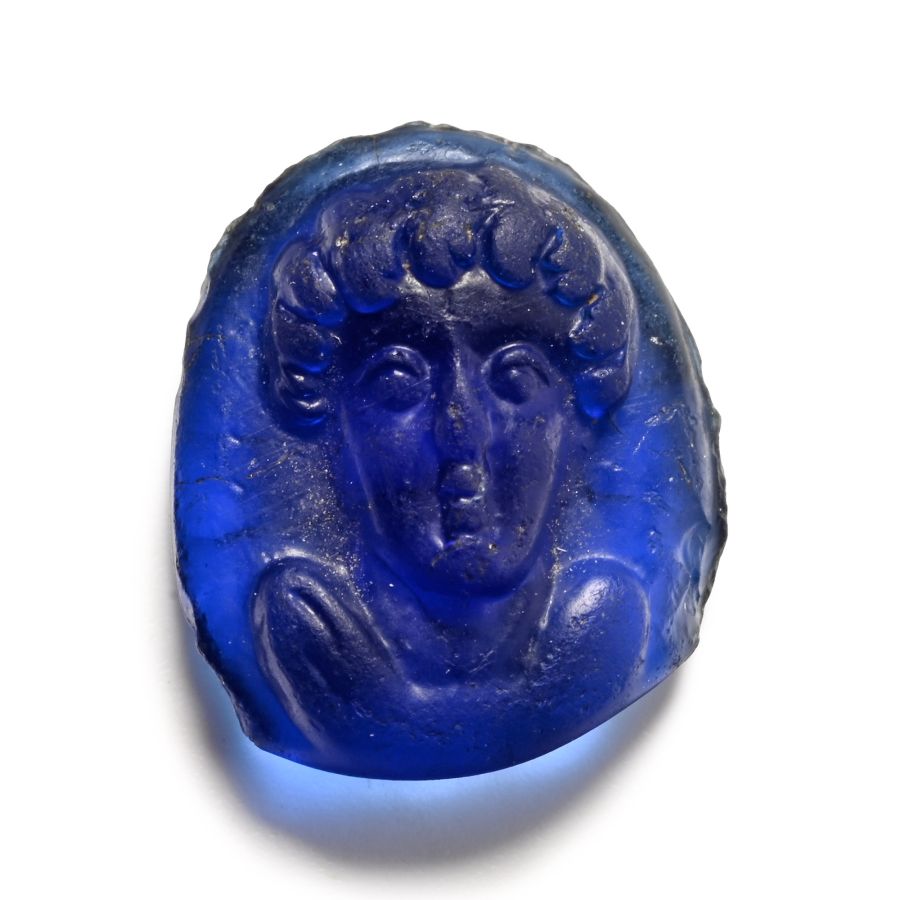
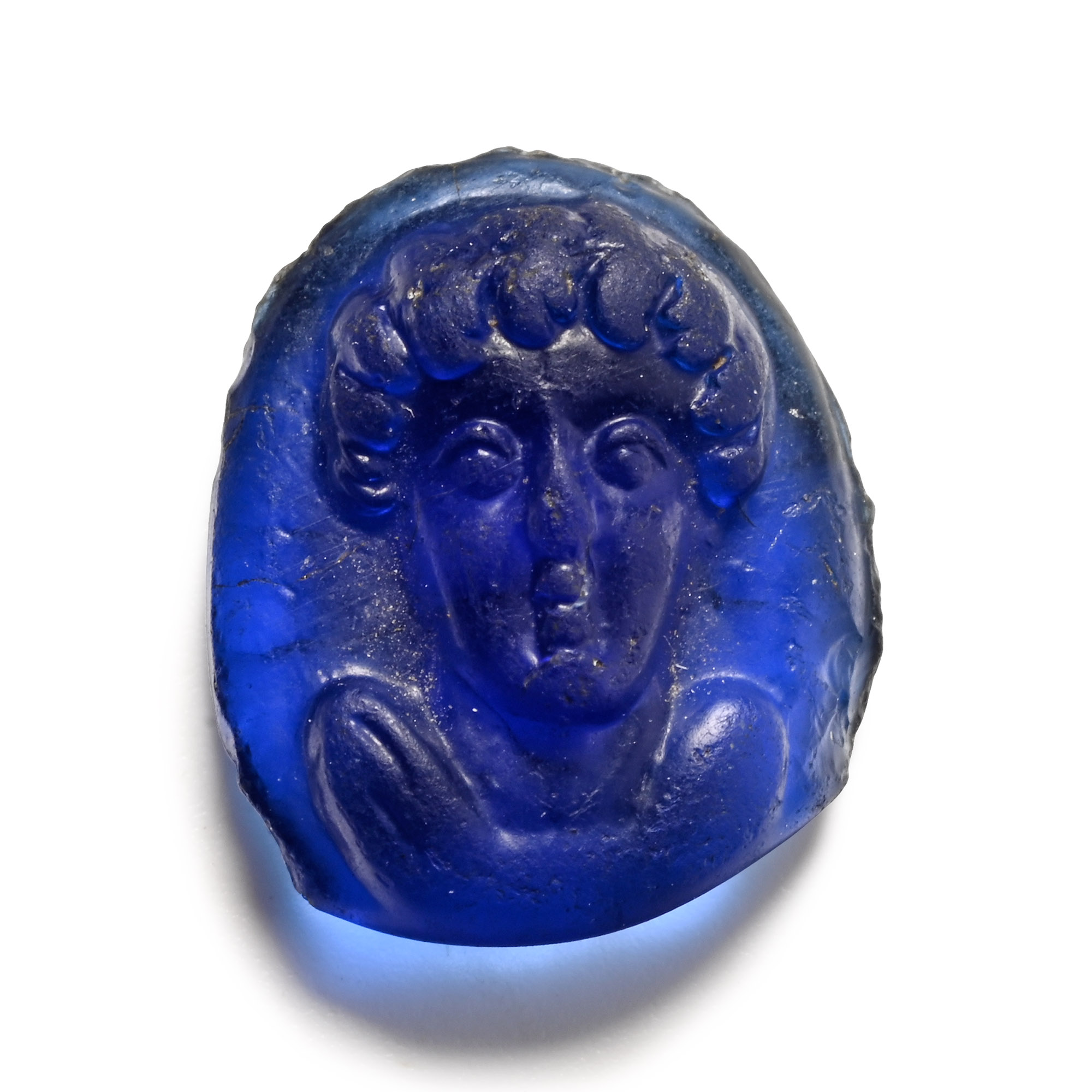
Post-Classical Blue Glass Cameo of a Man
19TH CETNURY A.D. OR EARLIER
1/2 in. (0.64 grams, 12 mm).
Discoid in plan with facing bust with tousled hair.
ProvenancePrivate English collection, formed between the late 1970s and early 1990s.
Private collection, London, UK.
TimeLine Auctions follows a vetting process to ensure the authenticity and legality of all items, reinforcing our commitment to integrity and responsible trading. Each antiquity, antique, and coin lot undergoes thorough examination by a vetting committee of at least ten external specialists, professional trade association members, scientists, and archaeologists: Our Vetting Process
AUCTIONS:
TimeLine is a leading auction house specialising in antiquities, ancient art, collectables, natural history, coins, medals, and books. Our auctions offer museums, collectors, historians, and enthusiasts the opportunity to acquire unique and historically significant pieces.
LOT 0384
Post-Classical Blue Glass Cameo of a Man
Estimate £500 - 700€580 - 810 (for guidance only)$680 - 950 (for guidance only)
-
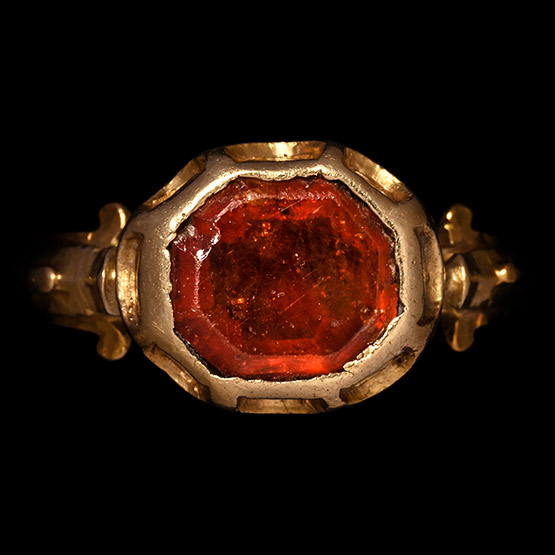
Renaissance Gold Ring with Table-Cut Hessonite Garnet
Western Europe, 16th century A.D.Estimate: £3,000 - 4,000 (+bp*)
Opening Bid: £1,500
Tiered hoop and shoulders supporting a cup bezel with scallop detailing, inset with an octagonal cloison. 7.07 grams, 27.56 mm overall, 19.87 x 19.76 mm internal diameter (approximate size British U, USA 10, Europe 22.52, Japan 21)
Private collection, Europe. Acquired on the English art market. This lot has been checked against the Interpol Database of stolen works of art and is accompanied by a search certificate number no.13048-248385.
Parallels for the ring type are dated 16th century. A related finger ring is also available in the British Museum collection. The chalice-shaped workmanship of the bezel betrays a strong Italian influence in the workmanship of the ring section. -
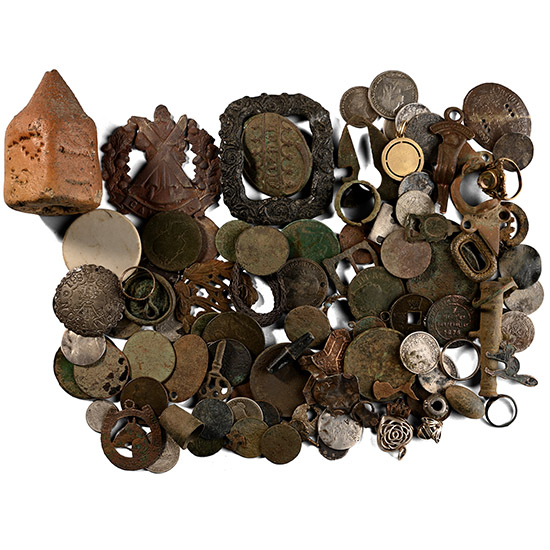
Tudor and Later Mixed Artefact Group
16th-21st century A.D.Sold for (Inc. bp): £91
Including various coins, mounts, rings, a toy cannon, and others. 540 grams total, 11-62 mm
Found Tyne and Wear, UK. This lot is for UK buyers only, not for export. -
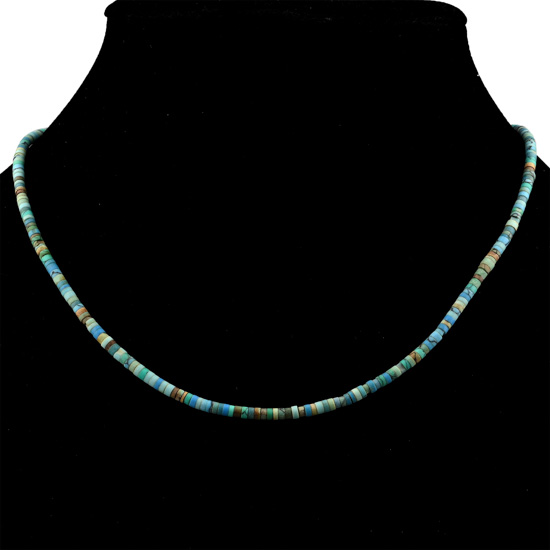
Egyptian Style Stone and Other Bead Necklace String
20th century A.D.Sold for (Inc. bp): £7
Composed of polychrome annular beads; restrung. 4.69 grams, 36.3 cm
From London, UK, gallery collection, 1990s.
