
Loading, please wait...
LOT 0386
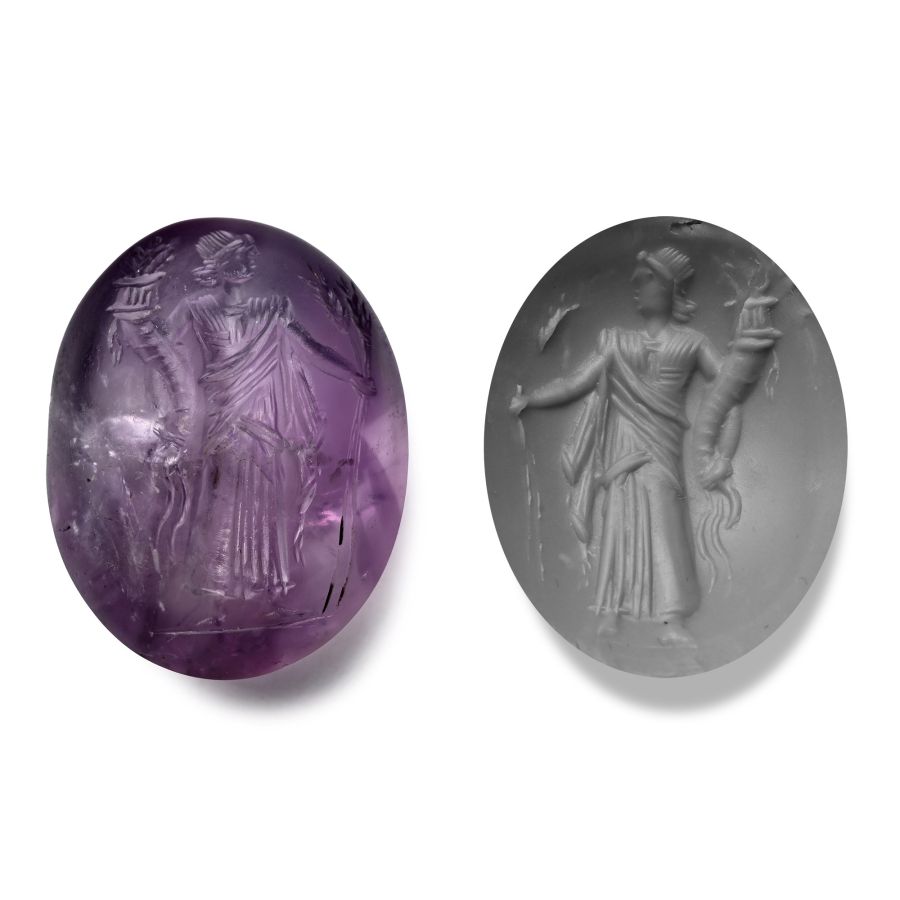
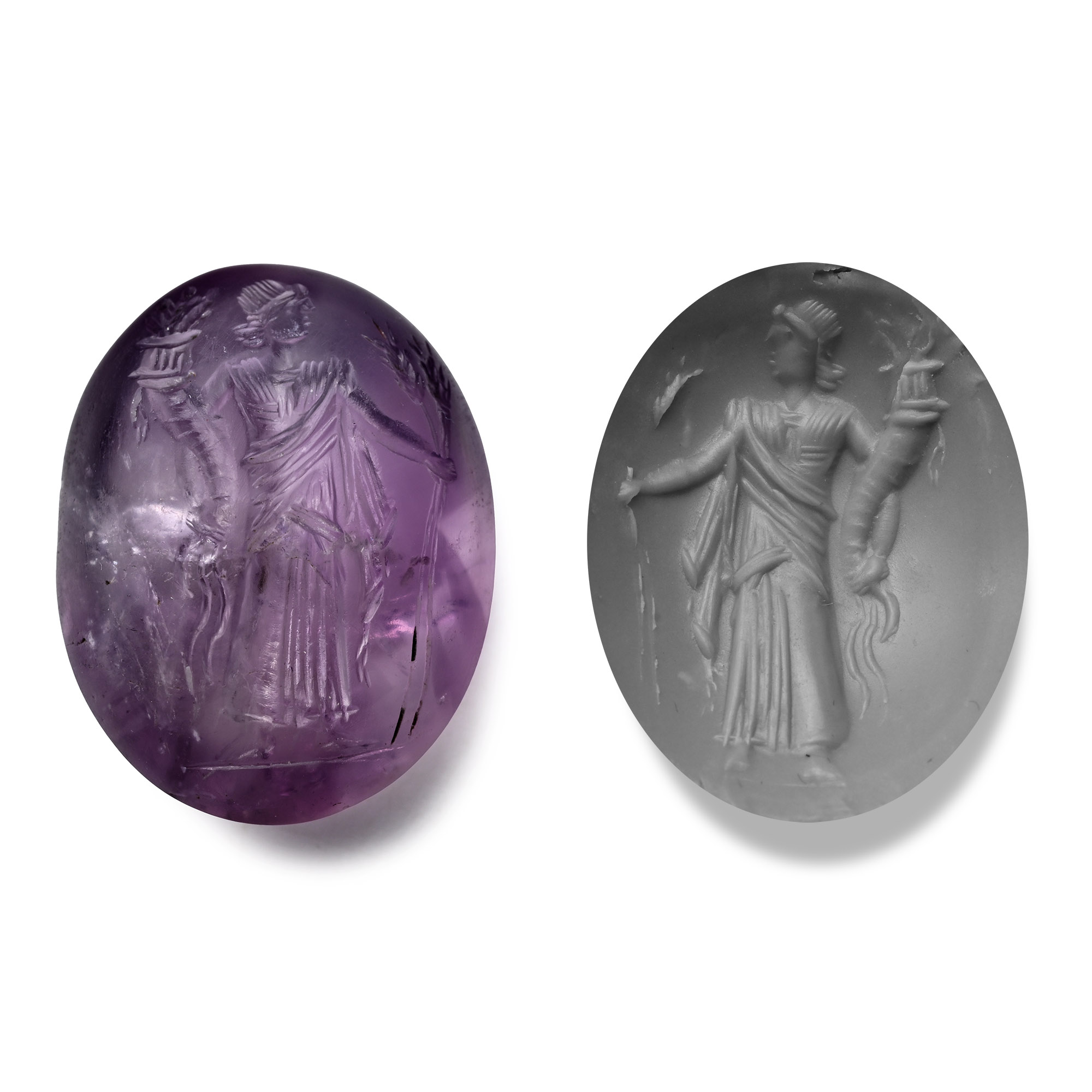
Post-Classical Amethyst Gemstone of the Roman Goddess Fortuna
19TH CENTURY A.D. OR LATER
1 in. (6.15 grams, 24 mm).
Biconvex in section with intaglio Fortuna standing in ankle-length robe on a baseline, supporting a cornucopia in one arm and holding two stems; supplied with a museum-quality impression.
ProvenancePrivate English collection, formed between the late 1970s and early 1990s.
Private collection, London, UK.
TimeLine Auctions follows a vetting process to ensure the authenticity and legality of all items, reinforcing our commitment to integrity and responsible trading. Each antiquity, antique, and coin lot undergoes thorough examination by a vetting committee of at least ten external specialists, professional trade association members, scientists, and archaeologists: Our Vetting Process
AUCTIONS:
TimeLine is a leading auction house specialising in antiquities, ancient art, collectables, natural history, coins, medals, and books. Our auctions offer museums, collectors, historians, and enthusiasts the opportunity to acquire unique and historically significant pieces.
LOT 0386
Post-Classical Amethyst Gemstone of the Roman Goddess Fortuna
Sold for (Inc. bp): £1,300
-
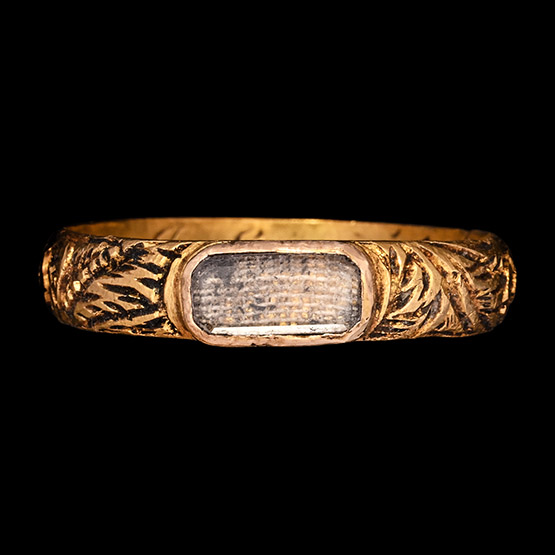
Stuart Period Gold Mourning Ring with Rock Crystal Gemstone
England, 18th century A.D.Sold for (Inc. bp): £2,860
Decorated with black enamelled foliate engraving; bezel set with a table cut rock crystal compartment containing some hair of the deceased; inner face engraved ‘Capt(ain). G Squrritt ob 1 Jan 1724’ and the maker's mark ‘GE’. 3.33 grams, 20.04 mm overall, 17.17 mm internal diameter (approximate size British M, USA 6, Europe 12.46, Japan 12)
Private collection, Europe. Acquired on the English art market. This lot has been checked against the Interpol Database of stolen works of art and is accompanied by search certificate number no.13055-248357.
Mourning rings were made to commemorate the death of an individual. Similar examples are held in the British Museum's collection, including AF.1547; AF.1551; AF.1550; AF.1552; AF.1549. While the majority of mourning rings tend to refer to the deceased by initials and death only, this ring mentions the deceased's family name in full, which is usually the case for people of note/influence. -
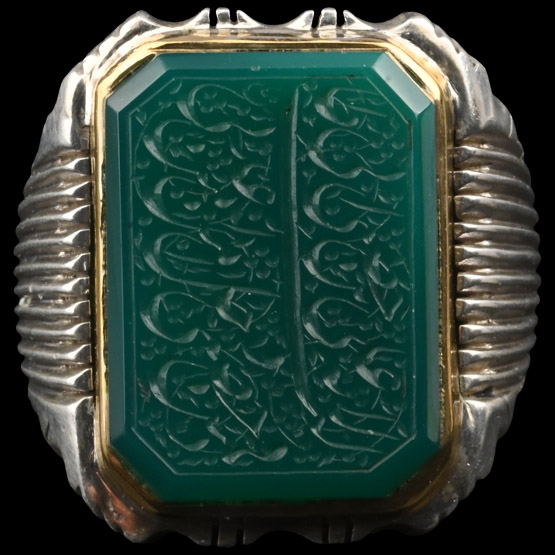
Silver-Coloured Metal Ring with Calligraphic Gem
Late 20th-21st century A.D.Sold for (Inc. bp): £234
With a broad, vertically banded hoop in a rectangular bezel; gilt cell with inset cloison, dense calligraphic script with floral ornament. 20.30 grams, 28.52 mm overall, 21.51 mm internal diameter (approximate size British X 1/2, USA 11 3/4, Europe 26.92, Japan 25)
Private collection, UK. -
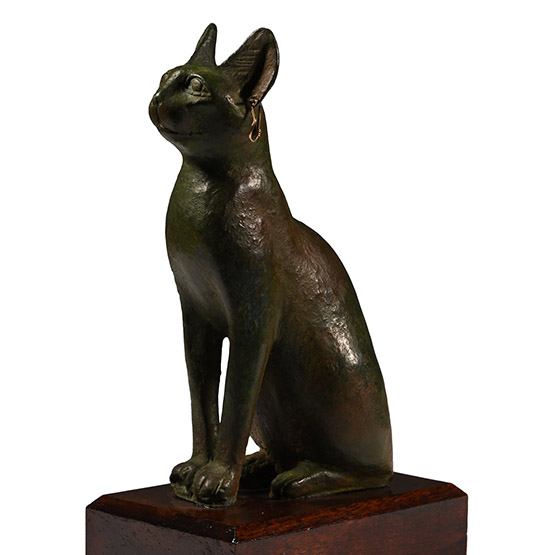
Egyptian Style Cat on Wooden Base
20th century A.D.Sold for (Inc. bp): £416
Modelled in the round in alert pose with gold coloured loop in each ear; bronze or composition on a polished wooden base; after the antique. 1.25 kg total, 20.5 cm including stand
From a private, UK, collection in the 1980s. Property of a London, UK, antiquarian.
