
Loading, please wait...
LOT 0398
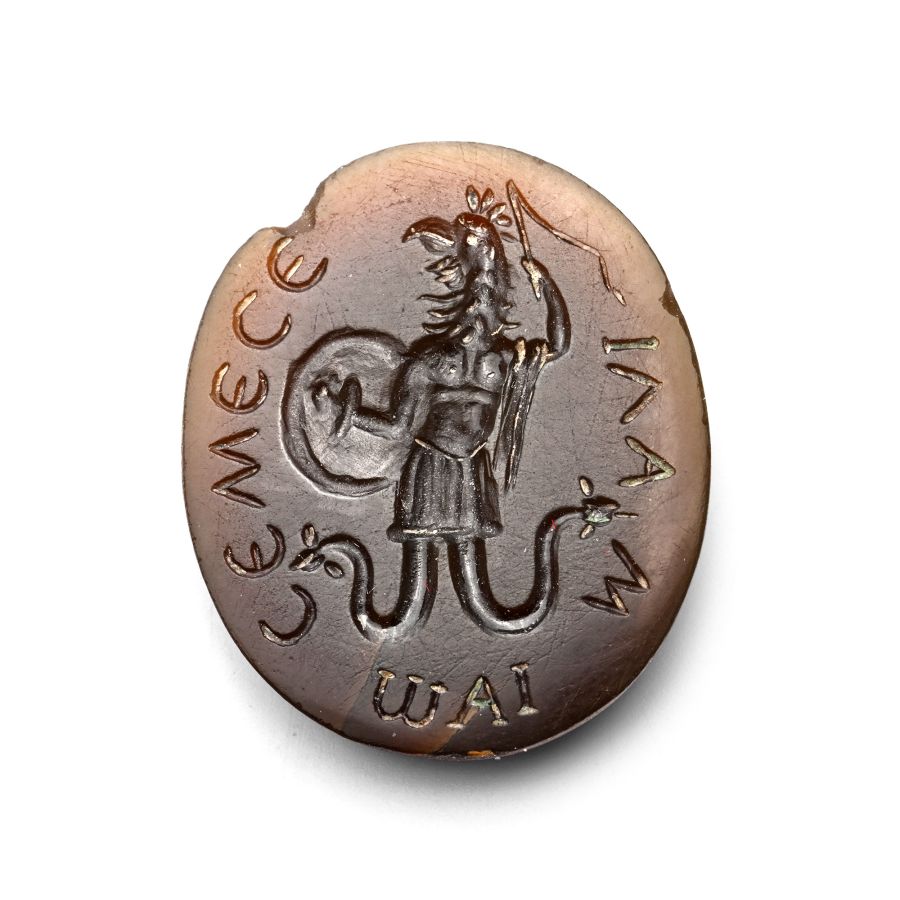
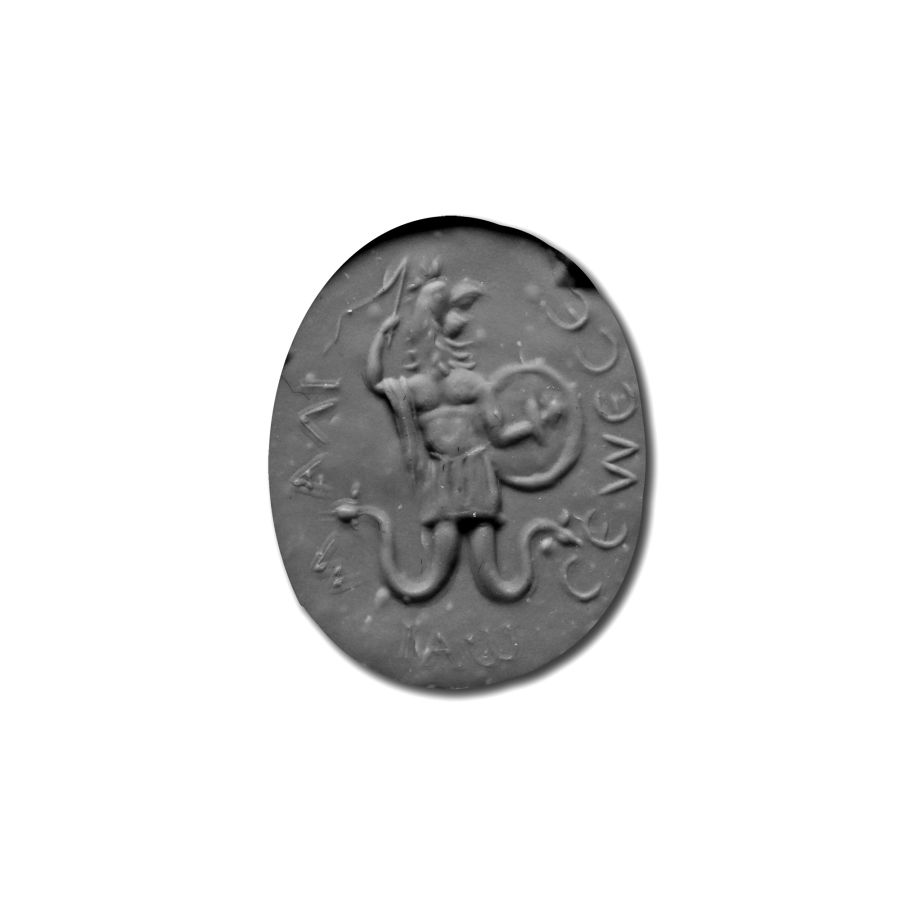
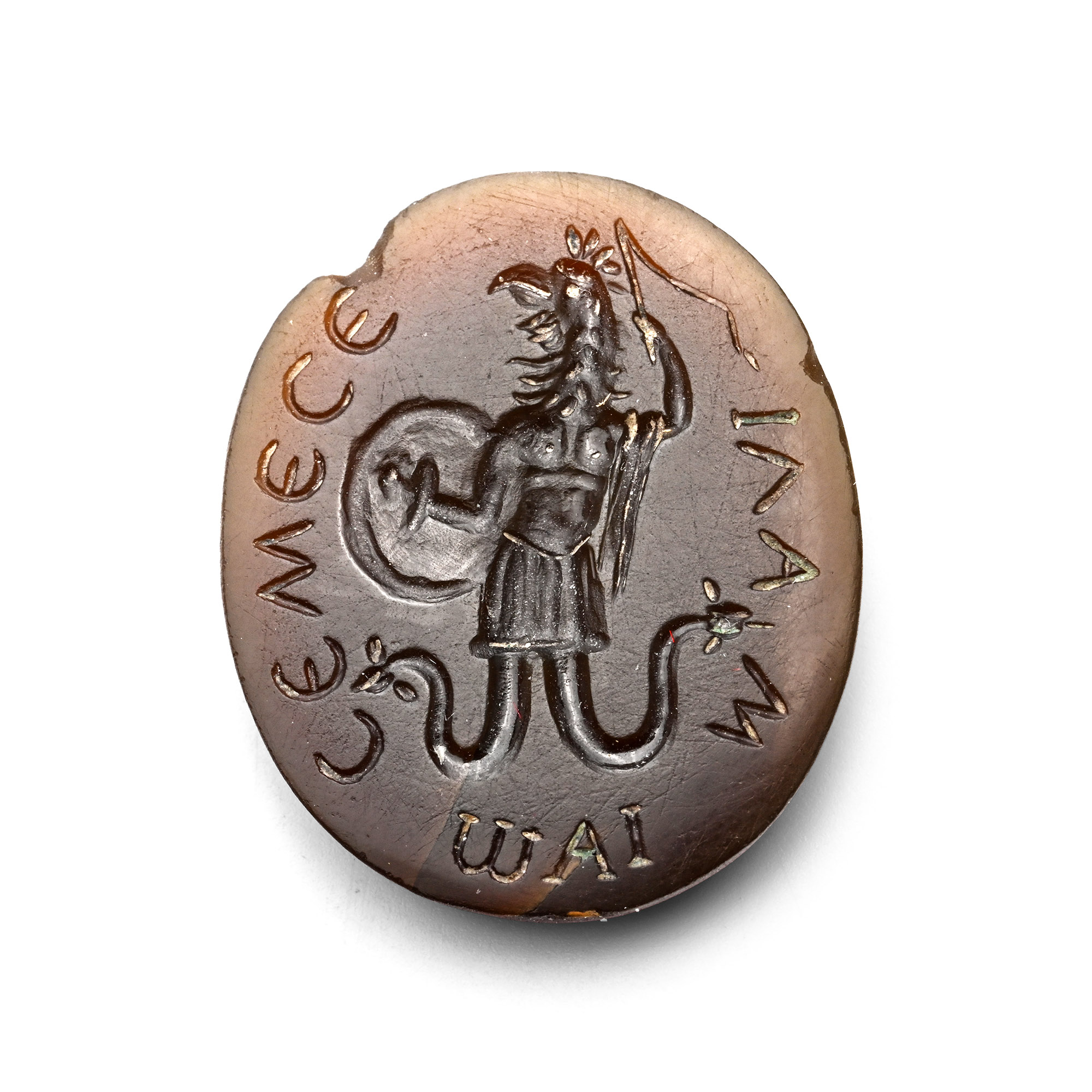
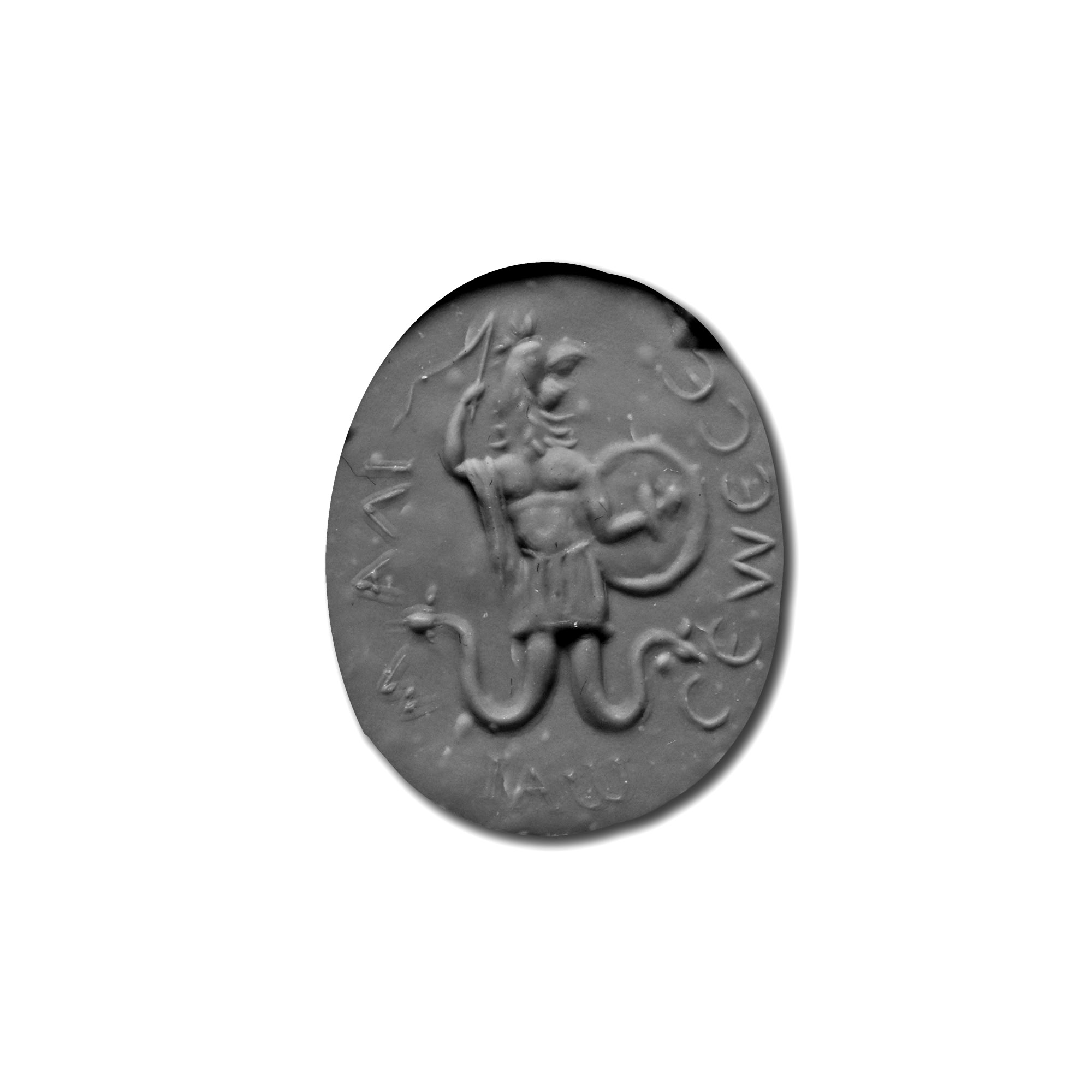
Post-Classical Agate Gnostic Gemstone with Anguiped
18TH-19TH CENTURY A.D. OR EARLIER
1 in. (3.41 grams, 23 mm).
Incuse motif of serpent-legged rooster facing left holding a shield and solar whip; enigmatic agical inscriptions surrounding; supplied with a museum-quality impression.
ProvenanceCollection of Mr and Mrs V.A., Monte Carlo, 1960s.
Acquired on the European art market.
Private collection, England.
TimeLine Auctions follows a vetting process to ensure the authenticity and legality of all items, reinforcing our commitment to integrity and responsible trading. Each antiquity, antique, and coin lot undergoes thorough examination by a vetting committee of at least ten external specialists, professional trade association members, scientists, and archaeologists: Our Vetting Process
AUCTIONS:
TimeLine is a leading auction house specialising in antiquities, ancient art, collectables, natural history, coins, medals, and books. Our auctions offer museums, collectors, historians, and enthusiasts the opportunity to acquire unique and historically significant pieces.
-
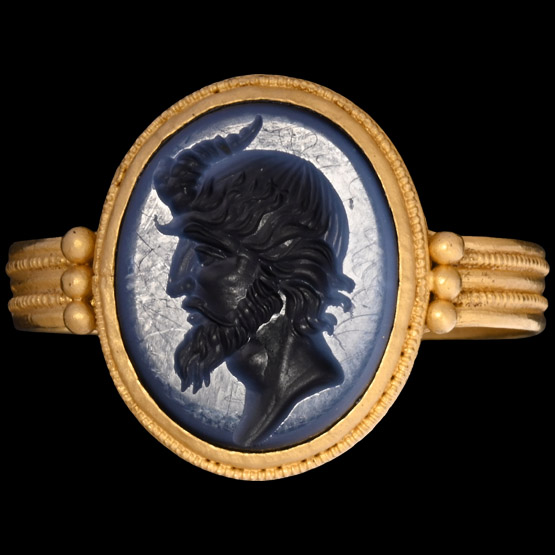
Renaissance Nicolo Gemstone with Bust of the Greek God Pan in Gold Ring
17th century A.D. or laterEstimate: £3,000 - 4,000 (+bp*)
Opening Bid: £1,500
Ellipsoid nicolo plaque with intaglio profile bust of Pan with thick hair and beard, goat's horns on the brow; in a later sympathetic gold ring; supplied with a museum-quality impression. 5.40 grams, 23.72 mm overall, 21.99 x 17.07 mm internal diameter (approximate size British P 1/2, USA 7 3/4, Europe 16.86, Japan 16)
Private collection, England. This lot has been checked against the Interpol Database of stolen works of art and is accompanied by search certificate number no.13153-249514. -
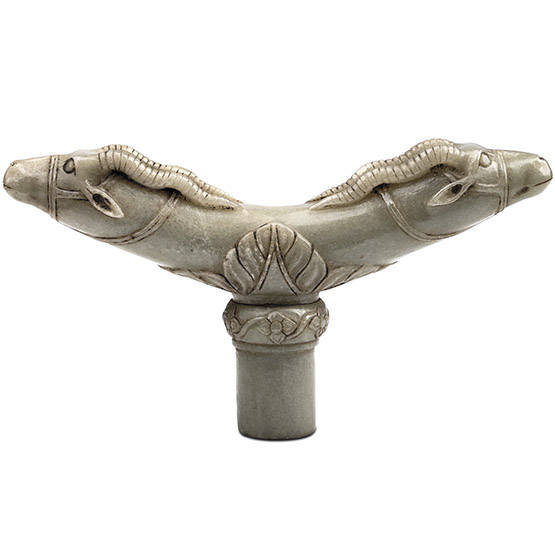
Indian Carved Jade Ibex-Headed Walking Stick Handle
Late 20th-21st century A.D.Sold for (Inc. bp): £416
Carved in the round with addorsed ibex heads, each with integral bridle, lotus flower at the junction above a floral collar and tubular stem. 243 grams, 15.5 cm
Private collection, UK. -
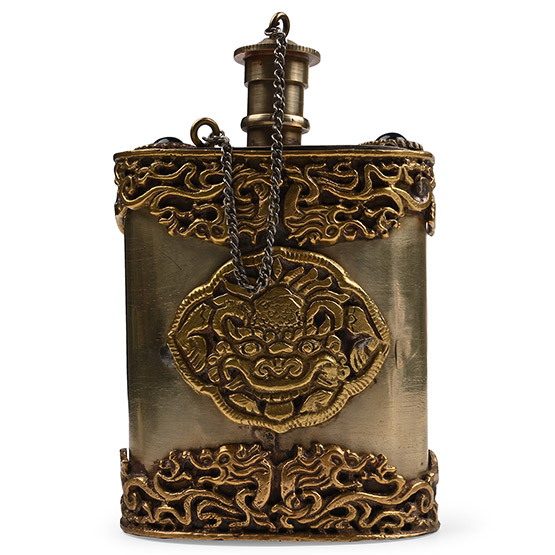
Tibetan Brass Hip Flask
Mid 20th century A.D.Sold for (Inc. bp): £39
With applied mask design, cabochon studs to the shoulders, screw-thread to stopper. 265 grams, 14.6 cm
From the private collection of a Kent, UK, gentleman.
