Loading, please wait...

Use mousewheel to zoom in and out, click to enlarge

Details

LOT 2165

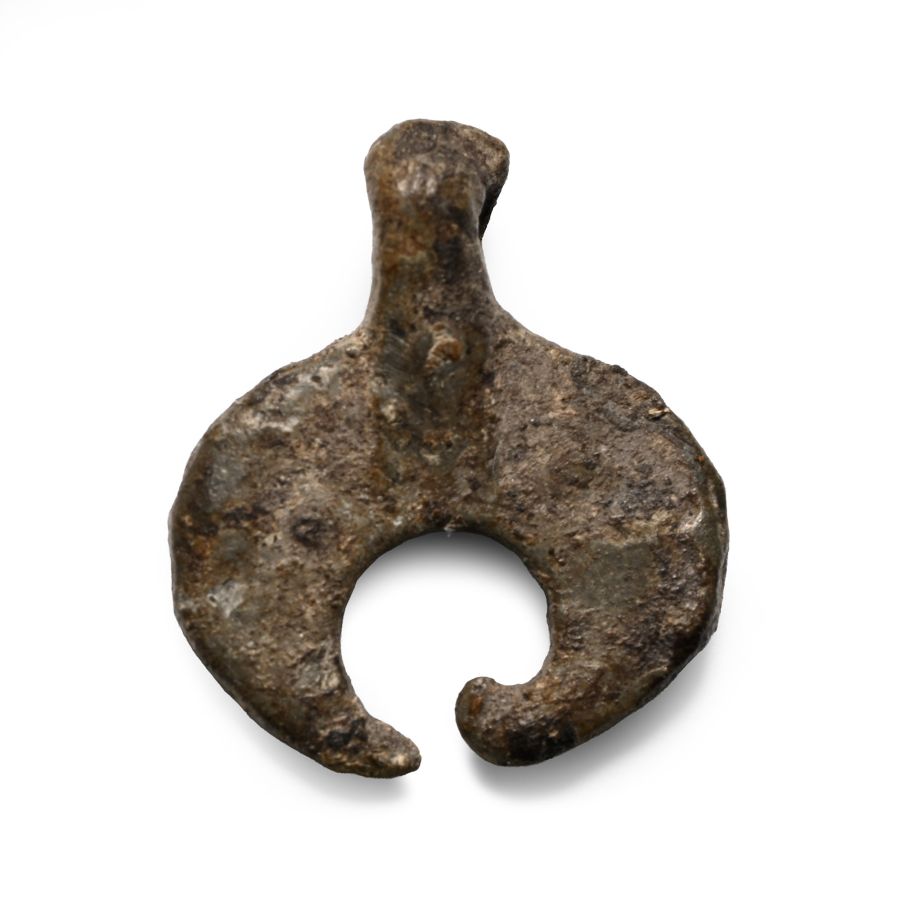
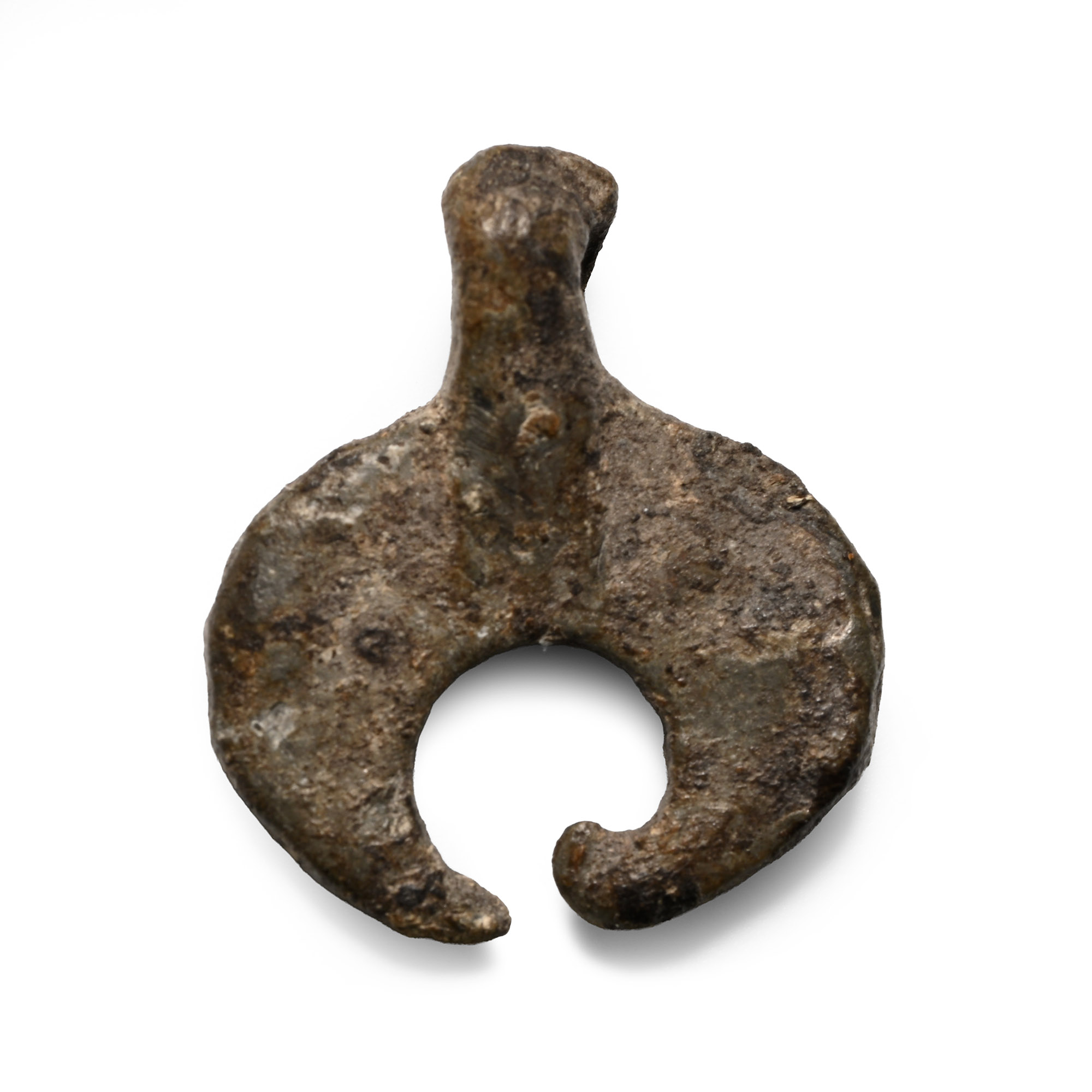
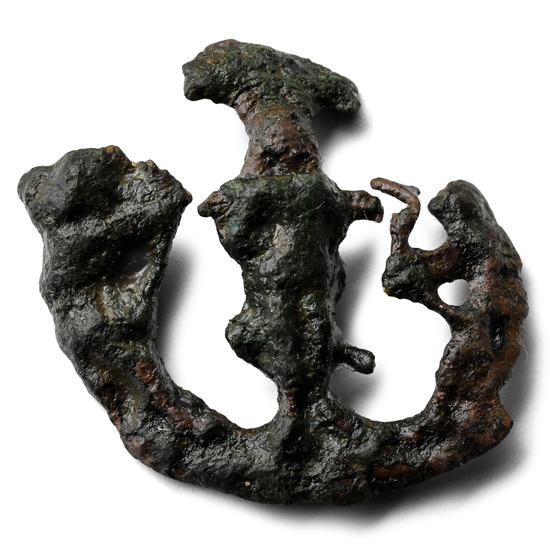
Post Byzantine Bronze Pilgrim's Badge with Ottoman Crescent

CIRCA 14TH-15TH CENTURY A.D.

3/4 in. (2.07 grams, 18 mm).

Crescent pendant with pierced lug, pellets to obverse. [No Reserve]

Provenance

From a retired Lincolnshire, UK, gentleman's collection, a long time member of the Pewter Society.

Literature

Cf. Mitchiner, M., Medieval Pilgrim & Secular Badges, London, 1986, item 1088, for type.

CONDITION

VETTING:

TimeLine Auctions follows a vetting process to ensure the authenticity and legality of all items, reinforcing our commitment to integrity and responsible trading. Each antiquity, antique, and coin lot undergoes thorough examination by a vetting committee of at least ten external specialists, professional trade association members, scientists, and archaeologists: Our Vetting Process


AUCTIONS:

TimeLine is a leading auction house specialising in antiquities, ancient art, collectables, natural history, coins, medals, and books. Our auctions offer museums, collectors, historians, and enthusiasts the opportunity to acquire unique and historically significant pieces.

LOT 2165

Post Byzantine Bronze Pilgrim's Badge with Ottoman Crescent

Sold for (Inc. bp): £33

Print page

RELATED LOTS

  • Medieval Our Lady of the Flames Limestone Figural Scene
    Medieval 'Our Lady of the Flames' Limestone Figural Scene
    15th century A.D. or later

    Sold for (Inc. bp): £845

    Carved in the half-round frieze fragment or devotional sculpture of the Madonna del Fuoco, facing female in wimple and long robe with her right arm bent forward, left arm extended above a child gripping the folds of her robe; billowing flames surrounding the pair; mounted on a custom-made stand. 10.55 kg total, 37.7 cm including stand


    Acquired Lukas Pearsie, Suffolk, 2012. Property of a Kent collector. From the N.J. collection, Leicester, UK.

    One version of the legend of 'Our Lady of the Flames' concerns an image of Mary and the Infant Jesus which was saved from a house-fire at Forli, near Ravenna, Italy by a miraculous intervention. The icon burst out of the wall of the blazing house to the astonishment of the locals, who reported it to the church authorities and it was subsequently accepted by a papal legate as a miracle. The legend was propagated in an early Italian printed book by Giuliano Bezzi called "Il Fuoco Trionfante" (The Triumphant Fire) printed in 1637. The events are said to have taken place around 1420 A.D.

    Lot Details

  • Medieval Pewter Pilgrims Badge of Saint Werburgh
    Medieval Pewter Pilgrim's Badge of Saint Werburgh
    14th-15th century A.D.

    Sold for (Inc. bp): £169

    Formed as a low-relief image of three geese on a field with wattle hurdle fence panels; inked collector's mark to the reverse 'BILL.' (Billingsgate, London). 2.71 grams, 30 mm


    From a retired Lincolnshire, UK, gentleman's collection, a long time member of the Pewter Society.

    St Werburgh (also Werburga in Latin documents) was an abbess, daughter of King Wulfhere of Mercia (died 675 AD ), whose emblem was geese. One of the best-known miracles was the command given by St Werburgh to a flock of geese causing havoc in the cornfields of Weedon. One version of the legend is that St Werburgh had been interested in a flock of geese that visited the convent meadow and bathed in the pond in Weedon. St Werburgh named her favourite goose with a black ring around his neck as Grayking. Subsequently, Grayking was eaten by the convent steward, Hugh, as the flock ruined his field of corn and he felt that they had not been punished enough by St Werburgh. When St Werburgh found out this she was furious with the steward. She found the bones of the goose Grayking and ordered him to arise. The bones reformed and Grayking the goose stood before her.

    Lot Details

  • Medieval Lead Vesica-Shaped Personal Seal Matrix
    Medieval Lead Vesica-Shaped Personal Seal Matrix
    Lincolnshire, circa 13th century A.D.

    Sold for (Inc. bp): £52

    Scaphoid in plan with chamfered edges and raised fleur-de-lys motif; underside with central fleur-de-lys and border with legend '+ S' ALANI D'FERIBY' for 'seal of Alan of Ferriby'. 11 grams, 31 mm


    Found Lincolnshire, UK. Acquired on the UK art market from the 1990s. From the private collection of a Lincolnshire, UK, gentleman.

    Lot Details

Stay up-to-date with the latest from TimeLine Auctions by joining our mailing list