
Loading, please wait...
LOT 1533
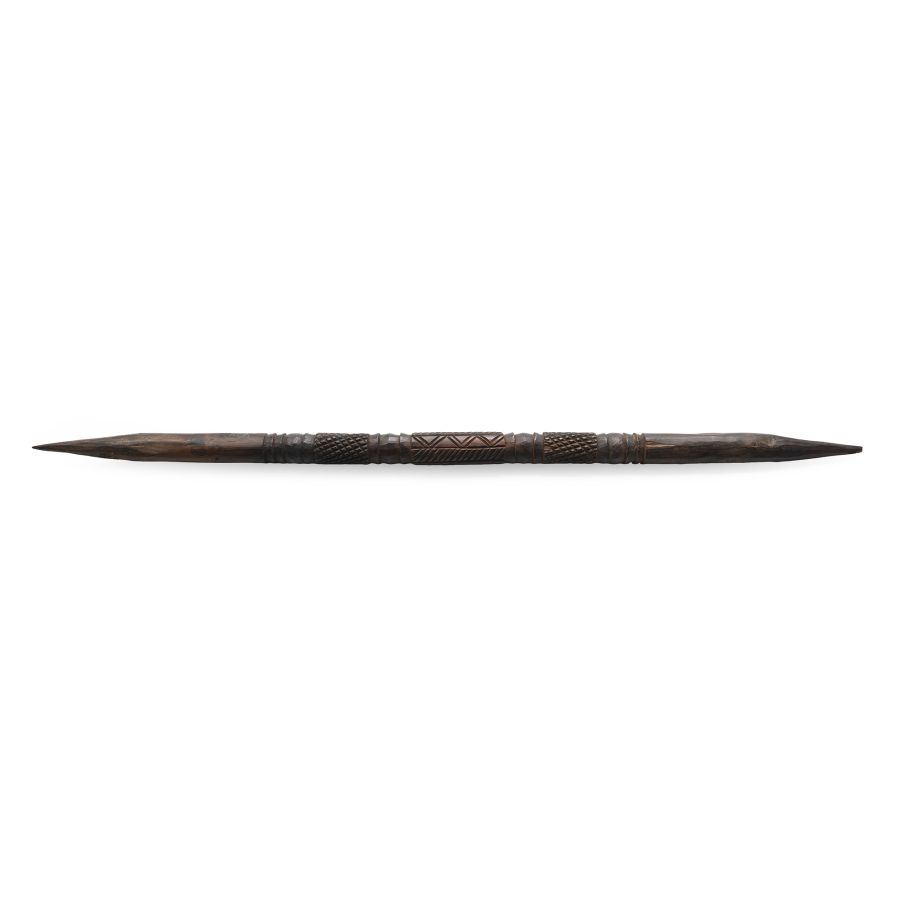
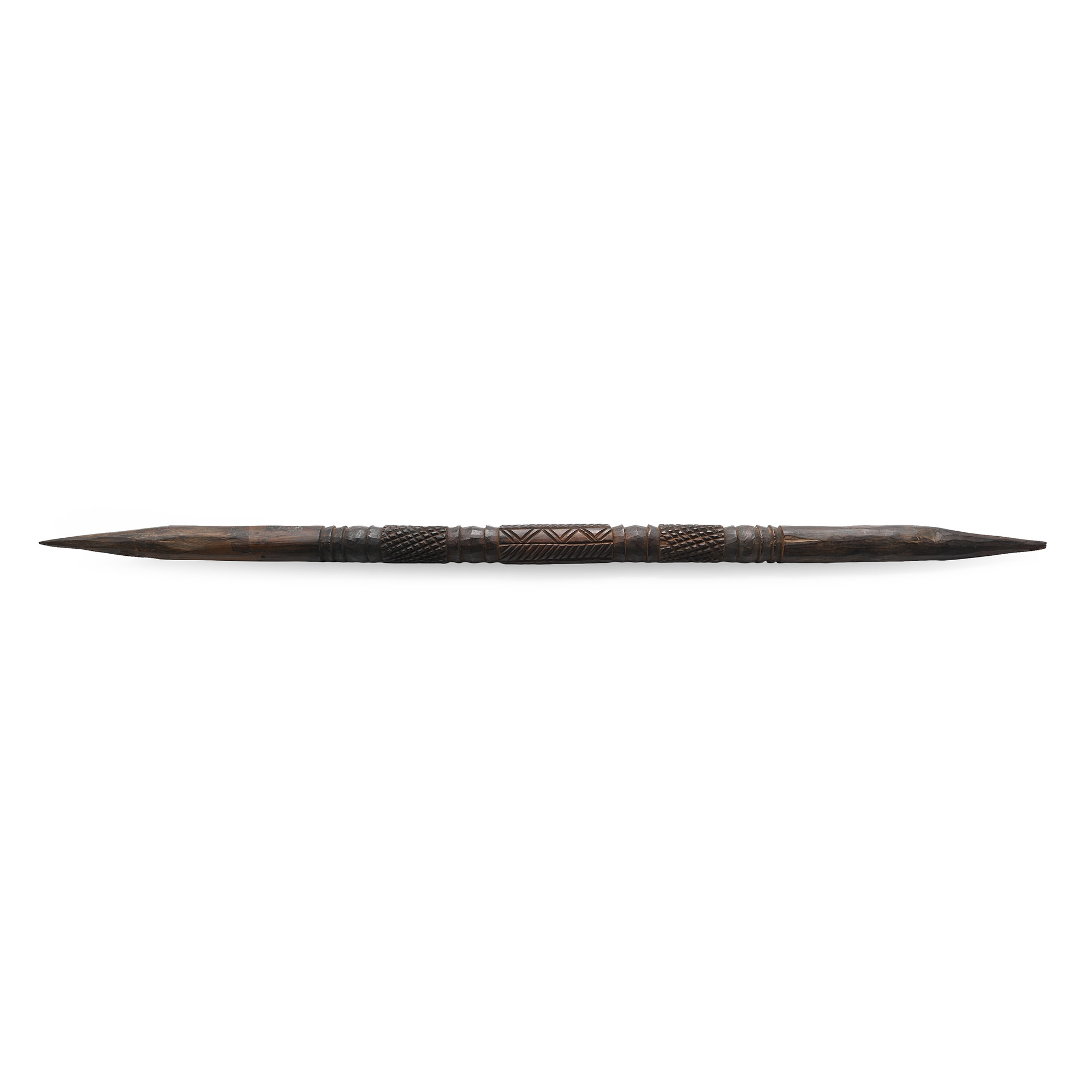
Polynesian Carved Hardwood Fighting Stick
LATE 20TH CENTURY A.D.
27 1/4 in. (320 grams, 69.2 cm).
Comprising a worked round-section stave with point to each end, central grip with carved balusters and hatched sleeves. [No Reserve]
ProvenanceProperty of a Berkshire, UK, gentleman collector.
CONDITIONTimeLine Auctions follows a vetting process to ensure the authenticity and legality of all items, reinforcing our commitment to integrity and responsible trading. Each antiquity, antique, and coin lot undergoes thorough examination by a vetting committee of at least ten external specialists, professional trade association members, scientists, and archaeologists: Our Vetting Process
AUCTIONS:
TimeLine is a leading auction house specialising in antiquities, ancient art, collectables, natural history, coins, medals, and books. Our auctions offer museums, collectors, historians, and enthusiasts the opportunity to acquire unique and historically significant pieces.
-
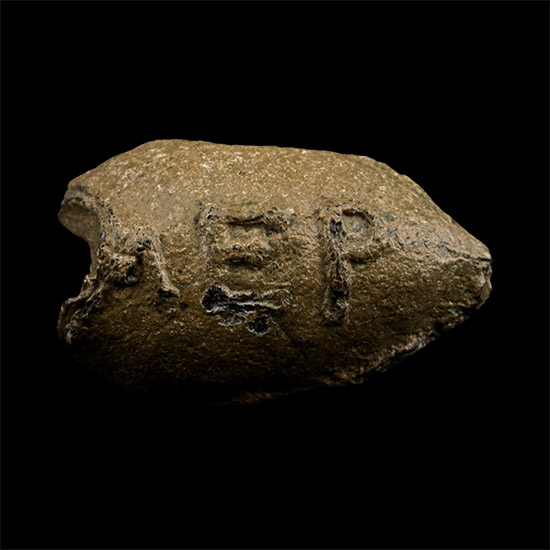
Greek Macedonian Lead Impacted Slingshot
4th-3rd century B.C.Sold for (Inc. bp): £52
Lentoid type with one end deformed on impact; raised legend '[.]MEP' to one face and 'NA[..]' to the other. 26.6 grams, 25 mm
Ex German art market, 2000s. Acquired from an EU collector living in London. From the collection of a Surrey, UK, gentleman. -
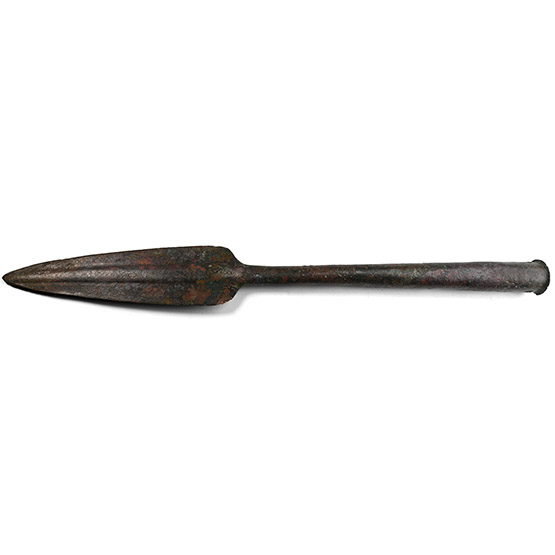
Luristan Bronze Socketted Spearhead
2nd-1st millennium B.C.Sold for (Inc. bp): £312
Comprising a lentoid-section, leaf-shaped blade with tapering socket. 285 grams, 38 cm
Ex Abelita family collection, 1990s. -
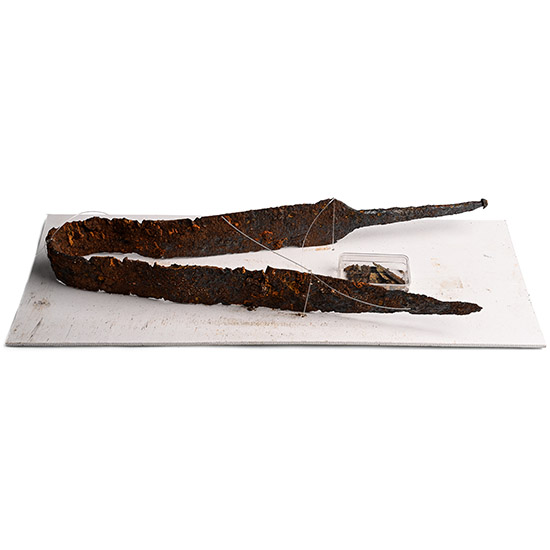
Iron Age Celtic La Tene Ritually Bent Sword
Circa 450 B.C.– 50 A.D.Sold for (Inc. bp): £351
An iron long sword of Stead's Type II with two-edged, parallel-sided flat-section blade, rounded shoulders, long lenticular-section tang with knop finial. 760 grams total, 40 cm
Acquired on the German art market. Private collection, Germany. Kept in the UK from 2016.
