
Loading, please wait...


LOT 0780
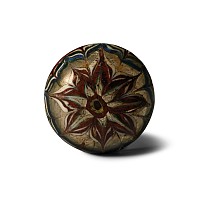
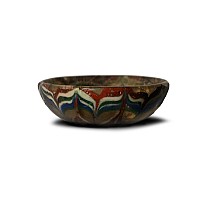
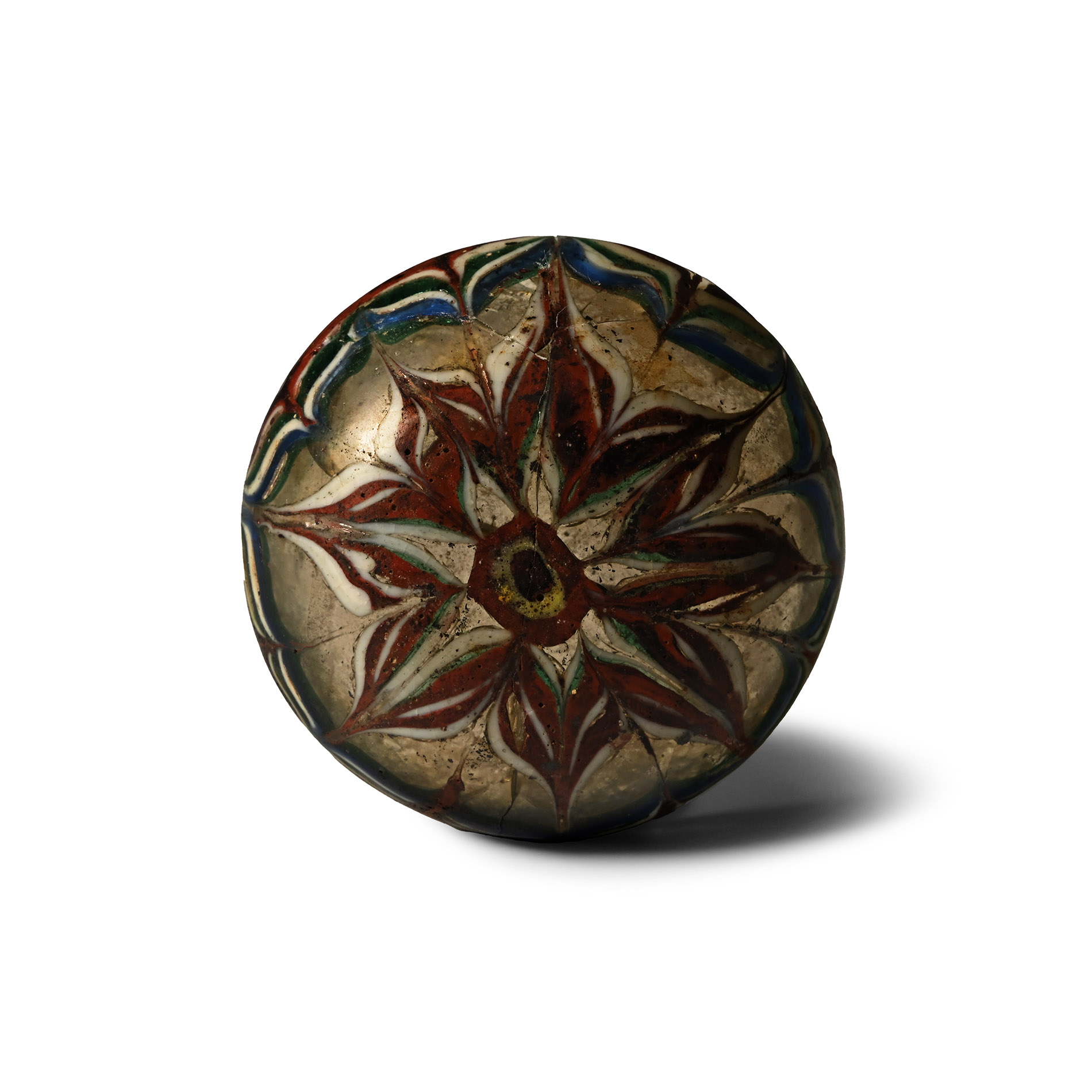
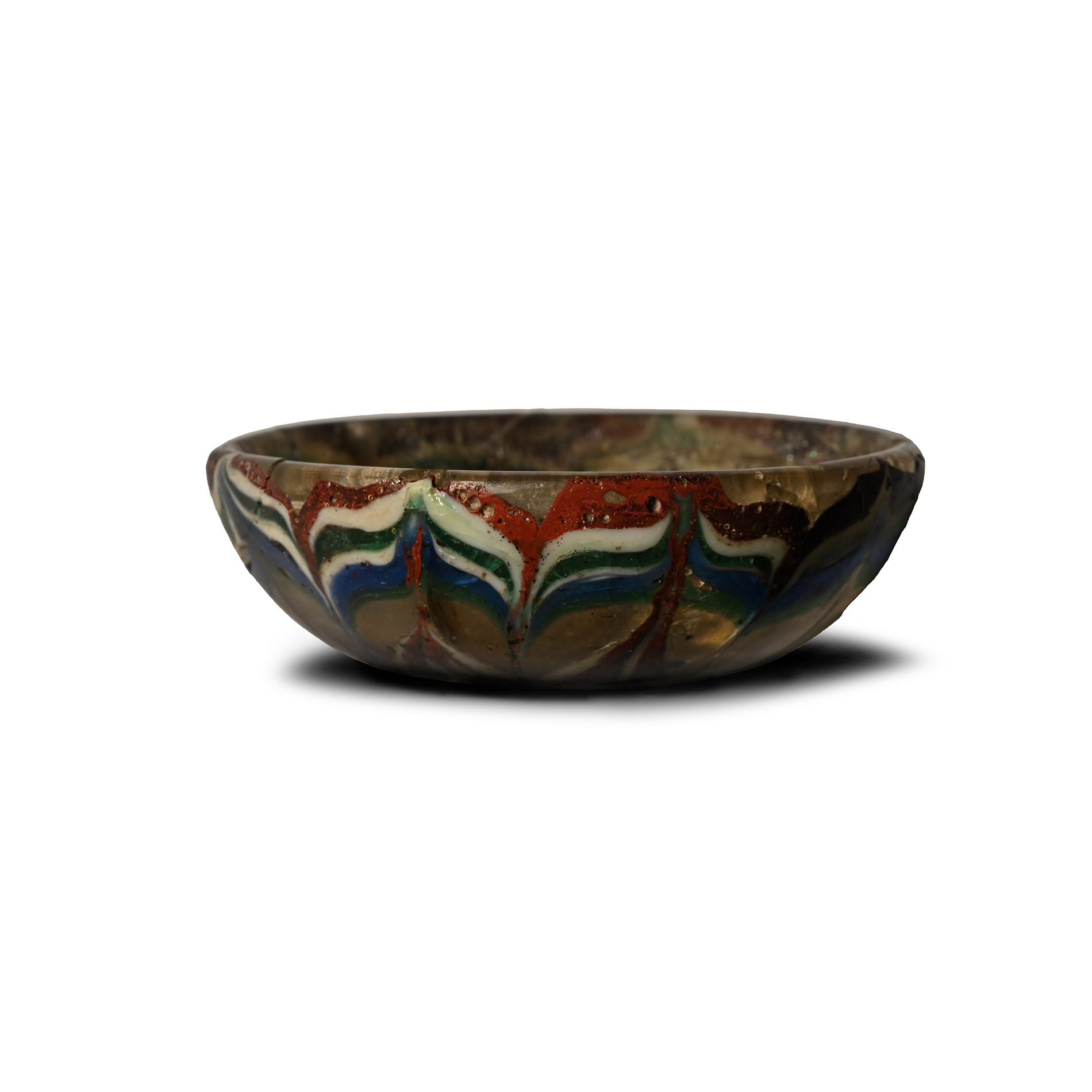
Polychrome Glass Bowl
ROMAN, 1ST CENTURY A.D. OR LATER
2 1/2 in. (42.2 grams, 63 mm).
Shallow bowl with rounded rim, the outer face with dragged and marvered trails forming a rosette.
ProvenanceS.S.H., South France, 1950s.
Accompanied by a copy of an Art Loss Register certificate no.S00133093.
This lot is accompanied by an illustrated lot declaration signed by the Head of the Antiquities Department, Dr Raffaele D’Amato.
See The Corning Museum of Glass, accession number 79.1.40, for type; cf. Goldstein, S.M., Pre-Roman and Early Roman Glass, in the Corning Museum of Glass, Corning-New York, 1979, no.545, for a similar decorated shallow ribbed bowl; fragments of similar bowls in nos.504-505.
FootnotesSuch decorated shallow bowls were mainly produced in the Eastern Provinces of the Roman Empire, and some scholars proposed Alexandria as the workshop. They were realised with mosaic glass technique, mould-pressed and tooled.
CONDITIONTimeLine Auctions follows a vetting process to ensure the authenticity and legality of all items, reinforcing our commitment to integrity and responsible trading. Each antiquity, antique, and coin lot undergoes thorough examination by a vetting committee of at least ten external specialists, professional trade association members, scientists, and archaeologists: Our Vetting Process
AUCTIONS:
TimeLine is a leading auction house specialising in antiquities, ancient art, collectables, natural history, coins, medals, and books. Our auctions offer museums, collectors, historians, and enthusiasts the opportunity to acquire unique and historically significant pieces.
-
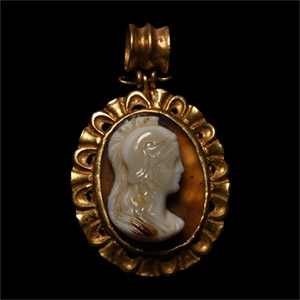
Roman Gold Pendant with Minerva Cameo
2nd-3rd century A.D.Sold for (Inc. bp): £2,600
Comprising: ellipsoid gold plaque with egg-and-dart scrolled border, articulating ribbed suspension loop; obverse with inset carved shell cameo of Minerva with crested helmet, long hanks of hair, top of tunic at shoulder. 8.29 grams, 39 mm
Acquired in the 1970s. Acquired on the UK art market. Private collection, London, UK. This lot has been checked against the Interpol Database of stolen works of art and is accompanied by a search certificate number no.12522-232023. This lot has been cleared against the Art Loss Register database, and is accompanied by an illustrated lot declaration signed by the Head of the Antiquities Department, Dr Raffaele D’Amato. -
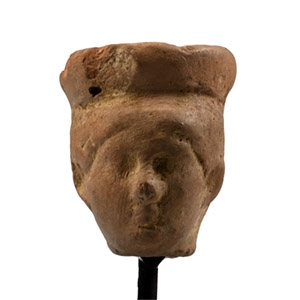
Roman Terracotta Head of a Goddess
1st-4th century A.D.Sold for (Inc. bp): £104
Modelled in the round with circular headdress above the hair drawn back to the nape of the neck; mounted on a custom-made stand. 56.5 grams total, 73 mm including stand
Acquired from Brigantia Antiques, York, UK, circa 2008. Ian Wilkinson collection, Nottinghamshire, UK, formed since 1985. This lot is accompanied by an illustrated lot declaration signed by the Head of the Antiquities Department, Dr Raffaele D’Amato. -

Roman Bronze Military Compass and Tweezers Multi-Tool
Circa late 2nd-4th century A.D.Sold for (Inc. bp): £169
Featuring a compass and tweezers, free-moving collar to one arm, one arm with two oval terminals and one tapering to a point. 19 grams, 90 mm
Acquired before 2000. From the collection of a European gentleman living in the UK. This lot is accompanied by an illustrated lot declaration signed by the Head of the Antiquities Department, Dr Raffaele D’Amato.
This instrument, a type of circinus formed of two flat-section arms, was widely used by masons and carpenters, as well as for making wall decorations for the preparation of repetitive elements such as spirals or circles. It was widely used by the agrimensores of the army, as is proven by a very similar specimen found in Carnuntum, the camp of the Legio XIIII Gemina.
