
Loading, please wait...
Details
LOT 255409
Polished Imperial Porphyry Gaming Pieces
ROMAN, 4TH-6TH CENTURY A.D. OR LATER
5/8 - 7/8 in. (125 grams total, 15-23 mm).
A group of twelve hand-cut and hand-polished globular gaming pieces. [11, No Reserve]
Provenance
Acquired in the 1990s from the Bath Antiques Centre, Somerset, UK.
From the private collection of a Somerset gentleman.
Footnotes
Mons Porphyrites (today Jabal Abu Dukhkhan) is the mountainous site of a group of ancient quarries in the Red Sea Hills of the inhospitable eastern desert in Egypt, a five-day trip from the Nile during Roman times. They were discovered by Caius Cominus Leugas in 18 A.D., and during the Roman Empire, the mines officially belonged to the emperor and were the only known source of the Imperial Porphyry, Mons Porphyrites. This dark purple stone was associated with royalty and used for prestigious sculpture and architecture. The location of the mines was lost sometime in the 5th century and rediscovered in the early 19th century. Excavations in the area have revealed the well-preserved quarries and the dwelling places of the quarrymen, and also thousands of ostraca have been discovered containing messages that provide details of how the quarrying took place, and of how the highly skilled quarrymen ordered their food.
CONDITIONVETTING:
TimeLine Auctions follows a vetting process to ensure the authenticity and legality of all items, reinforcing our commitment to integrity and responsible trading. Each antiquity, antique, and coin lot undergoes thorough examination by a vetting committee of at least ten external specialists, professional trade association members, scientists, and archaeologists: Our Vetting Process
AUCTIONS:
TimeLine is a leading auction house specialising in antiquities, ancient art, collectables, natural history, coins, medals, and books. Our auctions offer museums, collectors, historians, and enthusiasts the opportunity to acquire unique and historically significant pieces.
LOT 255409
Polished Imperial Porphyry Gaming Pieces
Estimate £200 - 300€230 - 350 (for guidance only)$270 - 410 (for guidance only)
Opening Bid
£5 (EUR 6; USD 7) +BP*
RELATED LOTS
-
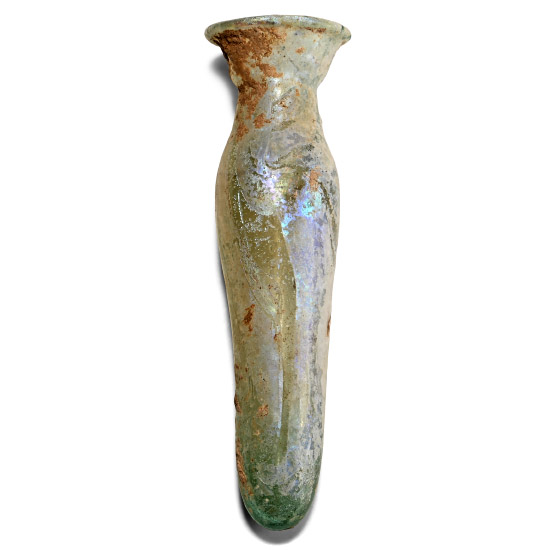
Roman Iridescent Glass Balsamarium
3rd century A.D.Estimate: £100 - 140 (+bp*)
Opening Bid: £50
Slender tapering body with a rounded base and a trumpet-shaped mouth with a rolled rim. 20.87 grams, 12.7 cm
Acquired in the 1990s from London dealerships and auction houses. From the Lonson collection. -
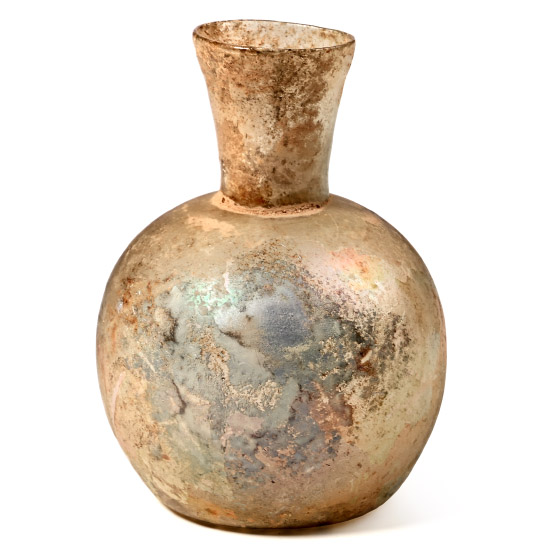
Roman Iridescent Glass Flask with Flared Neck
3rd-4th century A.D.Estimate: £100 - 140 (+bp*)
Opening Bid: £50
Bulbous body with dimple base and a trumpet-shaped neck. 30 grams, 10 cm
Acquired in the 1990s from London dealerships and auction houses. From the Lonson collection. -
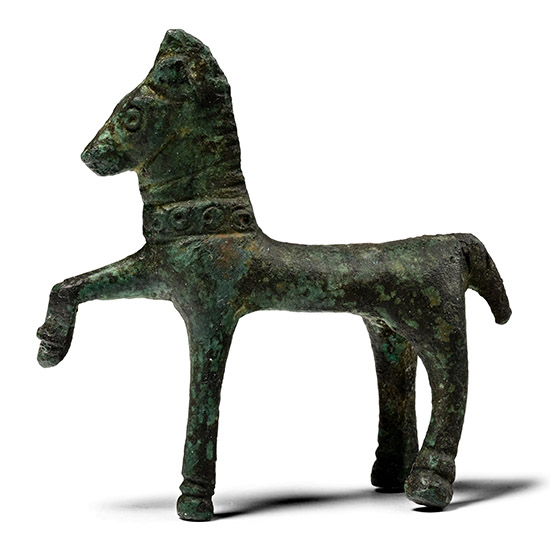
Roman Bronze Stepping Horse Statuette
100-300 A.D.Estimate: £150 - 200 (+bp*)
Opening Bid: £5
Modelled in the round with an elongated body and legs, right foreleg raised, head turned slightly to the right, a stamped ring-and-dot collar around the neck and eyes indicated by ring-and-dot motifs. 27.44 grams, 49 mm
From the private collection of a European gentleman (1942-2024), formed since the 1970s.
