
Loading, please wait...

LOT 0769
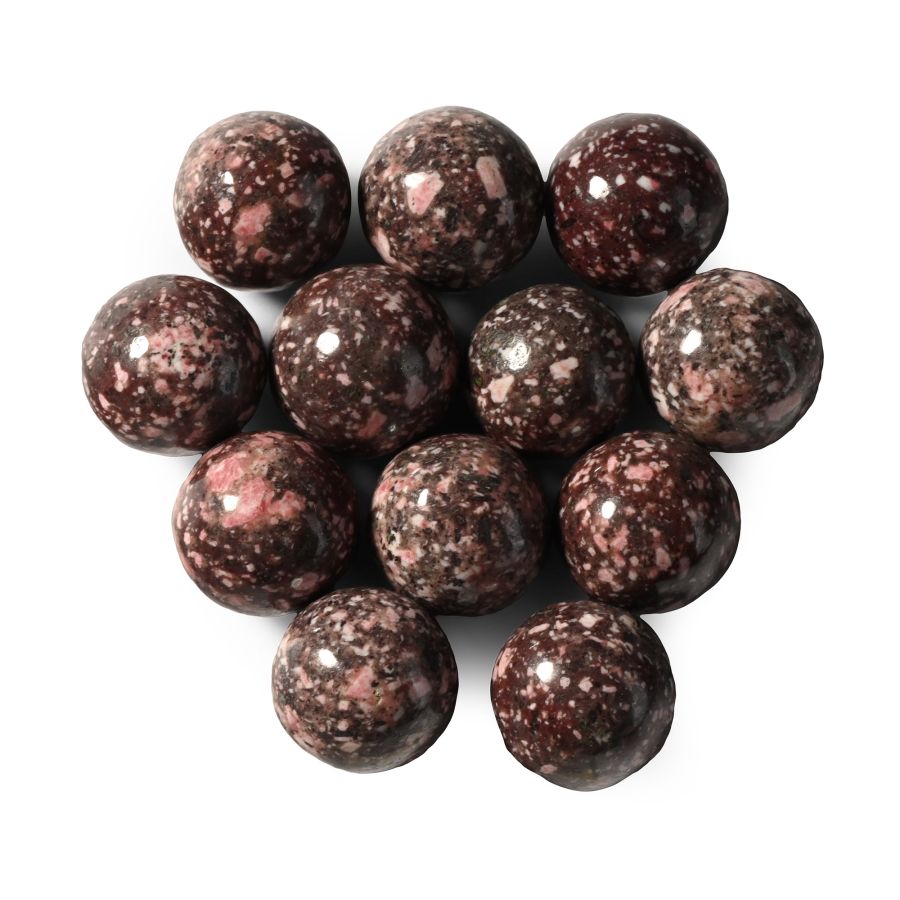
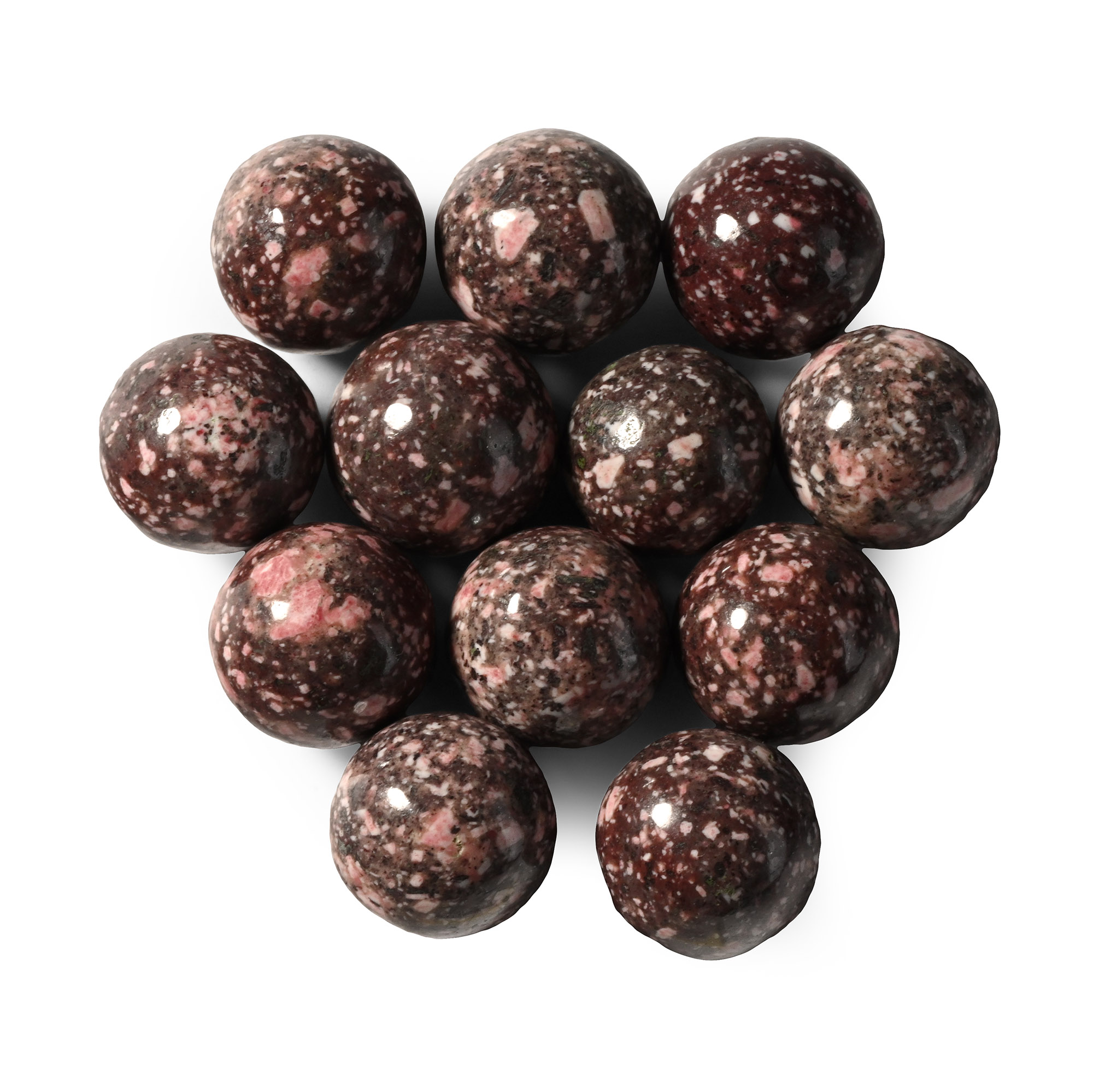
Polished Imperial Porphyry Gaming Pieces
ROMAN, 4TH-6TH CENTURY A.D. OR LATER
1/2 in. (55 grams total, 14 mm each).
A group of twelve hand cut and hand polished globular gaming pieces. [12]
ProvenanceAcquired in the 1990s from the Bath Antiques Centre, Somerset, UK.
From the private collection of a Somerset gentleman.
TimeLine Auctions follows a vetting process to ensure the authenticity and legality of all items, reinforcing our commitment to integrity and responsible trading. Each antiquity, antique, and coin lot undergoes thorough examination by a vetting committee of at least ten external specialists, professional trade association members, scientists, and archaeologists: Our Vetting Process
AUCTIONS:
TimeLine is a leading auction house specialising in antiquities, ancient art, collectables, natural history, coins, medals, and books. Our auctions offer museums, collectors, historians, and enthusiasts the opportunity to acquire unique and historically significant pieces.
-
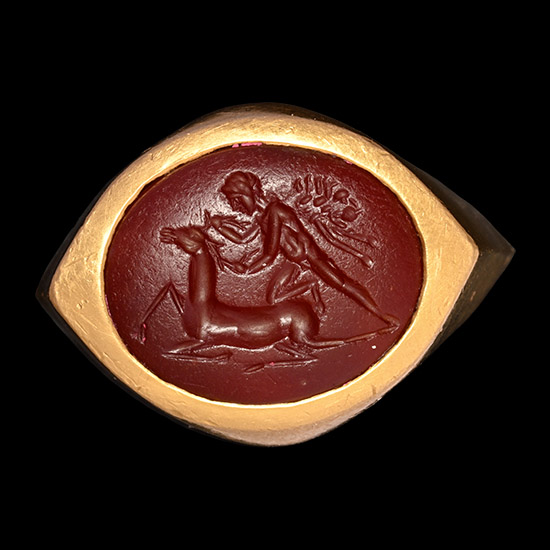
Roman Gemstone of Hercules with Ceryneian Hind in Gold Ring
2nd century A.D.Estimate: £3,000 - 4,000 (+bp*)
Opening Bid: £1,500
Red jasper intaglio engraved with nude Hercules draped in lion's skin, holding antlers of a reclining hind; set into a later substantial gold ring with carinated hoop and enigmatic italic inscription to the inner face with date 1922. 24.05 grams, 29.85 mm overall, 22.95 x 22.30mm internal diameter (approximate size British Z+2, USA 13 1/4, Europe 31.31, Japan 30)
Private collection, England. This lot has been checked against the Interpol Database of stolen works of art and is accompanied by search certificate number no.13171-249502.
The third labour of Hercules was to capture the Ceryneian hind, a swift, golden-antlered animal sacred to the goddess Artemis (Diana), required to bring it alive to the court of King Eurystheus. He accomplished the task after a year-long chase, when he wounded the hind's legs with an arrow near the Ladon River. He explained the situation to Artemis, and after he showed the hind to the king, the animal was released back into nature. -
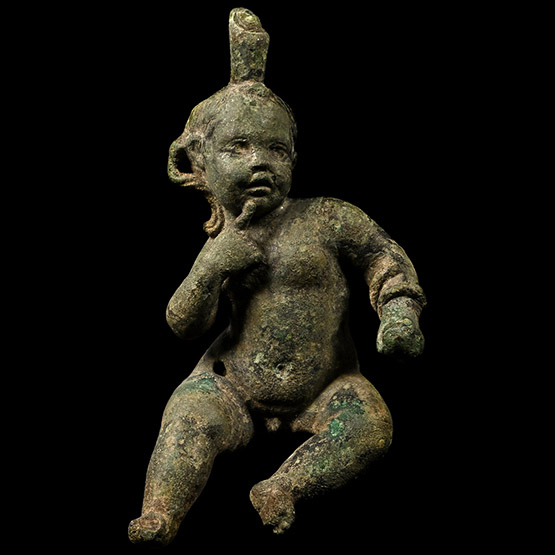
Roman Bronze Figure of the God Harpocrates
1st century A.D.Estimate: £2,500 - 3,500 (‡+bp*)
Opening Bid: £1,250
Modelled in the round, sitting with miniature double-crown, serpent arm-ring on left wrist, sidelock; fixing socket to right thigh. 145 grams, 72 mm
Private collection, Me. A., Florida, USA, early 1990s. European private collection, acquired in Germany, September 2000. This lot has been checked against the Interpol Database of stolen works of art and is accompanied by a search certificate number no.12683-234609. -
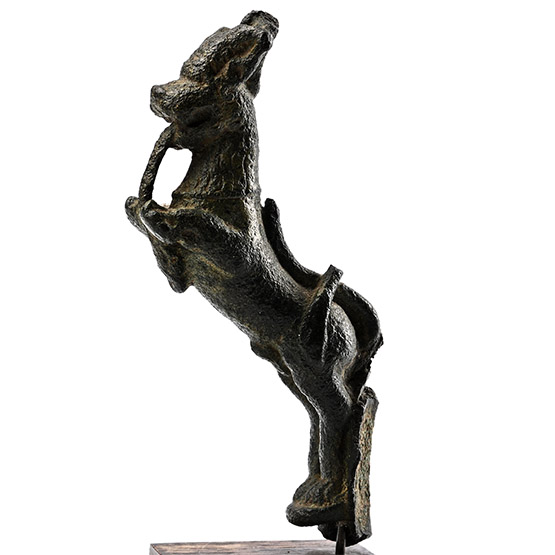
Roman Bronze Prancing Lion Statuette
1st-3rd century A.D.Sold for (Inc. bp): £715
Modelled in the round with the tail laid along the spine, collar to the neck and crest between the pricked ears; tongue protruding to form a loop against the chest, possibly from a handle; mounted on a display stand. 226 grams total, 13 cm including stand
Acquired from Bath Antiques Centre, 1990s; and inspected and verified by Robert Knox of the British Museum. From the private collection of a Somerset gentleman.
