
Loading, please wait...
LOT 3130
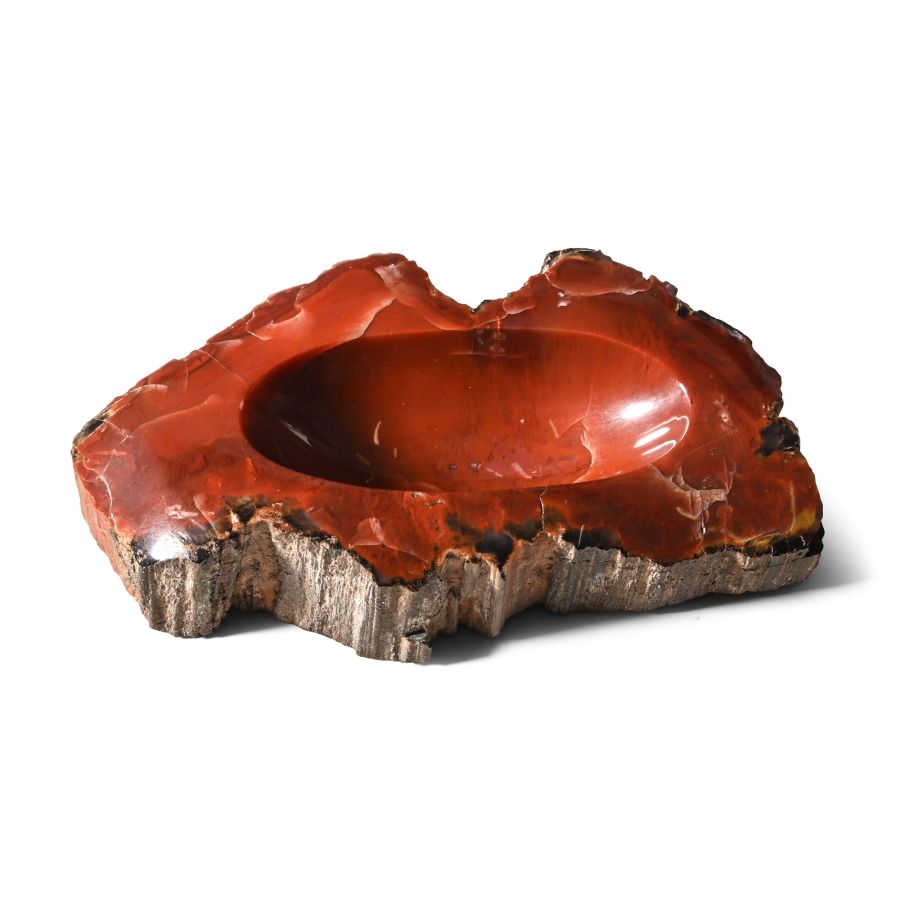
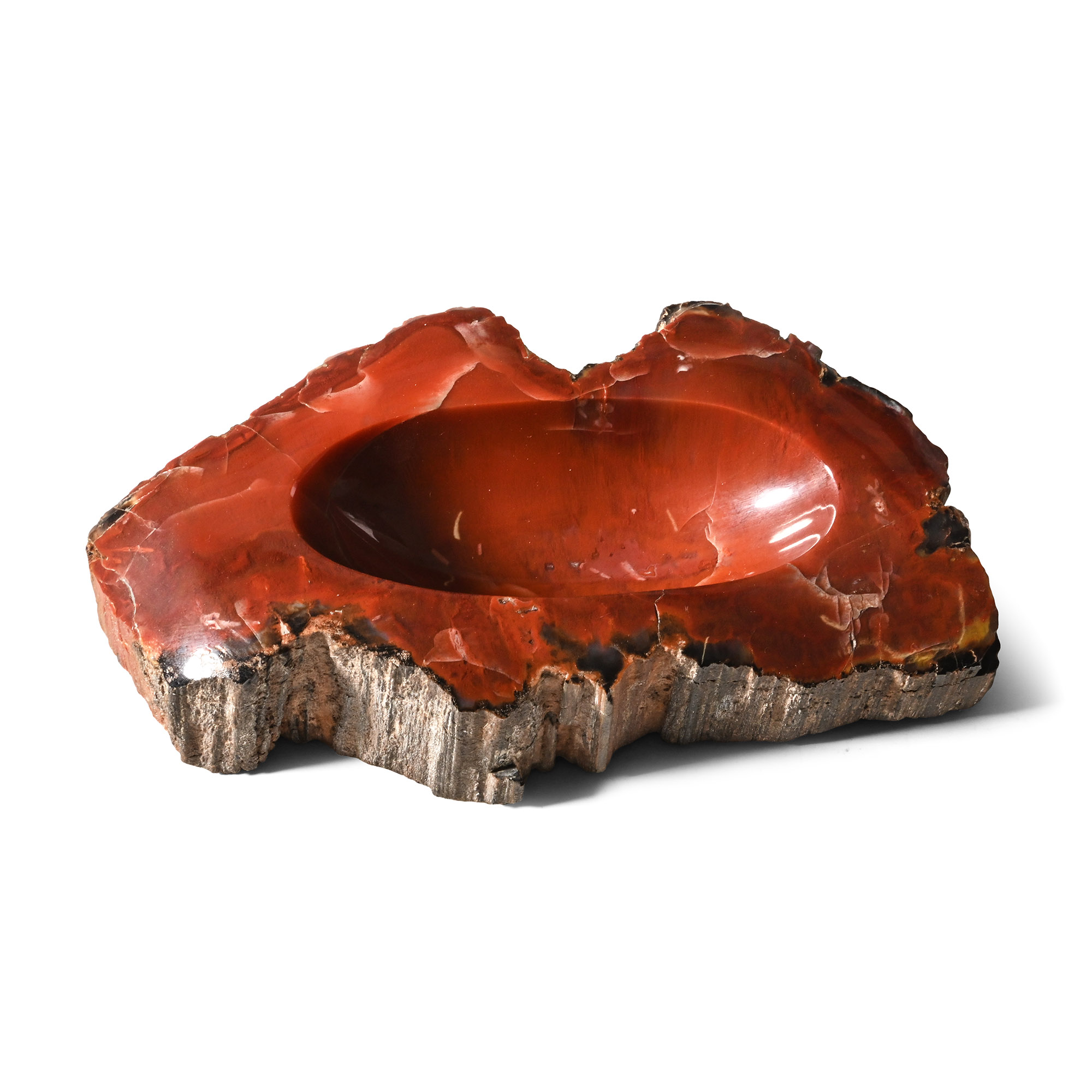
Polished Fossilised Wood Trinket Dish
LATE TRIASSIC PERIOD, CIRCA 225 MILLION YEARS B.P.
5 3/4 in. (580 grams, 14.5 cm).
Narrow section of an agatised wood, the upper face highly polished. [No Reserve]
ProvenanceAcquired on the UK art market.
Property of a Suffolk, UK, gentleman.
TimeLine Auctions follows a vetting process to ensure the authenticity and legality of all items, reinforcing our commitment to integrity and responsible trading. Each antiquity, antique, and coin lot undergoes thorough examination by a vetting committee of at least ten external specialists, professional trade association members, scientists, and archaeologists: Our Vetting Process
AUCTIONS:
TimeLine is a leading auction house specialising in antiquities, ancient art, collectables, natural history, coins, medals, and books. Our auctions offer museums, collectors, historians, and enthusiasts the opportunity to acquire unique and historically significant pieces.
LOT 3130
Polished Fossilised Wood Trinket Dish
Estimate £30 - 40€35 - 46 (for guidance only)$41 - 54 (for guidance only)
-
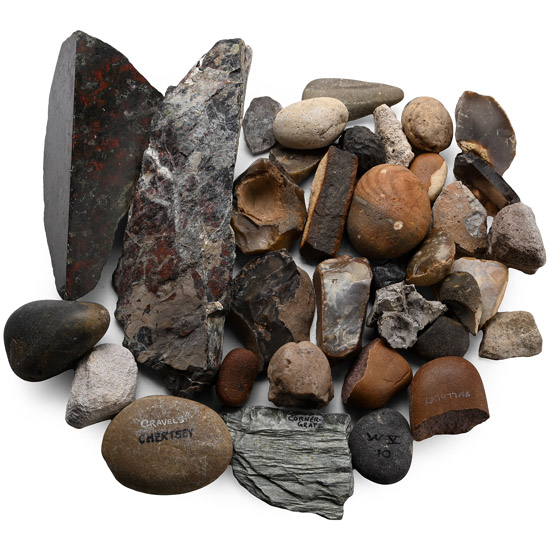
Rock and Mineral Collection
Estimate: £10 - 20 (+bp*)
Opening Bid: £5
Mixed group of rock specimens, including a smoky quartz. 2.46 kg total, 20.4 - 3.3 cm
Some of the specimens were found during the original official excavations in the Farnham area, Surrey, UK, which were conducted by Harold Falkner (1875-1963) and William Francis Rankine (c.1877-1962), who were instrumental in the excavation works and pit dwellings at sites including Six Bells, Frensham, Tilford, Thursley, Bagshot, and Waverley, amongst others, at and near Farnham in the 1930s and 1940s. Much of the material is now in the prestigious Farnham museum. The present part of the collection has been gifted to their good friend and Haselmere Parish Priest, Charles Borelli (c.1914-2000) of Farnham, who was part of the Borelli family from Italy, who emigrated from Lake Como in 1828 to set up the Borelli family watch and jewellery business; thence by family descent to his nephew. -
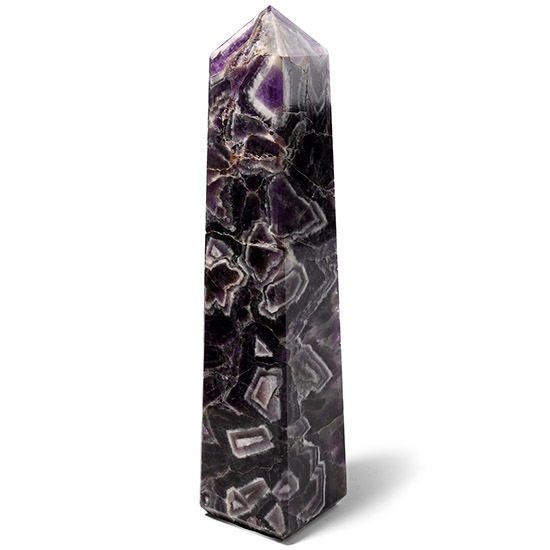
Chevron Amethyst Crystal Obelisk
Estimate: £70 - 90 (+bp*)
Opening Bid: £5
Large point with bevelled edges, showing chevron-like crystal formations with contrasting banding. 717 grams, 19.5 cm
From Malawi. Property of a Bristol, UK, gentleman collector. -
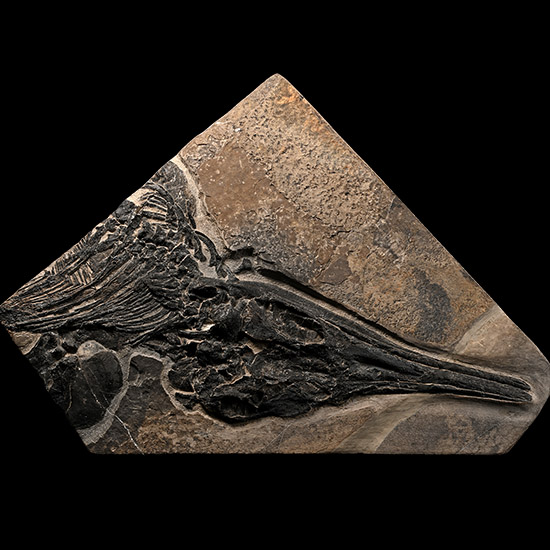
Fossil Ichthyosaur Skull and Partial Skeleton
Triassic Period, circa 246-237 million years B.P.Estimate: £2,000 - 3,000 (+bp*)
Opening Bid: £500
Featuring the top of the skull with an exposed left eye socket and part of the lower jaw also visible, a number of the cervical vertebrae present, as well as ribs and part of the right scapula. 5.75 kg, 36 cm
From the Guanling Biota formation, China. Previously with Shishang Corporation, Taiwan. From a West London gentleman collector; acquired from a professional fossil company in Taiwan.
Originally, ichthyosaur fossils were misidentified as ‘Saurian’, being either lizards or forms of crocodile. The term 'Ichthyosaur' was first used in 1817 by the German naturalist Karl Dietrich Eberhard Konig, and he did not publish the name until 1825. By the 1830s, the name Ichthyosaur was widely used.
