
Loading, please wait...
LOT 2543
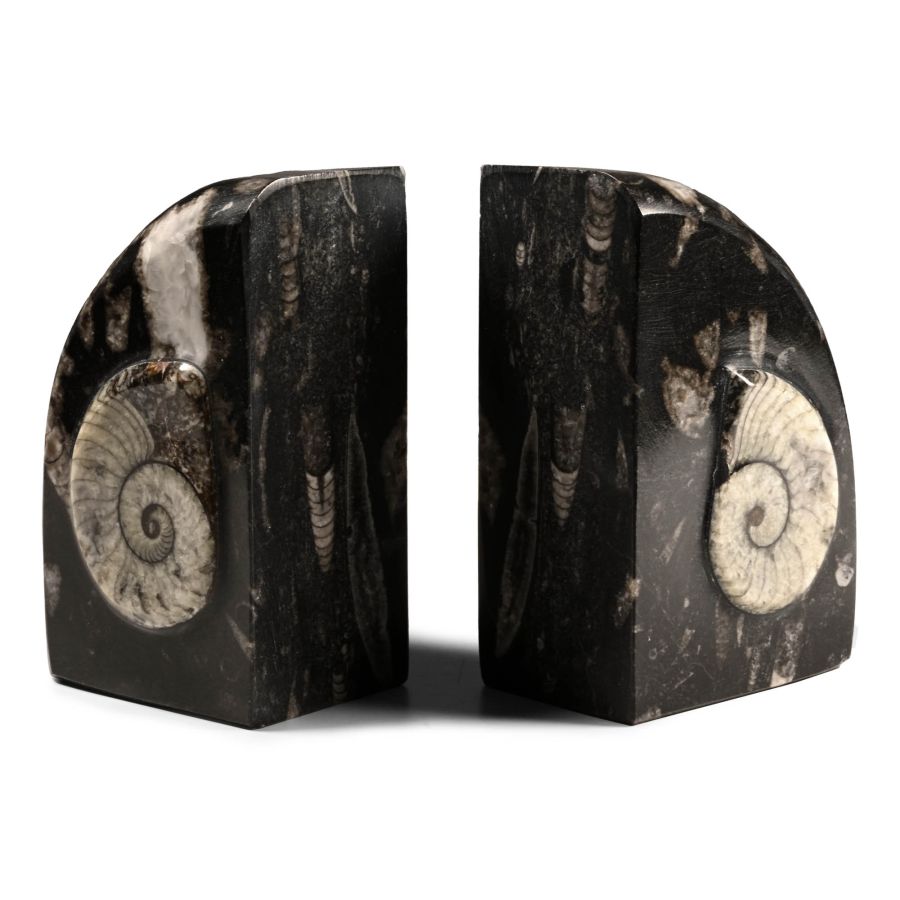
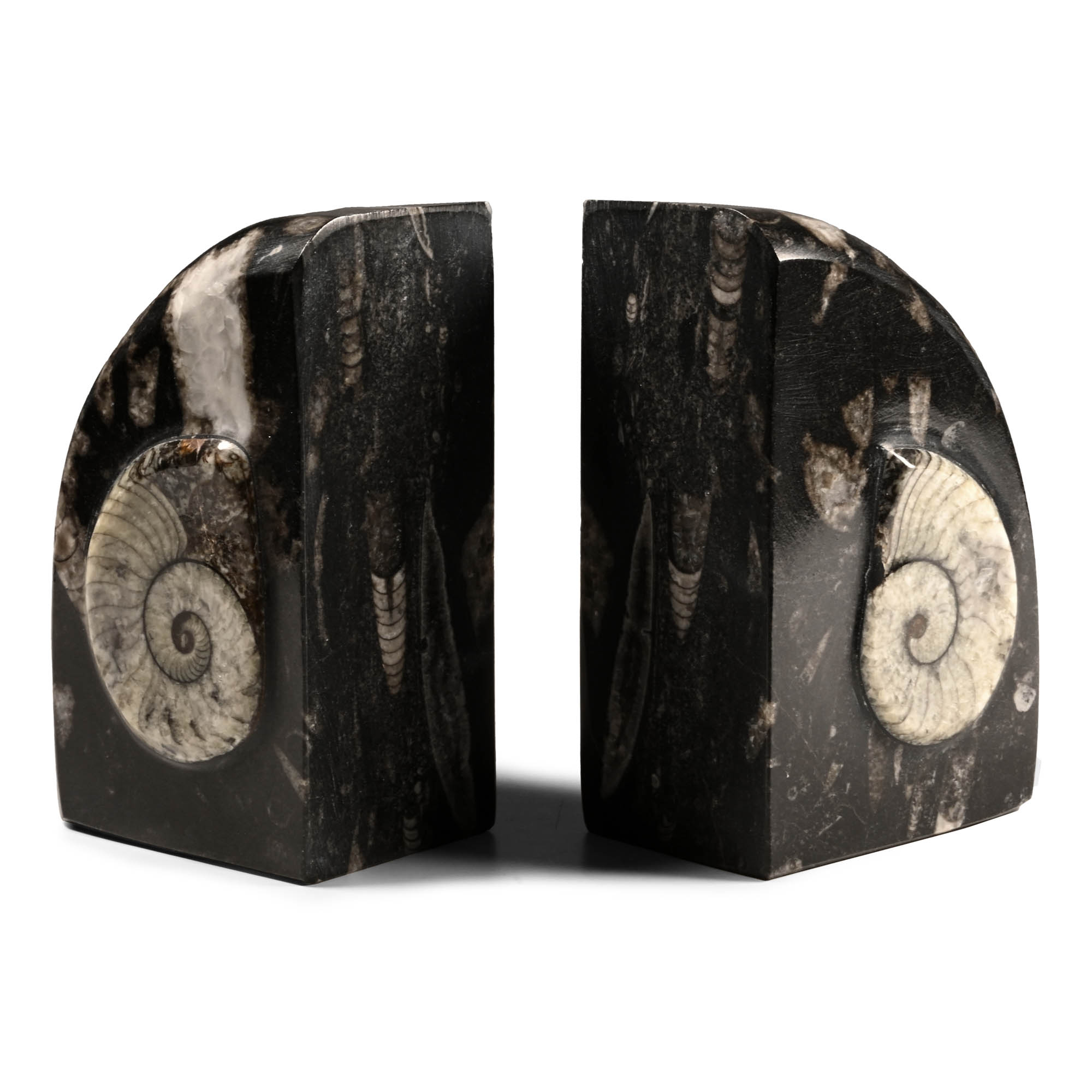
Polished Fossil Orthoceras Bookend Pair
DEVONIAN PERIOD, CIRCA 417-354 MILLION YEARS B.P.
4 3/4 in. (2.15 kg total, 12 cm high each).
A pair of bookends formed from fossiliferous stone showing sections of goniatite and orthoceras fossils, two large Goniatite sp. fossils set to the frontal face. [2, No Reserve]
ProvenanceFrom a Cambridgeshire, UK, collection.
CONDITIONTimeLine Auctions follows a vetting process to ensure the authenticity and legality of all items, reinforcing our commitment to integrity and responsible trading. Each antiquity, antique, and coin lot undergoes thorough examination by a vetting committee of at least ten external specialists, professional trade association members, scientists, and archaeologists: Our Vetting Process
AUCTIONS:
TimeLine is a leading auction house specialising in antiquities, ancient art, collectables, natural history, coins, medals, and books. Our auctions offer museums, collectors, historians, and enthusiasts the opportunity to acquire unique and historically significant pieces.
-
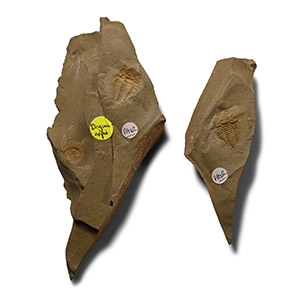
Fossil Daguinaspis Trilobite
Cambrian Period, circa 539-485 million years B.P.Sold for (Inc. bp): £13
Comprising two matrices, one with Daguinaspis ambrogi fossil and the other containing a negative impression of a fossil. 124 grams total, 94 - 131 mm
From a Cambridgeshire, UK, collection. -
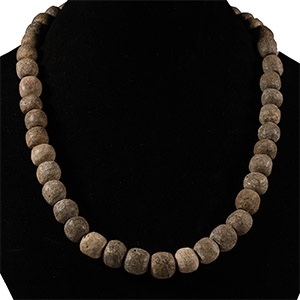
Woolly Mammoth Bone Bead Necklace String
Devensian Period, 110,000-12,000 years B.P.Sold for (Inc. bp): £59
Restrung using recently polished Mammuthus primigenius bone beads. 175 grams, 60 cm
Ex London, UK, collection, 2000s. -
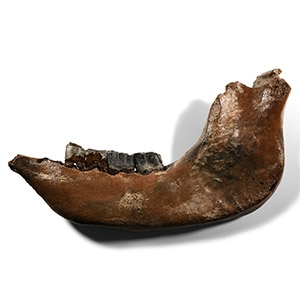
Woolly Rhinoceros Jaw
Devensian Period, circa 110,000-12,000 years B.P.Sold for (Inc. bp): £468
A well-preserved lower jaw section from Coelodonta antiquitatis with four molars. 3 kg, 52 cm
From the Northamptonshire, UK, collection of J. Shaul. Property of a Cambridgeshire, UK, gentleman.
The form of the woolly rhino’s skull and teeth had evolved to support its grazing lifestyle with its head dipped downwards towards the ground, even in its relaxed attitude. The skull is unusual in having both an extensively ossified nasal septum, probably evolved as a result of the heavy pressure on the horn and face when grazing, and a down-turned anterior region on the premaxilla that contacts the edge of the upper jaw. The shoulders were raised with a powerful hump, used to support the animal's massive front horn and also used for storing fat.
