
Loading, please wait...
LOT 2660
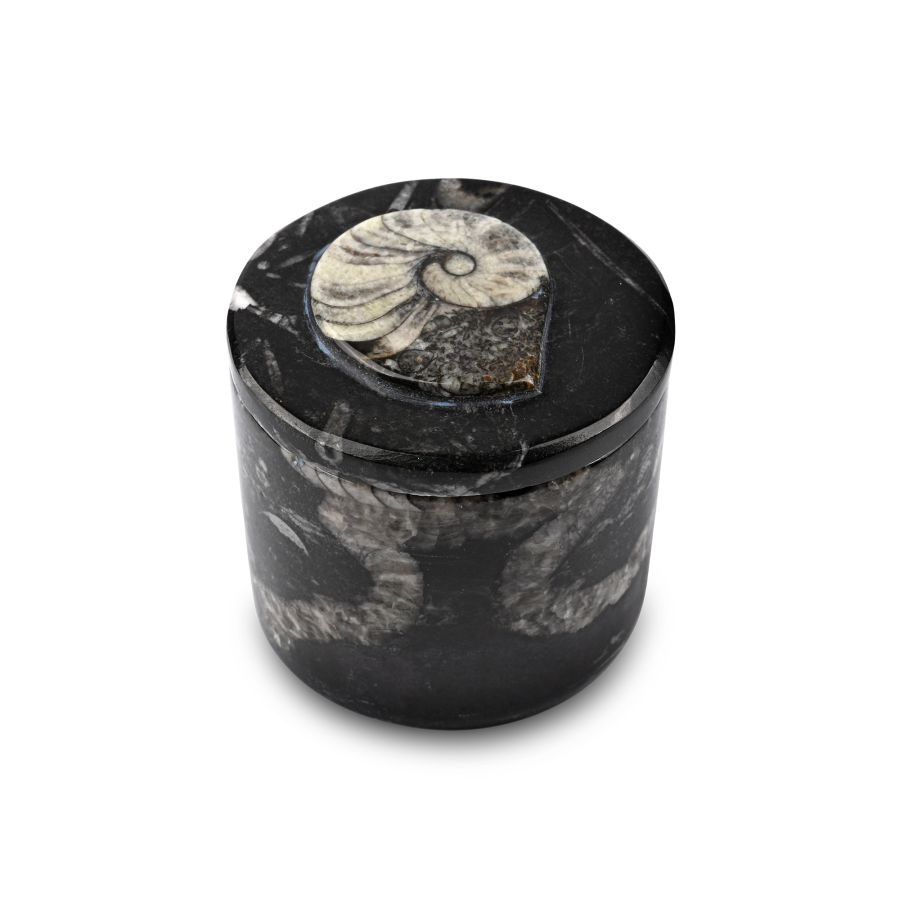
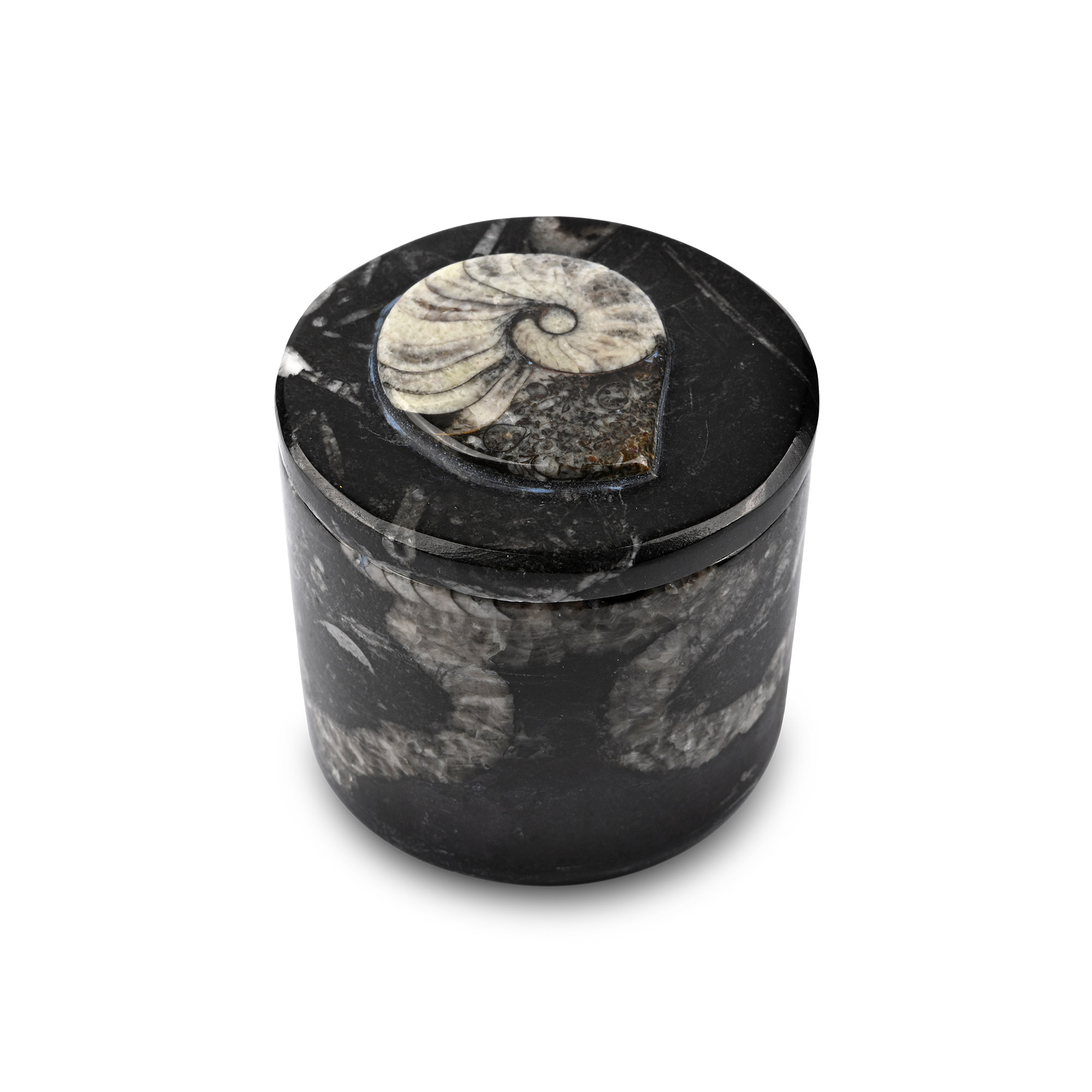
Polished Fossil Goniatite Ammonoid Lidded Trinket Box
DEVONIAN PERIOD, CIRCA 400 MILLION YEARS B.P.
2 5/8 in. (327 grams, 68 mm wide).
A cylindrical box carved from fossiliferous stone, the lid set with a larger Goniatite sp. specimen. [No Reserve]
ProvenanceFrom Morocco, North Africa.
From the private collection of Kenneth Machin (1936-2020), Buckinghamshire, UK; his collection of antiquities and natural history was formed since 1948; thence by descent.
TimeLine Auctions follows a vetting process to ensure the authenticity and legality of all items, reinforcing our commitment to integrity and responsible trading. Each antiquity, antique, and coin lot undergoes thorough examination by a vetting committee of at least ten external specialists, professional trade association members, scientists, and archaeologists: Our Vetting Process
AUCTIONS:
TimeLine is a leading auction house specialising in antiquities, ancient art, collectables, natural history, coins, medals, and books. Our auctions offer museums, collectors, historians, and enthusiasts the opportunity to acquire unique and historically significant pieces.
-
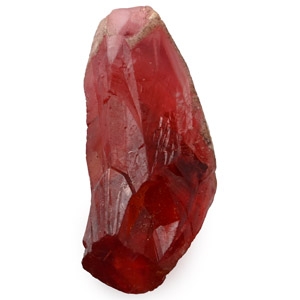
Rhodochrosite Crystal Mineral Display Specimen
Sold for (Inc. bp): £65
A cherry-red twinned crystal. 3.57 grams, 24 mm
Property of a North West London, UK, lady. -
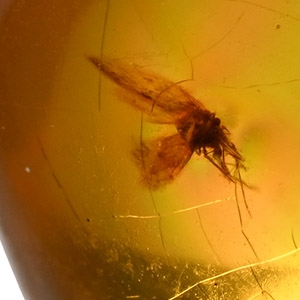
Fly and Other Inclusions in Polished Amber
Oligocene Epoch, circa 45 million years B.P.Sold for (Inc. bp): £59
Polished translucent pebble with a fly and two other inclusions. 1.21 grams, 16 mm
Property of a North West London, UK, lady. -
.jpg)
Boxed and Labelled Native Copper Specimen Collection
Sold for (Inc. bp): £221
A group of native copper specimens, each held in a white card collector's tray. 180 grams total, 24-42 mm
Very fine condition.
Caledonia Mine, Ontonagon County, Michigan, USA. Mineral Imports, London, UK. Gregory, Bottley & Lloyd (Gregory's). From the private collection of John Meredith, acquired since the 1990s; thence by descent.
