
Loading, please wait...
_900x900.jpg "Polished Copal with Insects")
_200x200.jpg "Polished Copal with Insects")
.jpg "Polished Copal with Insects")
LOT 2539
Polished Copal with Insects
OVER 3 MILLION YEARS B.P.
5 1/8 in. (36 grams, 13 cm).
Containing several insects and other inclusions. [No Reserve]
ProvenanceFrom Madagascar.
Acquired 1950s-1960s.
From an old Bristol, UK, palaeontological collection.
TimeLine Auctions follows a vetting process to ensure the authenticity and legality of all items, reinforcing our commitment to integrity and responsible trading. Each antiquity, antique, and coin lot undergoes thorough examination by a vetting committee of at least ten external specialists, professional trade association members, scientists, and archaeologists: Our Vetting Process
AUCTIONS:
TimeLine is a leading auction house specialising in antiquities, ancient art, collectables, natural history, coins, medals, and books. Our auctions offer museums, collectors, historians, and enthusiasts the opportunity to acquire unique and historically significant pieces.
-
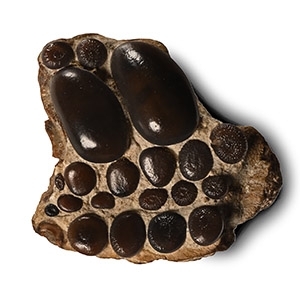
Fossil Pycnodont Partial Fish Palate
Middle Jurassic Period, circa 175-160 million years B.P.Sold for (Inc. bp): £13
In matrix with rows of molar teeth in situ. 7.35 grams, 31 mm
From Kingsthorpe, Gloucestershire, UK, 1960s. From a Leicestershire, UK, collection. Accompanied by a previous typed information card. -
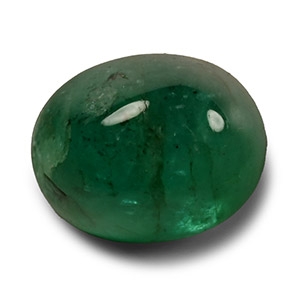
Natural Emerald Cabochon
Sold for (Inc. bp): £156
Oval-shaped with domed upper face; testing as emerald or chrysoprase. 0.64 grams, 9 mm
Acquired on the UK art market before 2000. Property of an Essex, UK, gentleman. -
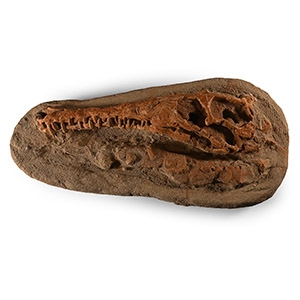
Fossil Diosaurus Skull and Bones on Composite Matrix
Paleocene Period, 66-56 million years B.P.Sold for (Inc. bp): £585
Displaying the left side of the skull and jaws with teeth, with a number of vertebrae to the side, set on a composite sandstone matrix; possibly Argochampsa krebsi. 6.66 kg, 51 cm
From a Cambridgeshire, UK, collection.
