
Loading, please wait...
LOT 0589
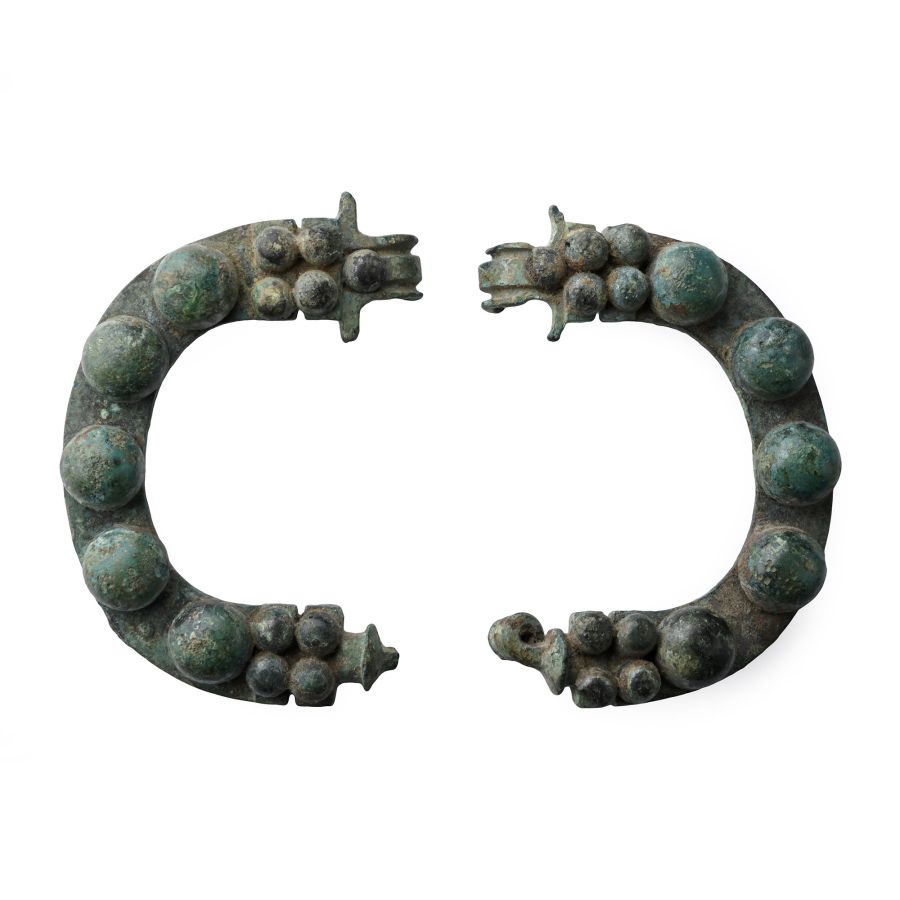
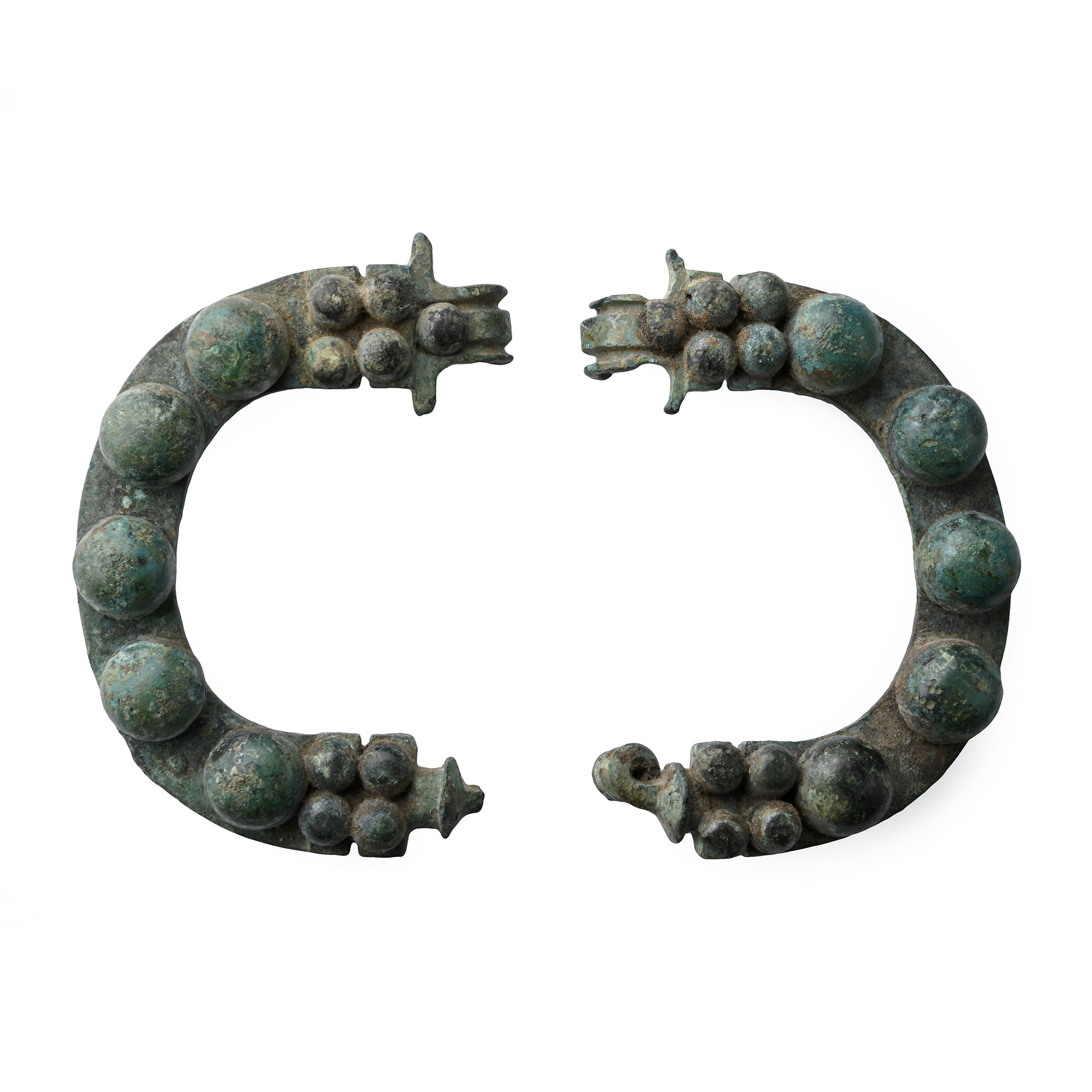
Phrygian Bronze Bow Brooch Pair
IRON AGE, CIRCA 8TH-7TH CENTURY B.C.
3 in. (108 grams total, 76 mm).
A matched pair with crescentic body, curved catch to one arm and remains of coiled spring to the other; domed studs attached to the arch through prepared holes. [2, No Reserve]
ProvenanceFrom the private collection of a European gentleman (1942-2024), formed since the 1970s.
CONDITIONTimeLine Auctions follows a vetting process to ensure the authenticity and legality of all items, reinforcing our commitment to integrity and responsible trading. Each antiquity, antique, and coin lot undergoes thorough examination by a vetting committee of at least ten external specialists, professional trade association members, scientists, and archaeologists: Our Vetting Process
AUCTIONS:
TimeLine is a leading auction house specialising in antiquities, ancient art, collectables, natural history, coins, medals, and books. Our auctions offer museums, collectors, historians, and enthusiasts the opportunity to acquire unique and historically significant pieces.
-
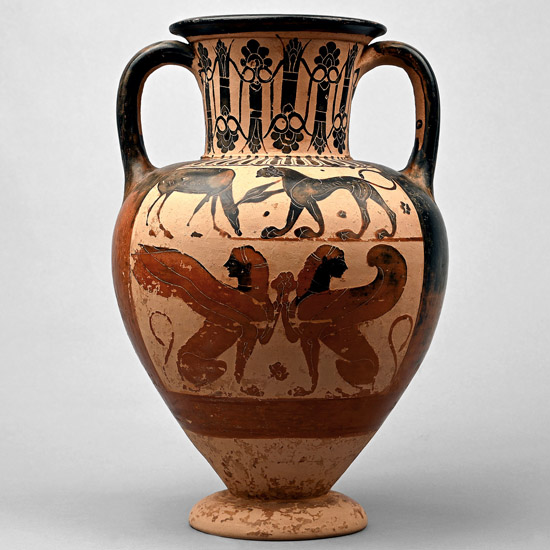
Greek Terracotta Amphora Attributed to the Phineus Painter
Chalcidian, circa 525 B.C.Estimate: £4,000 - 6,000 (‡+bp*)
Opening Bid: £2,500
Piriform body with splayed foot and narrow handles; the neck with slender lotus blossoms and palmettes, Side A) two opposing roosters with a lotus blossom in between, two standing swans flanking, below a youth on horseback holding the reins of a trotting horse, a man and a woman behind the horse; Side B) a grazing deer before an advancing panther looking back, two opposing sphinxes below with their heads turned back and front paws raised. 1.06 kg, 28 cm
Ex Münzen und Medaillen A.G., H. Cahn, Basel, 13 April 1985. Private collection, Bern, Switzerland. This lot has been checked against the Interpol Database of stolen works of art and is accompanied by a search certificate number no.12643-236366.
An important work by the leading master of the 'Chalcidian' workshop, which, despite the name, is not to be located in Chalkis itself but rather in a Chalcidian colony in Magna Graecia (possibly Rhegion). Within the oeuvre of Phineus, who is known for his neck-amphorae, examples with two image zones are very rare—see, for example, the fragmentary amphora in the Faina Collection in Orvieto, with similar sphinxes. -
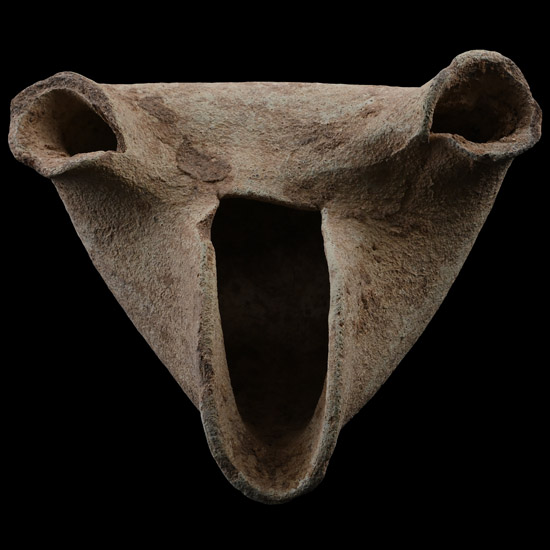
Phoenicio-Punic Terracotta Oil Lamp
Circa 3rd-2nd century B.C.Sold for (Inc. bp): £52
A triangular body with a narrow spout and two filler holes at the sides. 75 grams, 86.6 mm
From the private collection of Mr Brian Edwards, New Malden, Surrey, UK, formed from the late 1970s-early 1980s; thence by descent. Accompanied by a collector's data information card with collection reference no.119. -
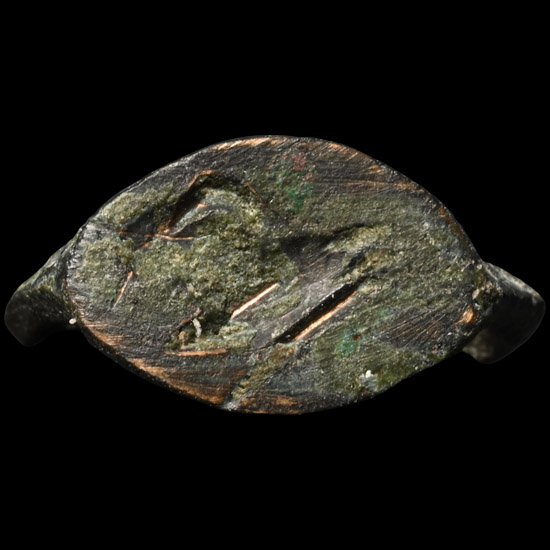
Greek Bronze Child's Ring
Circa 4th-2nd century B.C.Sold for (Inc. bp): £33
Featuring a slender round-section hoop and a lentoid bezel with a reclining ibex. 0.82 grams, 13.19 mm overall, 10.53 mm internal diameter
From the private collection of a European gentleman (1942-2024), formed since the 1970s.
