
Loading, please wait...
LOT 0535
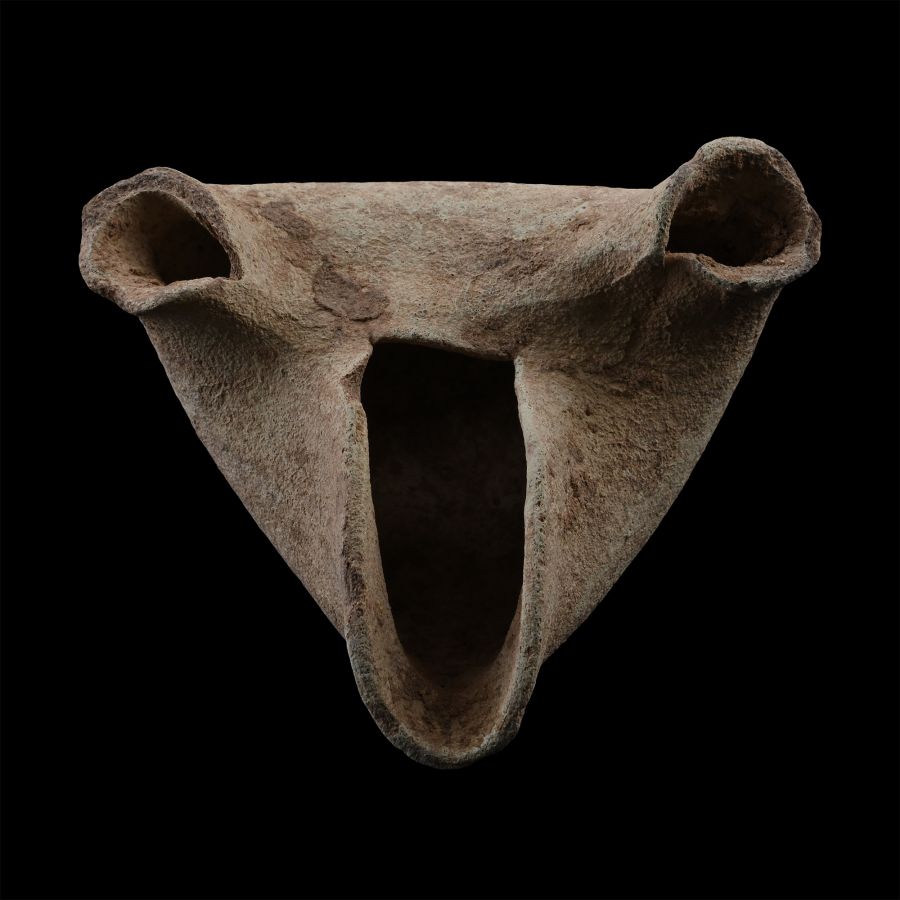
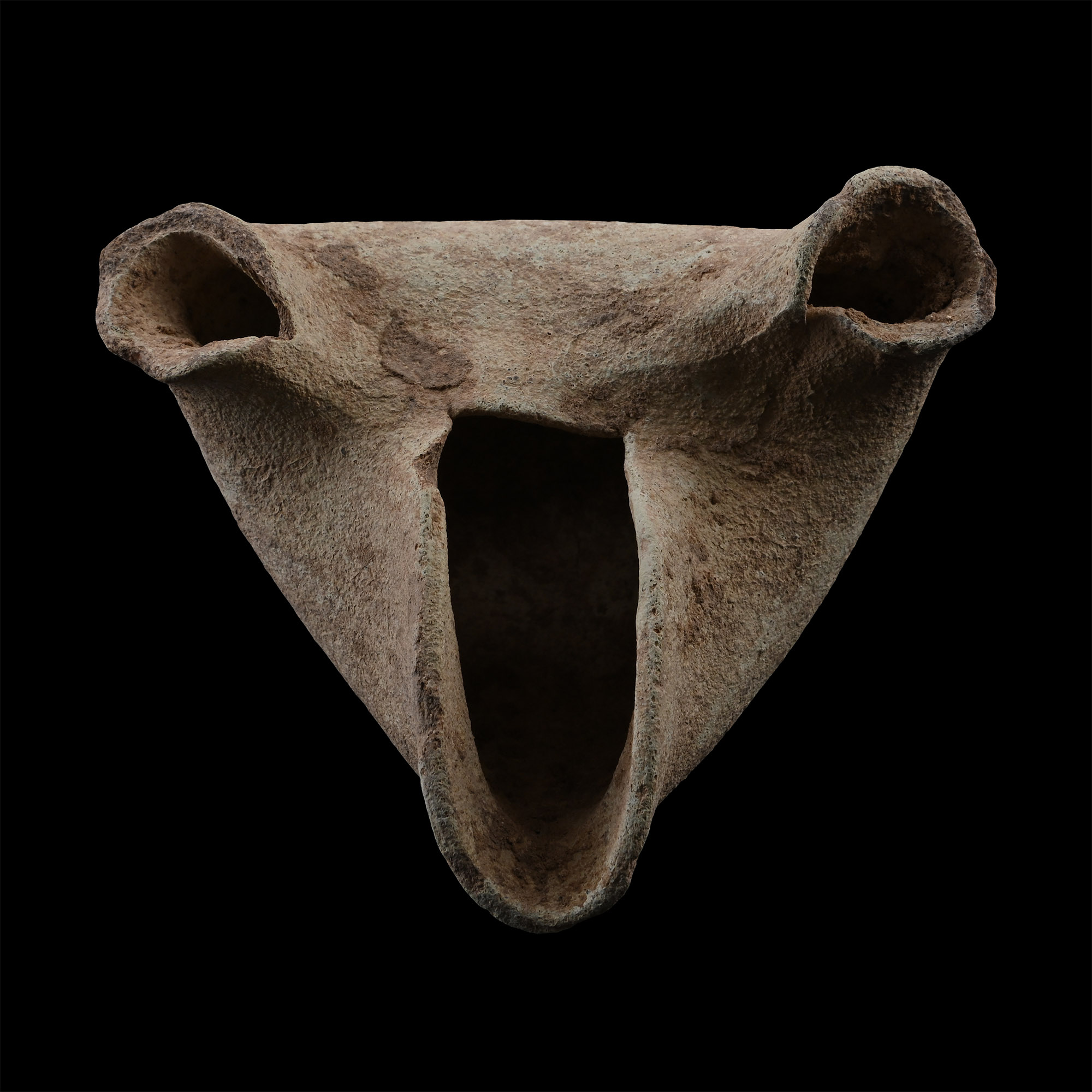
Phoenicio-Punic Terracotta Oil Lamp
CIRCA 3RD-2ND CENTURY B.C.
3 3/8 in. (75 grams, 86.6 mm).
A triangular body with a narrow spout and two filler holes at the sides. [No Reserve]
ProvenanceFrom the private collection of Mr Brian Edwards, New Malden, Surrey, UK, formed from the late 1970s-early 1980s; thence by descent.
Accompanied by a collector's data information card with collection reference no.119.
TimeLine Auctions follows a vetting process to ensure the authenticity and legality of all items, reinforcing our commitment to integrity and responsible trading. Each antiquity, antique, and coin lot undergoes thorough examination by a vetting committee of at least ten external specialists, professional trade association members, scientists, and archaeologists: Our Vetting Process
AUCTIONS:
TimeLine is a leading auction house specialising in antiquities, ancient art, collectables, natural history, coins, medals, and books. Our auctions offer museums, collectors, historians, and enthusiasts the opportunity to acquire unique and historically significant pieces.
-
.jpg)
Greek Painted Pottery Aryballos
Corinthian, circa 6th century B.C.Estimate: £300 - 400 (‡+bp*)
Opening Bid: £150
With a narrow neck and a broad rim to the mouth, a short strap handle to the rear; painted concentric rings around the mouth. 212 grams, 75 mm
Private collection, acquired in 1994; thence by descent.
From the 8th century B.C., Corinthian pottery vessels were exported to Greek colonies in South Italy and the coast of Asia Minor. They were used to hold perfumed oil, an essential item for the wealthy middle classes of the time. In Italy, especially in Etruria, local workshops produced imitations of Corinthian vessel types for a clientele of Greek settlers and local populations with a taste for Greek fashions. -
.jpg)
Large Greek Silver-Gilt Bowl
Hellenistic, 2nd-1st century B.C.Estimate: £18,000 - 24,000 (+bp*)
Opening Bid: £10,000
A shallow phiale with chamfered, thickened rim; narrow band of gilding beneath the rim, broad parcel-gilt decorative band with wave borders framing reserved tendrils and foliage; to the centre a parcel-gilt panel with keystone border and quatrefoil motif. 428 grams, 21.2 cm
French collection, 1980s. Pierre Berge & Associes, Paris, Archéologie, 16 May 2018, lot 214. Accompanied by a copy of a seven-page examination report number 113/2019 by Dr habil Mikhail Treister. Accompanied by the original French archaeological passport. Accompanied by a copy of the relevant Pierre Berge & Associes catalogue pages. This lot has been checked against the Interpol Database of stolen works of art and is accompanied by search certificate number no.10426-168735.
The bowl is comparable to an early group of Parthian bowls, kept in the P. Getty Museum, dated to the 2nd century B.C. It belongs to a group of bowls with parcel-gilt decoration on the interior, most probably manufactured in one of the Eastern Hellenistic workshops. -
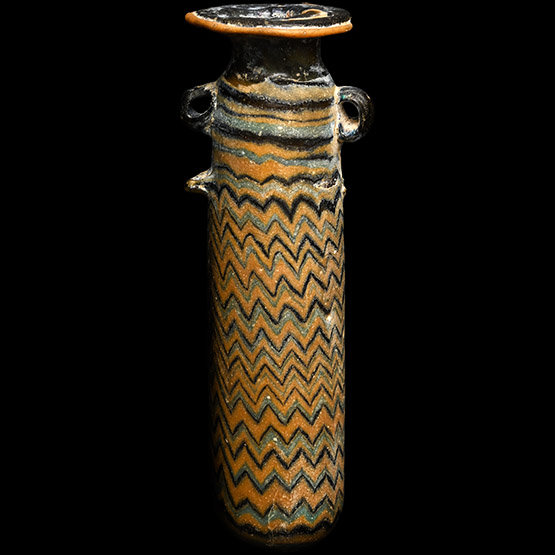
Greek Core-Formed Tall Glass Alabastron
6th-5th century B.C.Estimate: £4,000 - 6,000 (‡+bp*)
Opening Bid: £2,000
With a fusiform body, slender neck and broad flange rim, decorated with marvered feathering and spiralling trails; two lateral loop handles and a pinched lateral lug. 36.69 grams, 91 mm
Anonymous sale, Binoche & Giquello, Paris, 30th May 2012, no.124. Private collection, Switzerland. Accompanied by a copy of French passport no.0150269. This lot has been checked against the Interpol Database of stolen works of art and is accompanied by search certificate number no.13188-249220.
Alabastra of this typology, core-formed, trail-decorated and tooled, are typical of the Eastern Mediterranean. They were diminutive examples of a shape popularly produced for perfumed oils in the Greek world. Larger forms are known in both glass and ceramics.
